Wroxeter Roman City: A Roman Civic Centre and Post-Roman Court Site


Site at a Glance
- Rating
- 4.5
- Popularity
- Medium
- Country
- United Kingdom
- Primary era
- Classical
- External website
- Open
- Eras represented
- Classical, Medieval
- Civilizations
- Roman
- Site type
- City
On this page15 sections
History
Wroxeter Roman City in Wroxeter, United Kingdom, began as a Roman frontier post during the conquest of Britain in the first century AD. Associated first with Thracian auxiliary troops, it stood near the western end of Watling Street, the major Roman road leading toward Wales, the Severn valley, and the Wye valley. The settlement later became Viroconium Cornoviorum, a Roman town linked with the local Cornovii people.
Frontier fortress and Roman town
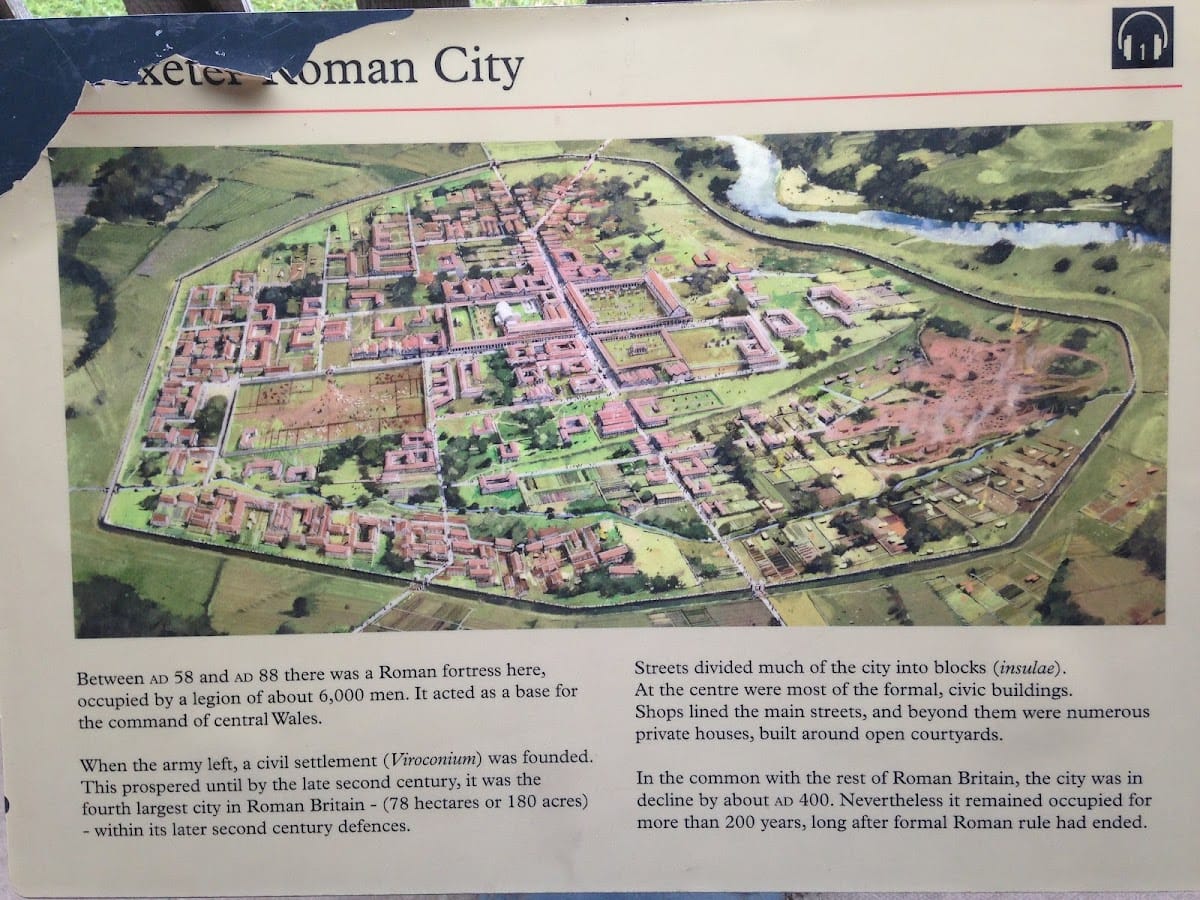
The earliest fort was established approximately between AD 57 and 85 during the campaigns of the governor Publius Ostorius Scapula. In the mid-first century, Legio XIV Gemina, a Roman legion, replaced the auxiliary garrison and enlarged the fort into a legionary fortress for the invasion of Wales. After this legion departed for campaigns under the governor Gnaeus Julius Agricola, Legio XX Valeria Victrix occupied the fortress. Agricola led Roman campaigns in Wales and northern Britain during the late first century AD.
By the late 80s, Legio XX Valeria Victrix had moved to Deva Victrix, the Roman military base at modern Chester, and the fortress ceased to serve the Roman army. The civilian settlement around the base, known as the canabae, then developed into a town established by about AD 90. Authorities of the Cornovii expanded its civic centre on a large scale after the army’s departure.
During the reign of Emperor Hadrian, whose rule from AD 117 to 138 brought extensive military and civic development across the Roman provinces, the town expanded to more than 70 hectares within its defended area. Its forum, the principal public square of a Roman town, was begun in the 120s over an unfinished legionary bathhouse. A dedicatory inscription to Hadrian shows that the complex was completed around AD 130. By then, Viroconium contained public buildings, baths, temples, and shops.
At its greatest extent, the town probably had a population of more than 15,000 and was probably one of the richest and fourth-largest Roman settlements in Britain. Its prosperity may have been connected with access to Wales and wider trade routes, even though it originated as a frontier settlement.
Fire, rebuilding, and the end of Roman rule
Between AD 165 and 185, the forum burned together with nearby shops and houses. Excavators later recovered many of the shops’ contents, while the forum itself was rebuilt with modifications. Urban life continued for roughly five centuries, but the town changed substantially after Roman rule ended. Occupation continued into the fifth century as many Roman buildings deteriorated.
Between approximately AD 530 and 570, when many other Roman towns and villas in Britain were being abandoned, Wroxeter underwent a major rebuilding programme. The old basilica, a large public building used for civic, administrative, and commercial purposes, was carefully demolished. It was replaced by timber-framed buildings set on rubble platforms. The programme created 33 carefully planned structures, probably including a large two-storey building, storage buildings, and houses. The person or institution responsible is unknown, although a bishop has been suggested. Some buildings were renewed three times, and the community probably continued for about 75 years before many structures were dismantled.
Post-Roman community and archaeological recovery
After the Roman period, Wroxeter served as an early capital or court centre associated with Powys and successor territories of the Cornovii. Later tradition connected the site with the early Welsh cities called Cair Guricon and related forms, as well as with Pengwern and Powys. Some traditions also associate Wroxeter with King Arthur, but this is a belief rather than an established historical fact.
The Wroxeter or Cunorix Stone, found in 1967, provides evidence for the post-Roman community. Probably a reused gravestone, it bears an inscription in an Insular Celtic language, a group of Celtic languages historically spoken in Britain and Ireland. The language is identified as partly Latinized Primitive Irish, and the stone dates approximately to AD 460 to 475.
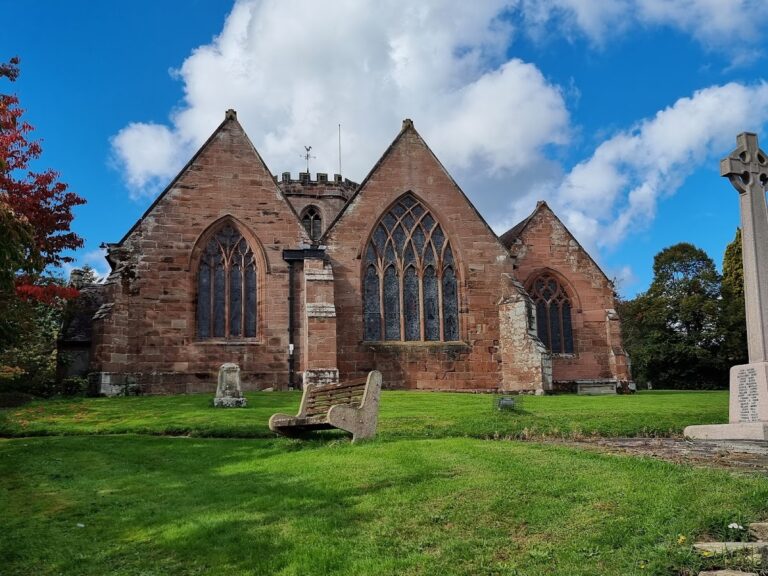
The site was probably abandoned peacefully during the second half of the seventh century or the beginning of the eighth. A tradition links the decline of the Roman city with the establishment of a new regional urban centre at Shrewsbury. One interpretation proposes that refugees moved there during a plague outbreak at Wroxeter, although this explanation remains uncertain. Roman building stone was later reused in nearby churches, including those at Atcham, Wroxeter, and Upton Magna, a practice proposed by archaeologist Philip A. Barker.
Interest in the ruins grew among antiquarians during the nineteenth century. Excavations in the early twentieth century exposed the forum and houses, while later twentieth-century work investigated a marketplace beside the baths and the large baths basilica, also described as a gymnasium. Modern geophysical survey and aerial archaeology have mapped much of the buried town, and excavation and research continue. English Heritage manages the surviving Roman remains and small museum. Important finds are also held at the Music Hall Museum in Shrewsbury and in English Heritage’s archaeological collections store at Wrest Park.
Remains
At its greatest extent, the defended settlement covered approximately 78 hectares, with the town expanding to more than 70 hectares, or about 173 acres, during the Hadrianic period. It developed around the military fort and later incorporated the fort’s plan into a civic street grid. Most of the settlement remains beneath fields and topsoil, while exposed areas show the civic centre, bath complex, domestic buildings, and later post-Roman structures.
Civic centre and public buildings
Forum
The forum was a colonnaded civic complex begun in the 120s and completed around AD 130. It was built over the unfinished legionary bathhouse at the centre of the settlement, linking the town’s military origins with its later civic organization. After the fire of approximately AD 165 to 185, the complex was rebuilt with alterations. Its remains form part of the excavated civic core.
Houses, shops, and marketplace
Excavated areas include houses, shops, simpler temples, and a marketplace beside the baths. Many hundreds of building foundations survive beneath the topsoil beyond the central public buildings. The fire deposits from the forum, adjacent shops, and houses preserved contents that were later recovered during excavation, providing material evidence for activity within the commercial and domestic parts of the town.
Baths and related structures
Public baths
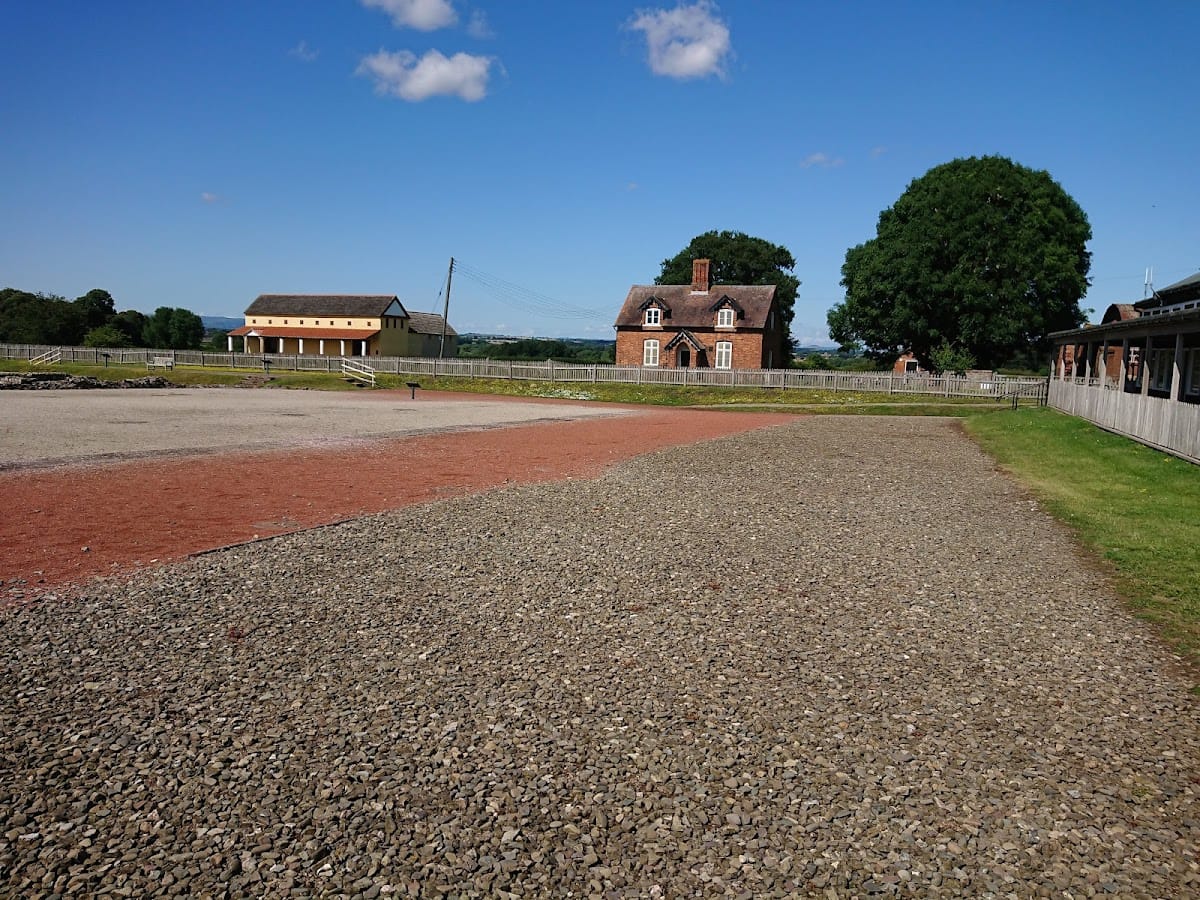
The surviving bath complex includes public bathing rooms and an underfloor heating system. Excavation revealed the bathhouse together with its heating arrangements. Different-coloured building materials in the exposed remains mark vanished walls, floors, and walkways, helping distinguish elements of the former complex.
Baths basilica
The baths basilica, also described as a gymnasium, dates to the second century AD. Its surviving wall rises to approximately seven metres. The structure known as the Old Work includes an arch and part of the baths’ frigidarium, the cold-water room of a Roman bath complex. The basilica wall is described as the largest free-standing Roman ruin in England.
Objects and evidence of community life
Finds from Wroxeter include jet objects, jewellery, finger rings, keys, bells, tessellated pavement, a cooking pot, architectural stonework, and broken jewellery. A tessellated pavement is a floor made from small pieces of stone, tile, or other material arranged in a geometric or figurative pattern. Bells were thought to bring good luck, and some jet and amber were also regarded as lucky. Jewellery and small metal objects provide evidence for personal adornment, security, and consumer practices among immigrant and native inhabitants.
More than 100 plaster votive eyes have been found at Wroxeter. Made from pieces of fallen wall plaster, they were probably offerings to a local deity from people seeking help for eye complaints. A healing spring may have existed in the area. White clay figurines of Venus were intended for household shrines, while a Roman altar was used for sacrifices and offerings to the gods.
Human burials have been excavated at Wroxeter, and coprolites, or fossilised faeces, have survived. These remains provide evidence for diet, health, and intestinal parasites. Numerous medical probes and other specialist surgical instruments also indicate the presence of professional medical practitioners.
Post-Roman structures and reconstructed buildings
Timber-framed buildings
The rebuilding programme of approximately AD 530 to 570 replaced the old basilica with timber-framed buildings on rubble platforms. The remains probably included a very large two-storey structure, storage buildings, and houses. Several of these structures were renewed during the community’s later occupation.
Roman villa reconstruction
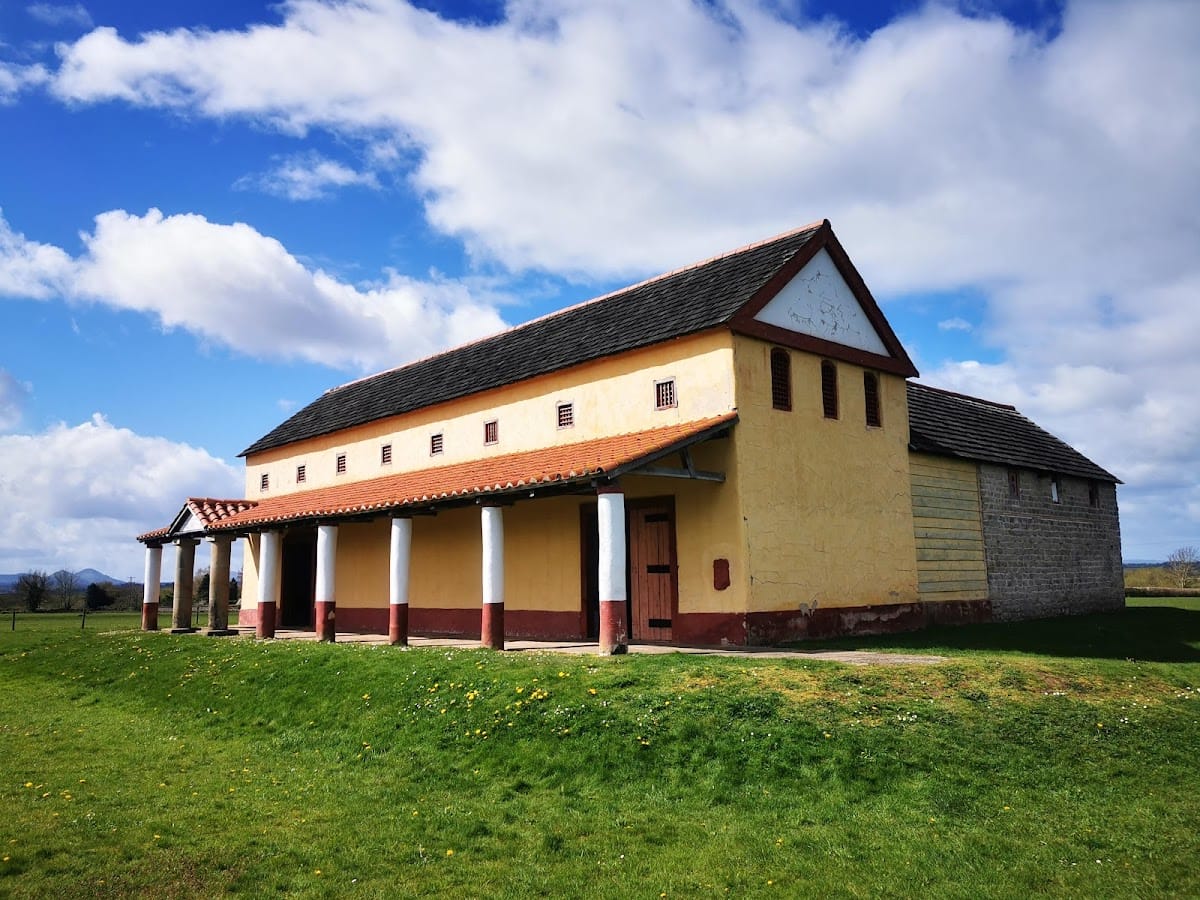
A reconstructed Roman villa opened in February 2011. Designed by archaeologist Dai Morgan Evans and built with assistance from local volunteers, it represents a large private residence of the later Roman period. The building demonstrates Roman construction techniques and domestic arrangements, using authentic ancient construction methods rather than preserving an original villa.
Archaeologists uncovered a mosaic depicting dolphins and fish at the site in 2024. The excavated remains, reconstructed house, and on-site museum present parts of Wroxeter’s Roman and post-Roman history, while objects from the settlement are also preserved in collections at Wrest Park and, in some cases, the Music Hall Museum in Shrewsbury.
Nearby sites