Witwald Castle: A Medieval Hill Castle in Switzerland


Site at a Glance
- Rating
- 4.6
- Popularity
- Very Low
- Country
- Switzerland
- Primary era
- Medieval
- Eras represented
- Medieval
- Civilizations
- Holy Roman Empire
- Site type
- Military
- Remains
- Castle
On this page7 sections
History
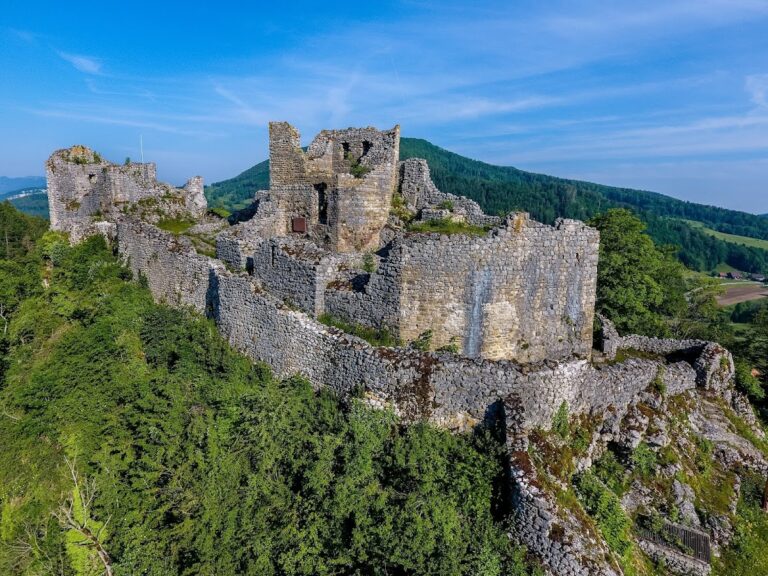
Witwald Castle, also known as Wild-Eptingen or the Younger Wild-Eptingen Castle, is a medieval hill castle above Eptingen in Switzerland. It was probably built in the thirteenth century as the center of a lordship created through forest clearance, apparently after the older Wild-Eptingen Castle had been abandoned. The site became the seat of the Eptingers in the upper Diegtertal.
The Eptinger lordship
The Eptingers became lords of the upper Diegtertal after the failure of Rudolf of Rheinfelden’s counter-kingship around 1080. Rudolf, an eleventh-century German nobleman, had been elected as a rival king during his conflict with the Salian ruler Henry IV. The earliest reference associated with the Eptingers is a forged document of 1189 that mentions Gottfried of Eptingen, while the castle itself is connected with the thirteenth century.
Witwald was probably damaged by the Basel earthquake of 1356, a major medieval earthquake that affected buildings across the Basel region. Despite this damage, it remained the sole center of lordship in the upper Diegtertal. In 1389, Günther of Eptingen bought Heinrich of Undervelier’s inherited share of Wild-Eptingen. The transaction involved members of the noble families who held interests in the property.
Conflict, transfer, and decline
During the fifteenth century, the lords of Falkenstein sought to extend Solothurn’s influence in Eptingen. Their acquisition of the comital rights of Sisgau in 1418 led to disputes with the Eptingers. Sisgau was a territorial district whose comital rights included jurisdiction and lordship associated with a count.
The Eptingers sought Basel as an ally and stationed Basel mercenaries at the castle before the Battle of St. Jakob an der Birs in 1444. In 1487, the lords of Eptingen sold Witwald Castle and its lordship to Basel. Basel then granted the lordship as a fief to the bailiff based at Farnsburg. After this transfer, Witwald probably fell into disrepair.
Investigation and conservation
The ruins were partially cleared and rebuilt in 1909, but received little maintenance afterward. In autumn 2012, a storm brought down trees and exposed wall traces together with numerous tile fragments. These discoveries prompted Archaeology Baselland to remeasure the entire complex. The Witwald Castle Foundation was established in 2017 to preserve the site, and comprehensive investigation and conservation followed in 2018. That work identified evidence of three fire events.
Remains
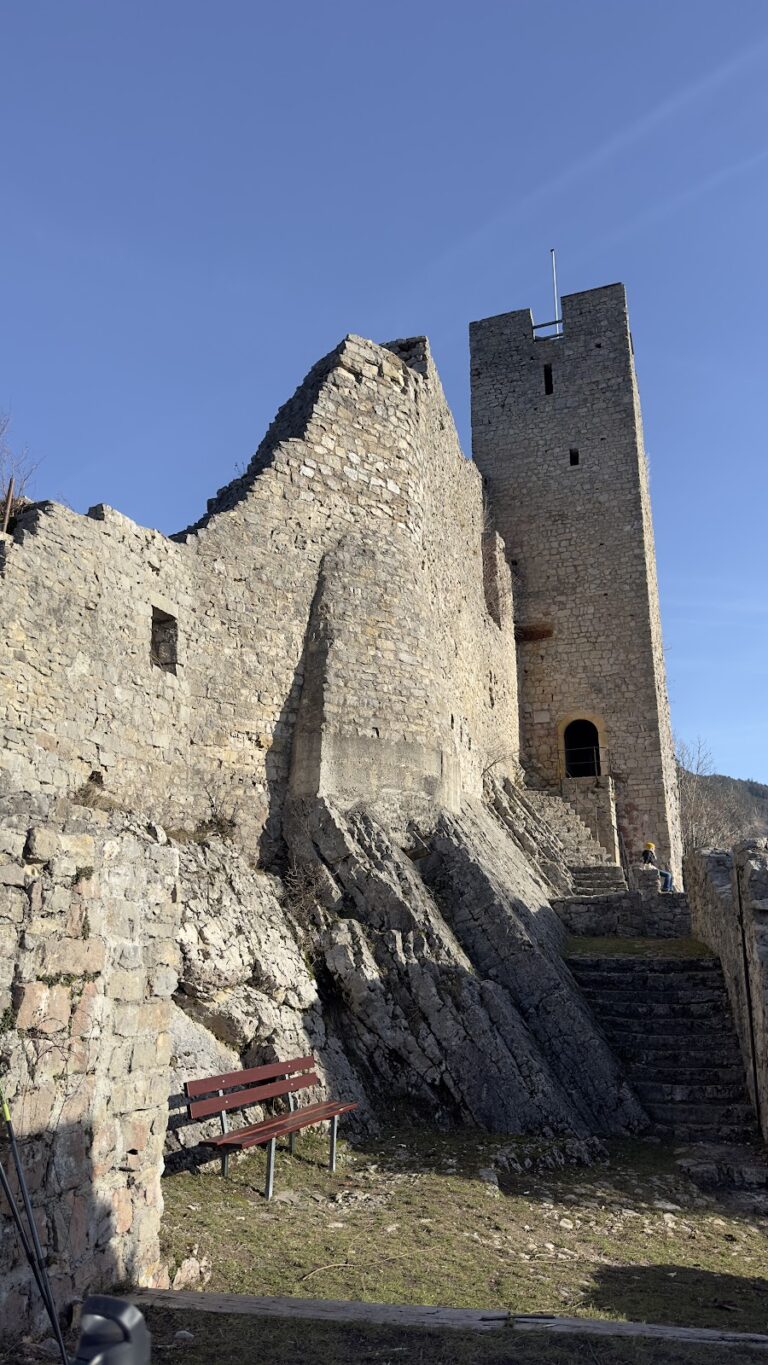
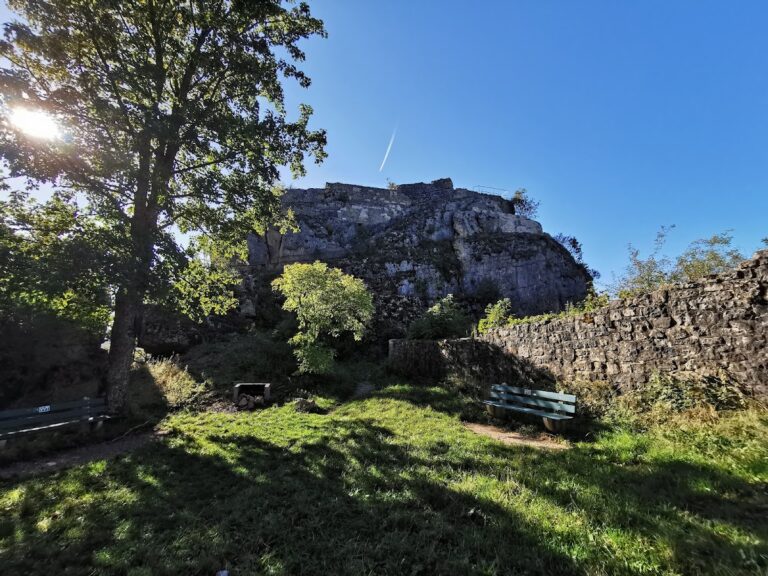
Witwald is a hill castle at an elevation of about 680 metres and survives as a ruin. The older Wild-Eptingen castle ruin lies approximately 300 metres to the southeast and is regarded as the probable predecessor of the later castle. Together, the two sites reflect the succession between an earlier castle and the thirteenth-century center of the Eptinger lordship.
Castle structures
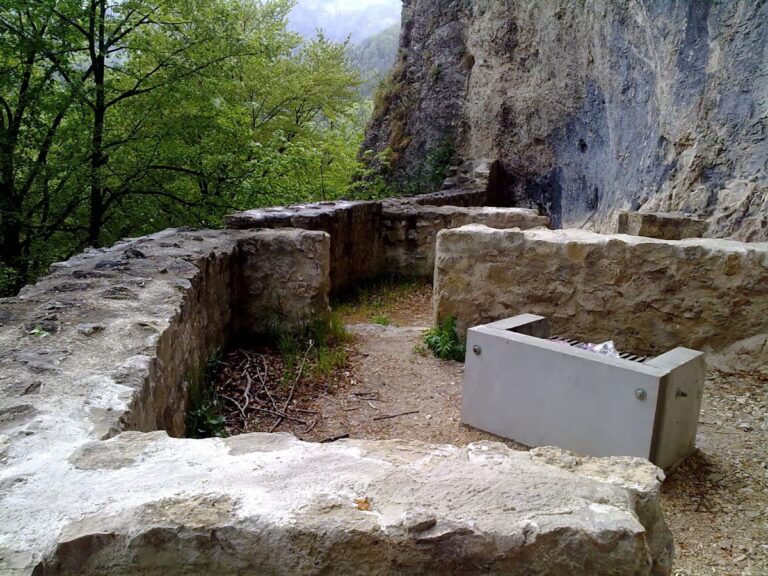
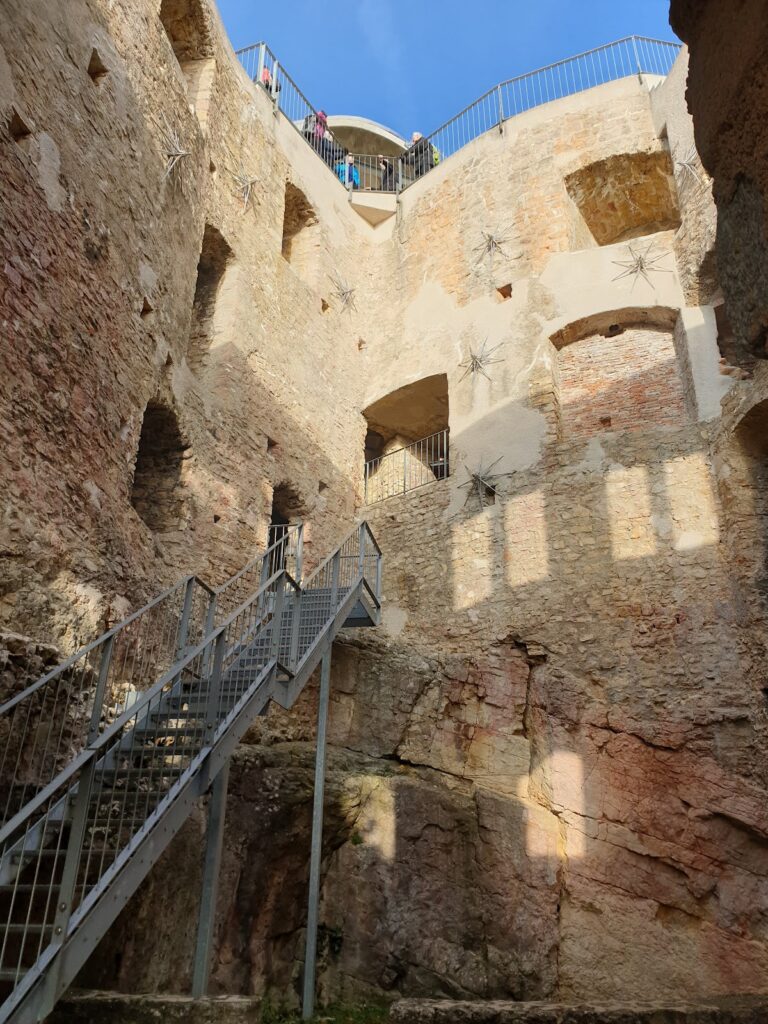
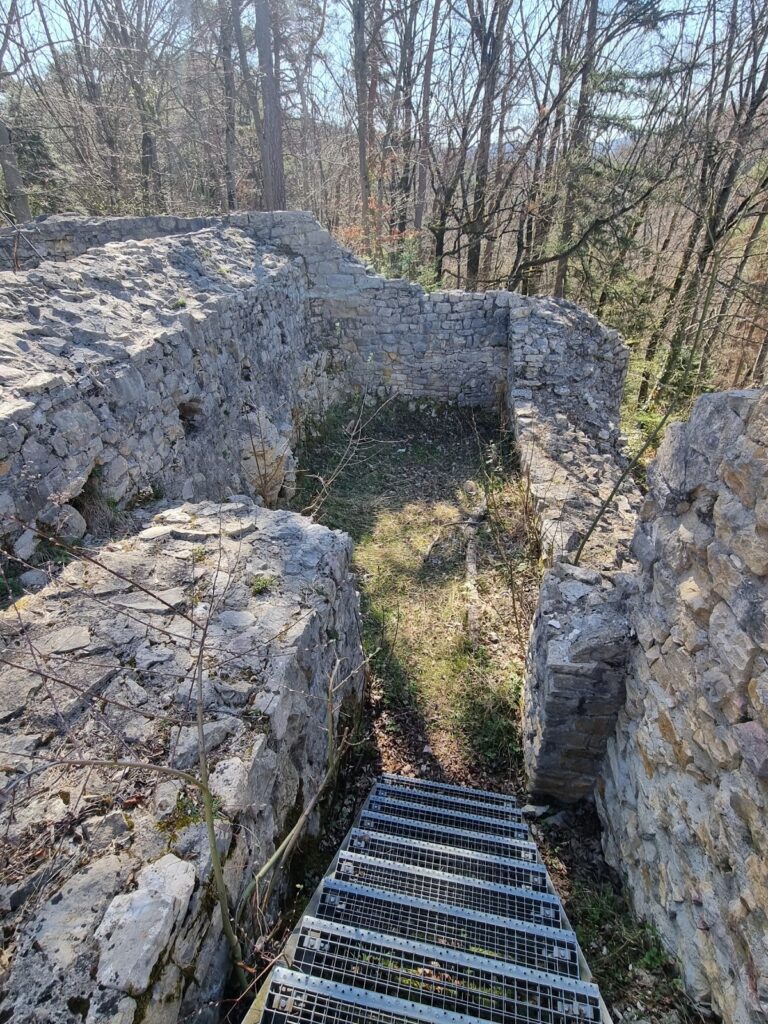
The surviving complex includes parts of the palas, the principal residential and representative building of a medieval castle, together with an entrance gate, a staircase, and a cistern for collecting and storing water. These remains form the principal visible elements of the ruined hilltop settlement. The masonry also incorporates rebuilding carried out during the partial clearance of 1909, while the wider complex was conserved in 2018.
Archaeological traces
The 2012 storm revealed additional masonry traces and numerous tile fragments beneath the trees. Their discovery led to a renewed survey of the entire complex and helped define parts of the surviving remains. The later investigation and conservation work also identified evidence of three separate fire events within the castle complex.
Nearby sites