Wittekindsburg: An Early Medieval Saxon Fortification in Germany
Visitor Information
Google Rating: 4.2
Popularity: Very Low
Country: Germany
Civilization: Medieval European
Site type: Military
Remains: Fort
History
Wittekindsburg is an early medieval fortification situated in the municipality of Wallenhorst, Germany. It was originally constructed by the Saxons, an early Germanic people who inhabited the region during the early Middle Ages.
The earliest phase of the site’s development dates back to the early 7th century, around 605 AD, reflecting the Saxons’ need for defended refuge settlements. The initial enclosure, including outer ramparts and ditches, was erected before the Saxon Wars fought by Charlemagne between 772 and 804 AD. These defensive structures provided protection in a period marked by increasing Frankish incursions into Saxon territory. Within the core enclosure, occupation layers have been dated to around 840 AD, indicating persistent use through and beyond the era of Saxon resistance.
Following Charlemagne’s conquest of Saxony, control of Wittekindsburg passed to the Carolingian rulers. They undertook refurbishments and enhancements to the fortifications, adapting the site to secure their new dominance in the region. This period of Carolingian occupation is reflected in the late 8th to late 10th-century structural phases. Radiocarbon dating of timber elements, including post remnants dated between 920 and 1020 AD, reveals that the site remained an active stronghold for several centuries, receiving ongoing maintenance and rebuilding.
By the end of the 10th century, the fort was ultimately abandoned. Subsequent medieval records do not mention Wittekindsburg as a fortification but rather refer to a farmhouse located on the site, as documented in a 1253 charter associated with the nearby Rulle monastery. Despite the site’s name suggesting a connection to Widukind, the famed Saxon leader who opposed Charlemagne, there is no direct evidence linking him to the fort.
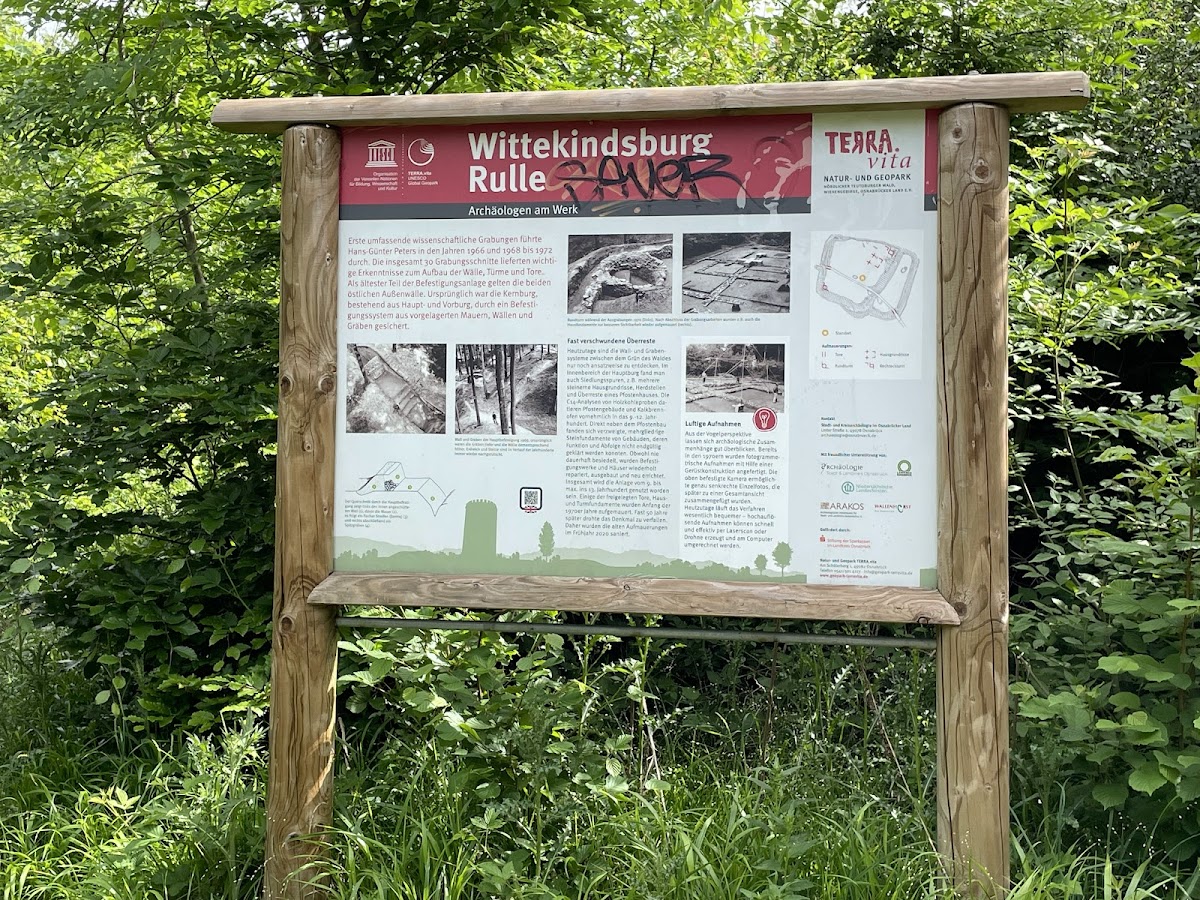
Archaeological interest in Wittekindsburg began in the late 19th century, with initial investigations led by Carl Schuchhardt around 1890. More comprehensive excavations took place between 1966 and 1972, uncovering substantial details about the site’s construction and use. Research has continued into the 21st century, with work recommencing in 2001, deepening understanding of this significant early medieval fortification.
Remains
Wittekindsburg occupies a strategic position atop a promontory of the Wiehengebirge hills, covering close to 16 hectares and making it the largest early medieval hillfort in Lower Saxony. The site’s layout is roughly rectangular, about 140 by 110 meters, oriented to take advantage of natural defenses provided by steep slopes to the north and southwest. This topographical advantage reduced the need for fortifications on those sides.
The western defenses comprise a substantial earth rampart behind a dry stone wall nearly 85 centimeters thick. At the front lies a deep, V-shaped ditch reaching more than three meters in depth, creating a formidable barrier against attackers. Both the northern and southern sides mirror this pattern, although the southern side includes an additional outer ditch for enhanced protection.
The eastern side of the fort, identified as the most vulnerable, is secured by a stronger masonry wall built with mortar, up to 1.15 meters thick. Behind this wall runs an earthen embankment, with a V-shaped ditch up to 3.9 meters deep placed before it. This combination of stone, earth, and deep trenches underscores the importance placed on guarding the eastern approach.
Access to the fort was carefully controlled through gate complexes. The main fort and its eastern outer bailey—the fortified area adjoining the main enclosure—both feature gates formed by chamfered chambers, designed to regulate entry and defend against intruders. The outer bailey itself is enclosed by a mortar-bound stone wall with an earthen rampart, showing that this inner zone was also heavily fortified.
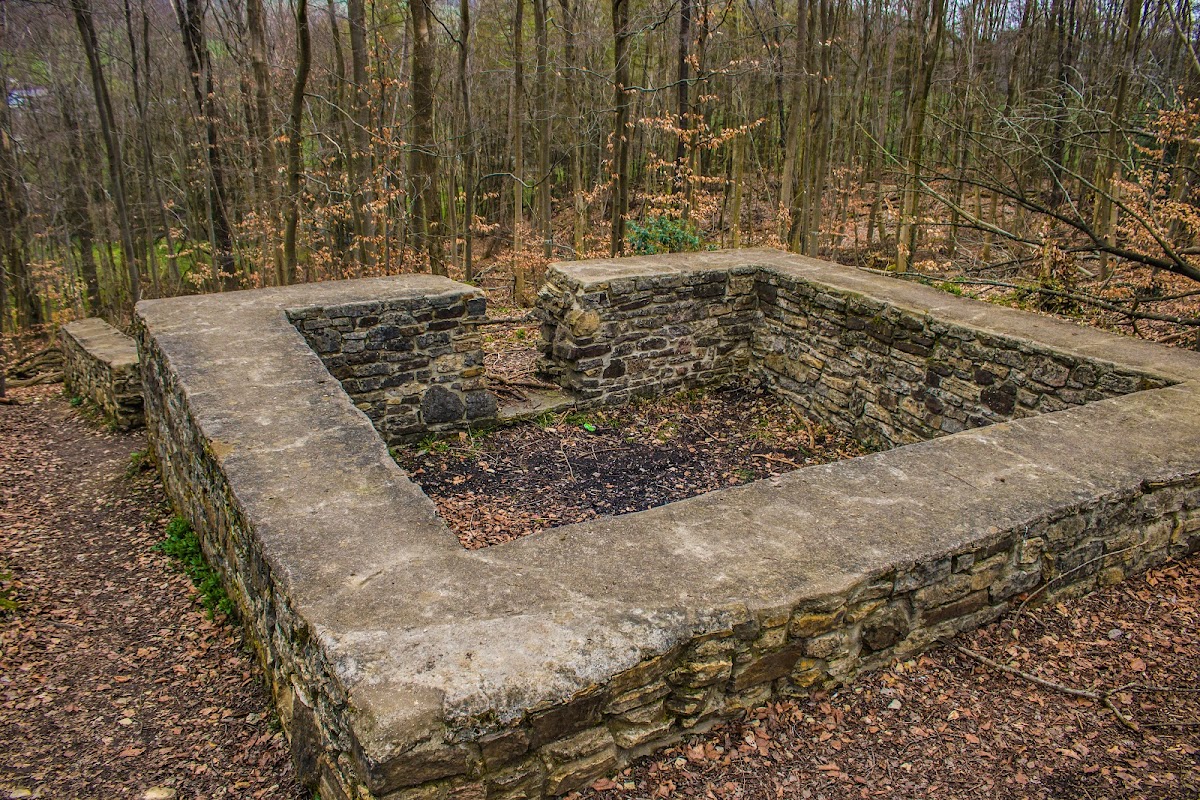
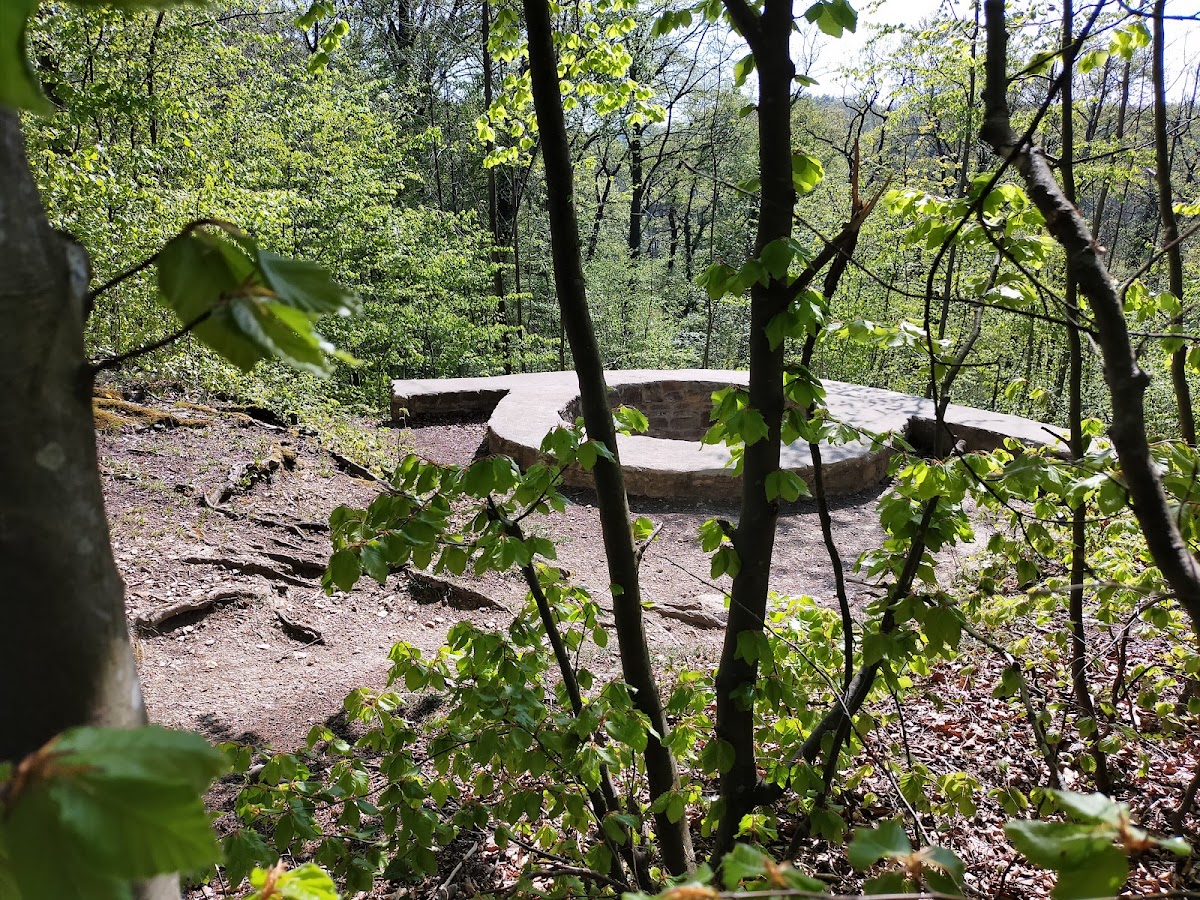
At corners of the enclosure stand two defensive towers which mark points of strength. A round tower is built into the southwest corner of the surrounding wall, while a square tower measuring nearly seven meters on each side occupies the northeast corner, integrated directly into the eastern defensive wall. The northeast corner also includes a corridor-like passage formed by the northern wall, which likely leads down the slope toward a water source, an important feature for sustaining occupants during sieges.
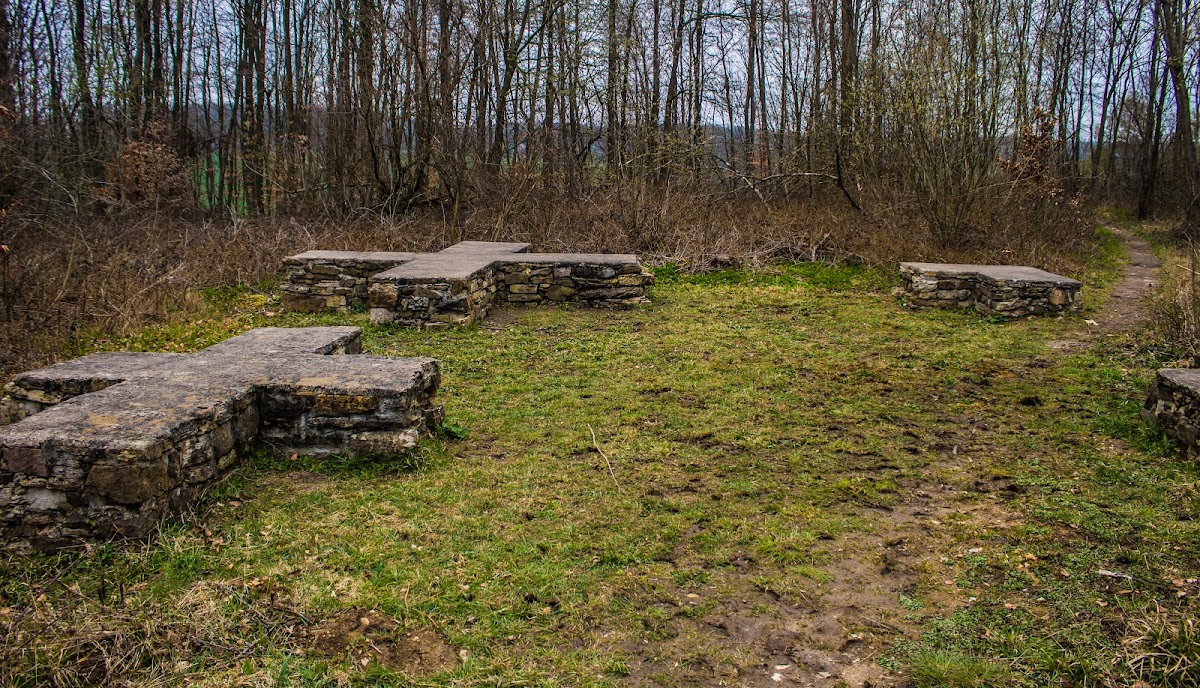
Inside the fort, excavations have uncovered foundations of multiple wooden and stone buildings erected in different phases of the site’s occupation. While the purpose of these structures remains unclear, their variety hints at a complex and prolonged settlement history involving habitation, administration, or military use.
Outside the main enclosure, the approach route was further defended by several lines of rampart and ditch defenses. Entry through these outer defenses was funneled by what is known as a pincer gate, a design intended to trap and expose attackers between two projecting walls.
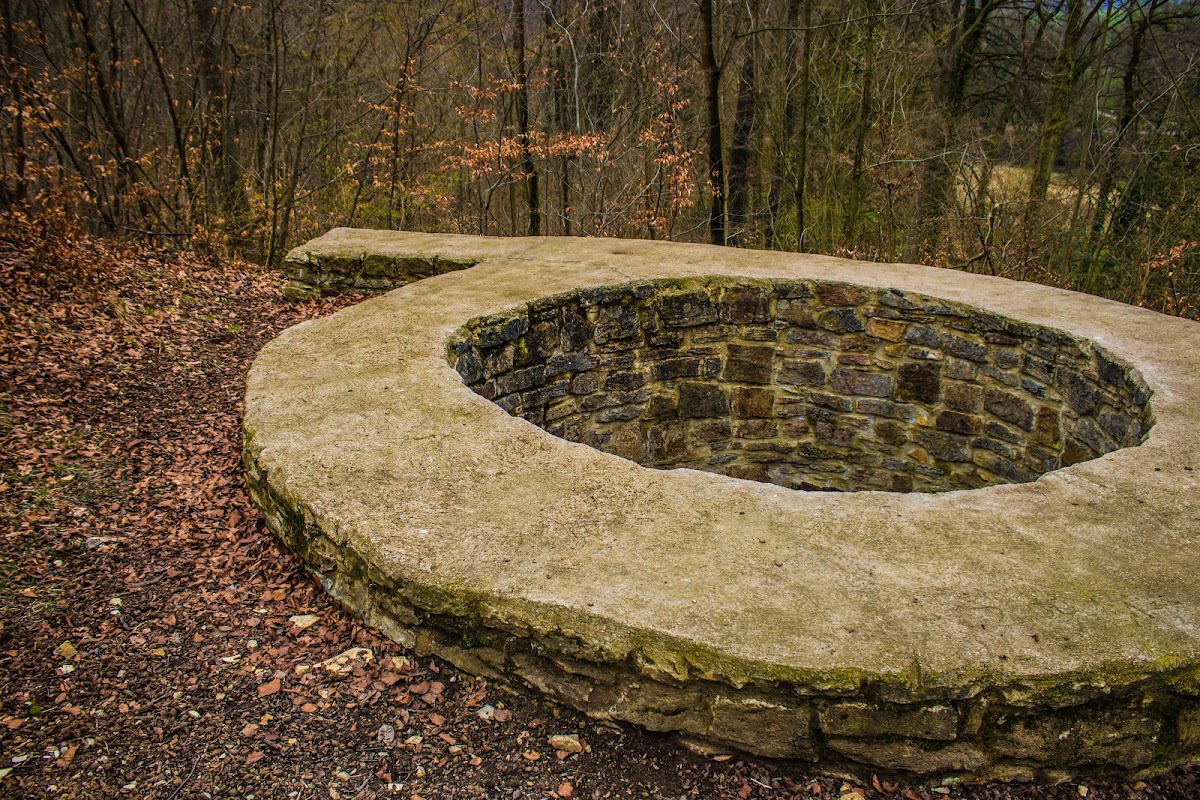
Today, the remains of Wittekindsburg are primarily found in the form of foundation outlines and visible earthworks. The stone walls and ditches continue to shape the landscape, giving insight into the fort’s past form and function. No artistic decorations or inscriptions have been reported from the site. The preservation of structural elements allows for a clear understanding of the fort’s defensive design and how it evolved over several centuries of use.
Nearby sites