Wiepersdorf Manor: A Literary Artists’ House in Germany


Site at a Glance
- Rating
- 4.5
- Popularity
- Low
- Country
- Germany
- Primary era
- Early Modern
- External website
- Open
- Eras represented
- Early Modern, Modern
- Civilizations
- German, Kingdom of Prussia
- Site type
- Domestic
- Remains
- Manor House
On this page13 sections
History
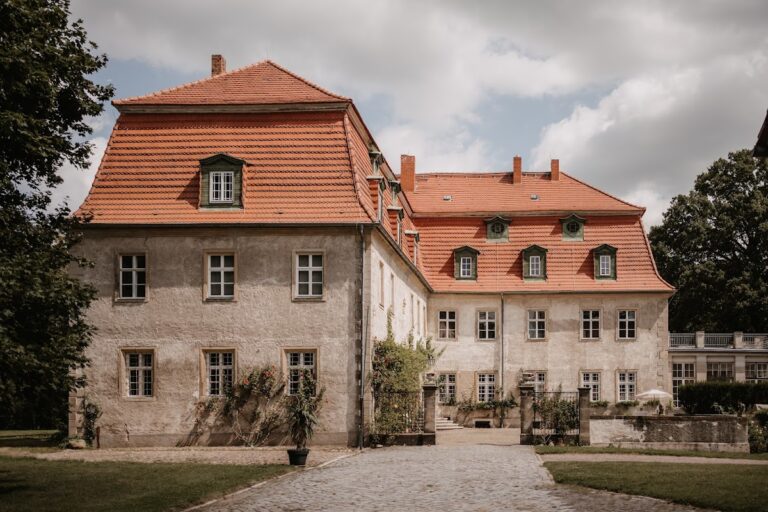
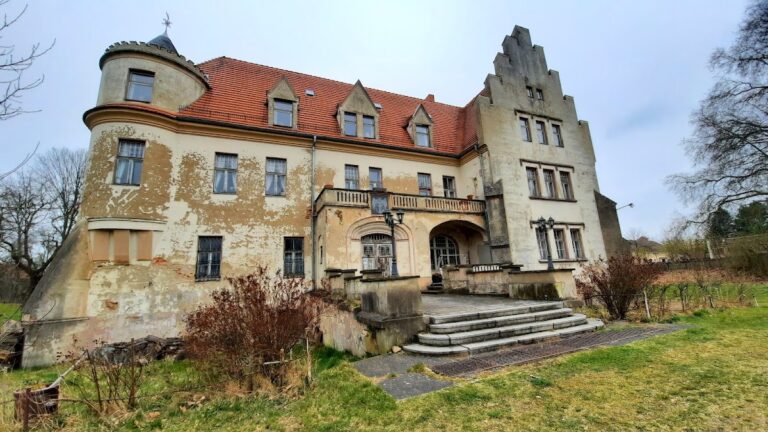
Wiepersdorf manor is a historic estate in Germany, in Wiepersdorf in the municipality of Niederer Fläming, southeast of Jüterbog in Brandenburg. Its present form developed mainly during the eighteenth century, when an earlier noble manor house was enlarged and joined to new wings. From 1780 to 1945, the property belonged to the von Arnim family. It later became associated with German Romanticism, an artistic and intellectual movement that valued imagination, emotion, nature, folklore, and cultural memory, and eventually served as an artists’ house providing accommodation, workspaces, and funded residencies.
From the von Leipzig estate to the von Einsiedel manor
The manor grew from an older estate house owned by the noble von Leipzig family. Johann Gottfried von Leipzig remained lord of the estate until 1728. In 1734, Gottfried Emanuel von Einsiedel, a Royal Prussian major who later became a general, acquired the Bärwalde estate district, including Wiepersdorf. The manor was probably expanded between 1734 and 1738, and two wings were added in 1736. These works incorporated parts of the earlier building and established the basic arrangement that later owners would alter.
Von Einsiedel’s fortunes declined after he fell out of favor with Frederick II of Prussia. He died in Potsdam in 1745. His daughter Sofia Dorothea inherited the Bärwalde estate district and managed Wiepersdorf for a time. After separating from her second husband in 1778, she decided to sell the property.
The von Arnim family estate
On 10 February 1780, Joachim Erdmann von Arnim purchased the Bärwalde estate district, Wiepersdorf, and other knightly estates for 98,000 thalers. His mother-in-law, Caroline von Labes, provided the money for the purchase. Von Arnim was a Royal Prussian chamberlain and diplomat, and he commissioned further alterations to the manor. Tower buildings were inserted between the main house and its side wings, producing the curved ensemble that remains a defining feature of the property.
The estate became the principal residence of the von Arnim family. Ludwig Achim von Arnim, later one of the major poets of German Romanticism, was born in Berlin in 1781. After his marriage to Bettina Brentano in 1811, he moved with her to Wiepersdorf in 1814. He shifted the estate farmyard to the south of the manor and enlarged it during the reorganization of the property.
Bettina returned to Berlin with the children after three years, while Achim remained at Wiepersdorf as estate lord and writer until his death there on 21 January 1831. Their physical separation produced a large correspondence. The letters became an important source for understanding the Arnims and German Romanticism, while also preserving observations about cultural life and the village during the early nineteenth century.
Later nineteenth-century changes
After Achim’s death, his brother Carl Otto von Arnim assumed control and leased the estate. Freimund von Arnim resumed its administration in 1844 or 1845, shortly before marrying Anna von Baumbach. Their first grandson, the painter Achim von Arnim-Bärwalde, was born in 1848. He later inherited the estates and undertook extensive changes to the manor and grounds, including the construction of an atelier in 1877 and an orangery in 1888 or 1889. Annois Wilm von Arnim took over Wiepersdorf in 1891.
The wider nineteenth-century property included the knightly estates of Weißen, Herbersdorf with Meinsdorf, and Bärwalde. Wiepersdorf itself covered 644 hectares around 1880, including 290 hectares of woodland. The associated estates comprised 225 hectares at Weißen, 241 hectares at Herbersdorf with Meinsdorf, and 242 hectares at Bärwalde. Distilleries operated at Wiepersdorf and Bärwalde, and the two estates served as cultivation stations for rye developed by Ferdinand von Lochow of Petkus for the world market.
War, persecution, and preservation
The von Arnim family’s ownership ended in 1945. Earlier financial difficulties had already affected the estate. In 1929, Ottmar von Arnim auctioned part of Achim and Bettina’s property, causing some family possessions to be lost, while the Freies Deutsches Hochstift later recovered others.
During the Nazi period, Wiepersdorf offered refuge to the painter Fritz Kuhr, who was persecuted as a “degenerate artist,” and to Werner Milch, a Germanist classified as Jewish under Nazi racial policy. Milch began writing his book Die junge Bettine at the manor. Friedmund von Arnim and his sister Bettina Encke von Arnim also sheltered Iwan Katz, a Jewish-born communist and former member of the Reichstag. These acts of protection formed part of the manor’s history during the dictatorship and helped shape its later preservation.
After the Second World War, Wiepersdorf briefly housed a Soviet commandant’s headquarters and war refugees. Plundering removed many furnishings and books from the Arnim library. Following the land reform, the neglected manor faced the possibility of demolition. Bettina Encke von Arnim, assisted by Iwan Katz, Brandenburg provincial officials, and the German Central Administration for Public Education, helped secure its preservation as a place of cultural and literary-historical value.
From poets’ foundation to artists’ house
Brandenburg authorities, the German Cultural Association for the Democratic Renewal of Germany, and the Association of German Authors established the German Poets’ Foundation in 1946. After the rooms were renovated and adapted, its first guests arrived in autumn 1947. Wiepersdorf became state property in 1948, and both the manor and its library received heritage protection.
In 1951, the Arnim library was transferred to the Academy of Arts in Berlin. It is now held by the Duchess Anna Amalia Library, while the manuscripts are preserved in the Goethe and Schiller Archive in Weimar. A smaller reference library remained at Wiepersdorf. After the managing director Werner Schendell was arrested for political reasons in 1950, Edith Rost became trustee. Her husband, the Dutch writer Nico Rost, was responsible for the Arnim library and manuscripts before their transfer.
From 1974 to 1980, the Institute for Monument Preservation of the German Democratic Republic directed extensive building work. The institute was the East German state body responsible for conserving and restoring protected historic monuments. The renovated property reopened on 10 May 1980 as the Bettina von Arnim Working and Recreation Center for Writers and Artists, serving members of the five artists’ associations. Earlier names had included Wiepersdorf Castle, Workplace for Intellectual Workers, Recreation Center for the Intelligentsia, and, from 1965, the Bettina von Arnim Home, Working and Recreation Center for Cultural Workers.
Administered by the East German Ministry of Culture and, from 1979, by the Cultural Fund of the German Democratic Republic, the institution hosted writers and artists during the German Democratic Republic period. Among them were Anna Seghers, Christa Wolf, Arnold Zweig, Volker Braun, Ernst Busch, Maxi Wander, and Kurt Masur.
Post-1989 cultural role
After the political changes of 1989, the manor was briefly operated as a hotel and its future became uncertain. Clara von Arnim founded the Friends of Wiepersdorf association on 3 October 1991 with the Goethe House in Frankfurt and support from Brandenburg. The association established the Bettina and Achim von Arnim Museum at the manor.
The Cultural Fund Foundation, created in 1990 as the successor to the East German Cultural Fund, assumed responsibility for the property. After a short renovation, Wiepersdorf reopened on 7 August 1992 as the Wiepersdorf Artists’ House, offering residencies lasting several months to artists from different disciplines and countries. The foundation’s financial position weakened after Saxony withdrew from the supporting state agreement in 1998, followed by Saxony-Anhalt and Thuringia in 2004. Its liquidation led to the dismissal of employees at the end of 2004 and the departure of resident artists by mid-December.
The German Foundation for Monument Protection became the operator on 1 July 2006. For more than twelve years, it funded, renovated, maintained, and operated the protected ensemble as an artists’ house. In July 2019, Brandenburg established the public-law Wiepersdorf Cultural Foundation. Its responsibilities include operating the artists’ house, awarding residencies, supporting art, culture, and science, and preserving Wiepersdorf’s connection with German Romanticism and literary history.
Remains
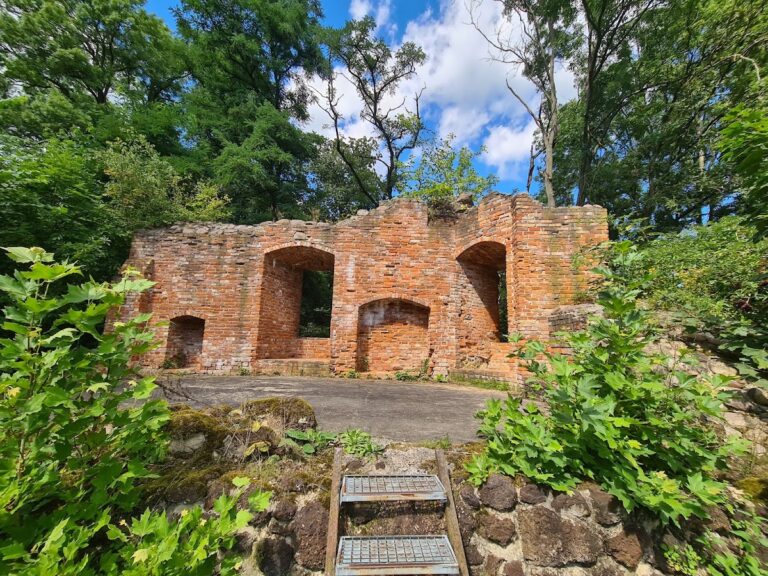
The surviving estate combines a manor house with diagonally placed wings, connecting towers, a formal garden, a landscape park, an orangery, a church, and the Arnim family cemetery. The main building is a mixed masonry-and-timber structure enlarged in the eighteenth century, incorporating remains of the earlier noble house. Later additions and adaptations created a connected architectural and cultural ensemble that includes the manor museum, park, orangery, cemetery, and Callot figures.
Manor house and connected wings
The main building probably received its enlargement between 1734 and 1738. A room now used as a wine cellar contains a cross-ribbed vault, a ceiling supported by intersecting masonry ribs, characteristic of sixteenth-century construction. Two wings were added diagonally in 1736 and originally stood apart from the central house. The later tower buildings joined them to the main building, producing the curved arrangement associated with the manor. The former farmyard once stood in front of the house, but Achim von Arnim moved it to the south side in 1814 and rebuilt it on a larger scale.
Atelier and garden features
Atelier
Achim von Arnim-Bärwalde built a spacious atelier in 1877 on the remains of the demolished north wing. It is the largest room in the house, with a high ceiling and doors decorated with paintings by the artist. A balcony and a semicircular projecting terrace were later added to the atelier. Five grotesque dwarf figures stand in a semicircle before its large window. These are among the site’s Callot figures, a term used for grotesque decorative garden sculptures.
Formal garden and orangery
A broad staircase with a solid balustrade and vases descends from the manor to a lowered formal garden parterre, a geometric arrangement of planted beds, with a central bed. The orangery, a glazed or specially designed building for protecting citrus and other plants from cold weather, was built south of the parterre in 1888 or 1889. The park also contains sandstone figures, statues representing figures from Greco-Roman mythology, and large vases that Achim von Arnim-Bärwalde brought back from journeys to Italy. A landscape garden adjoins the western side of the formal parterre.
Church and family cemetery
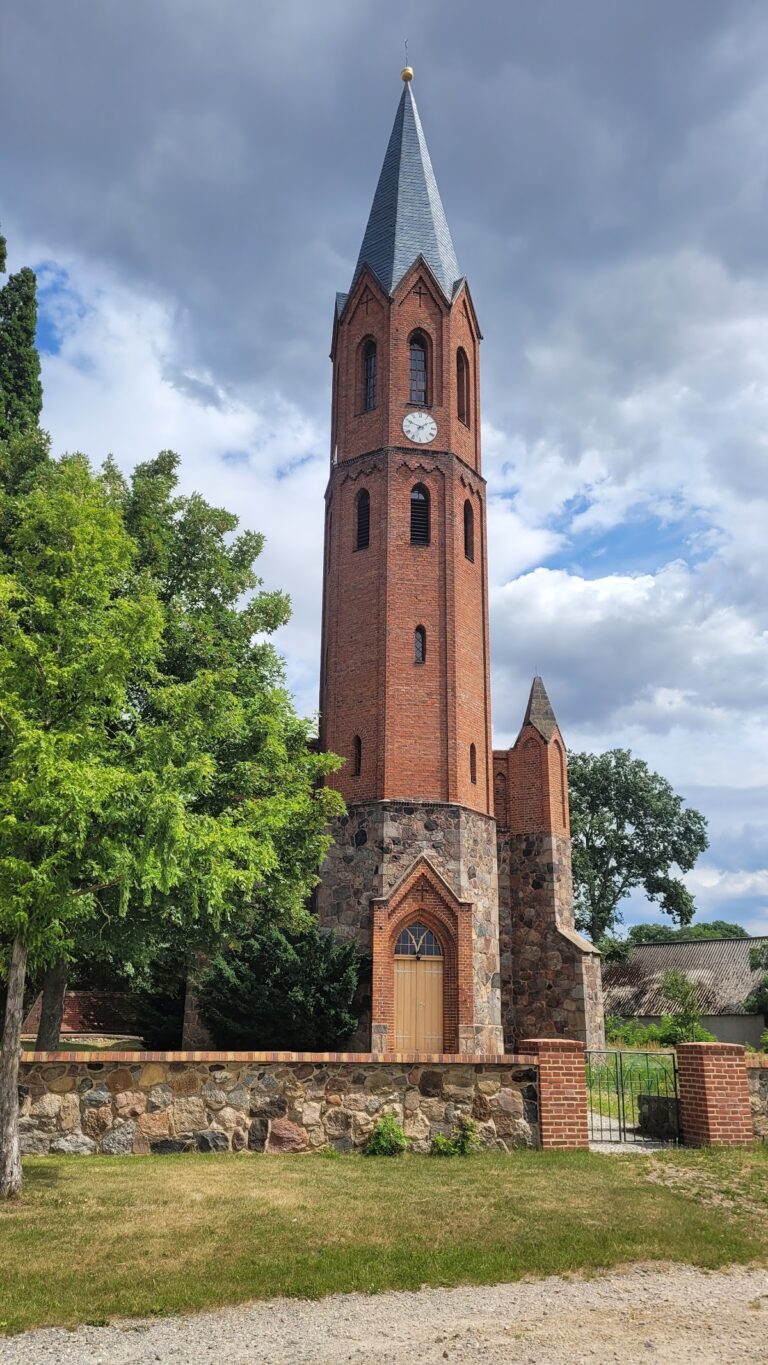
The small church in the northern part of the front park was remodeled in 1894 and 1895 according to plans by Achim von Arnim-Bärwalde, giving it its present appearance. It now serves as a parish church. Beside it lies the family cemetery, also laid out according to his plans. The cemetery contains the graves of Achim and Bettina von Arnim and several of their descendants.
Nearby sites