Westhove Castle: A 13th-Century Water Castle and Estate in Zeeland
Site at a Glance
- Popularity
- Medium
- Country
- Netherlands
- Primary era
- Medieval
- Eras represented
- Medieval, Early Modern
- Civilizations
- Dutch, Holy Roman Empire
- Site type
- Military
- Remains
- Castle
On this page7 sections
History
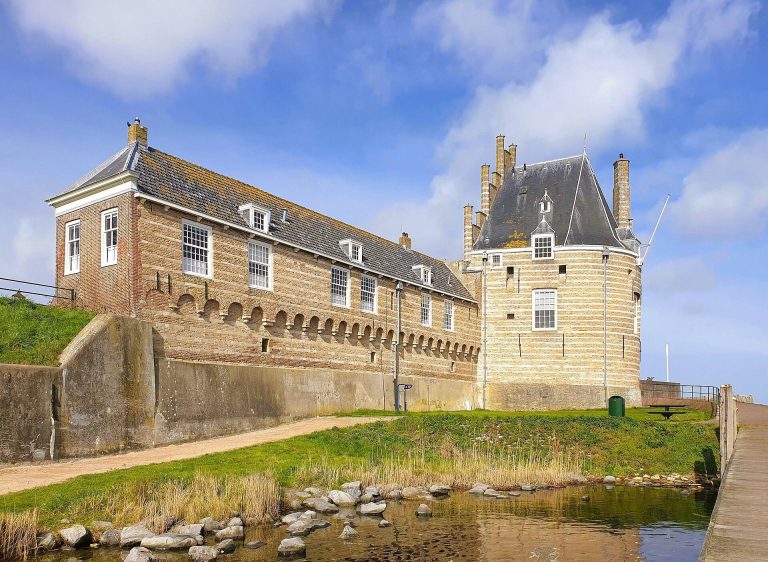
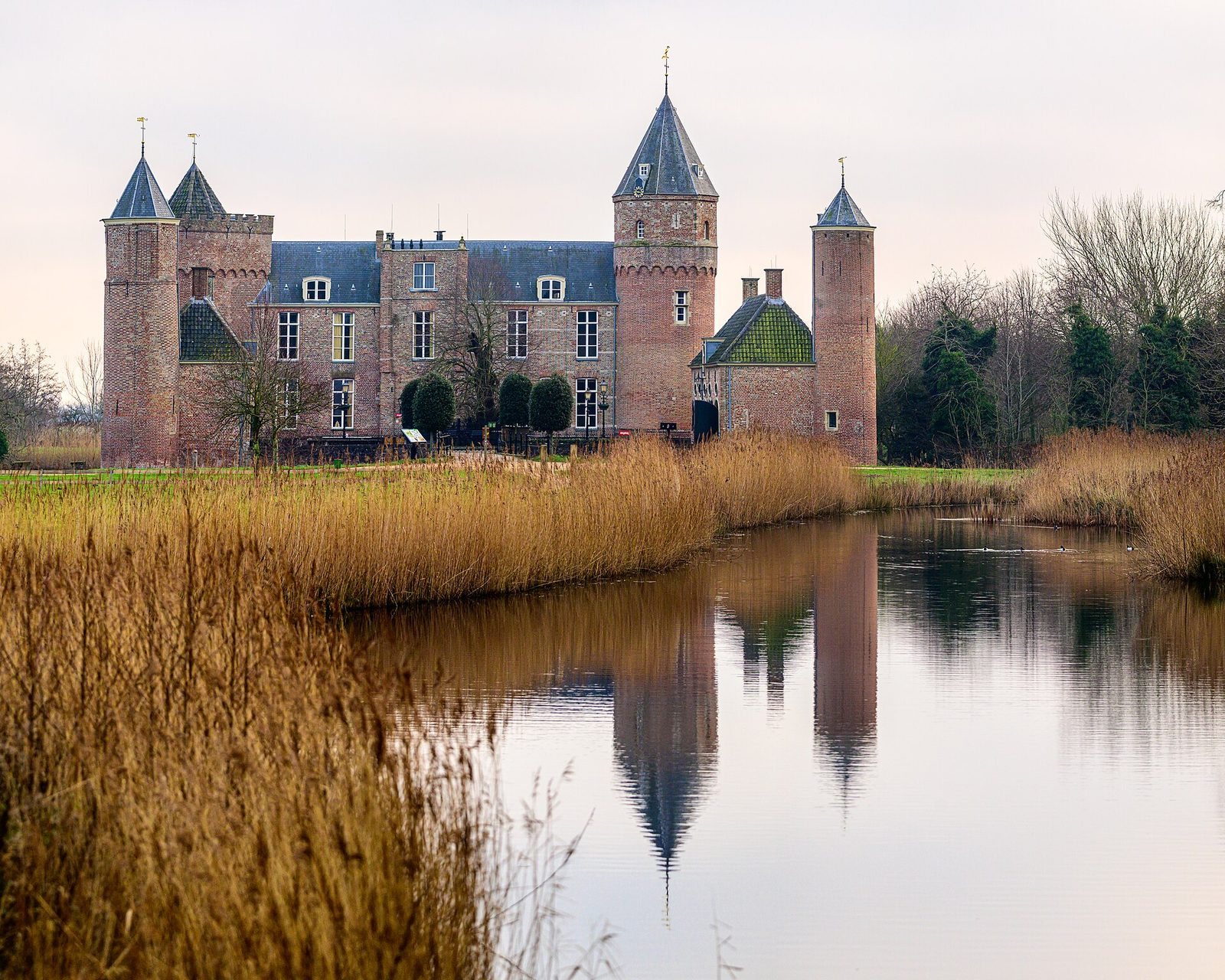
Westhove Castle is a brick water castle outside Oostkapelle on Walcheren in Zeeland, the Netherlands, identified as a 13th-century building. A water castle is associated with water as part of its setting or defenses. Middelburg Abbey held the estate by 1277, although that record does not establish when the castle was built.
Abbey estate and medieval visitors
On 30 October 1290, Count Floris V of Holland and the Zeeland nobleman Wolfert I van Borselen concluded the Treaty of Westhove at the castle. In 1401, the estate was conveyed to Willem van Beijeren, Count of Oostervant, and then granted back to him as a perpetual hereditary fief, a landholding passed down under feudal terms. The abbey’s abbot held influence in Zeeland and chaired the States of Zeeland and Walcheren, provincial governing assemblies that met at the abbey. The estate’s recorded ownership was updated when a new abbot took office. In 1413, Westhove was leased to Philips van Borssele, lord of Cortgene, for 25 years.
Among the castle’s recorded guests were the Count and Countess of Charolais in 1460 and Charles the Bold, Duke of Burgundy. In 1500, Philip the Handsome, ruler of the Habsburg Netherlands, visited with his wife Joanna of Castile. Their son, the future Emperor Charles V, came in 1505 and 1540, and his sister Mary of Hungary visited in 1547.
Seizure and changes of ownership
When Middelburg became a bishop’s city in 1559, Westhove passed under the bishop’s control. During the 1572 Siege of Middelburg, part of the Dutch revolt against Habsburg rule, soldiers occupied the castle and eventually surrendered it to Bartholt Entens van Mentheda. Entens was a Groningen nobleman and a leader of the Sea Beggars, rebel forces fighting Spanish Habsburg authority in the Low Countries. After the rebels captured Dordrecht and moved into Zeeland, Entens set fire to Westhove on 27 August 1572. Walcheren then came under William of Orange, a leader of the revolt, and church properties were sold.
Colonel Heijnrik Balfour acquired Westhove after the sale and died two years later. His widow, Christina Kant, sold it to Pierre de Loiseleur, known as de Villiers, an adviser to William I; Pierre died in 1590. The estate next belonged to Jacob Boreel, then to his son Willem Boreel (1591–1668), an ambassador to France. Westhove later passed to Johan van Reigersberg (1598–1621), followed by Johan’s widow and their son Jacob. Jacob left the estate to his cousin Jacoba van den Brandde rather than to his own son, Adam Boreel. Jacoba and her husband, Johan Adriaan van de Perre, had the orangery built. She died without children.
From private estate to convalescent home
On 10 March 1799, Jacoba’s cousin Wilhelmina Carolina van den Brande inherited Westhove. She and her husband, Adriaan Kaspar Cornelis Slicher (1776–1808), laid out a large water feature north of the house. Their son Johan Jacob Slicher (1802–1880), a member of the Lower House of the States General, seldom visited Zeeland and sold the estate. Jacques Phoenix Boddaert (1811–1885), a judge in Middelburg, became its next owner and undertook extensive maintenance.
In 1880, Boddaert sold Westhove to his sister P.P.C. De Bruyn-Boddaert (1814–1905), who gave the estate a new role as a convalescent home in 1899. Her daughter Wilhelmina Johanna de Bruyn (1842–1926) married W.A. Count van Lynden, mayor of Koudekerke, who carried out extensive restoration work. After the countess died, the Westhove Convalescent Home Foundation was established. M.A.J. Baroness van Till became its director in 1936.
Remains
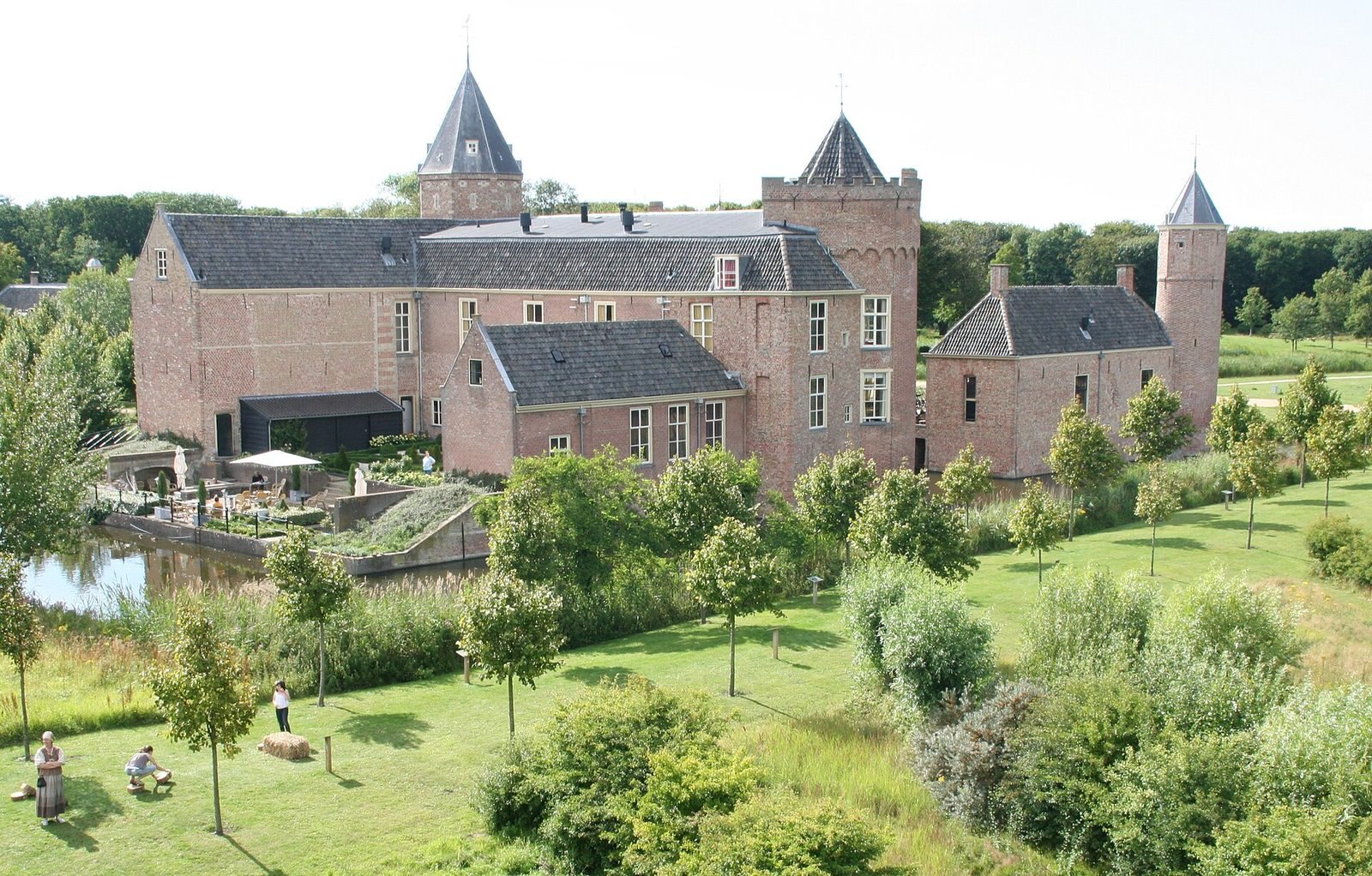
The estate includes the brick castle, associated coach houses, a former orangery, a garden, and a large water feature north of the house. These buildings and grounds preserve the layout of a historic estate, with the water feature positioned in relation to the house.
Castle and estate buildings
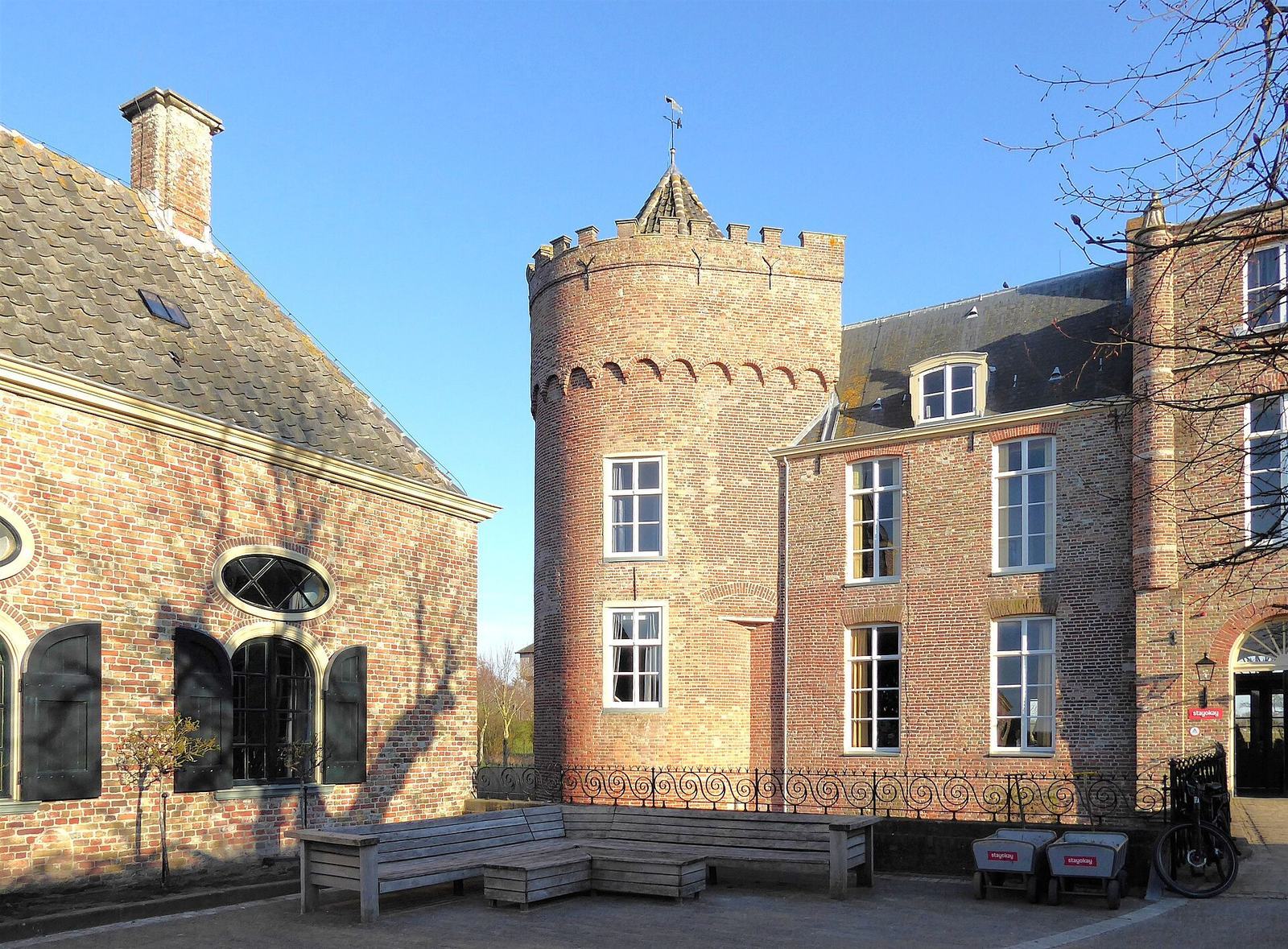
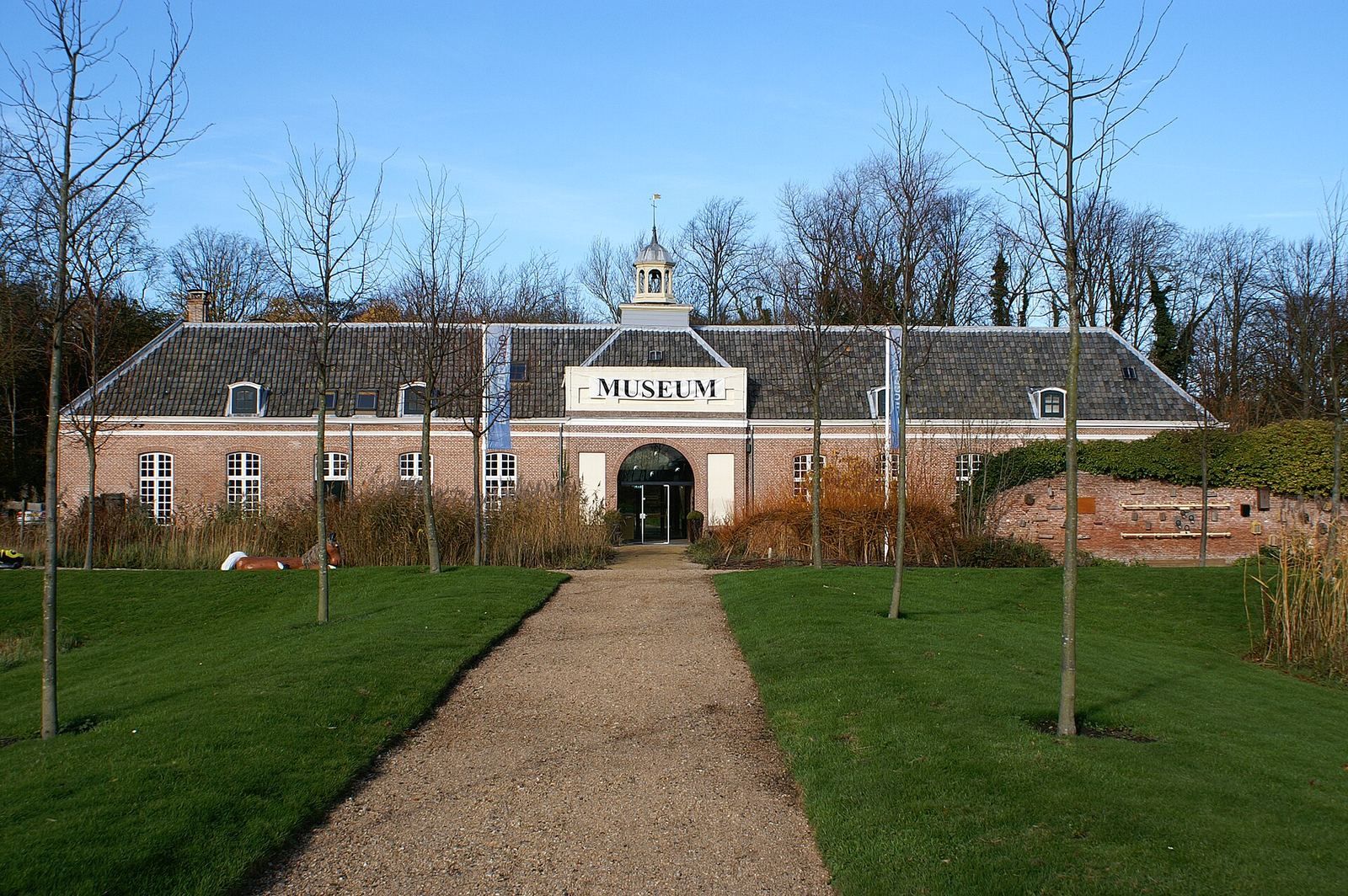
The castle and its associated coach houses now accommodate a StayOkay hostel, while the former orangery houses the Terra Maris museum. A weather vane bearing a heron dates from the period when the Reigersberg family owned Westhove.
Garden and water features
The large water feature lies north of the house. The castle garden also contains a replica of a medieval motte castle, a fortification built on a raised mound.