Campveerse Toren: A Medieval Harbor Defense Tower in Veere
Site at a Glance
- Rating
- 3.6
- Popularity
- Low
- Country
- Netherlands
- Primary era
- Medieval
- External website
- Open
- Eras represented
- Medieval, Early Modern, Modern
- Civilizations
- Duchy of Burgundy, Dutch, Habsburg
- Site type
- Military
- Remains
- Tower
On this page7 sections
History
Campveerse Toren is a fifteenth-century medieval defensive tower in Veere, Netherlands, built to protect the town’s harbor. It formed part of Veere’s maritime fortifications and later became an inn, giving the complex a continued role in the life of the harbor.
From harbor defense to inn
In the sixteenth century, the defensive building was converted into an inn, a change dated to 1540. It subsequently provided lodging and operated as a coffee house before becoming a restaurant. The building became known for housing one of the oldest inns in the Netherlands.
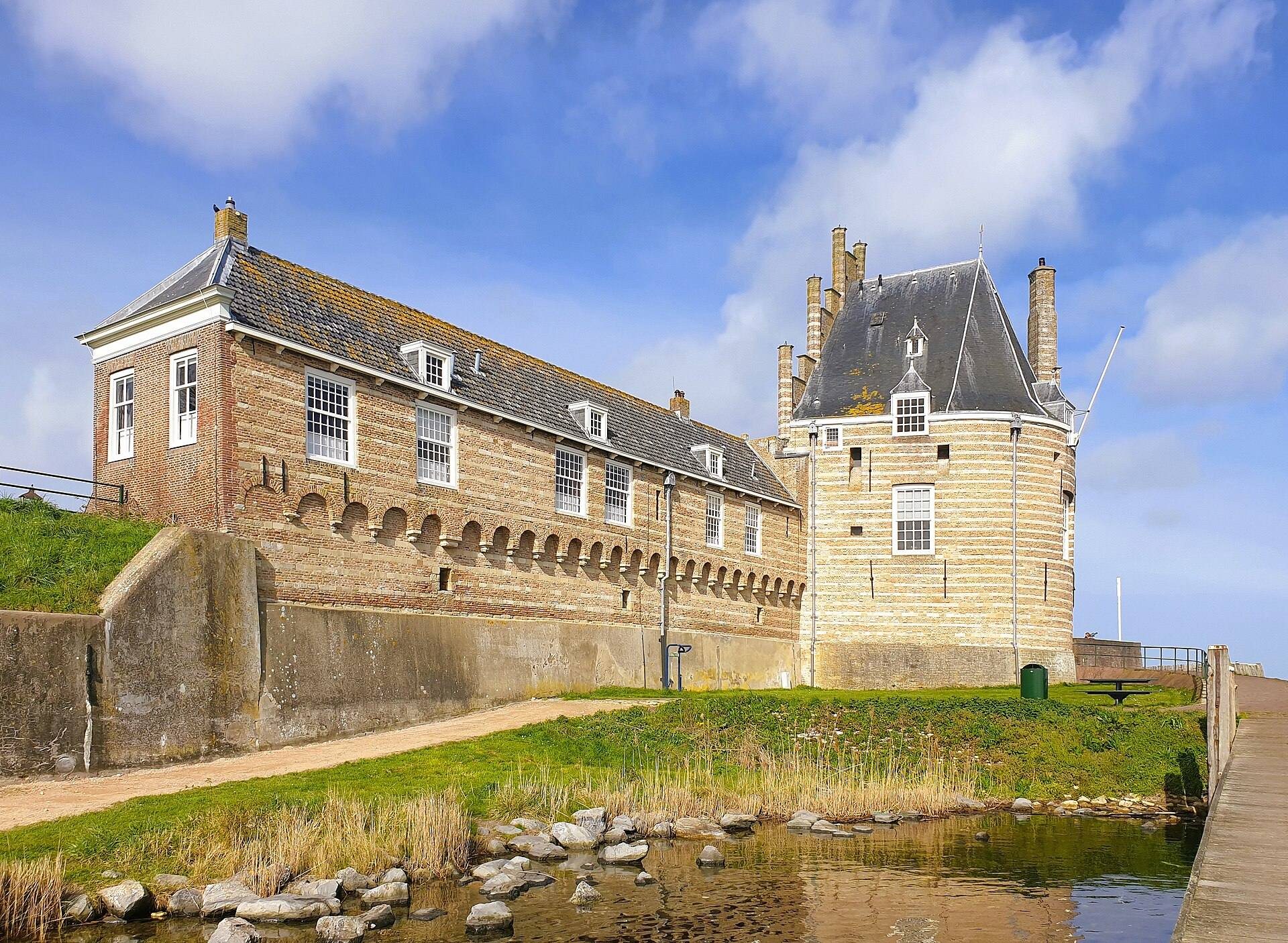
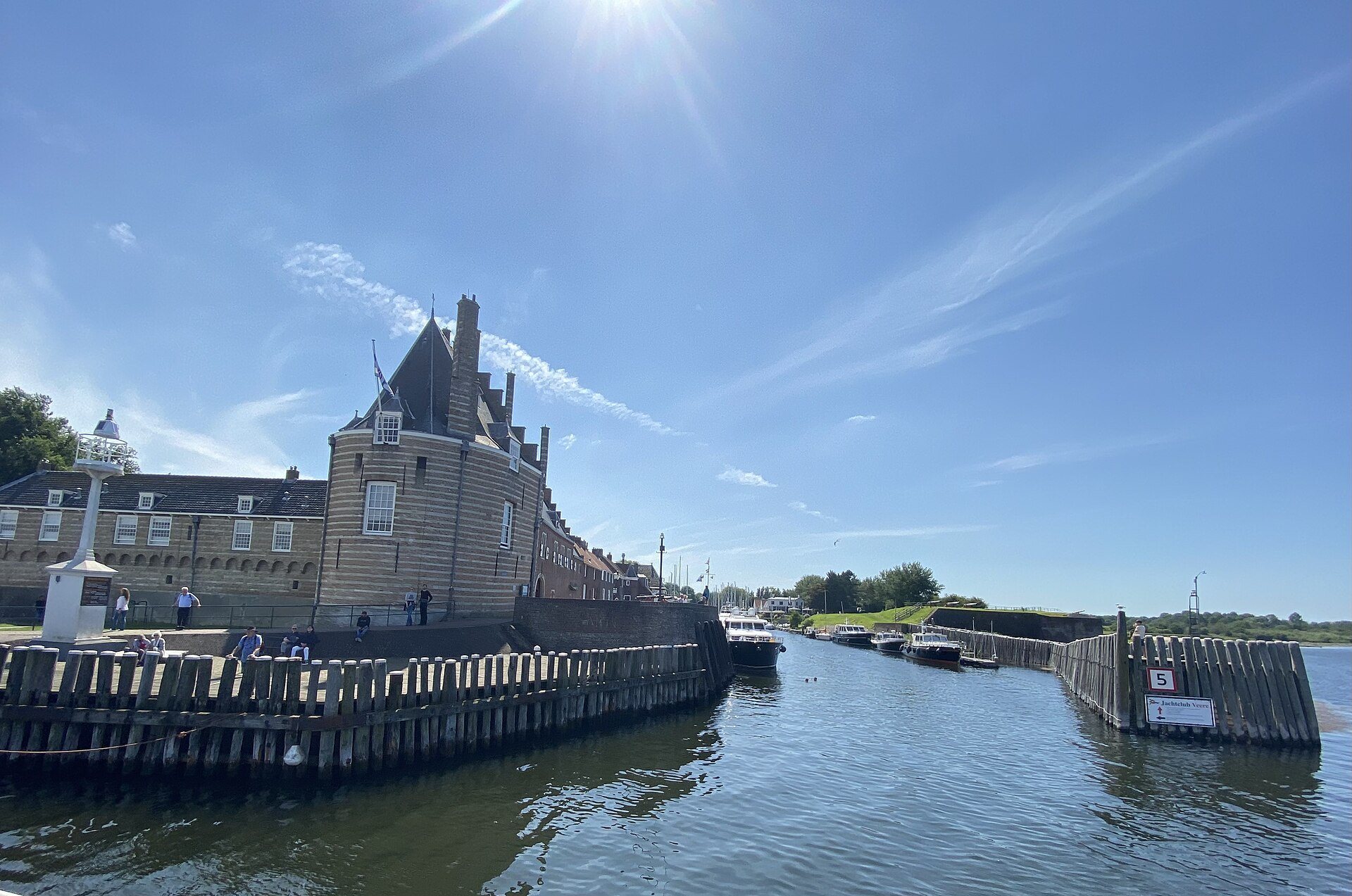
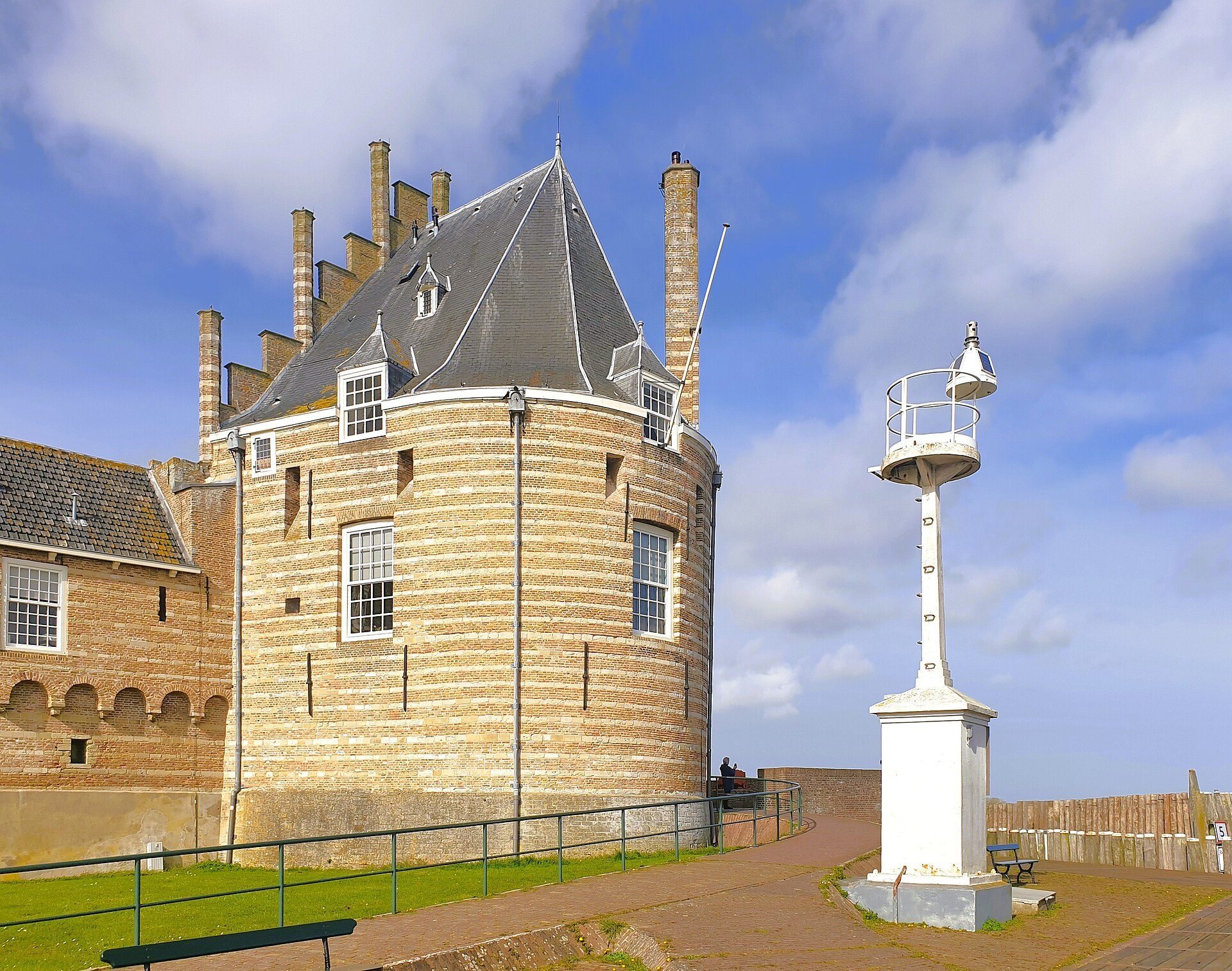
A major alteration took place in 1738, when a wing was added on the east side along an existing section of Veere’s town wall. The tower also retained a maritime function for many years. A navigation light for ships was mounted on its facade until 1924, when it was transferred to a structure on the quay in front of the tower.
Restoration and protection
The complex was restored in 1950 and again in 2007. The earlier restoration rebuilt the high roof and added the present stepped gable, replacing a period when the roof had been flattened and the gable was not present. Campveerse Toren entered the Dutch Rijksmonumenten register on 18 May 1967. A Rijksmonument is a building or site recognized as nationally important and protected as heritage in the Netherlands. Vereniging Hendrick de Keyser acquired the complex in 2005 and remains its owner.
Remains
The complex combines a semicircular defensive tower with two later wings arranged at right angles. The shorter wing follows the water, while the longer wing, added in the eighteenth century, contains hotel rooms. The tower stands partly in the Veerse Meer, a lake in the Dutch province of Zeeland.
The defensive tower
The tower is a rondeel, a rounded or semicircular defensive structure projecting from a fortification. Its side facing the water is curved, while the side facing the town is flat. The masonry alternates red brick with white natural stone, including Belgian limestone, to create strong horizontal bands. Along the water-facing side, a projecting brick corbel frieze forms a repeated pattern of rounded arches.
Facades and interior
The town-facing facade has a flat stepped gable whose six steps carry tall, built-up, star-shaped pinnacles. A stepped gable is a facade rising in a series of steps, while a pinnacle is a pointed architectural finial placed above a building or gable. The windows on this facade date from the conversion into an inn. The water-facing curved section has later windows. Its town side also contains a round-arched entrance framed in natural stone, with a stone bearing the date 1738 above it.
A stone staircase leads to the first-floor taproom in the tower, which retains one of its two large fireplaces. An oak staircase leads to the tower room on the second floor. Beneath the building is a cellar with a domed vault, while the tower interior retains massive main beams and beams supported by shaped beam supports.
Whale jaw
A whale jaw was hung on one of the tower walls around 1740. It served as a warning to Veere’s town government that political power ultimately belonged to the citizens. Moss damaged the jaw, and it was removed in November 2018. The Dutch Cultural Heritage Agency regards it as culturally significant.