Westerkerk in Amsterdam: A Calvinist Protestant Church
Site at a Glance
- Popularity
- Very High
- Country
- Netherlands
- Primary era
- Early Modern
- Eras represented
- Early Modern, Modern
- Civilizations
- Dutch
- Site type
- Religious
- Remains
- Church
On this page19 sections
History
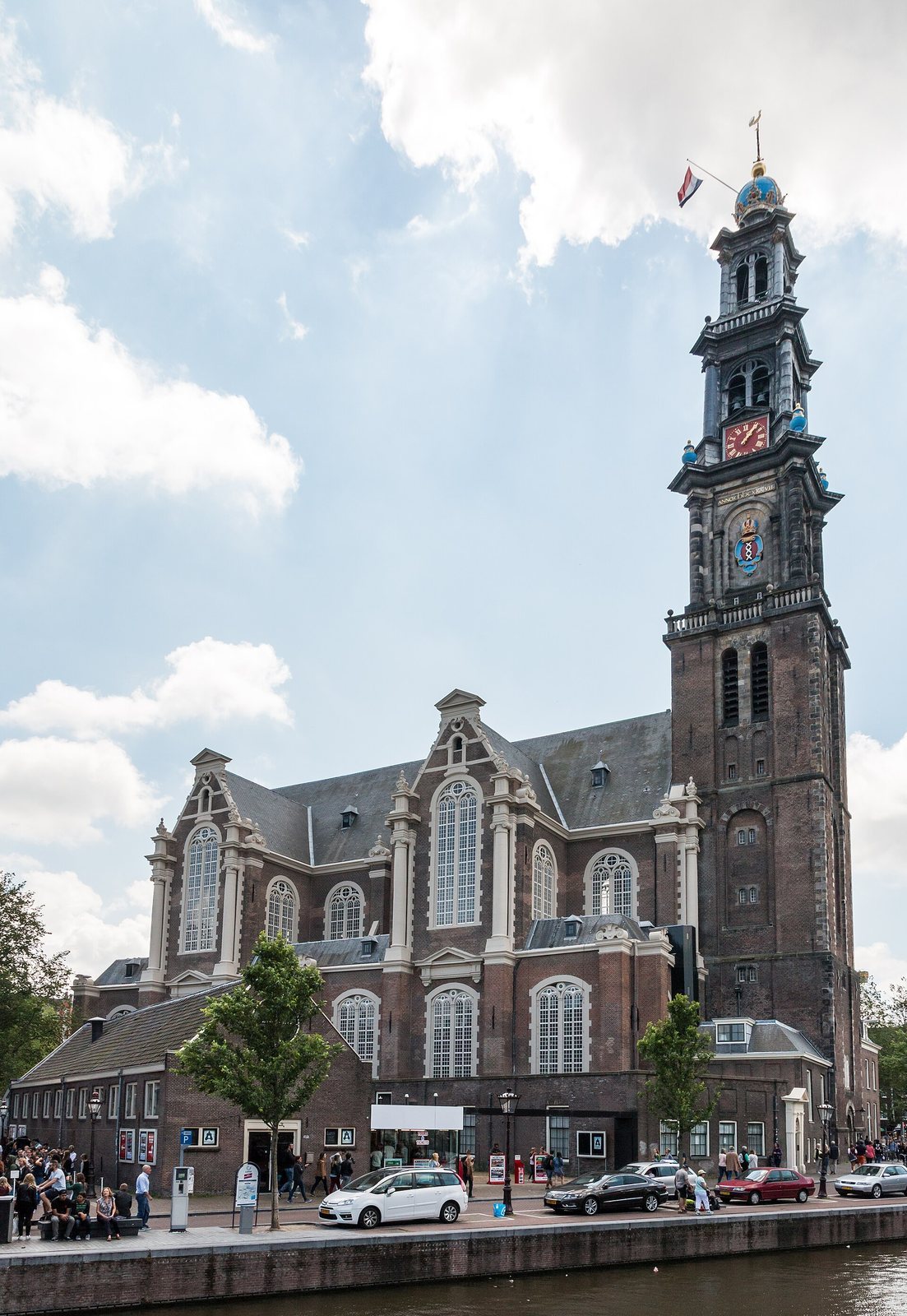
Westerkerk in Amsterdam is a Calvinist Protestant church in the Netherlands, designed by Dutch architect and sculptor Hendrick de Keyser and built from 1620 to 1631. Calvinism is a Reformed Protestant tradition. The church’s Renaissance design belongs to the early seventeenth century, and its inauguration took place on 8 June 1631, at Pentecost, the Christian feast commemorating the descent of the Holy Spirit. After Hendrick de Keyser died, his son Pieter continued the work. Westerkerk was among Amsterdam’s first churches built expressly for Protestant worship.
A church for Protestant Amsterdam
Amsterdam had become Protestant during the Reformation, the sixteenth-century movement that led to the establishment of Protestant churches. In 1578, older churches including the Oude Kerk and Nieuwe Kerk were converted for Protestant use. Westerkerk was established as a Calvinist parish church and remains in use by the Protestant Church in the Netherlands. It is the largest church in the Netherlands built for Protestant worship and is protected as a Dutch national monument.
The congregation reflected divisions between nearby communities. Residents of the Jordaan, a neighborhood beside the church, initially did not attend Westerkerk, which drew wealthier residents from the canal districts. Jordaan residents wanted a church of their own, and the Noorderkerk was subsequently established.
Burials and public memory
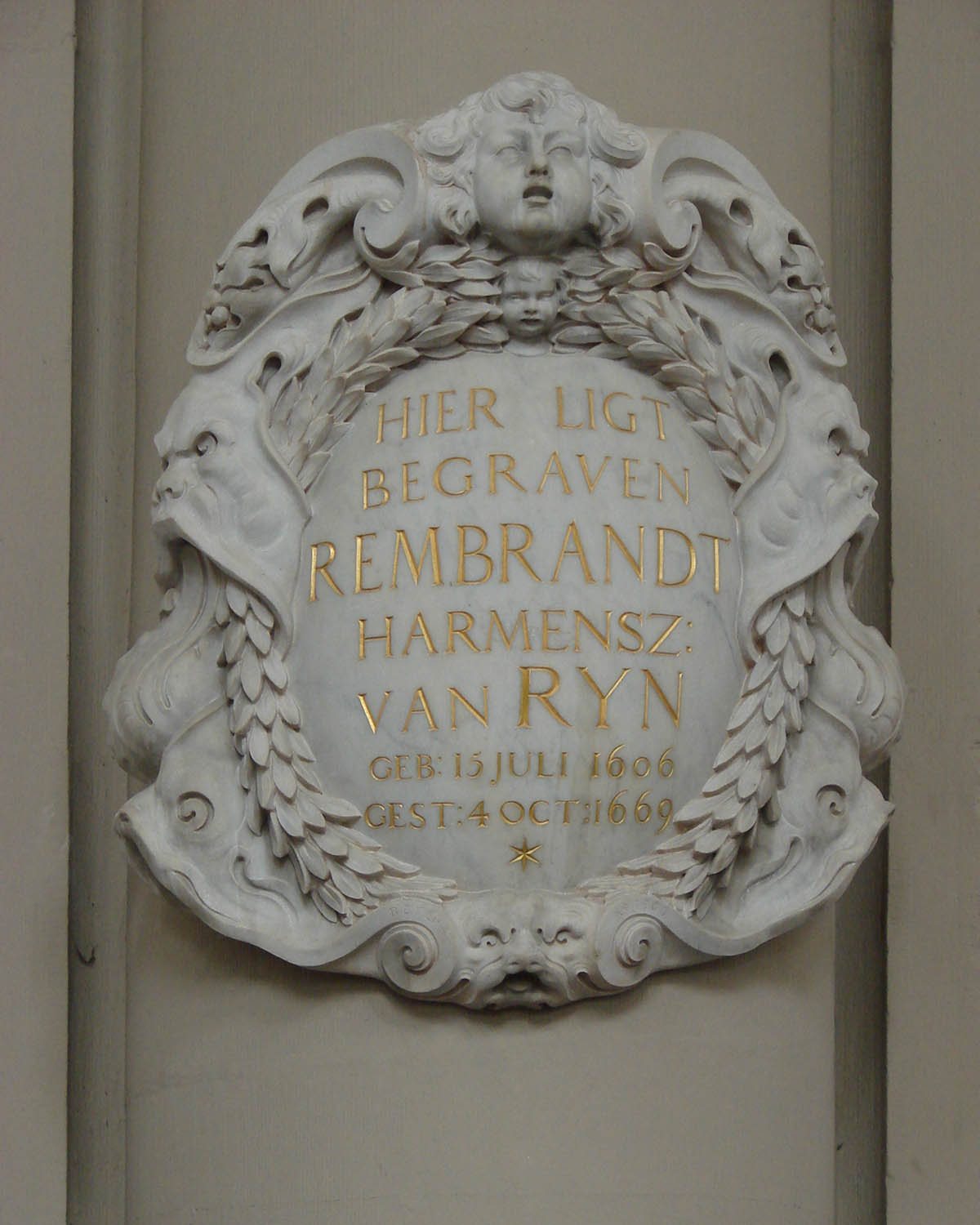
Rembrandt van Rijn, the Dutch painter, was buried in a church-owned grave on 8 October 1669. His companion Hendrickje Stoffels and son Titus were also buried at Westerkerk. Rembrandt had been buried as a poor man; after about twenty years, his remains were removed and destroyed in keeping with contemporary treatment of the remains of poor people. Other people buried at the church included Nicolaes Pietersz. Berchem, Jan Bicker, Joan Blaeu, Steven Blankaart, Samuel Blommaert, Anthonie van Borssom, Pieter de Carpentier, Frederick Coyett, Christoffel van Dijck, Govert Flinck, Johann Rudolph Glauber, Pieter van Gunst, Gillis and Melchior d’Hondecoeter, Albertus Seba, Jacques Specx, Isaak Tirion, and Hendrick van Uylenburgh. Their occupations included art, commerce, medicine, publishing, and service in Dutch trading companies and colonial administrations.
On 10 March 1966, Princess Beatrix, who later became queen of the Netherlands, married Claus von Amsberg at Westerkerk. The Nieuwe Kerk, the usual setting for royal weddings, was being renovated. Nearby, the Anne Frank House was the hiding place of Anne Frank, a Jewish diarist, her family, and others during two years of Nazi persecution in the Second World War. In her diary, Frank wrote about the church tower: its clock face could be seen from the attic where she hid, and she found the carillon’s sound comforting. An annual remembrance of Rembrandt on 15 July, his birthday, includes a lunchtime concert and flowers at his memorial.
Remains
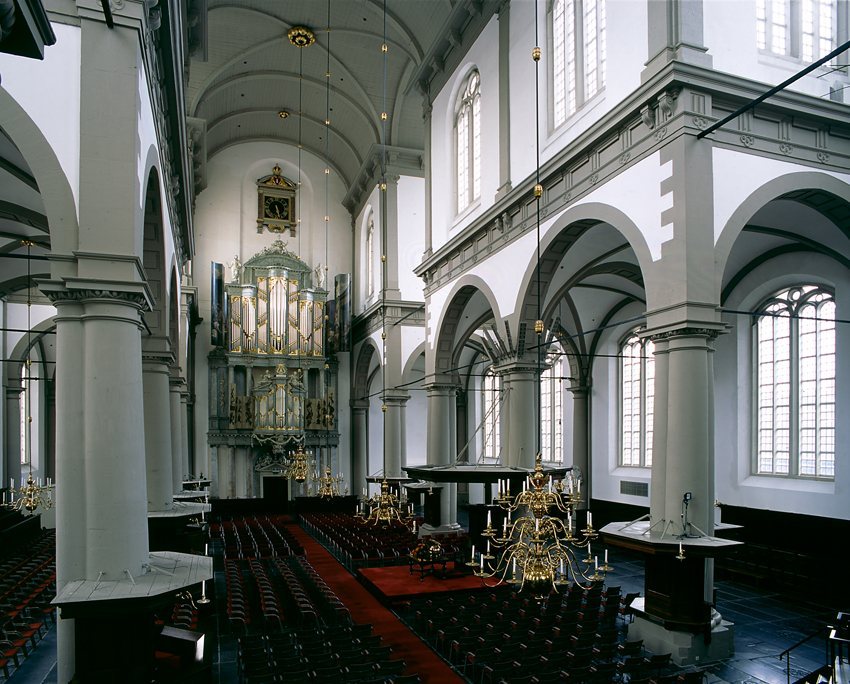
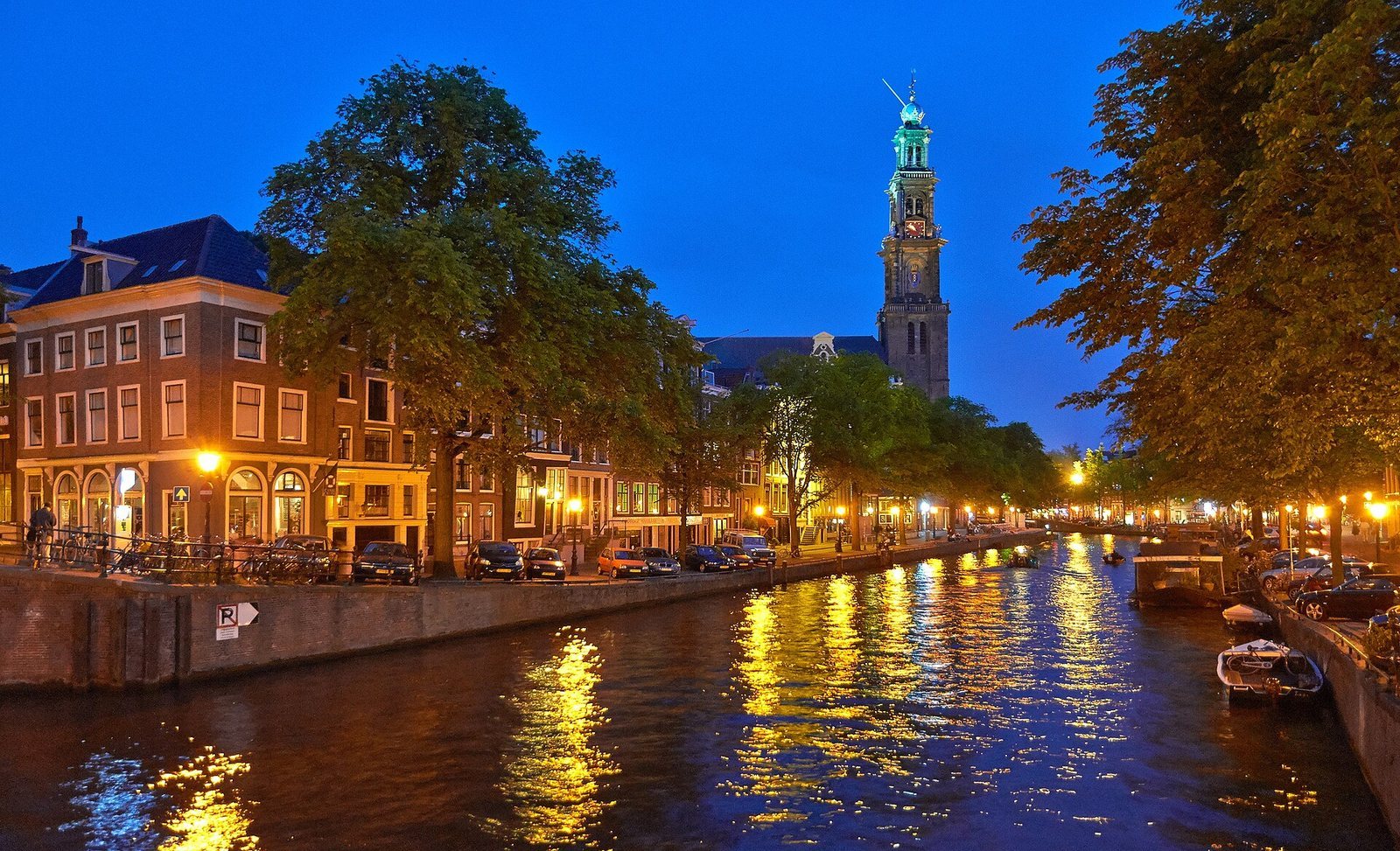
The church stands between the Prinsengracht and Keizersgracht canals, at the western edge of Amsterdam’s Canal Belt and beside the Jordaan. Its rectangular plan combines a high central nave, or main church space, with lower side aisles. Two equally sized transepts, crosswise sections of the building, give the plan the form of two connected crosses. Renaissance design is joined by post-Gothic elements, with Gothic features inside and outside the church.
Church and tower
The church plan
Westerkerk measures 58 metres long and 29 metres wide. Its three-aisled layout places the high nave between the lower side passages. The two transepts are equal in size, creating a double-cross plan that resembles a patriarchal cross, a cross with two crossbars.
The Westertoren and crown
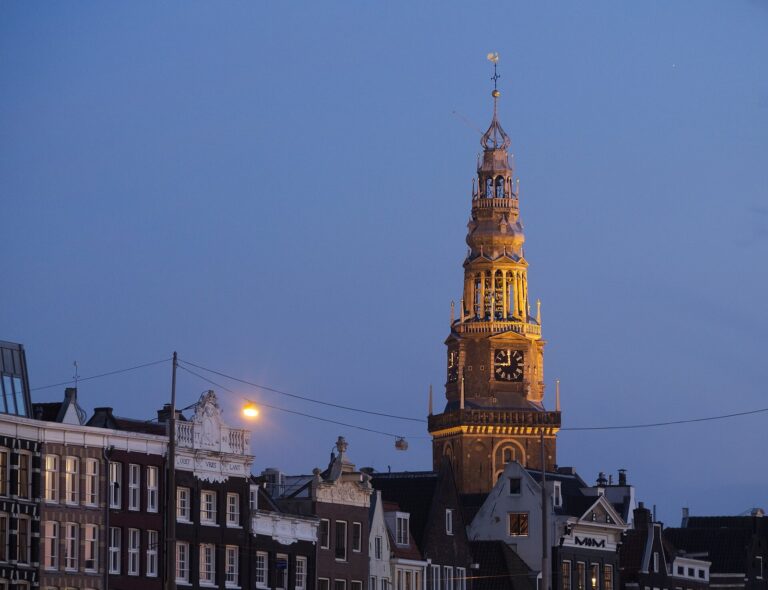
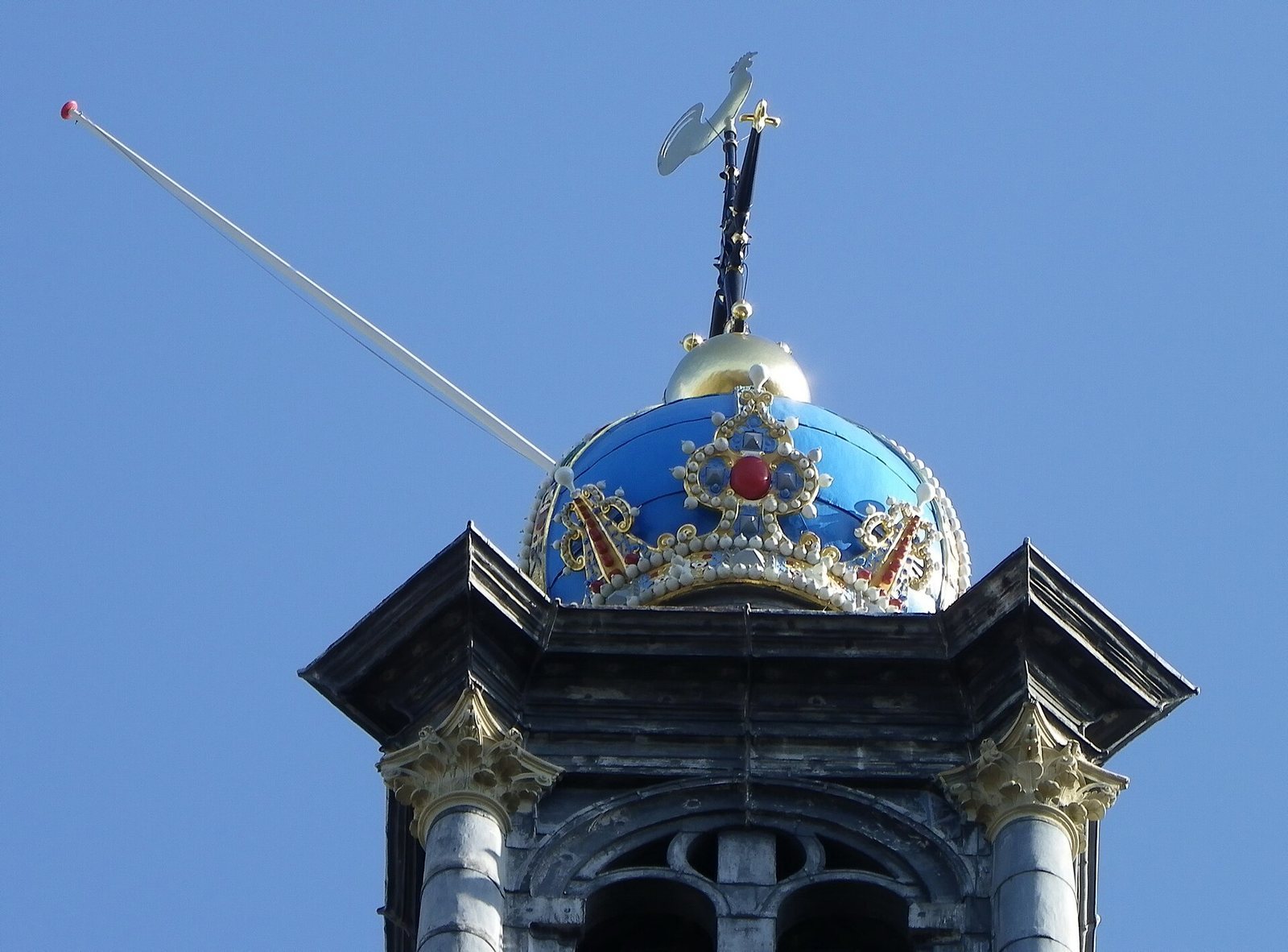
The Westertoren, the church tower, rises approximately 85 metres and is Amsterdam’s tallest church tower. Its spire dates to 1638. The designer of the spire is uncertain, although Dutch architect Jacob van Campen has been suggested. A crown associated with Holy Roman Emperor Maximilian I tops the spire. In 1489, Maximilian granted Amsterdam the right to use his crown in the city’s arms. A tradition connects that grant with his recovery from illness in Amsterdam and his later protection of the city. The crown was repainted blue, its original colour, in 2006. The tower was renovated between February 2006 and May 2007.
Bells and timekeeping
The carillon
Above the tower’s clock faces is a carillon, a set of tuned bells played from a keyboard. It contains 51 bells, including 14 large bells cast by François Hemony in 1658. Pollution damaged some bells, and Eijsbouts cast replacements in 1959; three further bells were added in 1991. The carillon spans four octaves and uses meantone temperament, a system for tuning musical intervals. Smaller Hemony bells no longer in use and the original seventeenth-century baton keyboard are kept in the tower. At the request of local residents, the carillon chimes throughout the day and night.
The quarter-hour drum
A drum made by Jurriaen Spraeckel of Zutphen in 1659 continues to sound the quarter hours and announce the hour and half-hour strikes. It also plays a brief tune at each quarter hour.
The strike bells
Assuerus, also known as Ahasverus, Koster made two strike bells in 1636. The hour bell weighs 7,509 kilograms, making it Amsterdam’s largest bell, and hangs in the carillon chamber. Its inscription gives the maker and place and date of casting, alongside the words, “The word of the Lord remains forever.” The smaller half-hour bell hangs near the top of the spire, just below the crown.
The swinging bells
Three bells cast by Hemony in 1658 hang in a lower chamber behind the tower’s sounding boards. Together, they form a major triad, a three-note major chord. After the largest bell cracked, Claude Fremy made a replacement 27 years later. The bells ring for Sunday services and during the Lord’s Prayer. The replacement is also linked to the foot pedals of the carillon’s hand-played baton keyboard, whose projecting batons are struck by the hands.
Organs
The main organ
After years of deliberation, Westerkerk commissioned organ builder Roelof Barentszn Duyschot to make its main organ in 1681. His son Johannes completed it in 1686. Christiaan Vater enlarged the console in 1727 and added a third manual, a keyboard played by the hands. The organ now has three manuals, a foot-operated pedal section, and 41 stops, controls that select sets of pipes. Its case is integrated with the church interior.
The instrument underwent major changes over time. Daniel Gerard Steenkuyl rebuilt its interior in 1895. In 1939, electric action and a swell division, an enclosed set of pipes with adjustable shutters for controlling volume, were added. The work nearly doubled the organ’s size, leaving it too large for its case. From 1989 to 1992, Flentrop reconstructed the instrument toward its earlier mechanical action and its form around 1727. The work retained about 600 original pipes and required about 3,000 more to be made. The organ’s pitch was lowered from 460 to 440 hertz. Its front pipes include nineteenth-century examples, among them pipes made by Hermanus Knipscheer in 1842.
Gerard de Lairesse painted the main organ’s inner shutters. One depicts King David dancing and playing before the Ark of the Covenant, a sacred object in the Hebrew Bible; the other shows the Queen of Sheba presenting gifts to King Solomon. In 1992 the organ was cleaned and repainted, mostly to resemble marble, reflecting its 1686 colour scheme. During the church’s interior restoration from 2018 to 2020, the organ was taken to Flentrop in Zaandam for cleaning and partial revoicing, then returned in spring 2020.
The choir organ
The smaller choir organ stands at the church’s east side. D.A. Flentrop built it in 1963 with 12 stops, two hand-played keyboards, and a foot-operated pedal section. Its oak case was originally unpainted and was painted light green after work in 2001. That year the instrument was tuned and slightly altered and named for minister Visser, who had raised money for its purchase. It was cleaned in 2017 and protected from dust during the church’s 2018–2020 interior restoration.
Interior furnishings and memorials
Church furnishings and painted panels
The church interior includes an altar table and a commemorative candelabrum. De Lairesse also painted gray-toned panels for the choir-organ section, showing the four Evangelists, the figures traditionally associated with the four Gospels, with their attributes. The inner shutters there depict old musical instruments.
Memorials inside the church
A marker commemorating Rembrandt is fixed to the north wall. Installed in 1906, it was modeled on his painting The Night Watch. A memorial plaque to pharmacist and chemist Johann Rudolph Glauber is also in the church.
Anne Frank statue
A memorial statue of Anne Frank stands outside Westerkerk at Westermarkt.