Waxenberg Old Castle: A Historic Residence and Chapel in Austria
Site at a Glance
- Popularity
- Low
- Country
- Austria
- Primary era
- Early Modern
- Eras represented
- Early Modern, Modern
- Civilizations
- Austria-Hungary, Habsburg, Holy Roman Empire
- Site type
- Domestic
- Remains
- Castle
On this page7 sections
History
Origins and Starhemberg residence
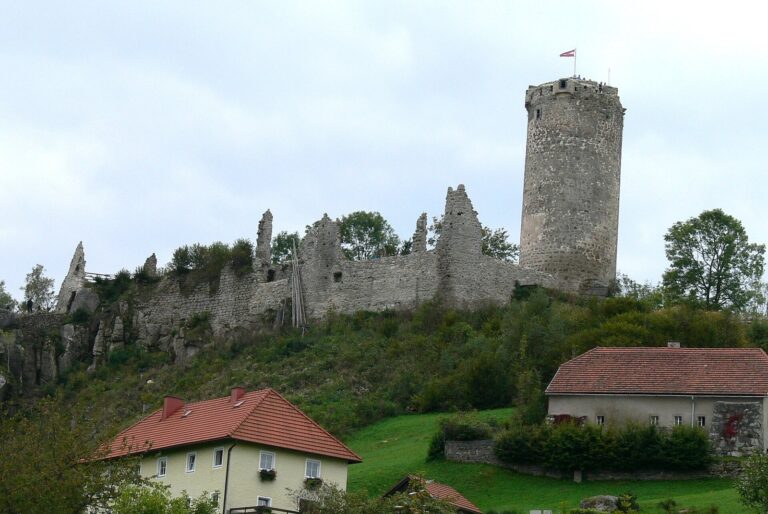
Waxenberg Old Castle is a historic residence in the center of Waxenberg, in the municipality of Oberneukirchen, Austria. The Lords of Gera probably built it in the seventeenth century; they also owned nearby Waxenberg Castle. The Starhemberg family had owned Waxenberg since 1640.
After lightning destroyed Waxenberg Castle in 1756, the Starhembergs moved into the Old Castle and enlarged it. Its chapel became Waxenberg’s parish church in 1784. The chapel’s private church patronage, a family’s rights in relation to a church that could include appointing clergy, was the Starhembergs’ last such patronage.
Expansion and political conflict
The complex expanded again between 1908 and 1910, when the New Castle was built north of the Old Castle. During the interwar period, from 1918 to 1938, Prince Ernst Rüdiger Starhemberg used the Old Castle as a base for the Heimwehr, an Austrian paramilitary political movement that he led.
On 22 May 1936, 90 local National Socialists took part in an attack on the castle. One person was killed and two were seriously wounded. State police, alerted beforehand, prevented more serious consequences. It remains unclear whether the attackers wanted only to seize weapons or also intended to abduct Starhemberg. The attack reflected the deep political divide between the Heimwehr and the Social Democrats.
Confiscation and later use
In 1938, the National Socialists confiscated the castle and made it available to Volksfürsorge, a welfare organization. The property returned to the Starhemberg family after the Second World War. The Association of the War Blind used the building from 1948 to 1968, and repeated renovations followed. The Starhemberg family owns the castle, which is used for events and also houses the Waxenberg Water Cooperative.
Remains
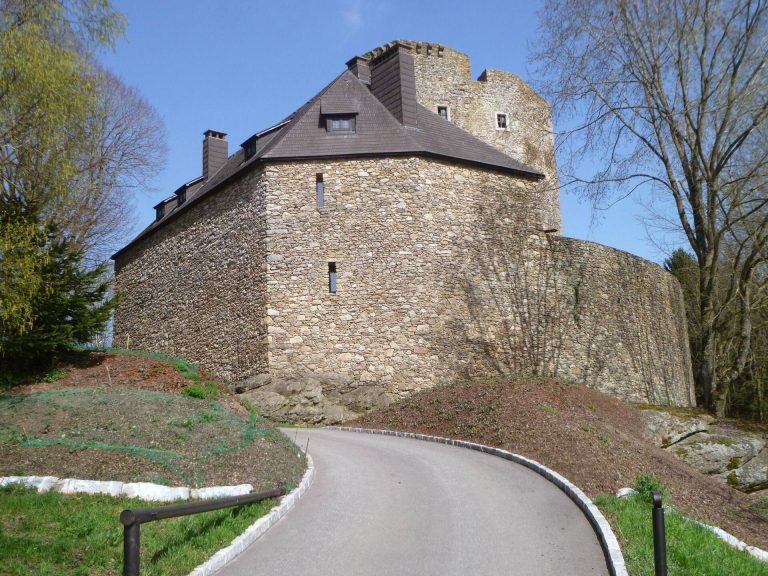
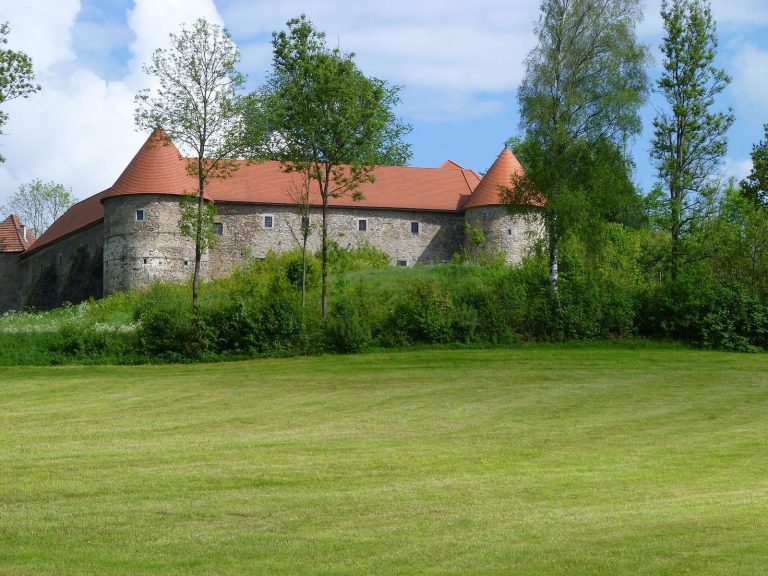
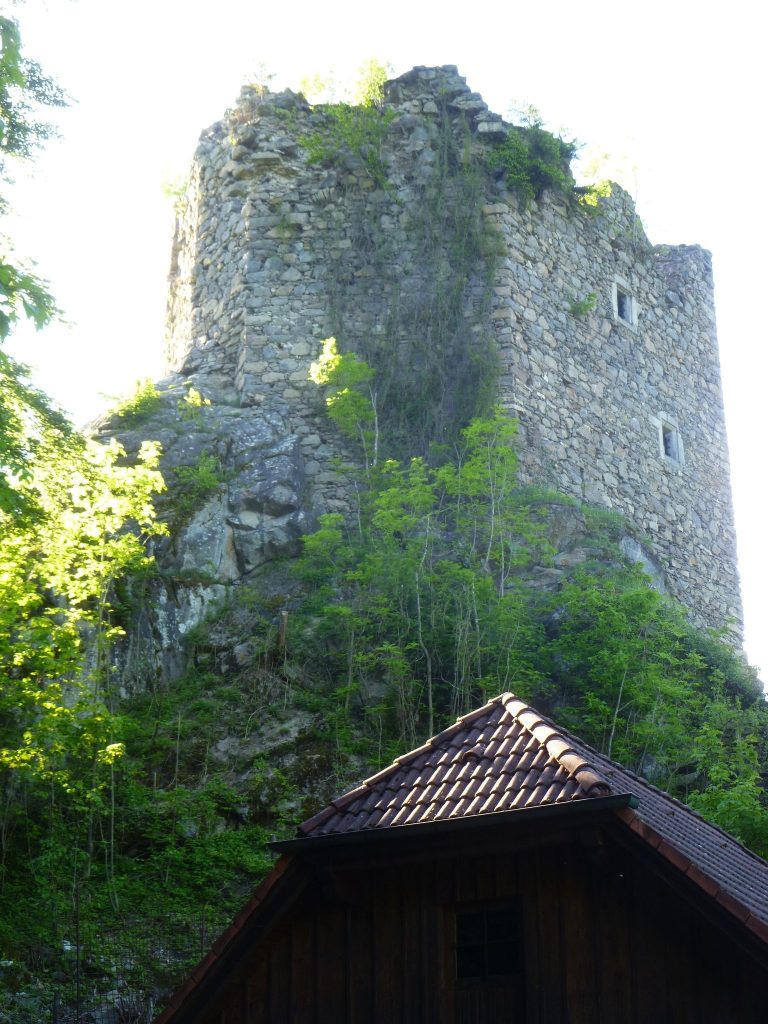
The complex comprises two horseshoe-shaped buildings with different orientations. The two-storey Old Castle is open to the south, while the New Castle, built around 1910, is two to three storeys high and open to the east. The Old Castle stands below Waxenberg Castle, about 200 metres away.
Old Castle
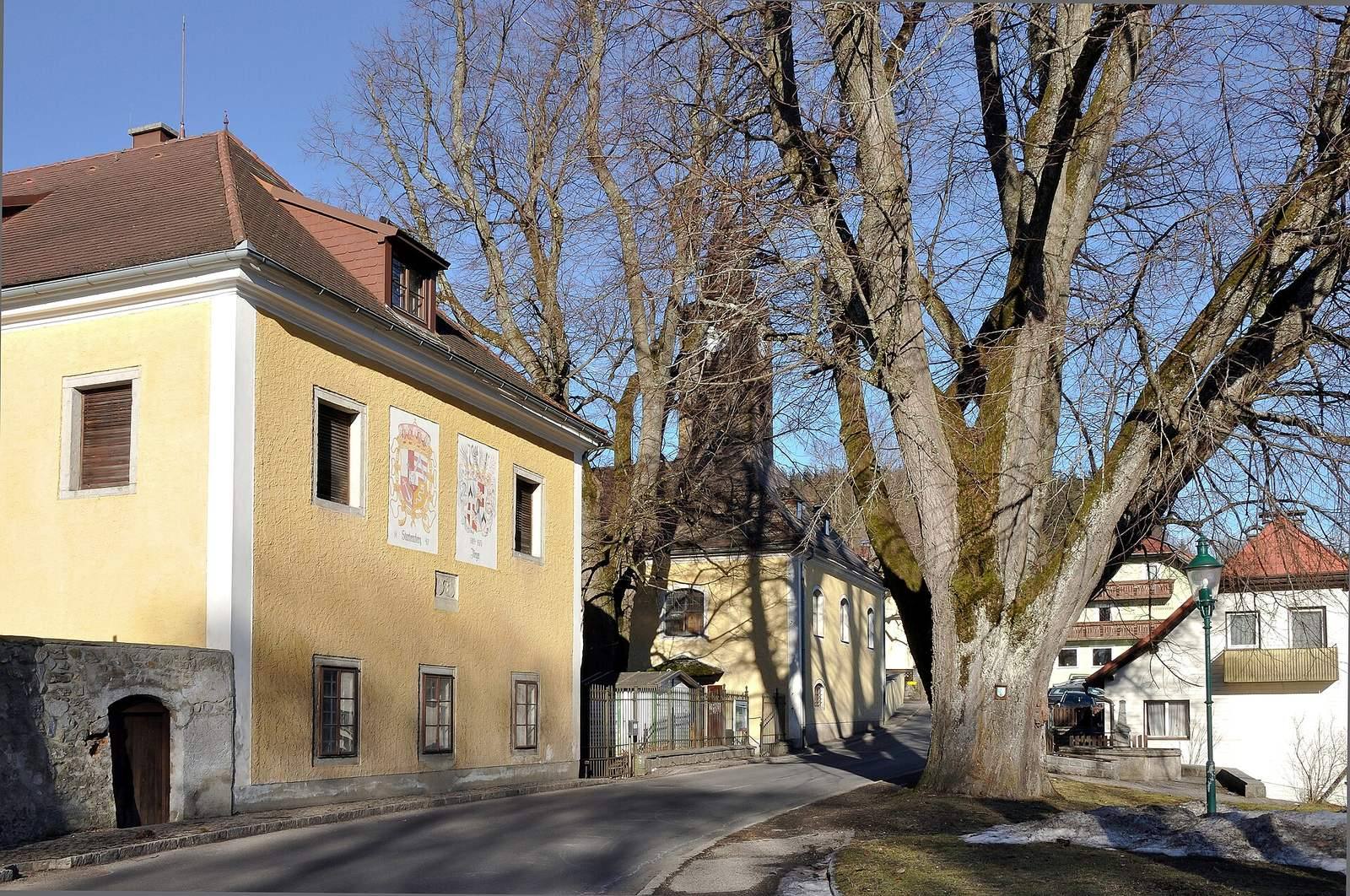
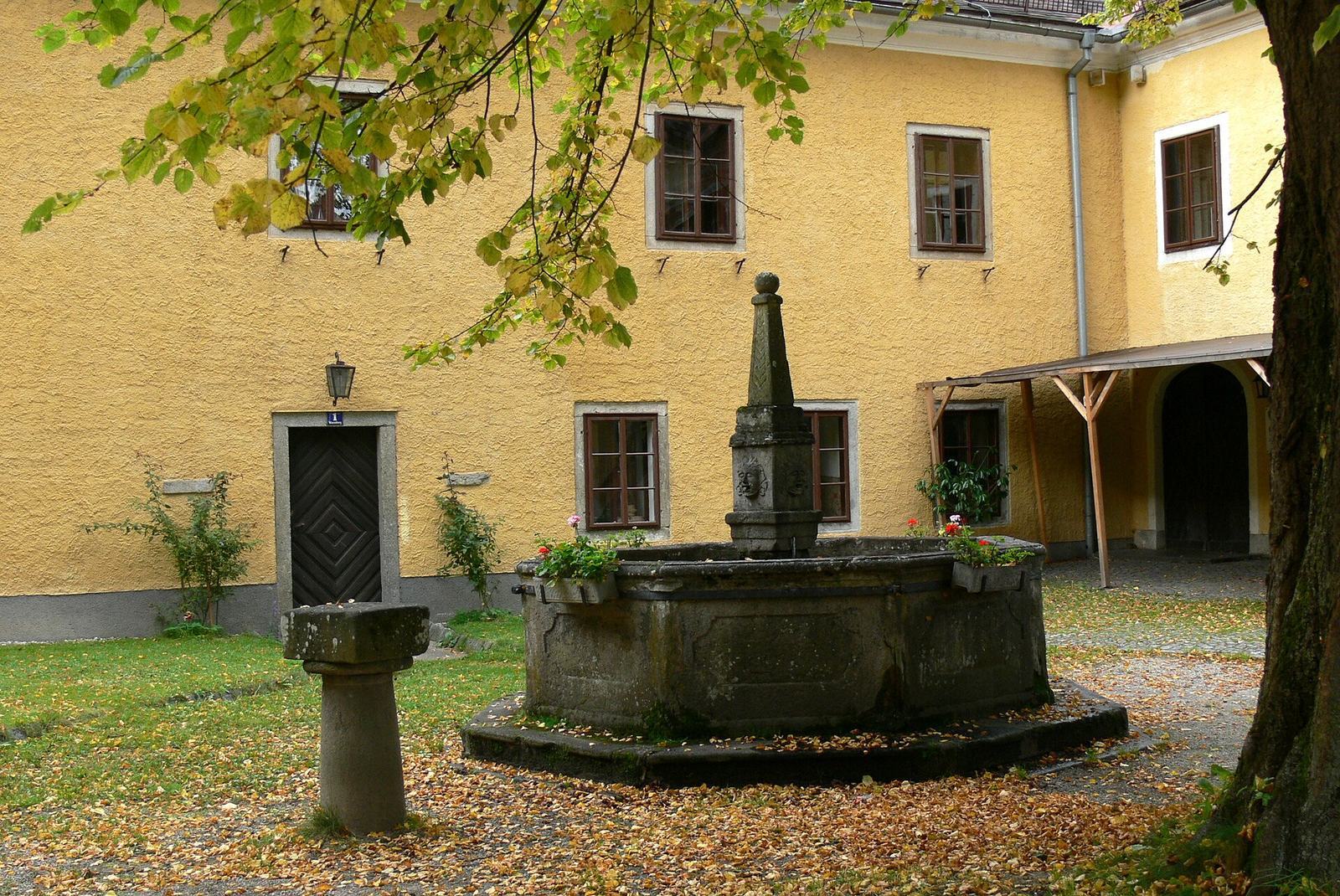
An octagonal fountain dating to the seventeenth century stands in the Old Castle’s courtyard. The south-facing side of the west wing bears the coats of arms of the Starhemberg, Jörger, Gera, and Turzo von Bethlen-Falva families.
The castle chapel, dedicated to Saint Joseph, occupies the southeast corner. Most of its furnishings date to the late nineteenth century. Ferdinand Stuflesser, an Austrian sculptor known for religious works, made the high altar in 1892. The chapel’s exterior wall also carries the Starhemberg and Jörger family arms.
New Castle
The uppermost floor of the New Castle contains a Knights’ Hall with a carved-beam ceiling dating to the mid-sixteenth century. The ceiling came from Eschelberg Castle.