Rohan Castle: A Baroque Castle and Former Arms Manufactory in Mutzig
Site at a Glance
- Popularity
- Low
- Country
- France
- Primary era
- Early Modern
- Eras represented
- Medieval, Early Modern, Modern
- Civilizations
- German, Holy Roman Empire
- Site type
- Domestic
- Remains
- Castle
On this page7 sections
History
Medieval fortification and changing control
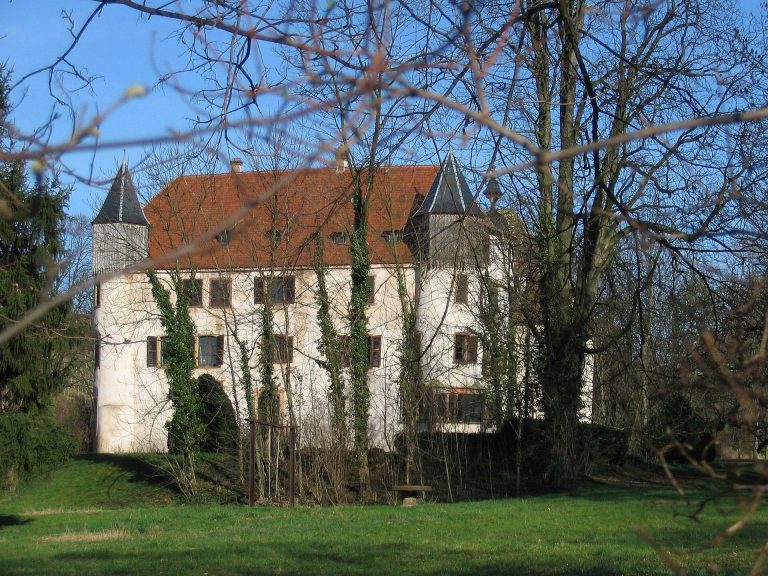
Rohan Castle is a medieval fortress rebuilt in Baroque form in Mutzig, France. The date of its construction is uncertain, though it is associated with Wirich Puller de Hohenbourg, a member of a local noble family. Mutzig was fortified in 1274 under Rudolph of Habsburg, the first Habsburg king of the Romans.
In February 1454, allies of the Archbishop of Mainz captured the town during a conflict with the Puller family, but the castle held out until forces from Strasbourg arrived. The following month, the Pullers ceded half of the town and castle to Strasbourg. In 1459, the town transferred its shares in both to the local burgher Conrad Bock, while in 1470 the Bishop of Strasbourg recovered the shares still held by the Pullers. Control later shifted between the bishops of Strasbourg, who held both religious and temporal authority, and the German princely House of Zweibrücken; at times, both held authority concurrently.
Destruction and episcopal rebuilding
Ernst von Mansfeld’s troops attacked the castle in 1622. A decade later, Swedish forces heavily damaged it during the Thirty Years’ War, the European conflict fought from 1618 to 1648.
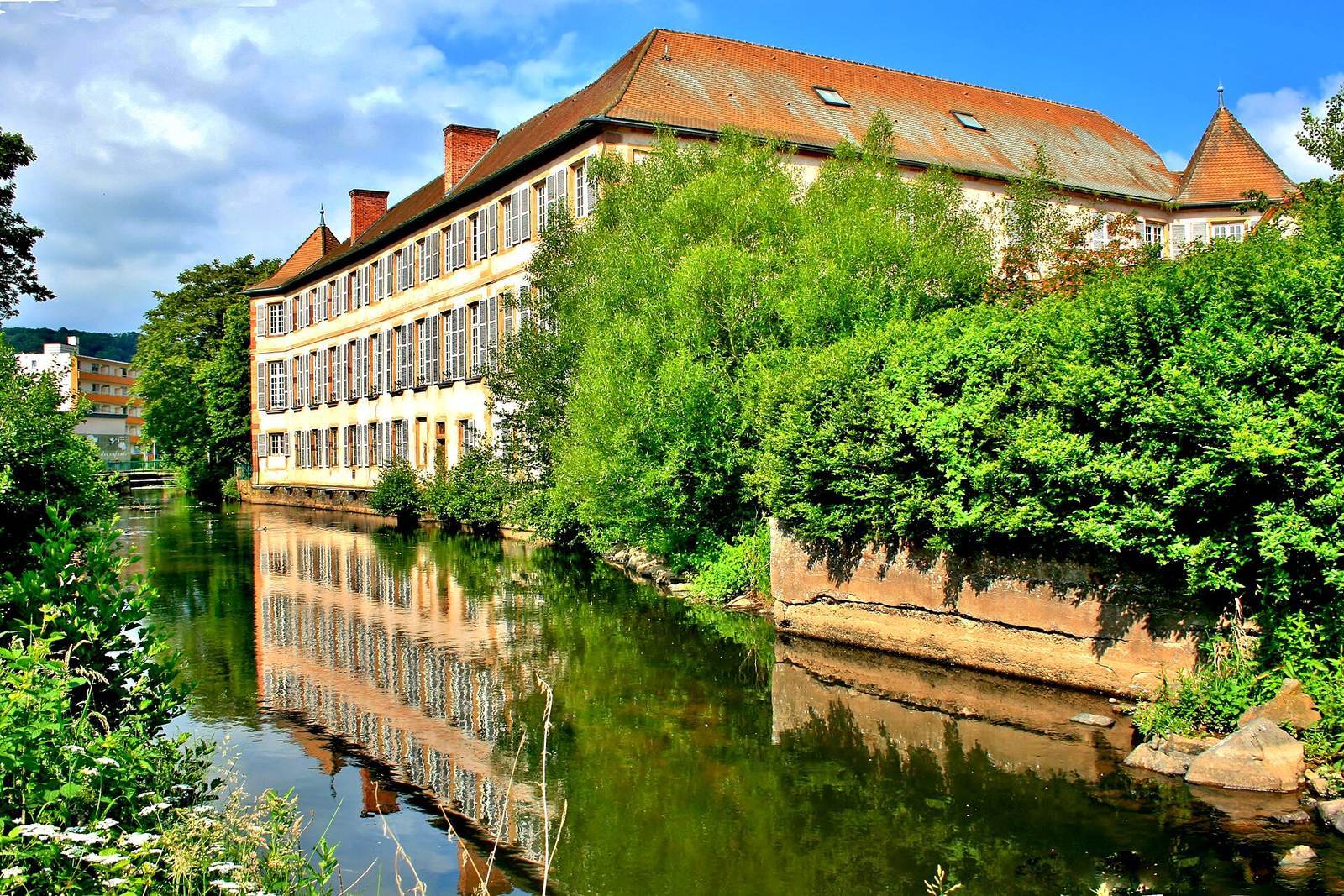
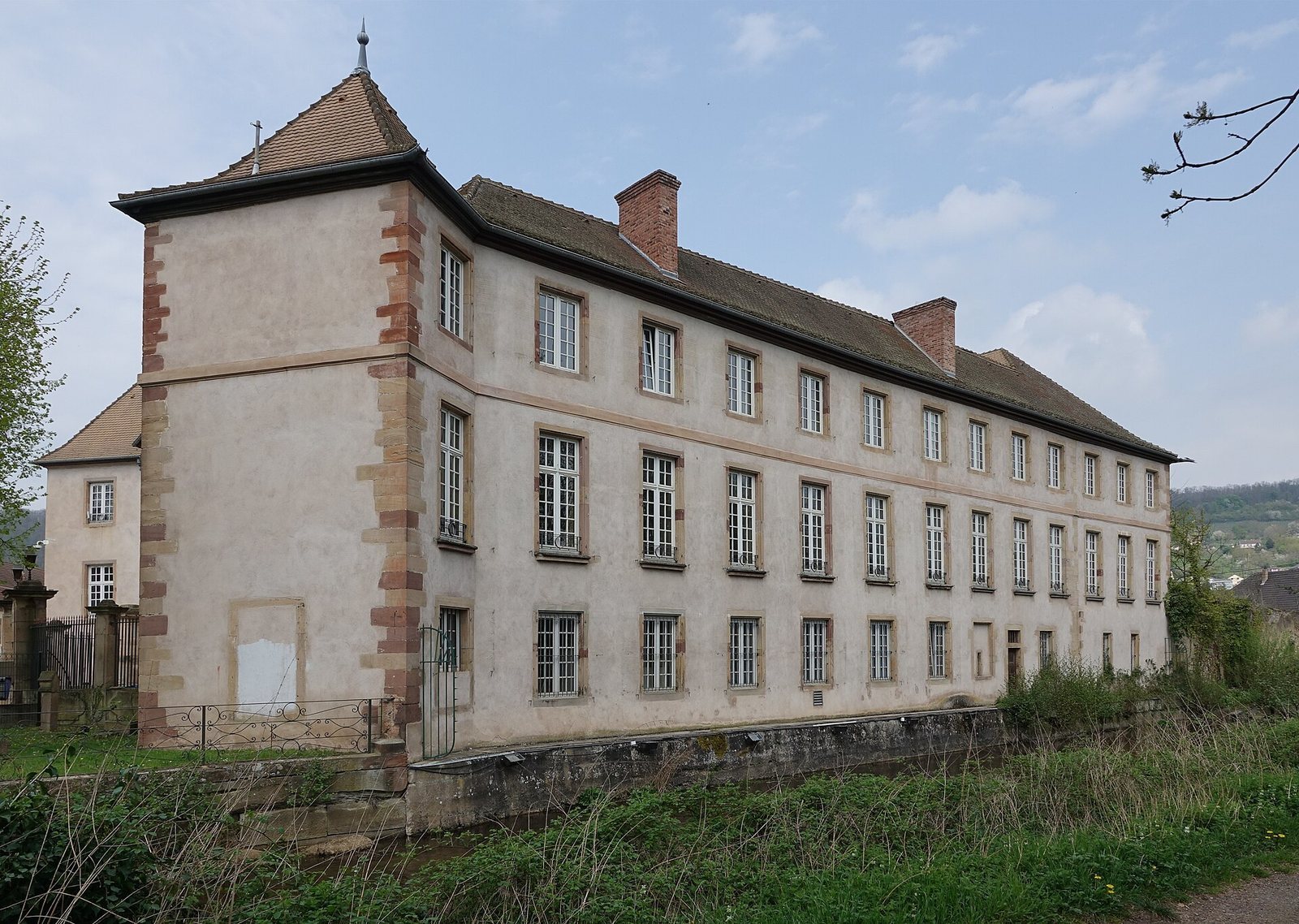
By 1669, the Bishop of Strasbourg owned the entire castle. He rebuilt it between 1673 and 1680, giving it its Baroque form. The residence was inaugurated in 1673 for Bishop Franz Egon von Fürstenberg, who was succeeded by his brother Wilhelm Egon.
Residence of the Rohan dukes
From 1704 to 1790, the castle served as a residence for the Rohan dukes Armand Gaston, François-Armand, Louis Constantin, and Louis René Édouard. The latter stayed there regularly in 1779. After the Palais Rohan in Strasbourg was completed in 1742, and with the family’s residences in Saverne also drawing its attention, the Mutzig castle became less important to the family.
Revolution and arms manufacture
During the French Revolution, which began in 1789 and transformed France’s political order, the castle was confiscated and pillaged. In March 1793 it was sold as national property, meaning property seized by the revolutionary state and offered for sale, to Mutzig mayor Meinrad Bruder and Louis Rumpler. A rifle factory was installed there that December.
The Coulaux arms-making interests acquired the property around the turn of the nineteenth century. The brothers’ purchase is dated to 1799, while arms manufacturer Jacques Coulaux acquired the castle and its outbuildings in 1804. The factory opened in the castle on 20 April 1801. Antoine Alphonse Chassepot, a Mutzig-born arms designer associated with the Chassepot rifle, made some of his rifles at the Manufacture d’Armes de Mutzig, also known as the Imperial Mutzig Arms Manufactory. The works operated until the Franco-Prussian War began in 1870, a conflict between France and Prussia and its German allies. German forces fortified the castle again in 1893.
Municipal ownership and restoration
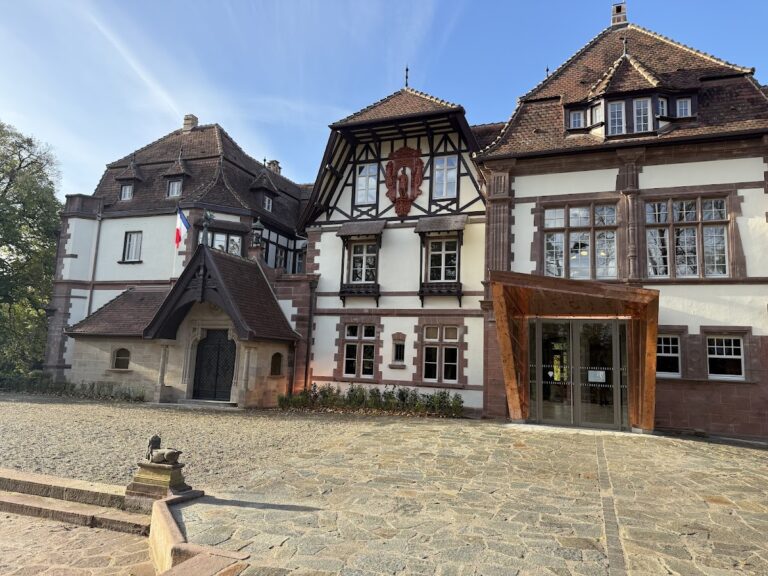
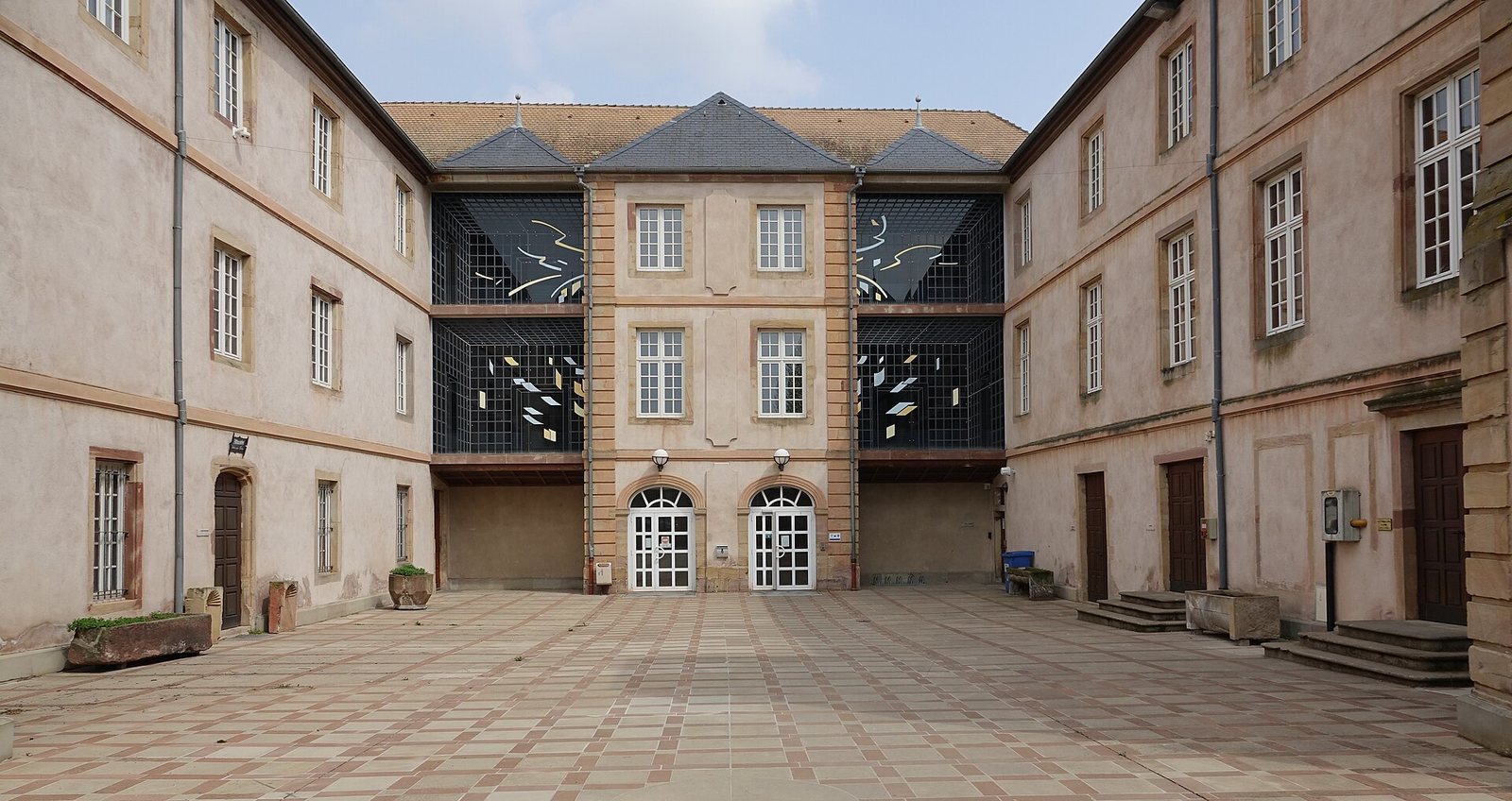
Mutzig’s municipality bought the castle in 1962. Since 1976, it has been registered as a French historic monument, with the designation covering its façades and roofs. A museum opened there in 1977. In 1986, architect Rizzotti restored and remodelled the building as a social and cultural centre and museum. Since 1996, the castle has housed the Regional Arms Museum.
Remains
The castle’s medieval form was a water-protected fortress, with a moat formed from a canal; its later and present architectural character is Baroque. During the arms-manufacturing period, production took place in buildings elsewhere on the premises, while the castle served as a residence for company directors and senior staff. The premises now accommodate a large collection of historic rifles, as well as a cinema and a library.