Rujm al-Malfouf Watchtower: A Circular Tower in Amman
Site at a Glance
- Country
- Jordan
- Primary era
- Iron Age
- Eras represented
- Iron Age, Classical
- Civilizations
- Roman
- Site type
- Military
- Remains
- Tower
On this page9 sections
History
Possible Iron Age origins and function
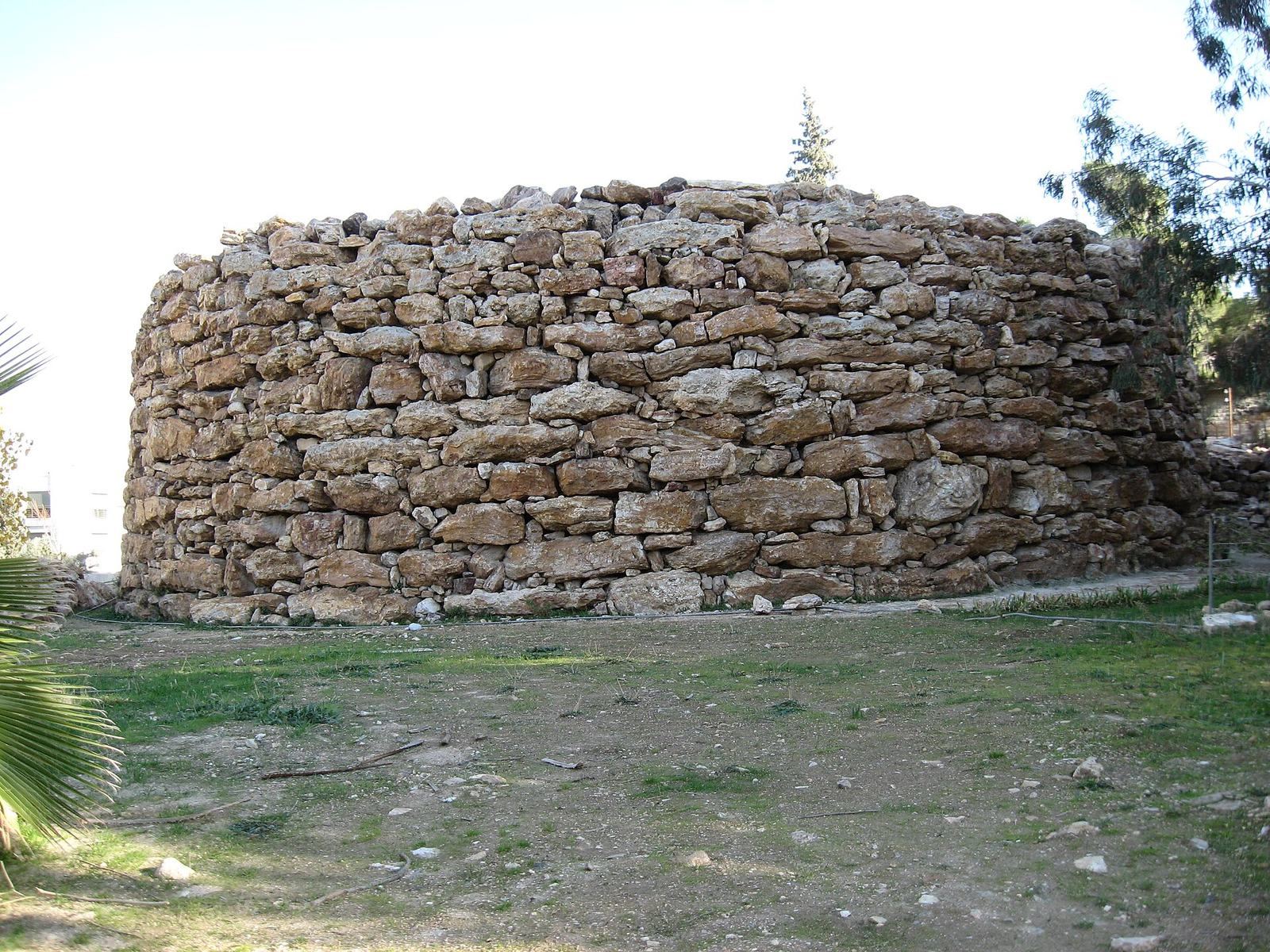
The Rujm al-Malfouf Watchtower is a round stone tower in northern Jabal Amman, Jordan, generally attributed to the Ammonites, an Iron Age people and kingdom, and often dated to the seventh century BCE, although its construction date remains uncertain. Nelson Glueck interpreted it as an Ammonite border post from Iron Age I, an early phase of the Iron Age in the Levant. Comparable towers have also been assigned to the Assyrian period, the era of Assyrian imperial power, around 730–630/620 BCE. That broader dating does not resolve the chronology of this tower.
The tower’s original purpose is also debated. It may have served as a defensive lookout or border fort, a refuge, or a shelter and agricultural complex for protecting fields and harvests or storing grain. Another possibility is that it housed an extended family or clan. One interpretation proposes that such structures began as defensive works and later supported agriculture during peacetime. Rujm al-Malfouf is part of a group of about 30 fortifications across Jordan, though the date of the group as a whole is uncertain.
Reuse and investigation
The tower was rebuilt and used again during Roman and Islamic periods. A 1969 excavation, led by Roger Boraas, found Roman-period pottery in two areas excavated down to bedrock, a result consistent with an early Roman date. Later excavation work may have identified pottery from the sixth or fifth century BCE in the tower’s lower levels.
Nineteenth-century surveys noted the structure, and excavations took place at intervals from 1969 to 2022. The differing evidence has left its earliest date and original role unresolved.
Remains
Physical structure
Circular tower
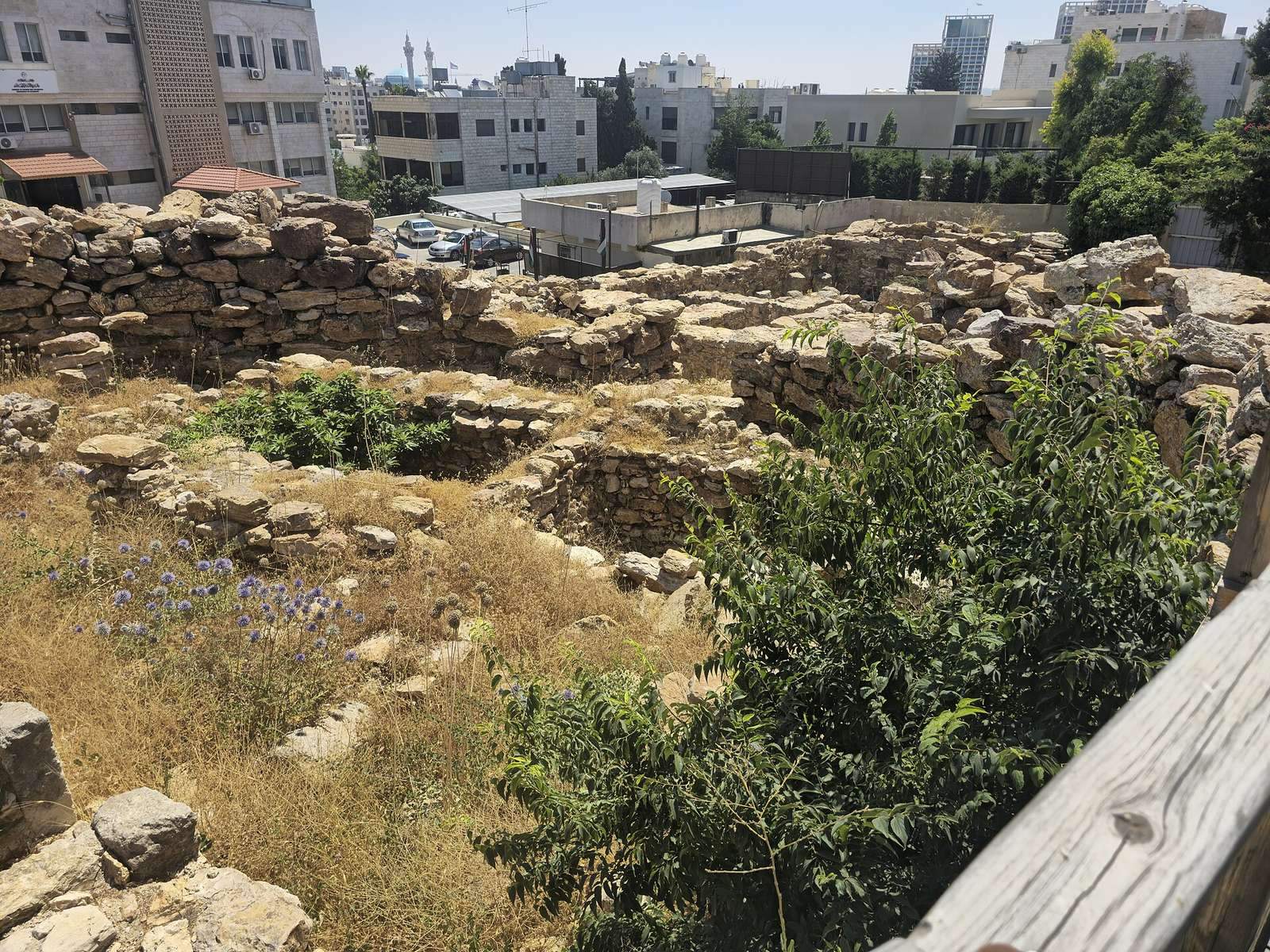
The stone tower stands in a residential area of northern Jabal Amman, overlooking Wadi Saqra. It measures about 22 m across. Descriptions give its surviving height as either about 4 m or 5.5 m; three levels can be identified, and it may once have risen another 5–6 m above its present height. The exterior was plastered, possibly to make it more difficult to climb. The name Rujm al-Malfouf is rendered as “heap of rounded stones,” a description associated with the tower’s circular form.
Entrance and internal levels
A split-level entrance led to a lower floor or basement set directly on bedrock and to an upper floor. Partition walls supported a Roman-style corbelled ceiling or floor, built from successive masonry courses projecting inward. The roof may also have used corbelled construction or wooden beams. Stone stairs survive in disrepair.
Eastern rooms
Several storage rooms adjoin the tower on its eastern side. Four roofless rooms are also part of the complex.
Excavated objects
Excavations at the site recovered coins, pottery items, and stamps.