Wakasa Kokubun-ji Temple: A Provincial Buddhist Monastery in Japan
Site at a Glance
- Rating
- 3.8
- Popularity
- Very Low
- Country
- Japan
- Primary era
- Early Modern
- External website
- Open
- Eras represented
- Classical, Medieval, Early Modern
- Civilizations
- Tokugawa, Yamato
- Site type
- Religious
- Remains
- Temple
On this page11 sections
History
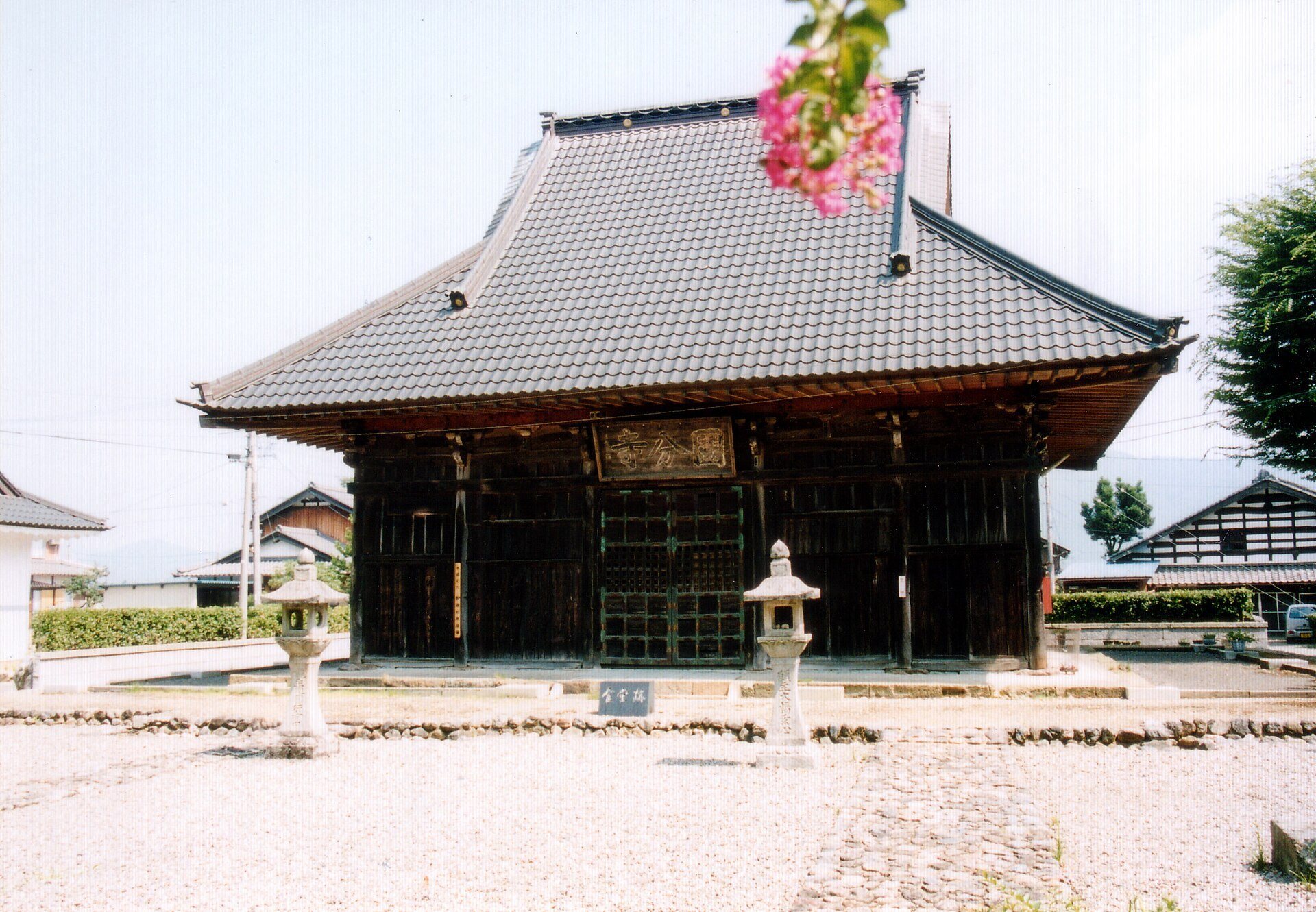
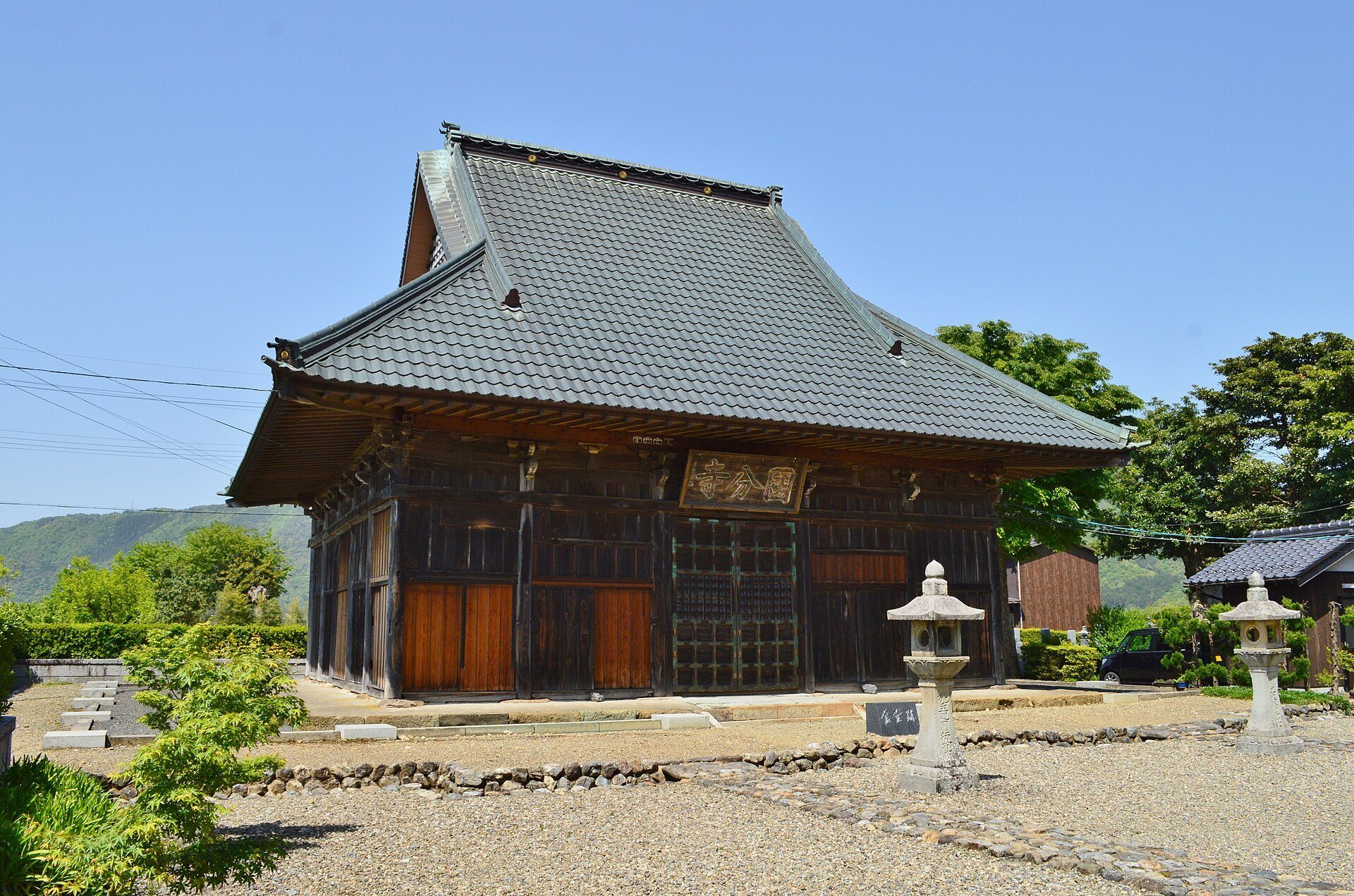
Wakasa Kokubun-ji is a Buddhist temple in Obama, Japan, associated with the provincial monasteries established throughout Japan under Emperor Shōmu’s decree of 741. The present temple belongs to the Sōtō school of Zen Buddhism, and its principal image is Shaka Nyōrai, the Japanese name for Shakyamuni Buddha. Its exact foundation date is uncertain, but the temple’s institutional history reaches back to the Nara period and its current main hall dates to around 1705.
Provincial monastery and early history
Emperor Shōmu’s 741 decree ordered the establishment of provincial Buddhist monasteries and nunneries as part of a state-supported Buddhist system. These institutions were intended to promote Buddhism and reinforce imperial control in the provinces. Wakasa Kokubun-ji belongs to this institutional tradition, although the circumstances of its initial construction remain debated.
One interpretation holds that Taikō-ji, a pre-existing family temple belonging to a local clan, was first converted for use as the Wakasa provincial monastery. A new temple may then have been established at the present site around the beginning of the Heian period, which lasted from 794 to 1185. The small scale of the buildings, their resemblance to Heian-period temples, and the scarcity of eighth-century roof tiles support this view. A record from 1603 gives the foundation date as 807. Another explanation is that the early buildings used a roofing material such as cypress bark instead of tile for economic reasons.
The temple was listed in the Engishiki, a tenth-century compendium of administrative and ritual regulations, as receiving an allocation of 10,000 bundles of rice for the provincial monastery. Records from 1265 describe land holdings belonging to both the monastery and its associated provincial nunnery, known as a kokubunniji. These records show that both institutions still existed at that time, although the monastery later declined, with further deterioration during the Muromachi period, from 1336 to 1573. The nunnery is known from historical records, but its location has not been identified.
Rebuilding and modern investigation
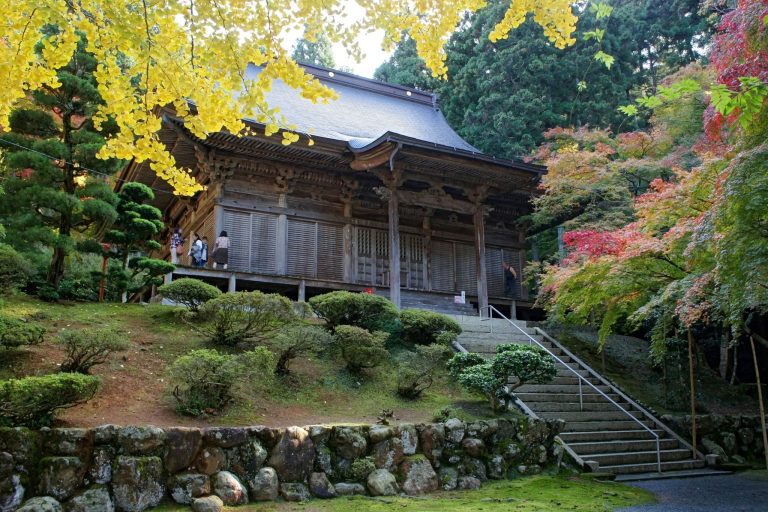
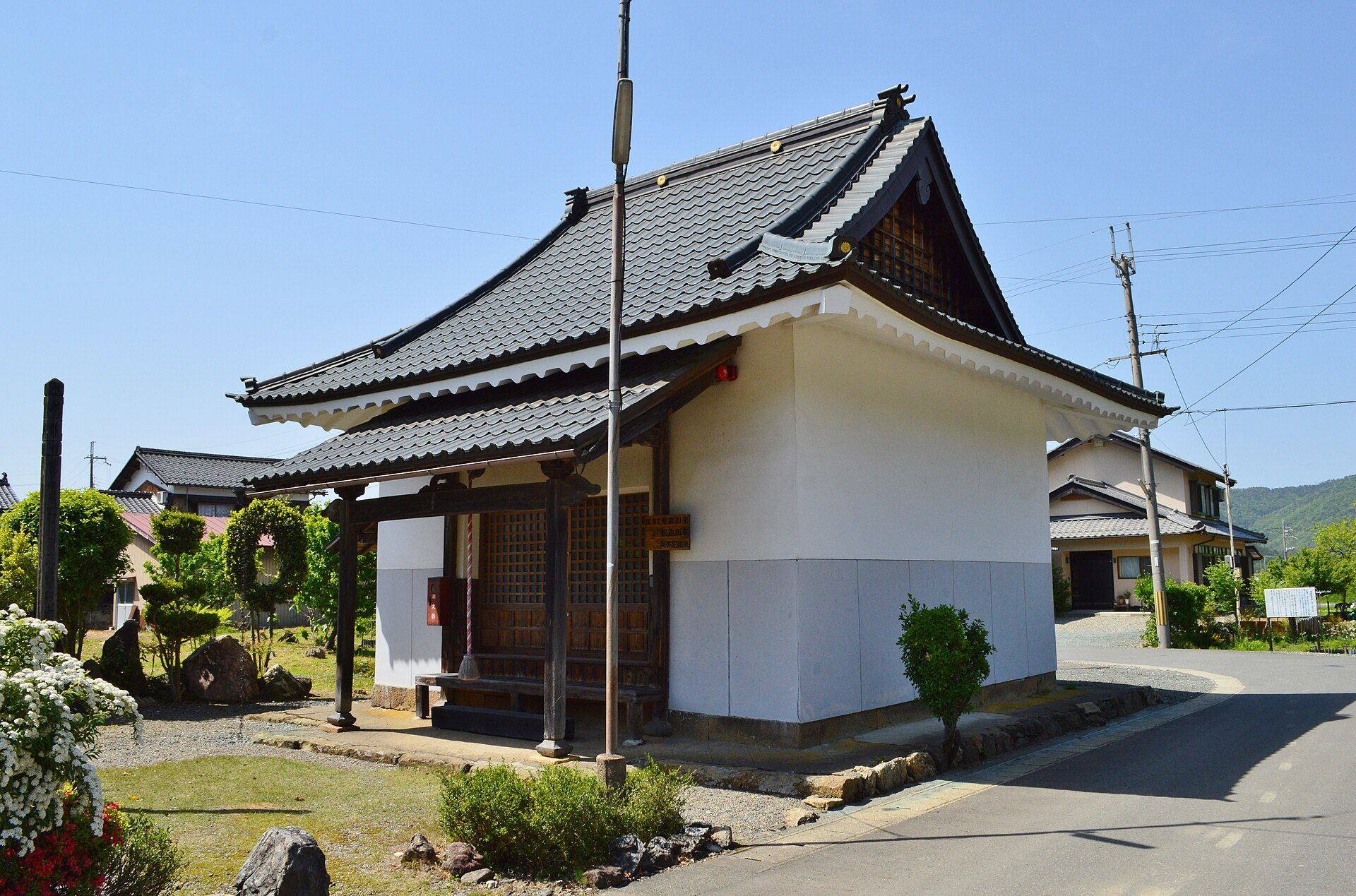
In 1611, Yamada Ittoku, a resident of Obama, organized donations to construct a Shaka-dō, or hall dedicated to Shaka Nyōrai, over the site of the ancient Main Hall. After this building fell into serious disrepair, it was rebuilt around 1705. The present Shaka-dō dates from that rebuilding and continues the temple’s connection with the ancient monastery precinct.
Archaeological excavations carried out from 1972 to 1974 clarified the plan of the ancient monastery and recovered materials associated with its occupation. The ancient Wakasa Kokubun-ji remains were designated a National Historic Site on December 23, 1976, followed by environmental improvement works between 1979 and 1983. In 2015, the heritage of Wakasa Kokubun-ji became part of the Japan Heritage group titled “Wakasa, the Food Kingdom, and the Saba Kaido: A Heritage of Exchange between the Sea and the Capital.”
Remains
Ancient monastery precinct
The temple occupies the same general area as the ancient monastery on the alluvial plain along the left bank of the Kitagawa River, about 4.5 kilometers east of central Obama. The ancient precinct measured approximately 218 meters on each side, equivalent to two traditional town units, and followed the surrounding grid lines. Its buildings were smaller than those of a typical provincial monastery.
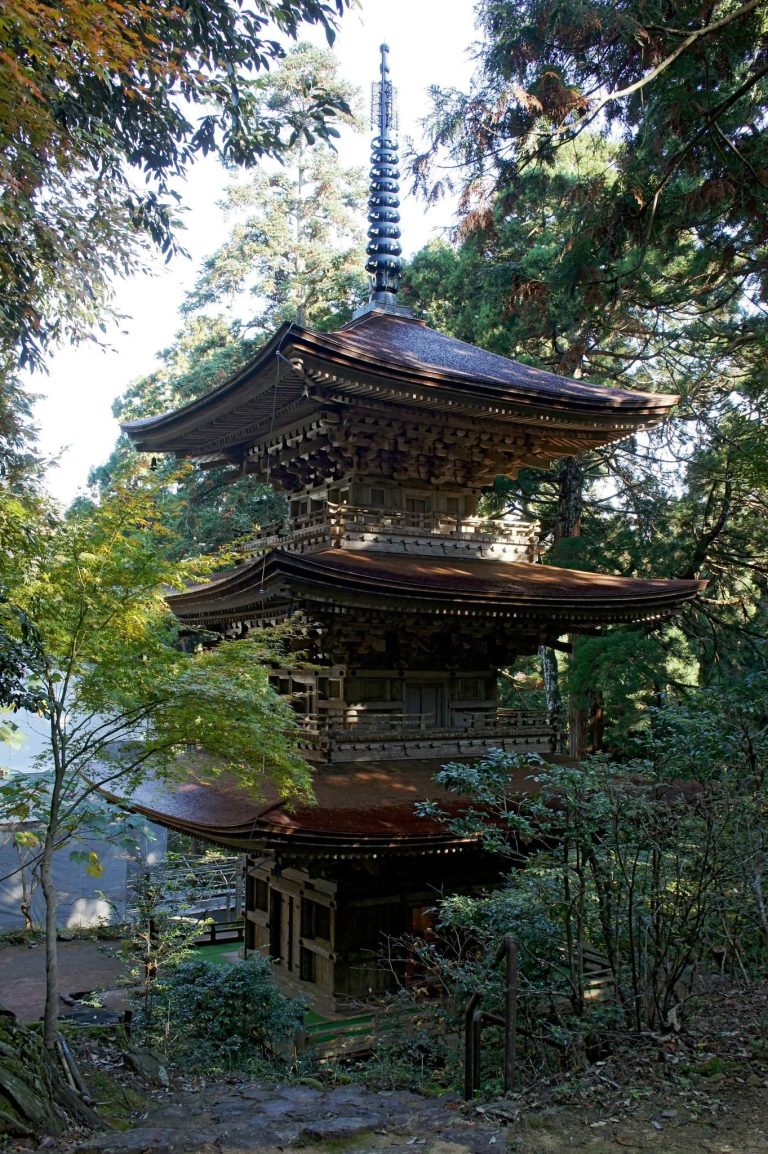
The compound was organized along a north-south axis. From south to north, the South Gate, Central Gate, Main Hall, and Lecture Hall stood in sequence. Corridors extended from both sides of the Central Gate and connected with the sides of the Main Hall, while a pagoda occupied a position east of the Central Gate. Excavated material includes Sue ware, Haji ware, green-glazed pottery, fragments of a gilt-bronze pagoda finial, and fragments of wind-bells. Heian-period artifacts were found around the principal buildings, while both Nara- and Heian-period material occurred near buildings along the northern edge of the precinct.
Temple halls and Buddhist images
Shaka-dō
The present Shaka-dō overlaps the foundation remains of the ancient Main Hall. Built around 1705, it is a five-bay by five-bay structure measuring 12.17 by 10.96 meters. Its irimoya roof, a form combining a central gable with sloping hipped sides, was originally thatched and is now covered with metal sheeting. Inside, an inner sanctuary measuring three bays by two bays is paired with a worship area measuring three bays by one bay.
The hall contains a seated wooden image of Shaka Nyōrai made by joined-block construction, a technique that assembles a statue from several joined pieces of wood. The body is thought to date from the Kamakura period, which lasted from 1185 to 1333, while the head belongs to the Edo period, from 1603 to 1868. The statue is 318 centimeters high. The Shaka-dō is designated an Obama City Tangible Cultural Property.
Yakushi-dō
A Yakushi-dō stands west of the Shaka-dō. Its central image is a seated Yakushi Nyōrai, a Buddha associated with healing. A seated Shaka Nyōrai is placed to the left and a seated Amida Nyōrai, associated with the Pure Land, to the right.
Yakushi Nyōrai
The seated wooden Yakushi Nyōrai is a joined-block sculpture from the Kamakura period, measuring 79.7 centimeters in height. An inscription states that it was enshrined as the principal image of a nunnery hermitage in 1693. It may earlier have been an older image from Wakasa Kokubun-ji. The statue is designated an Important Cultural Property of Japan.
Shaka Nyōrai and Amida Nyōrai
The seated wooden Shaka Nyōrai in the Yakushi-dō is an early Kamakura-period joined-block sculpture 85.7 centimeters high. It is thought to have served as the principal image of a temple that later ceased to exist, and an inscription records its repair in 1693.
The seated wooden Amida Nyōrai is another early Kamakura-period joined-block sculpture, measuring 86 centimeters in height. It too is thought to have been the principal image of a temple that later ceased to exist, and its inscription records repair in 1693. The three statues in the Yakushi-dō, together with the Shaka-dō, are designated Obama City Tangible Cultural Properties.
Kokubunji Kofun
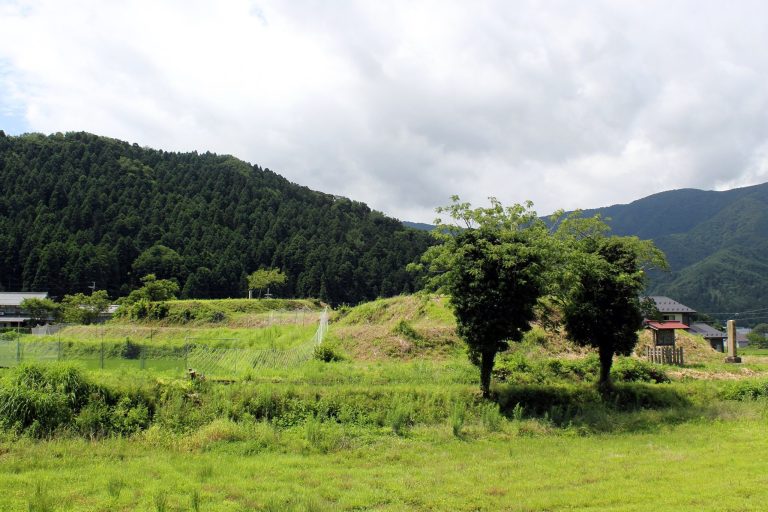
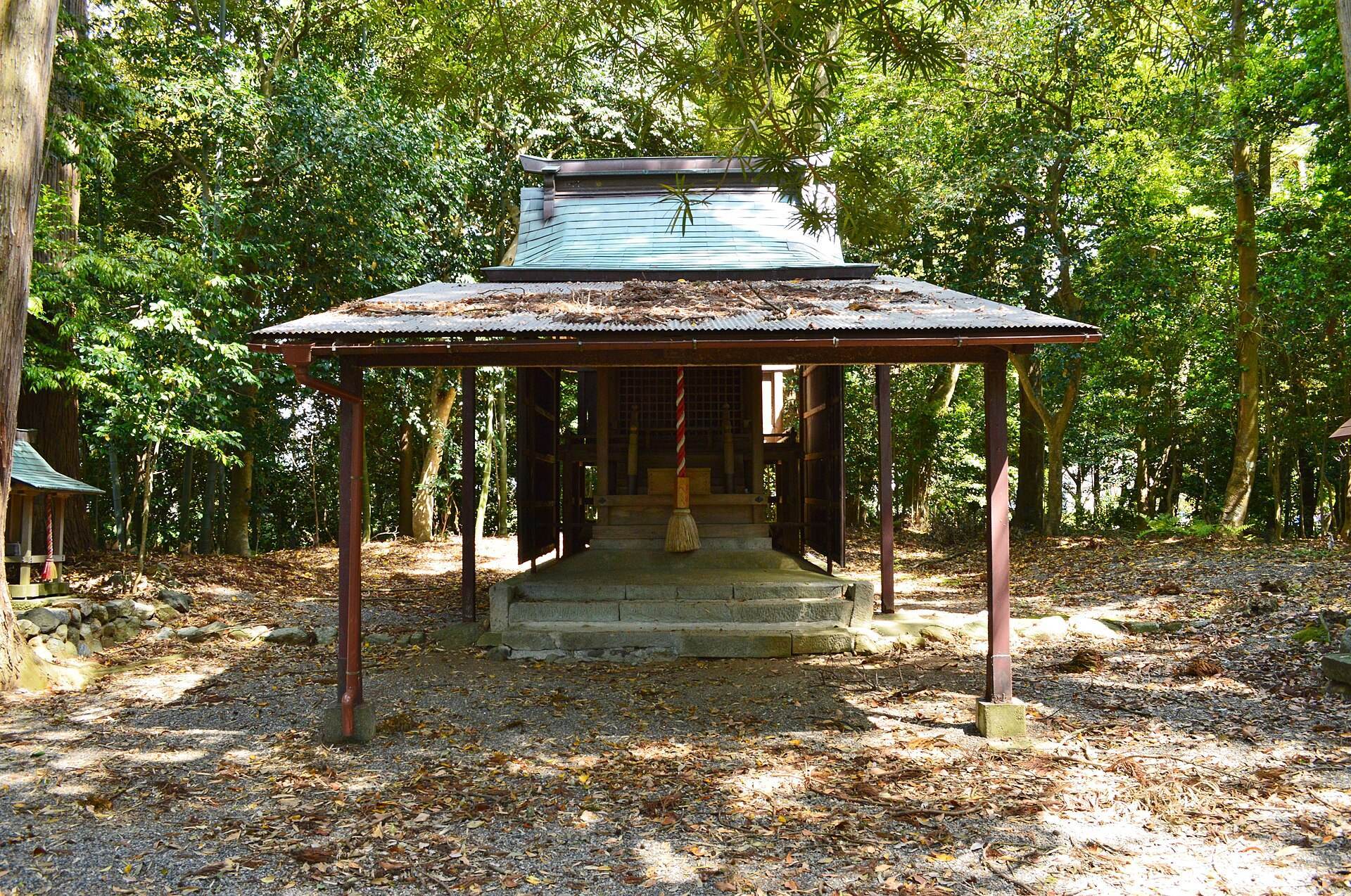
The temple grounds also contain Kokubunji Kofun, a circular burial mound approximately 50 meters in diameter. Estimated to date from the sixth century, it is one of the largest burial mounds in the Wakasa region. It lies immediately southwest of the ancient pagoda site, and a Wakasa-hime Shrine is now enshrined on its summit.