Wakasahiko Shrine: A Historic Shinto Shrine Complex in Fukui, Japan


Site at a Glance
- Rating
- 4.4
- Popularity
- Low
- Country
- Japan
- Primary era
- Modern
- External website
- Open
- Eras represented
- Early Modern, Modern
- Civilizations
- Tokugawa
- Site type
- Religious
- Remains
- Sanctuary
On this page10 sections
History
Wakasahiko Shrine is a Shinto shrine complex in Obama, Fukui, Japan, associated with the former Wakasa Province and traditionally founded in 714. Shinto is Japan’s indigenous religious tradition, in which a kami is a revered deity or sacred presence. The complex consists of Wakasahiko Shrine, the upper shrine, and Wakasahime Shrine, the lower shrine, and is also known as Onyu Myōjin.
Origins and Foundation
Shrine tradition relates that Hikohohodemi no Mikoto and Toyotama-hime appeared at Shiraishi in Shimonegori village in the form of people from Tang. Hikohohodemi, also called Hoori, is a mythological figure associated with the sea and with tide-controlling jewels, while Toyotama-hime is a sea-associated goddess and daughter of the sea deity Watatsumi. Wakasahiko Shrine was founded at Shiraishi on September 10, 714, and moved to its present location on September 10, 715. Shiraishi Shrine, an outlying shrine of Wakasahiko Shrine, stands at the earlier site.
Wakasahime Shrine was established on February 10, 721, through the branch enshrinement of the upper shrine’s deity. The two sanctuaries therefore represent an upper-and-lower shrine institution formed through a connected history. Hikohohodemi no Mikoto is worshipped as Wakasahiko-no-kami at the upper shrine, while Toyotama-hime is worshipped as Wakasahime-no-kami at the lower shrine.
Imperial Recognition and Provincial Status
The Nihon Sandai Jitsuroku, a ninth-century imperial chronicle, records the promotion of the Wakasahiko deity in 859 from Junior Second Rank, with an honorary distinction, to Senior Second Rank. The Wakasahime deity was promoted at the same time from Senior Third Rank to Junior Second Rank. The Engishiki, a tenth-century compendium of court regulations and shrine listings, names the two deities as two seats of a Myōjin Taisha in Onyu District of Wakasa Province. A Myōjin Taisha was a high-status shrine category recorded in that register.
By the medieval period, Wakasahiko Shrine was recognized as the ichinomiya, or first-ranked shrine of the province, while Wakasahime Shrine was regarded as the ninomiya, the second-ranked shrine. The shrine-associated Muku family maintained ties with officials of the capital and influential provincial warriors and held extensive estates. The upper shrine was originally the principal center of worship, but this role shifted to the lower shrine around the Muromachi period. Most festivals are now held at Wakasahime Shrine, where the priesthood is also resident.
Modern Shrine Status and Continuing Worship
The shrine is traditionally dated to 714 and was designated a National Shrine of the Middle Rank under Japan’s modern shrine-ranking system in 1871. It is also listed in the Engishiki as a Myōjin Taisha, recognized as a former ichinomiya of Wakasa Province, and included as a current Beppyo shrine of the Association of Shinto Shrines. The principal festival of the upper shrine takes place on October 10, while the lower shrine’s principal festival is held on March 10.
Wakasahiko Shrine is associated with tatami and mat-making and attracts worshippers connected with interior decoration. Wakasahime Shrine is traditionally believed to assist safe childbirth and child-rearing. These associations continue the distinct religious identities of the two shrines within one historical complex.
Remains
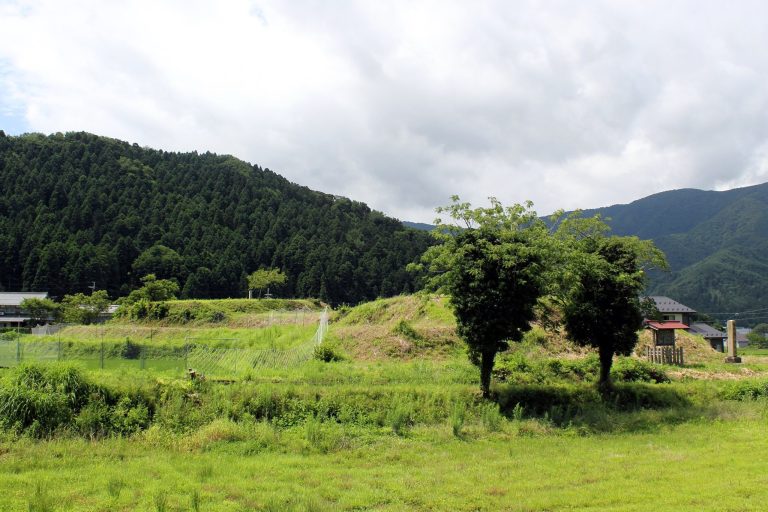
The complex lies at the foot of Mount Tadagadake southeast of central Obama. The upper shrine is in Tatsumae and the lower shrine is in Onyu, with the two precincts about 2 kilometers apart. Their principal sanctuaries follow the three-bay nagare-zukuri, or flowing-style, form, characterized by a projecting curved roof over the front of the sanctuary.
Upper Shrine Precinct
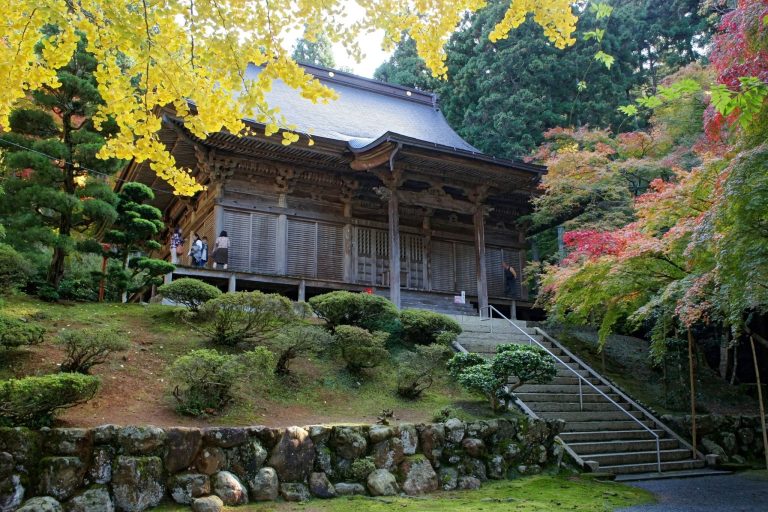
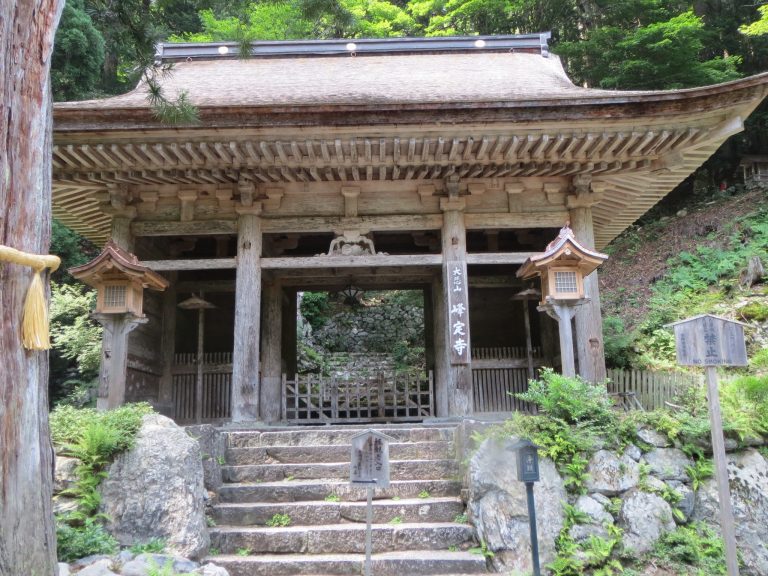
The upper precinct contains a main sanctuary dated to 1813, a guardian gate dated to 1830, and another gate. The main sanctuary, shrine gate, and guardian gate form a group of three historic buildings. The guardian gate is sometimes called a Rōmon or Zuishin-mon, although its architectural form is described as an eight-legged gate rather than a two-story gate.
Lower Shrine Precinct
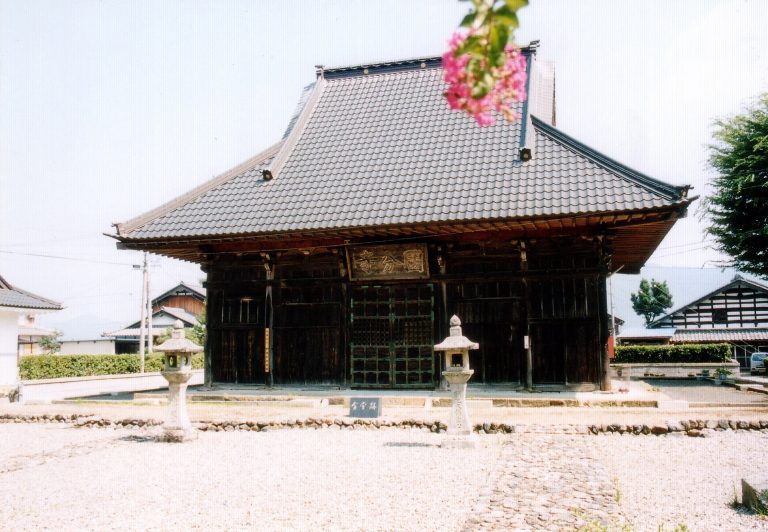
The lower precinct contains a main sanctuary dated to 1802, a guardian gate dated to 1743, a Shinmon gate dated to 1803, a Noh stage, and a sacred grove. A sacred grove is woodland retained within a shrine precinct as part of its sacred environment. The main sanctuary, gates, and grove are preserved as components of the lower shrine. Its guardian gate also belongs to the eight-legged form sometimes referred to as a Rōmon or Zuishin-mon.
The lower shrine also contains a yin-yang stone known as the Child-Seed Stone, associated with fertility. A large ginkgo tree is revered as the Milk Deity in connection with childbirth and child-rearing, while an ogatama tree is recognized as a natural monument by Obama City. The shrine crest shows a jewel above waves, an image referring to the tide-controlling jewels that Hikohohodemi is said to have obtained while staying in the Dragon Palace.
Ritual and Historical Objects
Heian-Period Sword
A Heian-period sword with a partly illegible inscription was dedicated to the shrine in 1795. Tradition attributes it to the swordsmith Munechika. The blade measures 79.1 centimeters.
Norito Shidai Scroll
The scroll Norito Shidai, copied in 1303, consists of seven pages measuring 30.1 by 339.6 centimeters. It is written on hishi paper and has a dark-brown floral damask cover added after the Edo period. Its text uses a decree-like format combining katakana, return marks, and red full stops, with dense side readings written in the same stroke. The scroll records imperial offerings to Wakasahiko Daimyojin from the provincial governor and local officials, offerings for annual and monthly festivals, and imperial offerings carried by envoys traveling along the Hokuriku road. It includes prayers dated 1212 and 1255, while the date 1303 at the end probably indicates the scroll’s compilation and copying.