Visbeker Bräutigam: A Group of Neolithic Megalithic Tombs in Germany
Site at a Glance
- Popularity
- Low
- Country
- Germany
- Primary era
- Stone Age
- Eras represented
- Stone Age
- Civilizations
- Unclassified
- Site type
- Burial
- Remains
- Necropolis
On this page9 sections
History
The Visbeker Bräutigam is a group of five Neolithic megalithic tombs, prehistoric burial structures built from large stones, near Endel in the municipality of Großenkneten, Lower Saxony, Germany. The tombs date broadly to about 3500–2800 BCE, during the Neolithic, the later part of the Stone Age associated with farming and settled communities. Their builders are attributed to the Funnel Beaker culture, a northern and central European archaeological culture named for its characteristic funnel-shaped pottery.
The name Visbeker Bräutigam means “Visbek Bridegroom.” Local legend places the story in the Ahlhorner Heide between Visbek and Wildeshausen. Gretchen’s father compelled her to marry a man she did not love. When she wished that the wedding would not happen, Gretchen, her bridal wagon, her wedding party, and the groom’s procession were said to have turned to stone, becoming the Visbeker Braut and Visbeker Bräutigam monuments. Visbeker Braut means “Visbek Bride.”
Remains
The five tombs stand in mixed woodland near Endel, north of the Aue stream, close to the boundary of the municipality of Visbek and about 35 metres above sea level. The Aue is also called the Engelmannsbäke in this stretch. Tombs 935 and 937 lie a few metres from No. 936, while No. 938 is a few metres southeast of it.
The five tombs
Visbeker Bräutigam 934
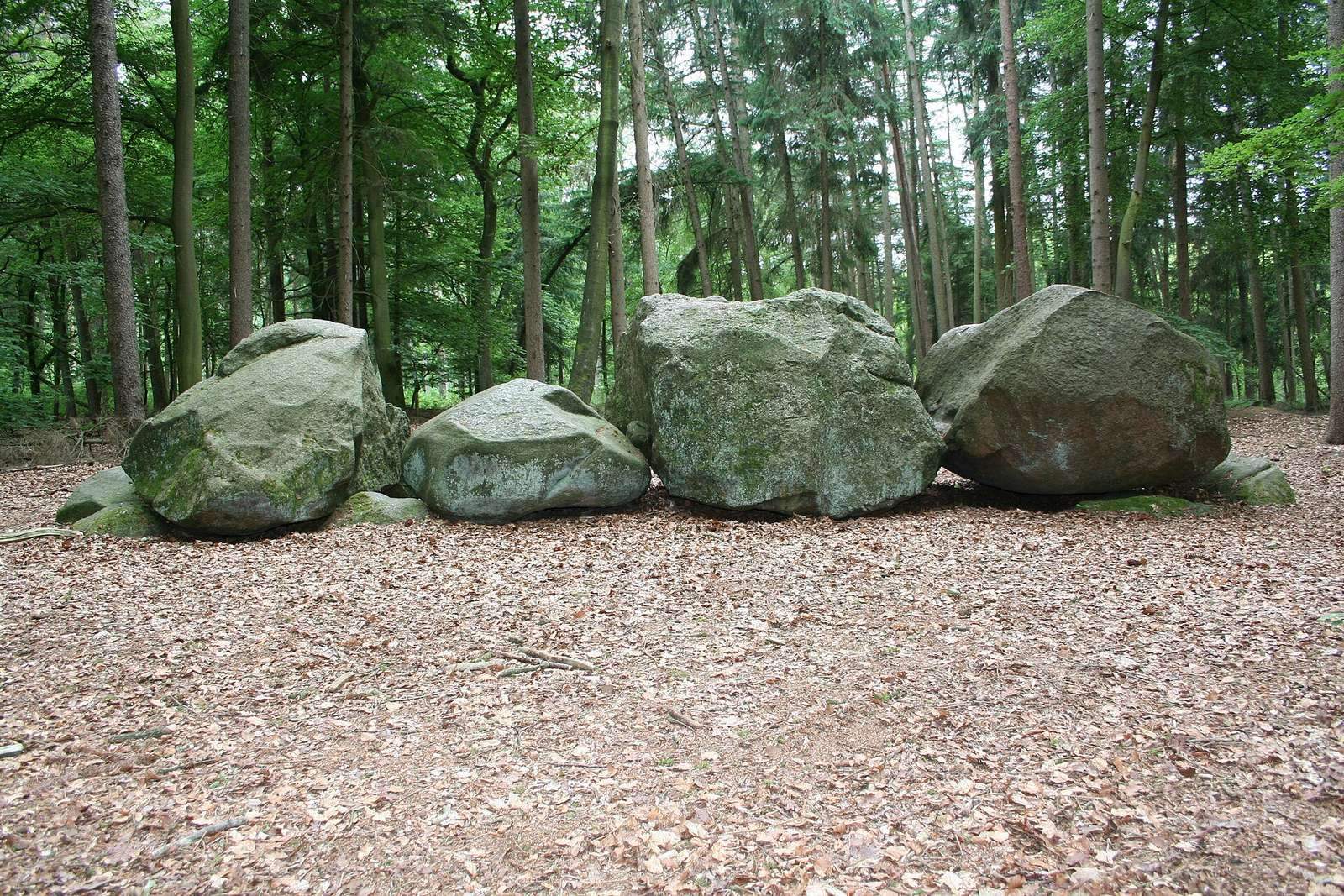
No. 934 is a passage grave, a tomb whose burial chamber is reached through a passage. Its chamber is 24 metres long, with an oval border of kerbstones, stones edging a chamber or mound. A smaller chamber, oriented northwest, was built first. Later, a wall was breached and the tomb enlarged, with a passage and the stone border added. Remains of the first phase and a distinct bend at the junction between the two phases can still be seen. Two roof stones remain in their original positions.
Visbeker Bräutigam 935
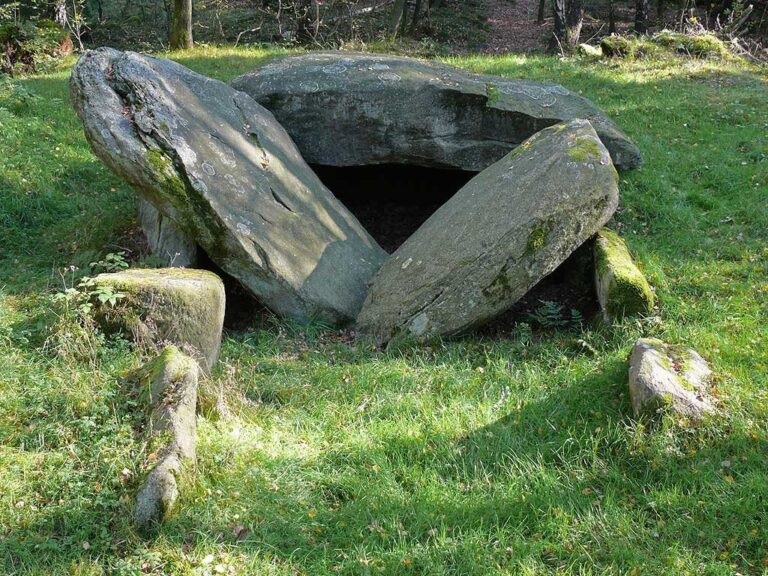
No. 935 is a comparatively modest tomb set within a round covering mound. Two roof stones and the tops of its supporting stones are visible, and the chamber is probably intact.
Visbeker Bräutigam 936
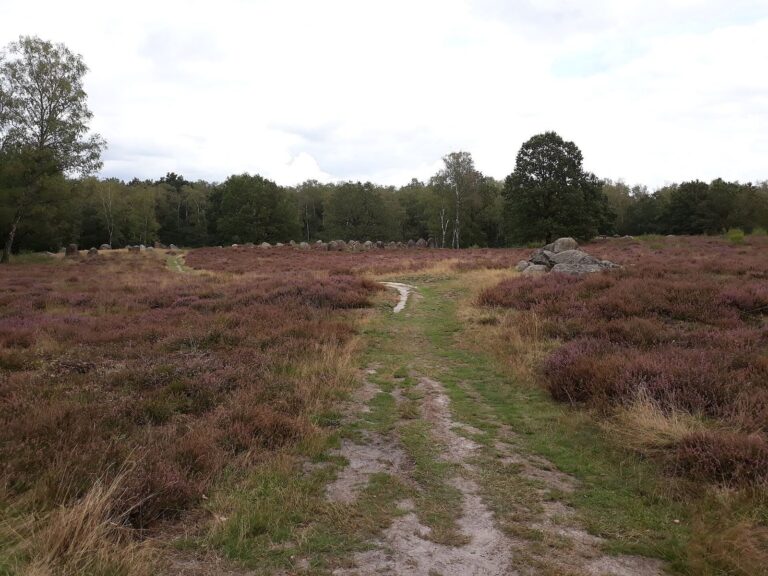
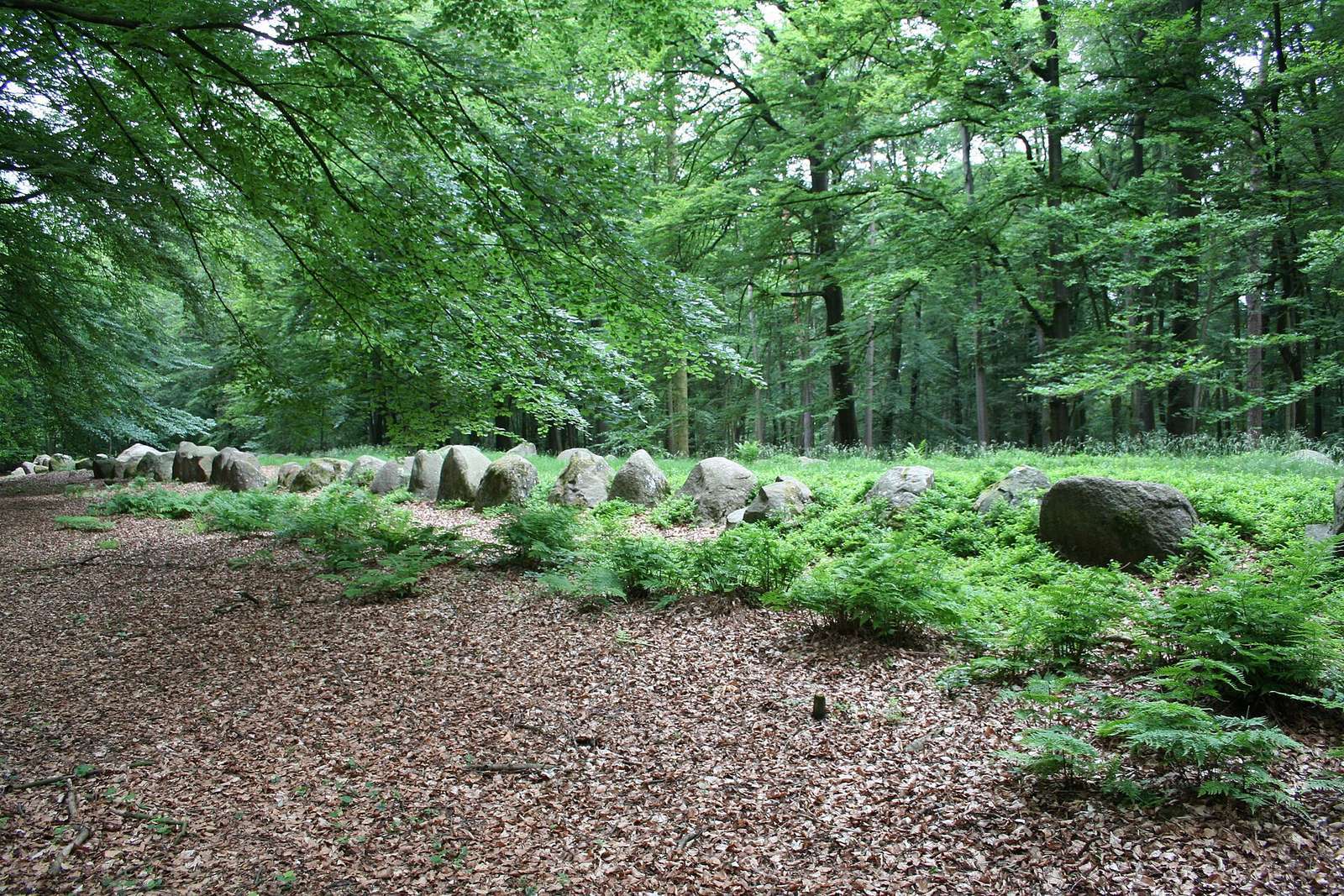
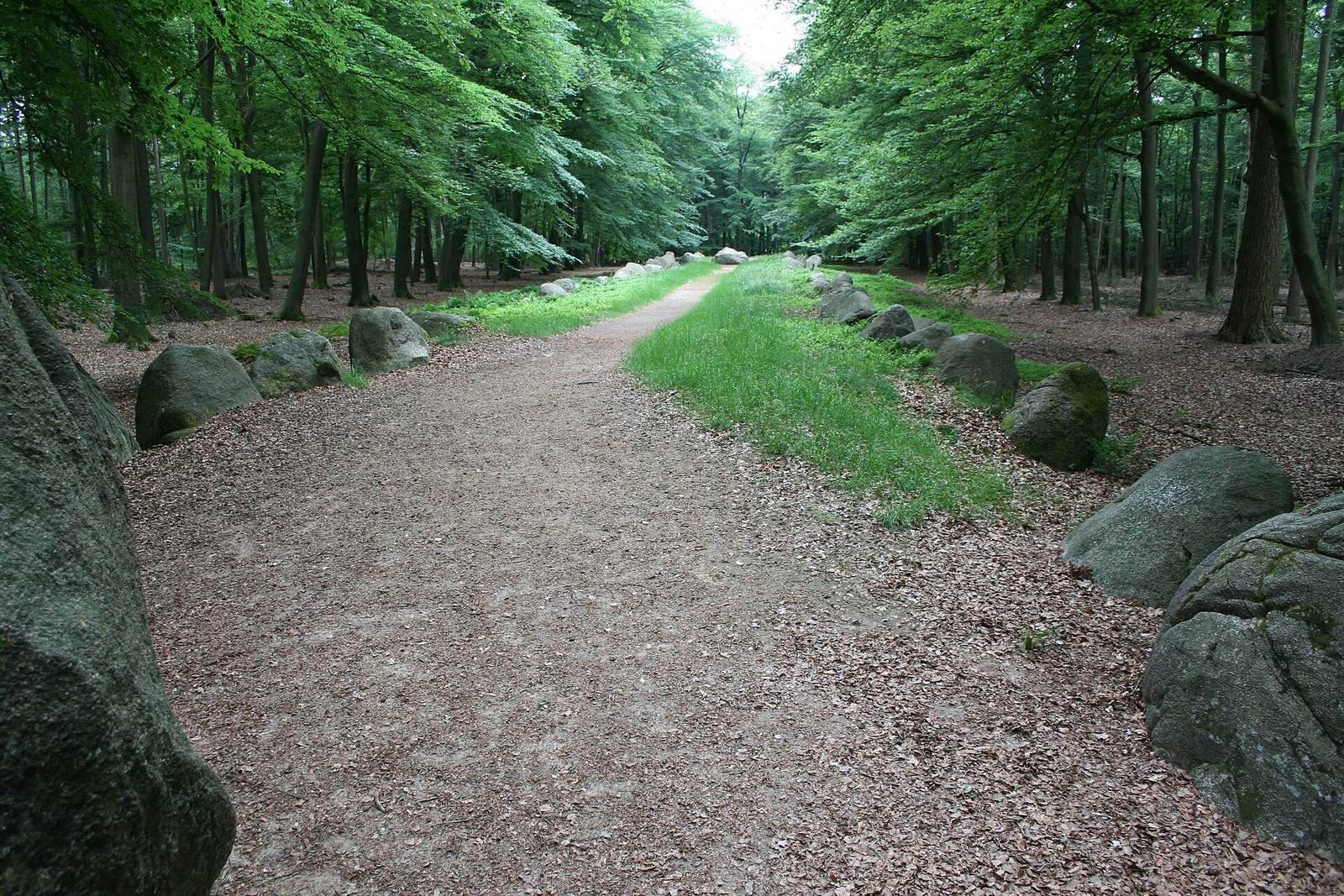
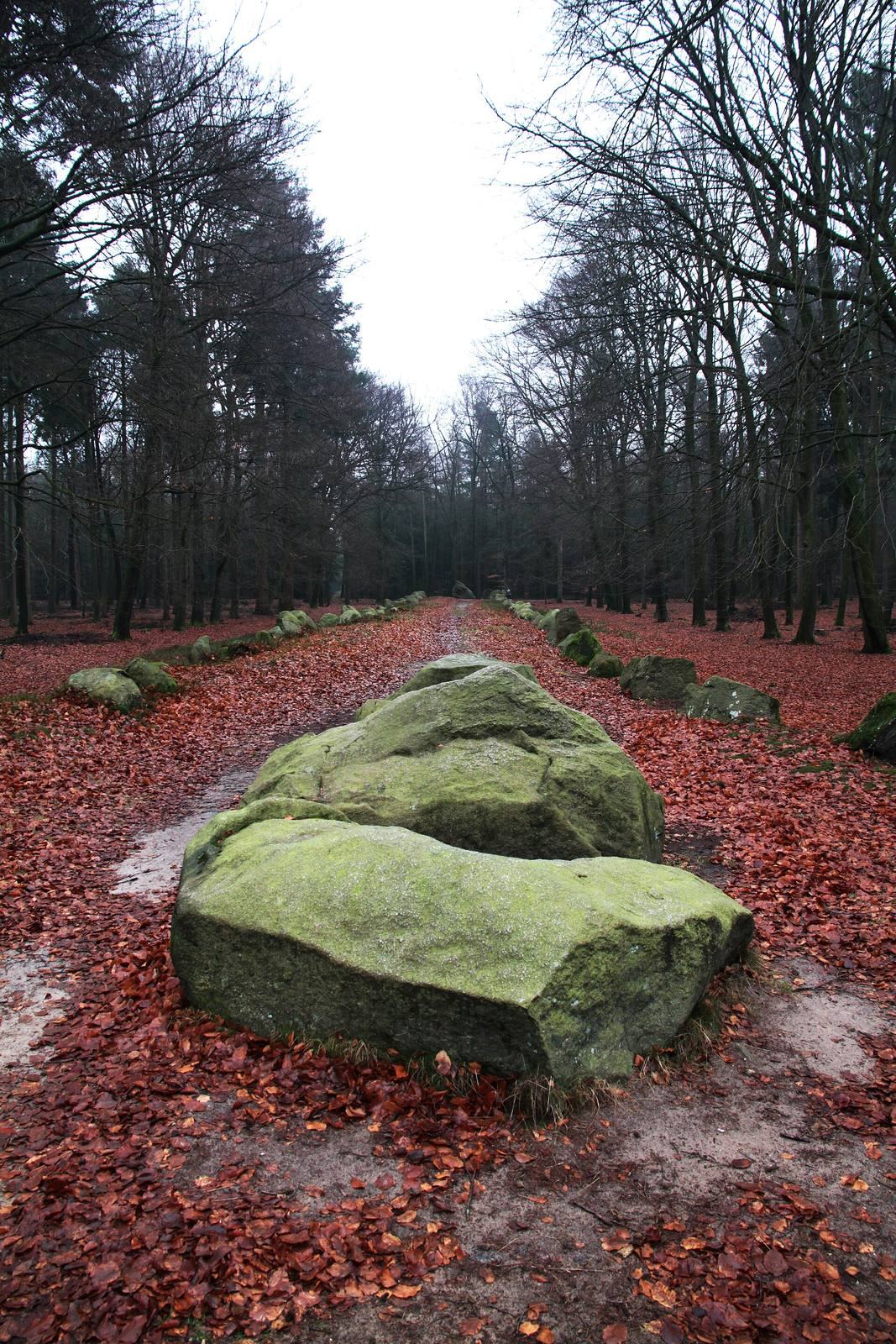
No. 936 is the longest megalithic tomb in Lower Saxony and among the largest in Germany. Its stone enclosure measures about 104 metres long and 8–9 metres wide. The enclosure is almost entirely preserved, with about 130 of roughly 170 original stones surviving; those at its narrow eastern end are particularly long. The tomb runs east–west, in line with the directions of sunrise and sunset at the summer solstice.
The chamber is at the western end of the enclosure. It measures about 10 metres and has five roof stones; its supporting stones are probably still deeply embedded in the ground. The chamber is smaller than both the enclosure and the chamber of No. 934. The tomb’s raised position suggests that earth once filled the enclosure, forming a long mound.
Visbeker Bräutigam 937
No. 937 is poorly preserved. Its chamber runs east–west and is deeply sunk into the ground, with most supporting stones still in their original positions. One roof stone remains inside the chamber, probably having slipped in along with a fragment of a second.
Visbeker Bräutigam 938, the Bridal Wagon
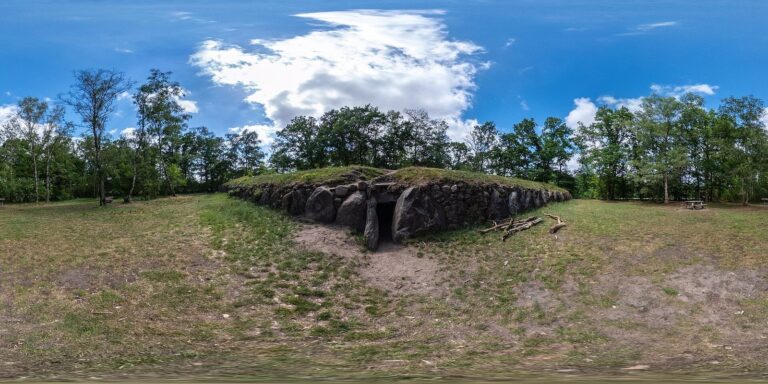
Also known as the Bridal Wagon, No. 938 lies within the traces of an earthen covering mound. Its chamber measures 7.20 by 1.50 metres internally. Nine supporting stones form its long sides, and end stones help carry four roof stones. The chamber is described as fully preserved, with its stones in their original positions. It is aligned northeast–southwest.
Nearby monuments
The Heidenopfertisch, another megalithic tomb, lies south of the Aue. The separate Visbeker Braut tomb is about four kilometres east-northeast of the Visbeker Bräutigam.