Glaner Braut: A Group of Neolithic Megalithic Graves in Germany
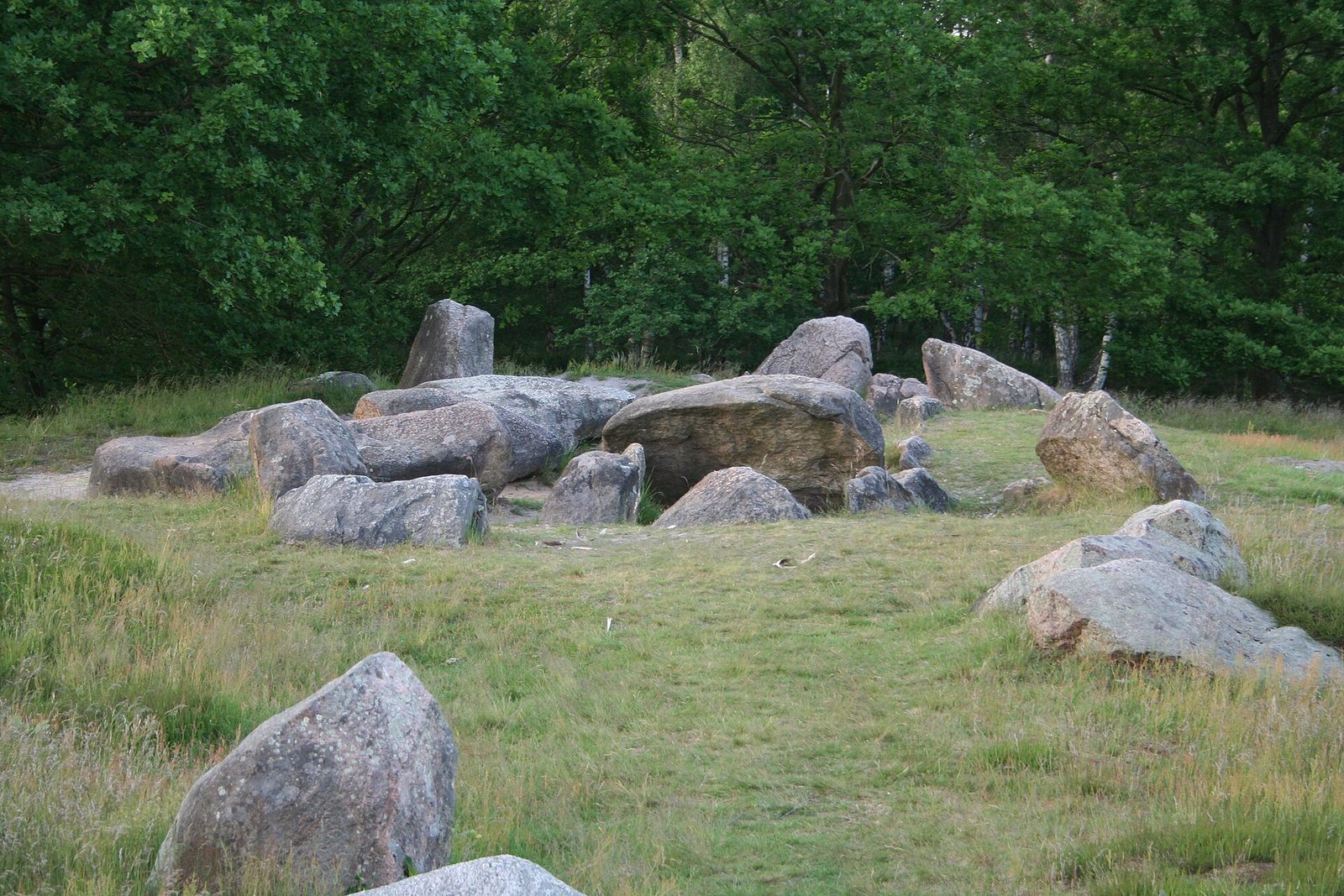
Site at a Glance
- Popularity
- Medium
- Country
- Germany
- Primary era
- Stone Age
- Eras represented
- Stone Age
- Civilizations
- Unclassified
- Site type
- Burial
- Remains
- Necropolis
On this page16 sections
History
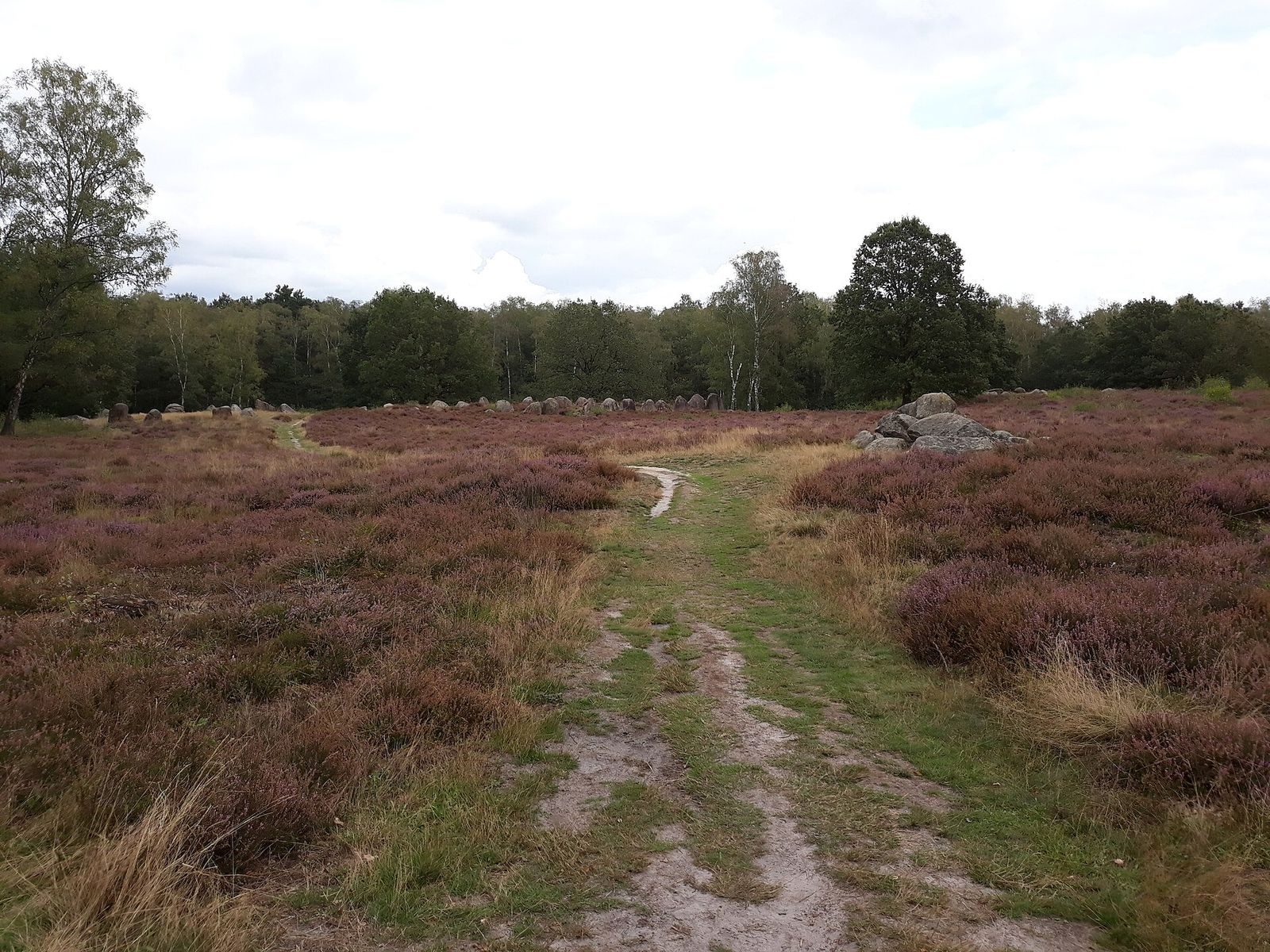
Glaner Braut is a group of four Neolithic megalithic graves in heathland near Glane, in Wildeshausen, Germany. Built between 3500 and 2800 BCE, the graves are attributed to the Funnel Beaker culture, a Neolithic culture of northern and central Europe named for the shape of some of its pottery. They belong to Nordic megalithic architecture, which uses large stones.
Neolithic construction and prehistoric reuse
The graves were later reused for urn burials during the Late Bronze Age and Early Iron Age. This practice fits a wider pattern of reusing megalithic graves for later burials. A 1999 study identified 72 sites where such reuse extended from the Bronze Age into the High Middle Ages; burials inside stone chambers occurred at 16 sites. The Late Bronze and Early Iron Ages were the principal period of reuse, as at Glaner Braut.
Naming, disturbance, and local traditions
The name refers to nearby Glane, a rural settlement. Glaner Braut was probably adopted as the name between about 1810 and 1830 and was in use by the 1860s. A proposal made in the nineteenth century suggested that its second element was borrowed from the better-known Visbeker Braut. Unlike that name, Glaner Braut was not primarily intended to associate burial customs with wedding traditions. In the late 1950s, the settlement name Glane was speculatively linked to Celtic origins and perhaps to a name once used for the nearby Aue watercourse.
During the 1820s and 1830s, people attempted to investigate the graves, sometimes blasting stones. Two stones were taken away for digging, and an enclosing bank planted with birches was made. A drill hole from stone blasting could still be seen in the 1860s.
Local legends tell of a wealthy people of Glane who lived at the site. In these stories, Prince Glanos occupied Grave I, while the smaller graves served as the people’s huts. A version told to children and adolescents at a nearby school camp describes Grave I as the foundation of a great temple where a flame had to remain alight. After Amelhusen mocked the gods and stamped out the fire, Glanos cursed the village. The realm was saved when its youngest and most beautiful people travelled from distant Hammaburg, an early medieval name associated with Hamburg, carrying flints to rekindle the flame.
Protection and twentieth-century interpretation
The graves were placed under monument protection and transferred to state ownership on 2 April 1934. During Nazi rule, the monuments were associated with Germanic origins and antiquity. In 1936, German author Wilhelm Teudt described nearby Loh, in Dötlingen, as a major Germanic assembly place and claimed that labyrinth-like structures he called “Troy-towns” lay in the area. These were speculative interpretations. Nature protection was extended to the entire heath in 1939.
Remains
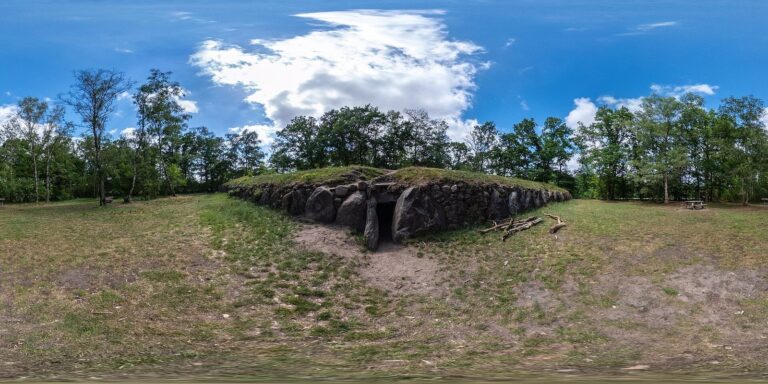
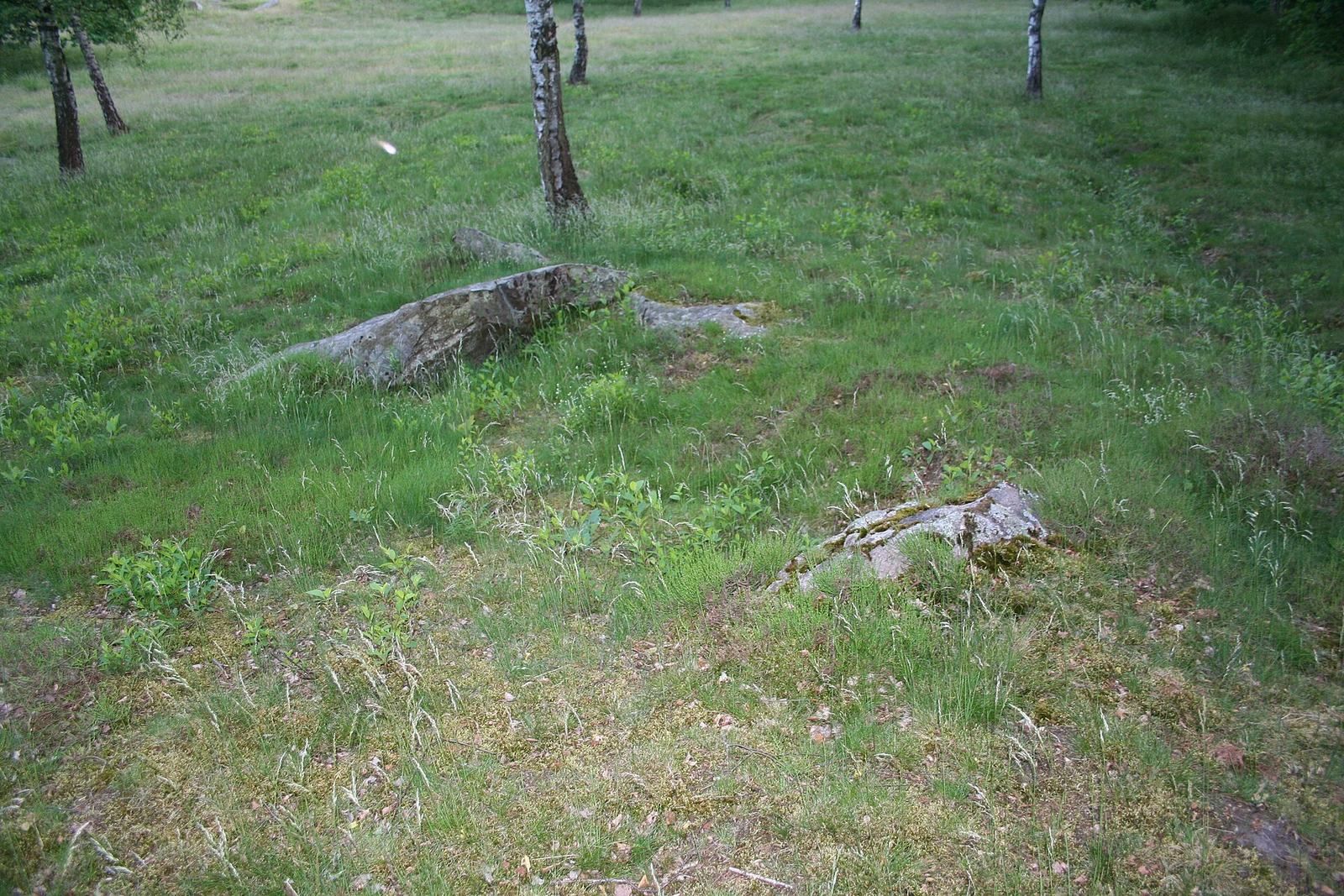
The four heavily damaged graves lie in heathland in the Glaner Heide, on the left bank of the Hunte and within the Wildeshauser Geest. The group is near Glane, opposite Dötlingen, and about six kilometres from central Wildeshausen. Damage makes the precise type of each grave difficult to establish.
Grave structures
The graves are numbered I to IV. Their different surviving dimensions and the right-angle arrangement of the first two provide the clearest picture of the group’s layout.
Glaner Braut I
The largest grave is about 50 metres long, with a trapezoidal outline between 6 and 8 metres wide. Its chamber, about 2 metres across, is badly damaged, and six supporting stones survive. Stones arranged around the burial structure, known as kerbstones, also formed part of the monument.
Glaner Braut II
Grave II lies at a right angle to Grave I and measures about 30 by 5 metres. Urns were placed in the fill between its surrounding stones and burial chamber.
Glaner Braut III
At Grave III, the surviving feature is the chamber, which measures about 6 by 2 metres.
Glaner Braut IV
Only remains of Grave IV’s burial chamber are visible. A capstone lies about 14 metres away.
Urn burials at Grave II
Six urn finds were made in the area of Grave II between 1965 and 2011. The finds show varied vessel forms and include cremated remains of adults and children.
The 1965 urn
The first recovered urn lay directly beside the outer edge of the chamber’s northern short-side support stone. It is an upright, two-part vessel with an indented upper section, assigned to Period V in Montelius’s numbered chronology for the Nordic Bronze Age. The cremated remains may have belonged to a man aged 47 to 54. His bones suggest a robust individual who had experienced substantial physical strain. Degenerative changes in the spine, or spondylosis, affected almost all the vertebral bodies, and mild periodontitis, inflammation of the tissues around the teeth, affected the jaw. Small bone tumors were also considered possible, though their nature was uncertain.
The 1975 vessel
A school pupil found another vessel in 1975. It has a funnel-shaped neck and a double-cone body, and its date ranges broadly from the Late Bronze Age to La Tène C/D, archaeological phases of the Iron Age. The cremated remains were too scanty for examination. The vessel was given to the Focke Museum in Bremen and later entered the collection of the Oldenburg Museum.
The May 1976 remains
On 19 May 1976, an excursion led by Dr. P. Glüsing recovered seven wall sherds and a small quantity of cremated bone near a kerbstone. The disturbed state of the find was apparent, and the pottery was probably from Period V or VI.
The June 1976 urns
A second University of Münster excursion, on 23 June 1976, recovered two further probable urns from the area of a heavily trodden path. One had a complete lower section, a gently curved body, a smoothed surface, and a flat base that curved slightly inward without decoration. The other was a similar fragment.
The cremated remains belonged to children of unknown sex. One was estimated to have died between 6 and 12 years of age; the other, between 3 and 4 years, with an uncertainty of 12 months. Harris lines, growth lines in bone associated with interruptions to normal development, suggest prolonged stress such as diarrhoea or hunger.
The 2011 urn
In August 2011, R. Laskowski of Braunschweig found the partly exposed rim of another urn. It lay in a narrow pit about 50 by 40 centimetres, between the northern end of the chamber and the surrounding stones. The urn was intact but cracked, with extra sherds that probably came from a lid or cover bowl. Its squat, three-part form has a curved shoulder, a conical neck, and a roll-shaped handle joining the neck and shoulder. Its typological date falls at the transition between Period V and Period IV; it was also assigned to the later Iron Age.
The vessel held abundant cremated remains, probably those of a man aged 54 to 60. His estimated height was 162 ± 3.3 centimetres. Slight inflammation affected the socket of a rear molar, and spondylosis was observed on a cervical vertebra, two lumbar vertebrae, and especially the sacral vertebra.