Vigla of Diaskari: A Minoan Settlement on Crete
Site at a Glance
- Popularity
- Very Low
- Country
- Greece
- Primary era
- Bronze Age
- Eras represented
- Bronze Age
- Civilizations
- Minoan
- Site type
- City
On this page6 sections
History
Vigla of Diaskari is a Minoan settlement on a hill in the Ierapetra area of southern Crete, Greece. Its beginnings were placed in Late Minoan I or earlier, a phase of Minoan Bronze Age chronology, after an initial attribution to Late Minoan III. Archaeologist Costis Davaras judged its extent and importance nearly comparable to those of Gournia, another Minoan settlement.
Discovery and dating
Davaras found extensive settlement remains while surveying and mapping the Makrygialos area in the early 1970s. In 1972, eleven test trenches, each measuring 5 by 5 metres, were excavated. Later study of the pottery, finds from hotel construction in the area, and fieldwork by Metaxia Tsipopoulou, Donald Haggis and rock specialist Peter Day informed Davaras’s revised assessment of the settlement’s beginnings.
Systematic campaigns in 1973 and 1977 instead concentrated on the separate Minoan Villa at Makrygialos, 2.8 kilometres west of Vigla. The villa, a substantial non-palatial Minoan building, probably belonged exclusively to Late Minoan IB.
Regional interpretations and names
In 1997, Metaxia Tsipopoulou and Anastasia Papacostopoulou proposed that Makrygialos–Diaskari, Petras and Zakros formed a third economic and political centre in eastern Crete during the Neopalatial period, a phase of Minoan Crete’s Bronze Age history. How these centres related to one another and to the major palaces of central Crete remains unclear.
Davaras, together with archaeologists Philip P. Betancourt and Nanno Marinatos, interpreted the Makrygialos villa as an elite residence connected with Diaskari as a harbour settlement. In this view, Diaskari and Langada made up a double harbour used for fishing and for sending agricultural products eastward.
French archaeologist Paul Faure proposed that the Makrygialos region was the ancient Greek city-state of Syrinthos, mentioned by the sixth-century geographer Stephanos of Byzantium. Davaras regarded Syrinthos as a pre-Greek name, possibly the Minoan name for the area. Makrygialos has also been associated with the location of ancient Stalai. The name Vigla derives from the Latin vigilia, meaning “watch.”
The name Diaskari has been speculatively linked to Dioskourion, a proposed name for the harbour settlement. This suggestion connects the name to a possible temple of the Dioscuri, the twins Castor and Pollux, who were associated with seafaring. Both the proposed temple and the name’s derivation remain uncertain.
Remains
Settlement on Vigla
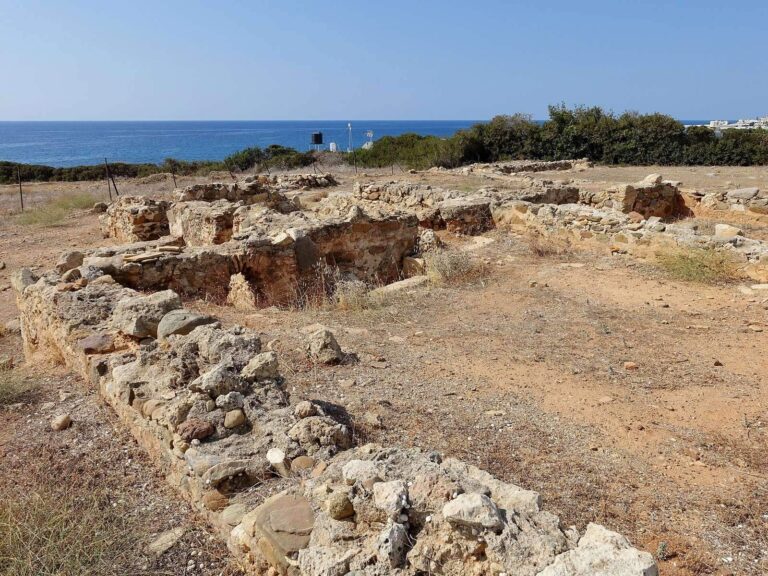
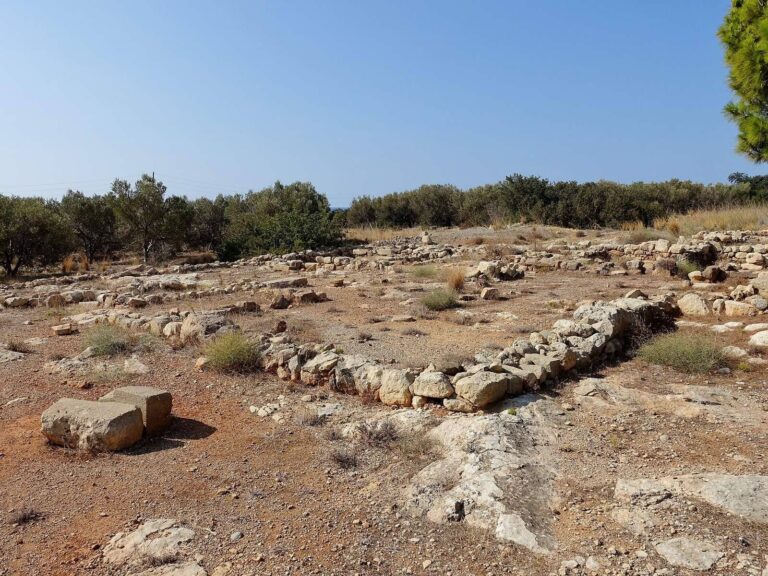
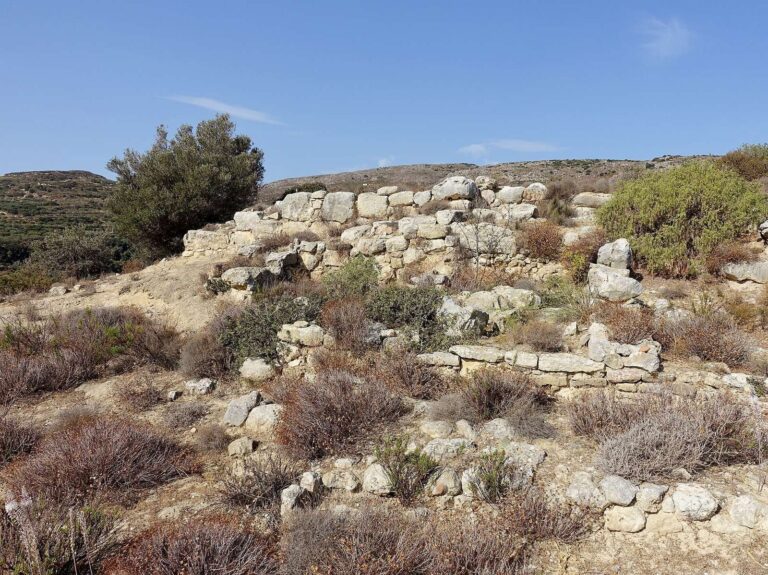
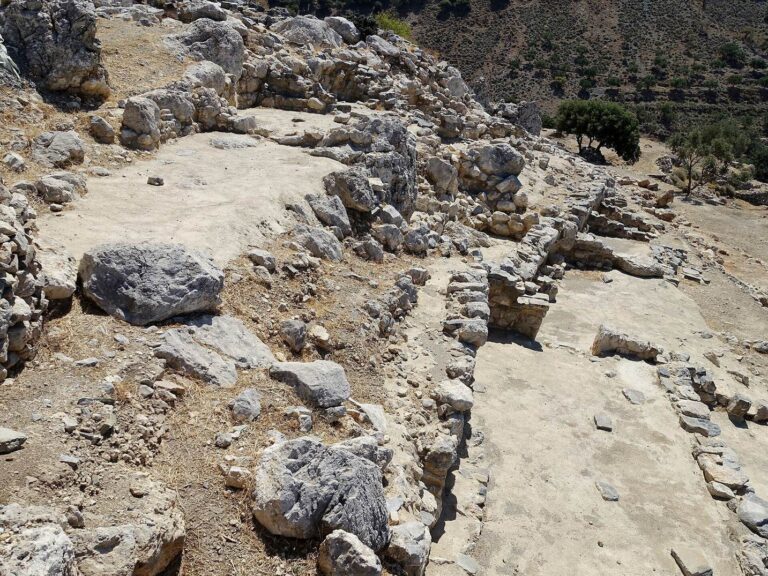
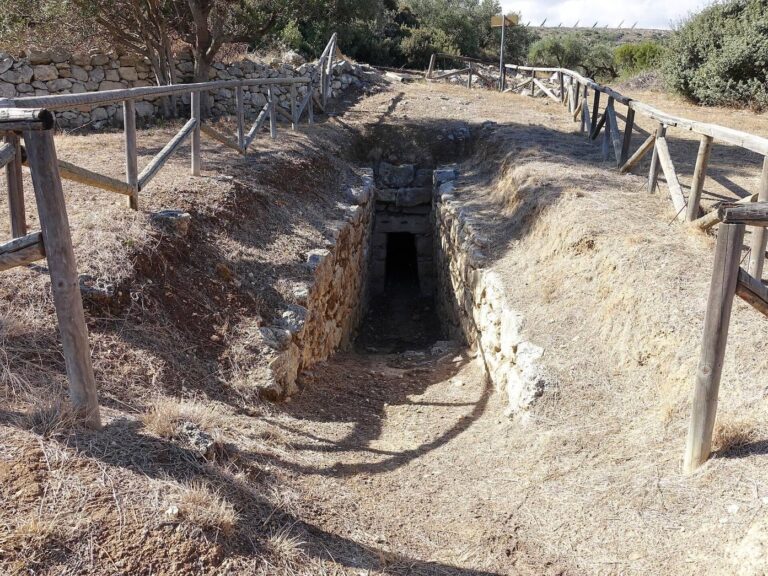
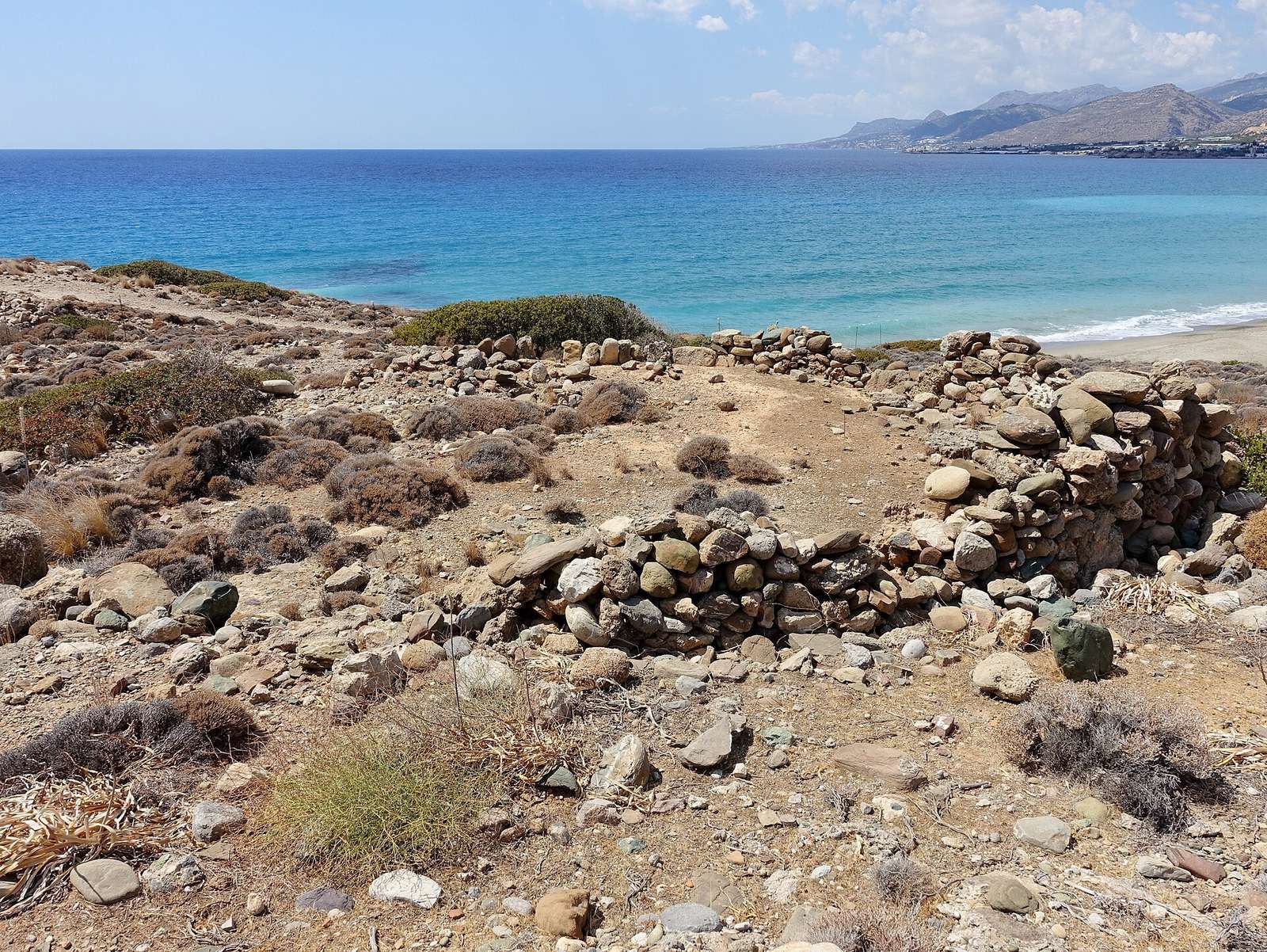
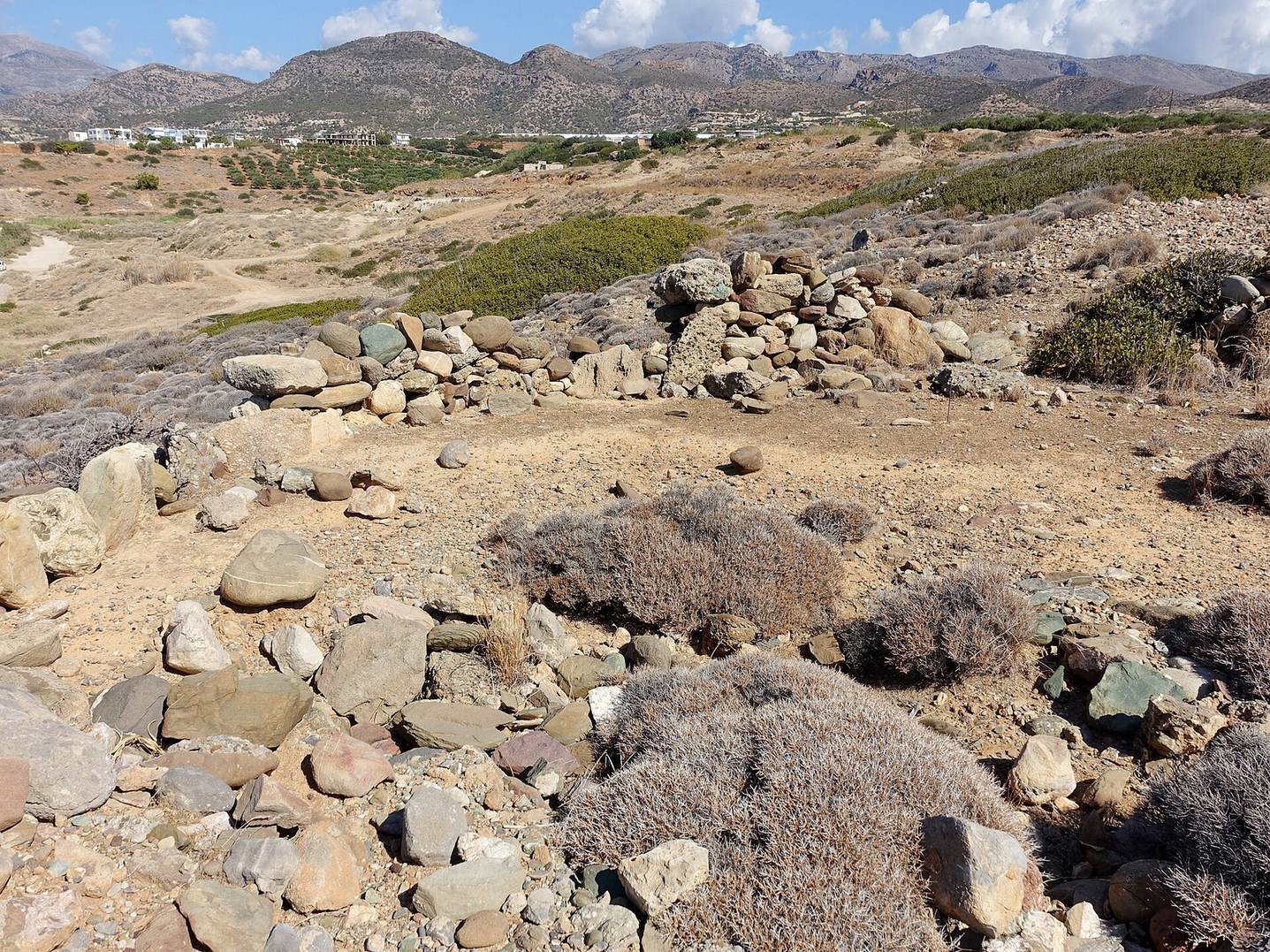
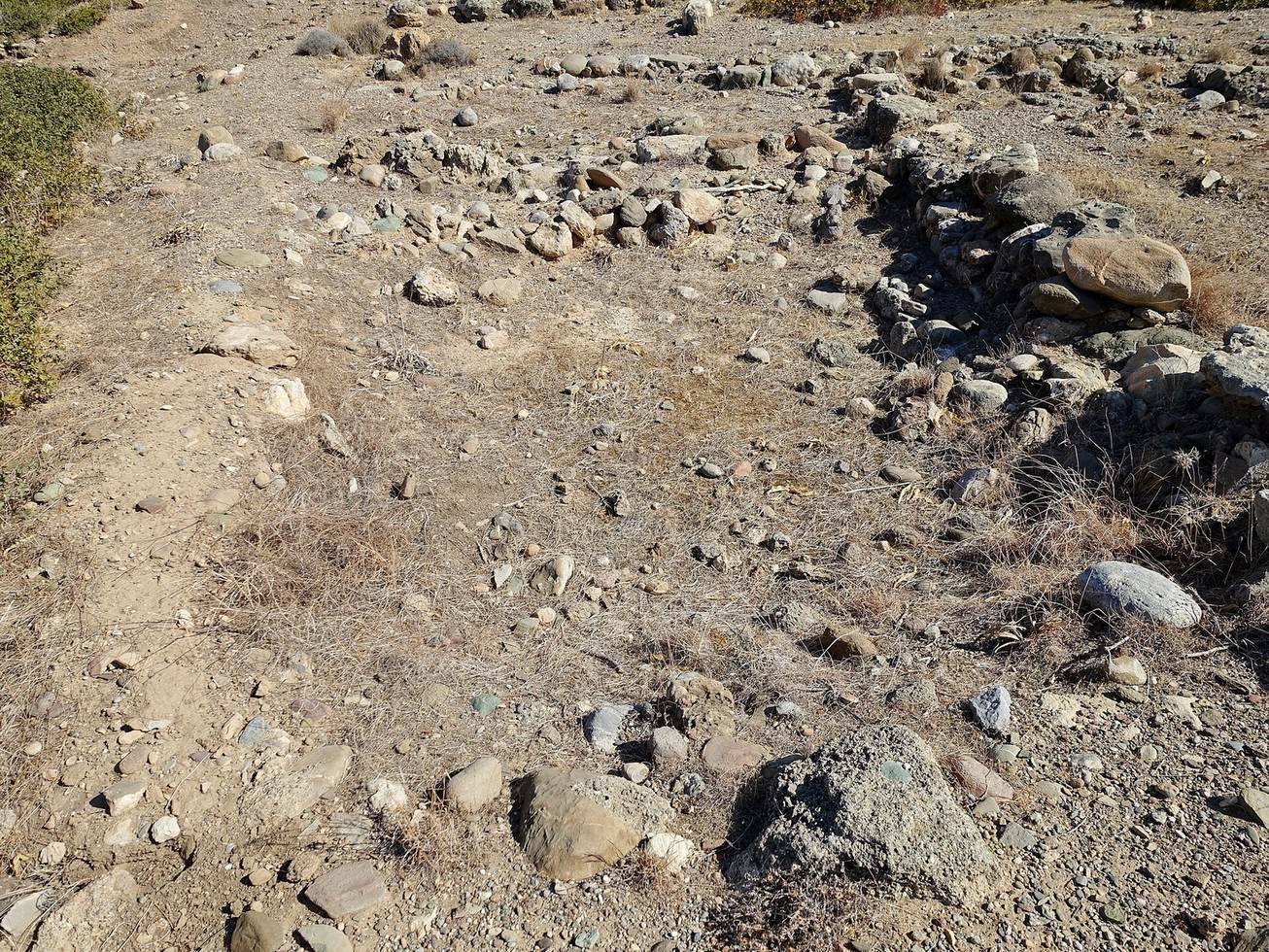
The settlement occupied the whole of Vigla, a hill about 300 metres east of Diaskari beach. The hill separates that beach from Langada beach and the mouth of the Andromylos River to the southeast. Excavated buildings had paved floors and masonry walls, and the trenches also yielded brick fragments.
Pottery from the settlement includes fragments decorated with floral and marine-style elements of Neopalatial Minoan art.
Karavospilios cave
Karavospilios, whose name means “Ship Cave,” lies on the shore below Vigla. The cave was higher above sea level before tectonic subsidence, the downward movement of land caused by geological processes, affected eastern Crete in antiquity. Its possible use as a shipyard remains uncertain.