Exaltation of the Holy Cross Church in Pruszcz Gdański: A Gothic Parish Church
Site at a Glance
- Popularity
- Medium
- Country
- Poland
- Primary era
- Medieval
- Eras represented
- Medieval, Early Modern, Modern
- Civilizations
- Kingdom of Prussia, Polish–Lithuanian Commonwealth, Teutonic Order
- Site type
- Religious
- Remains
- Church
On this page10 sections
History
Medieval origins
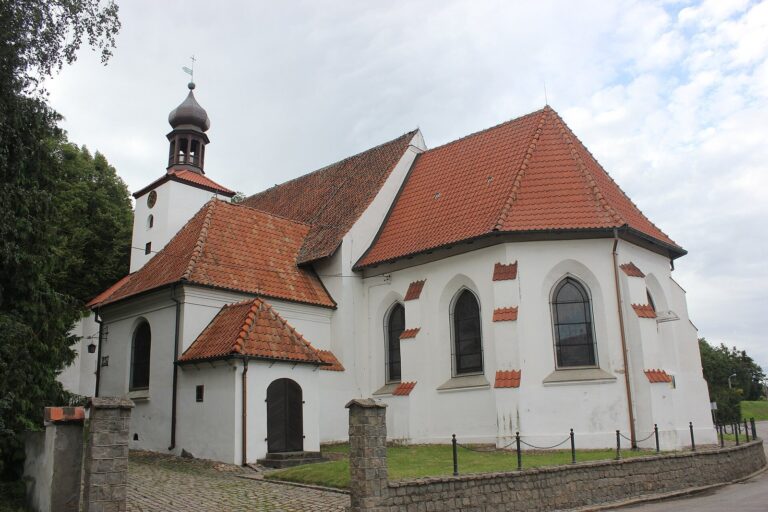
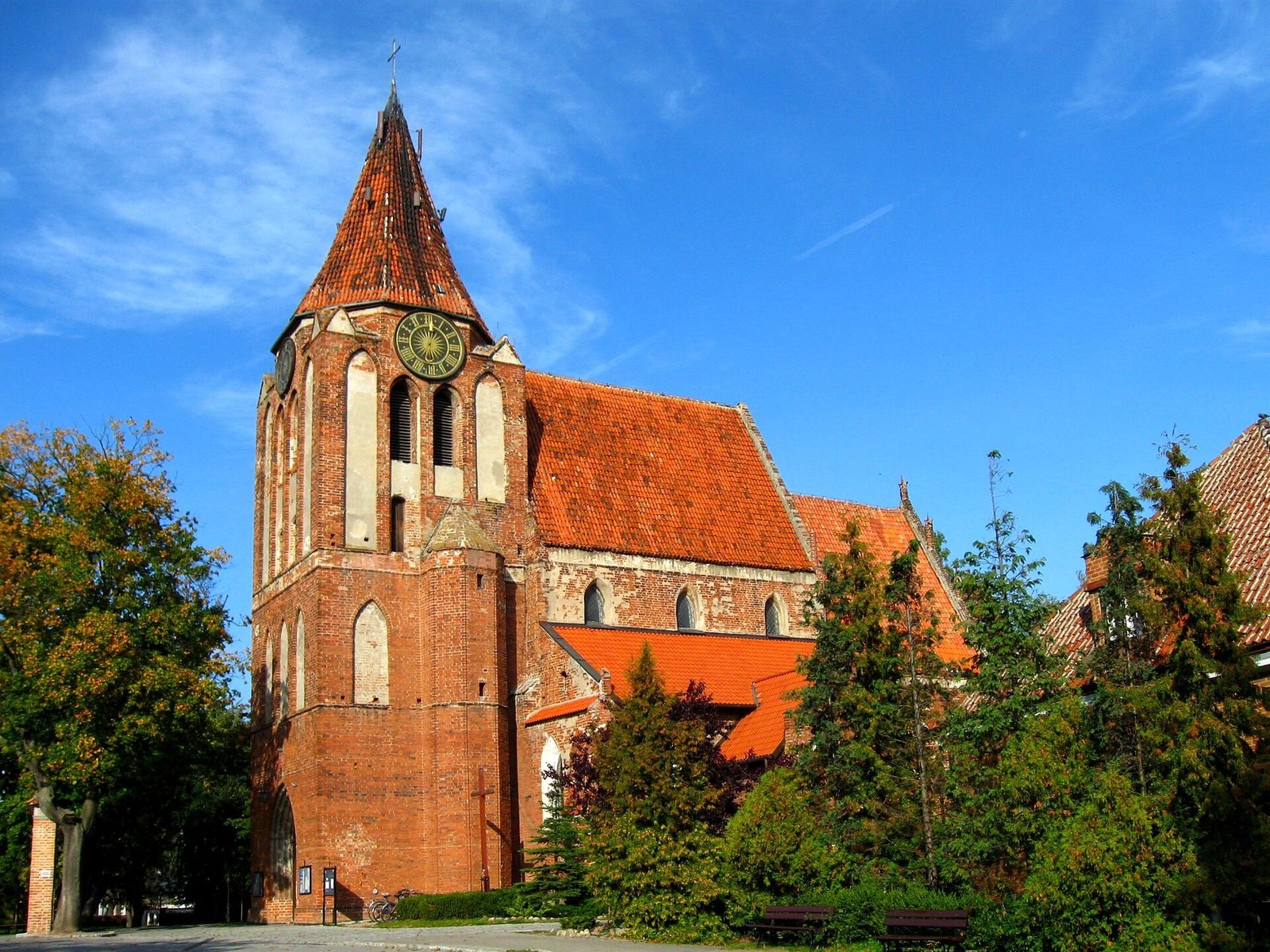
The Exaltation of the Holy Cross church in Pruszcz Gdański, Poland, is a Gothic Roman Catholic building whose first masonry form was erected by the mid-fourteenth century, before 1367. A fire that struck the village in 1460 destroyed the church’s roofs and interior. The building was rebuilt after 1466.
Reformation and Lutheran use
During the Reformation, Lutherans, followers of a Protestant tradition associated with that movement, took over the church around 1585. Lutheran worship continued there until 1944. A cemetery was probably established around the church in the seventeenth century.
The Crucifixion Altarpiece, dated 1515 and attributed to the Brussels workshop of Colijn de Coter, a painter from the Low Countries, was kept in the church from 1578 to 1945. It is one of the most impressive works of Netherlandish painting in Poland.
Repairs and twentieth-century changes
The church was repaired in 1742 and 1831. Lutheran worship ended in 1944, and the church returned to Catholic use in 1945. After the Second World War, the altarpiece was transferred to the National Museum in Warsaw. Since the 1980s, municipal and church authorities have sought its return to its historical display location.
Remains
The church and tower
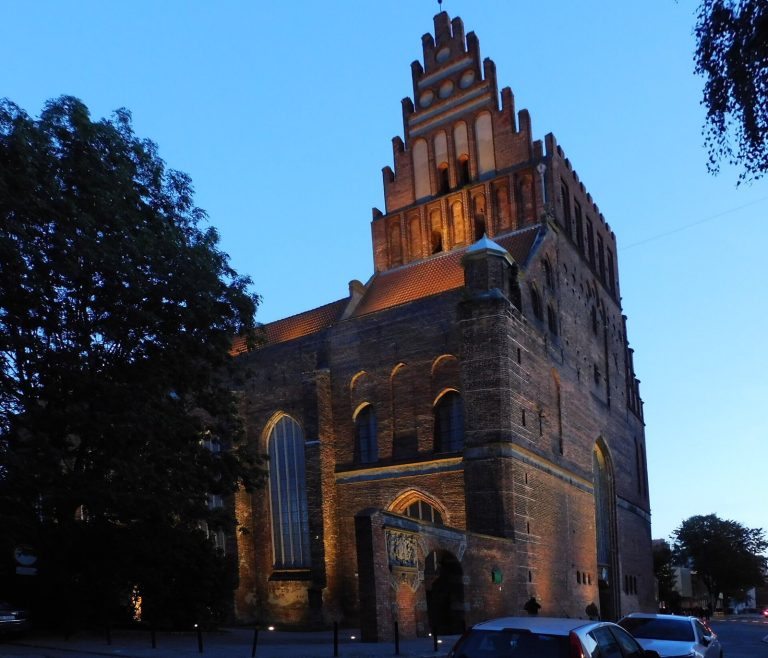
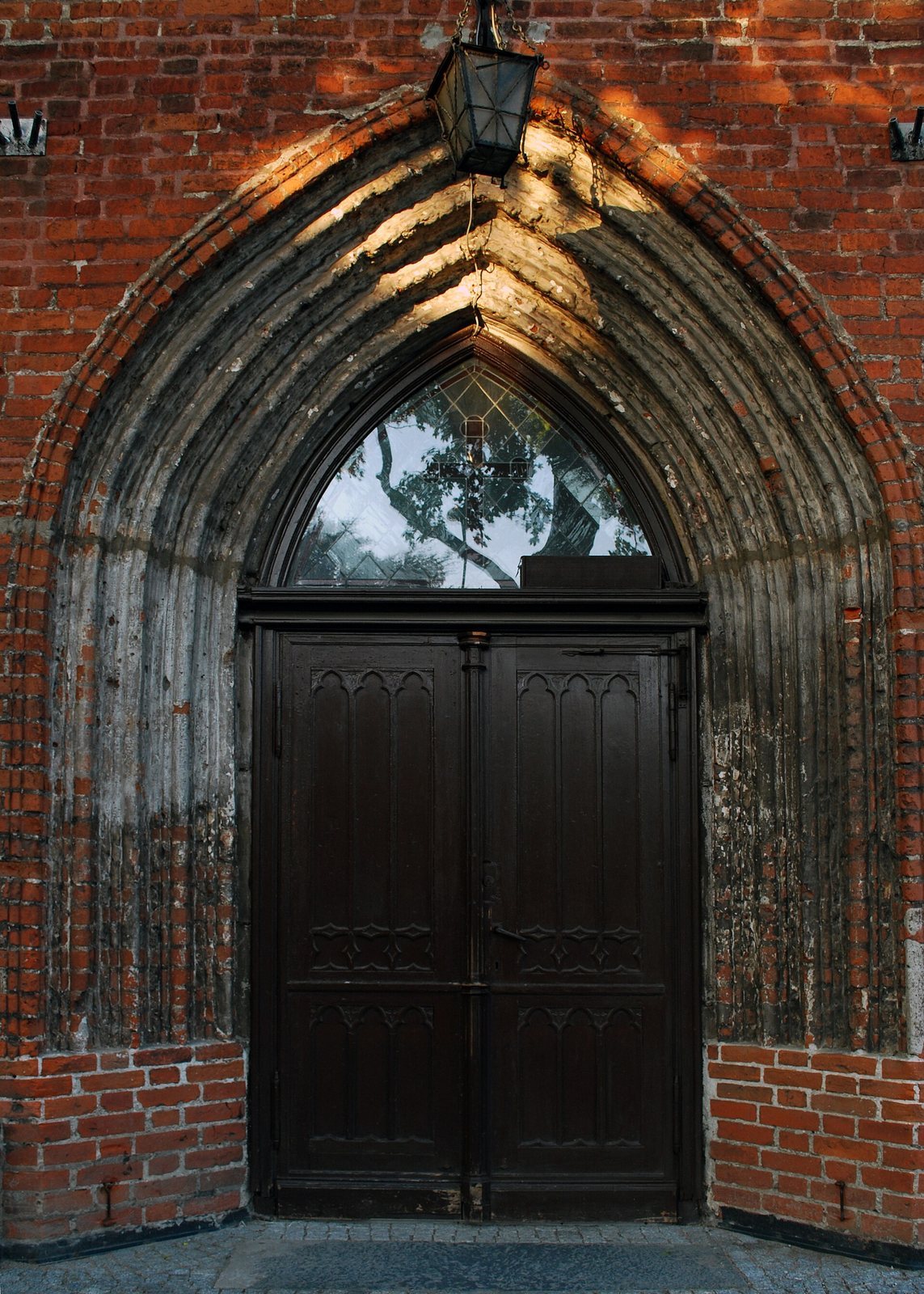
The church is Gothic and has a single tower. Its blind panels, shallow recesses that do not pass through the wall, contain painted tracery, ornamental architectural patterns. Large fragments of the decoration were found during conservation, and the painted patterns were reconstructed in 2016. A clock installed on the tower in 1831 underwent extensive restoration in 1936.
Interior furnishings
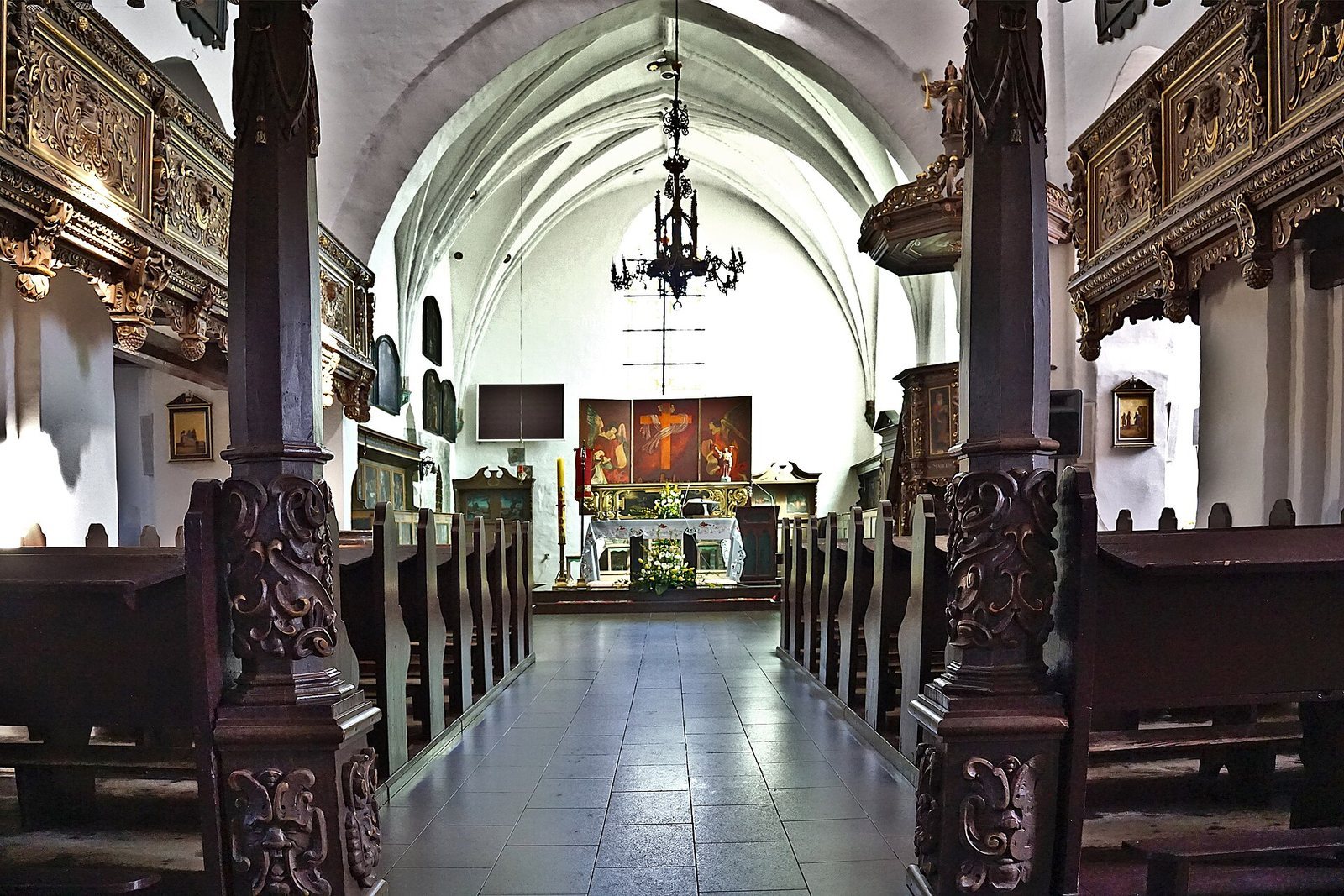
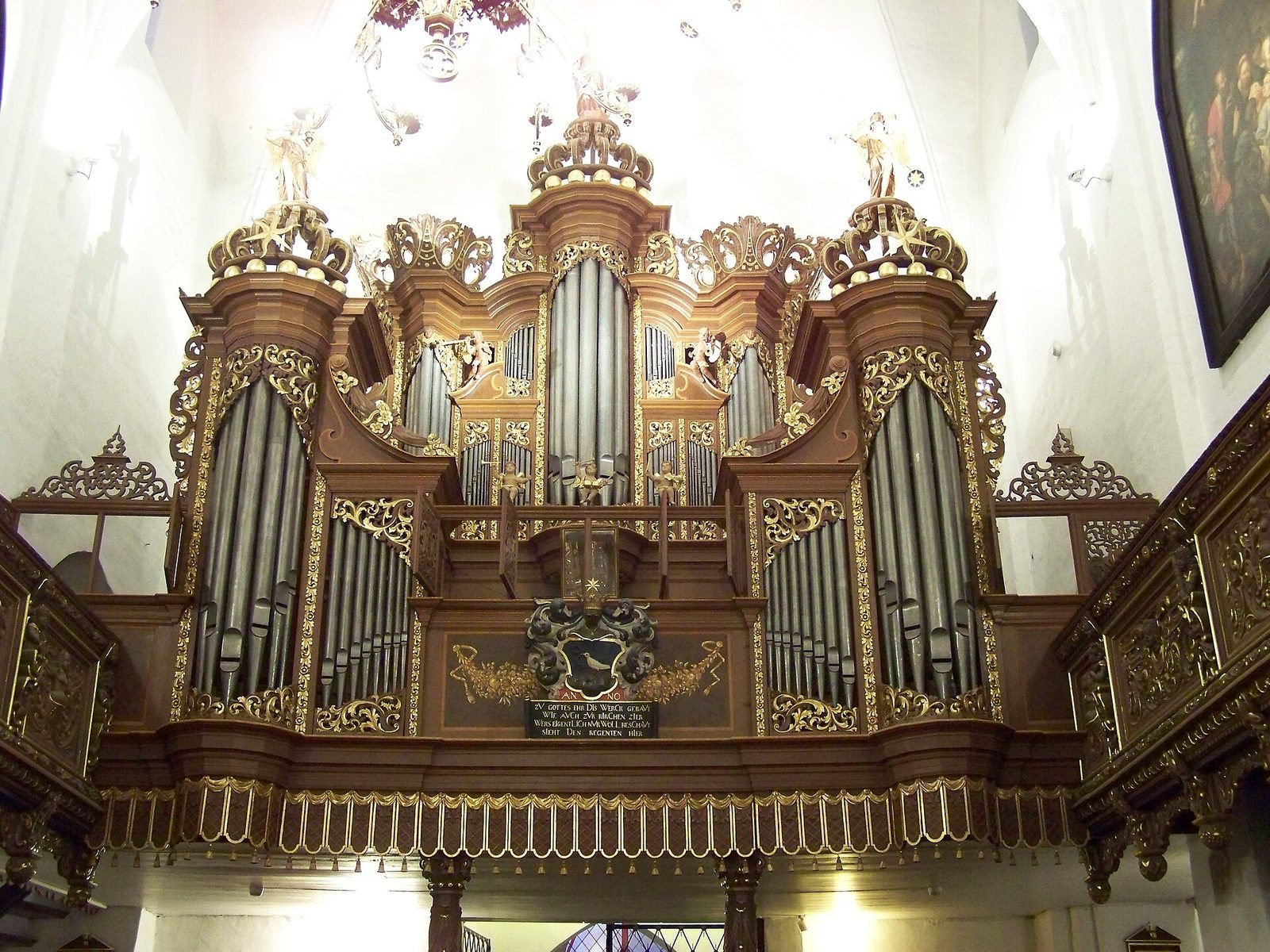
The church retains carved and polychromed wooden furnishings, including a Renaissance pulpit dated 1578, a gallery and a Baroque organ façade. The organ has 25 stops, each controlling a set of pipes, and two manuals, or keyboards.
Cemetery remains
Enclosure and gates
A brick enclosure with a small gate dates to 1864. A separate cemetery gate, dated 1648, bears an inscription.
Chapel and memorials
The cemetery’s surviving features include a brick mortuary chapel from the second half of the nineteenth century. A stone set on a pedestal commemorates Eugen Johst (1878-1933). The cemetery also contains an epitaph for Carl Ludwig Hellwich (1809-1893), a pastor from Rokitnica, and a large tomb slab from a family tomb.