Minoan Villa of Agios Georgios: A Terraced Complex in Crete
Site at a Glance
- Popularity
- Very Low
- Country
- Greece
- Primary era
- Bronze Age
- Eras represented
- Bronze Age
- Civilizations
- Minoan
- Site type
- Domestic
- Remains
- Villa
On this page8 sections
History
The Minoan villa of Agios Georgios is a Minoan building complex on Profitis Ilias hill in eastern Crete, Greece. The villa type is largely associated with the Neopalatial period, a phase of Minoan civilization linked to its palace centres. The complex may have supported farming in the surrounding area, and a small settlement probably stood nearby.
Minoan use and destruction
The building was probably destroyed during Late Minoan IA, one phase in Minoan archaeological chronology, though destruction during the succeeding Late Minoan IB phase is also possible. Pottery from sealed deposits was exclusively in the Late Minoan IA style, but that style continued in eastern Crete into Late Minoan IB. Landslides destroyed part of the complex, and early Christian burials caused further damage during the Byzantine period, the medieval Eastern Roman Empire.
Discovery and excavation
Amateur archaeologist Manolis Fygetakis drew attention to the site in 1959. Greek archaeologist Nikolaos Platon led excavations there in 1959 and 1960.
Remains
Terraced layout
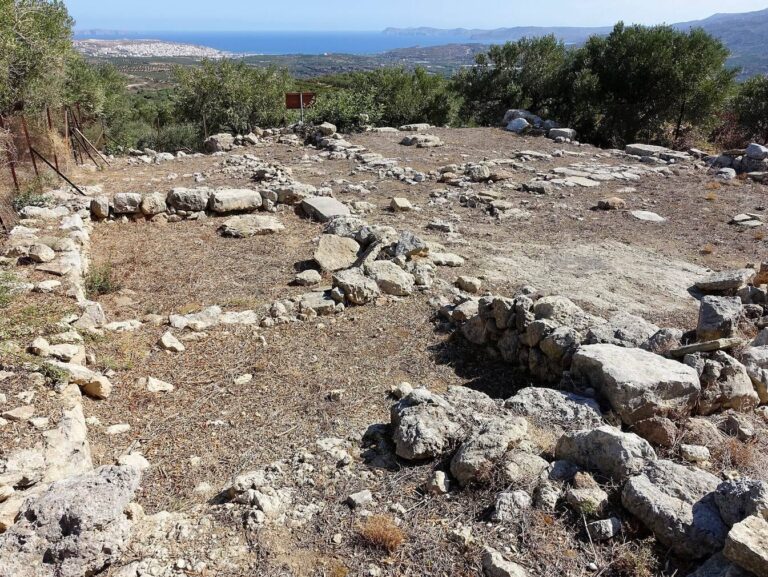
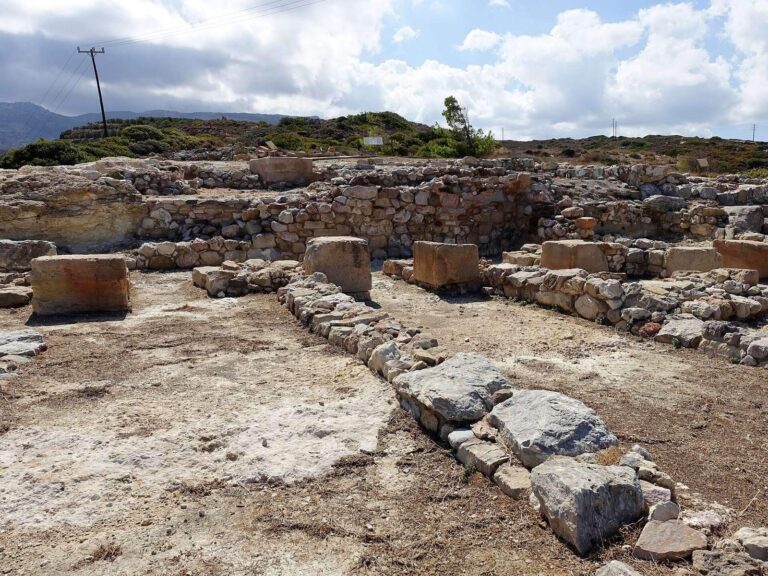
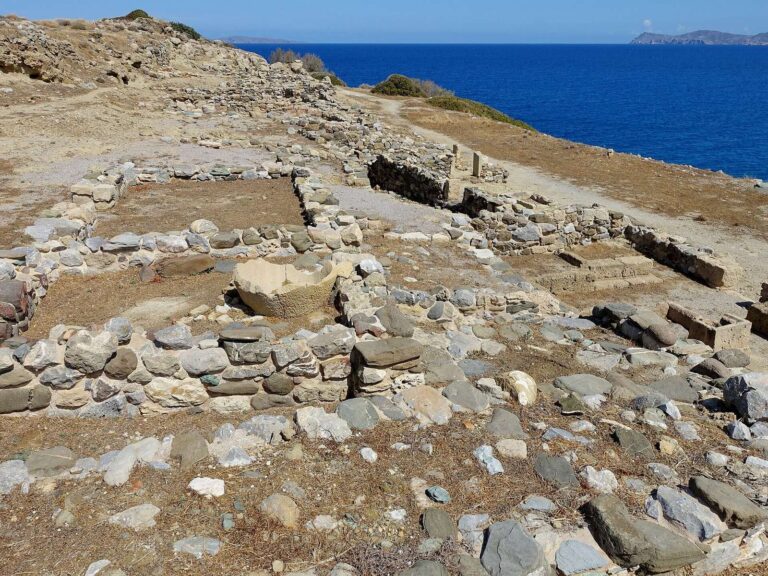
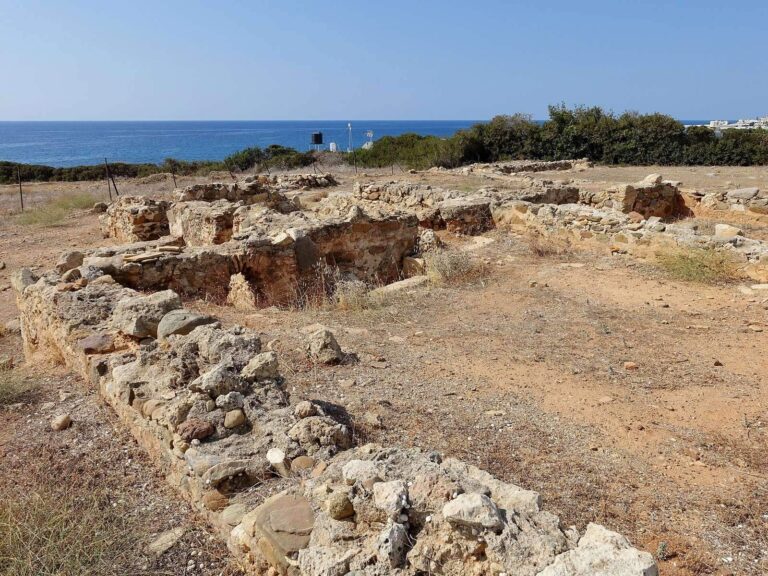
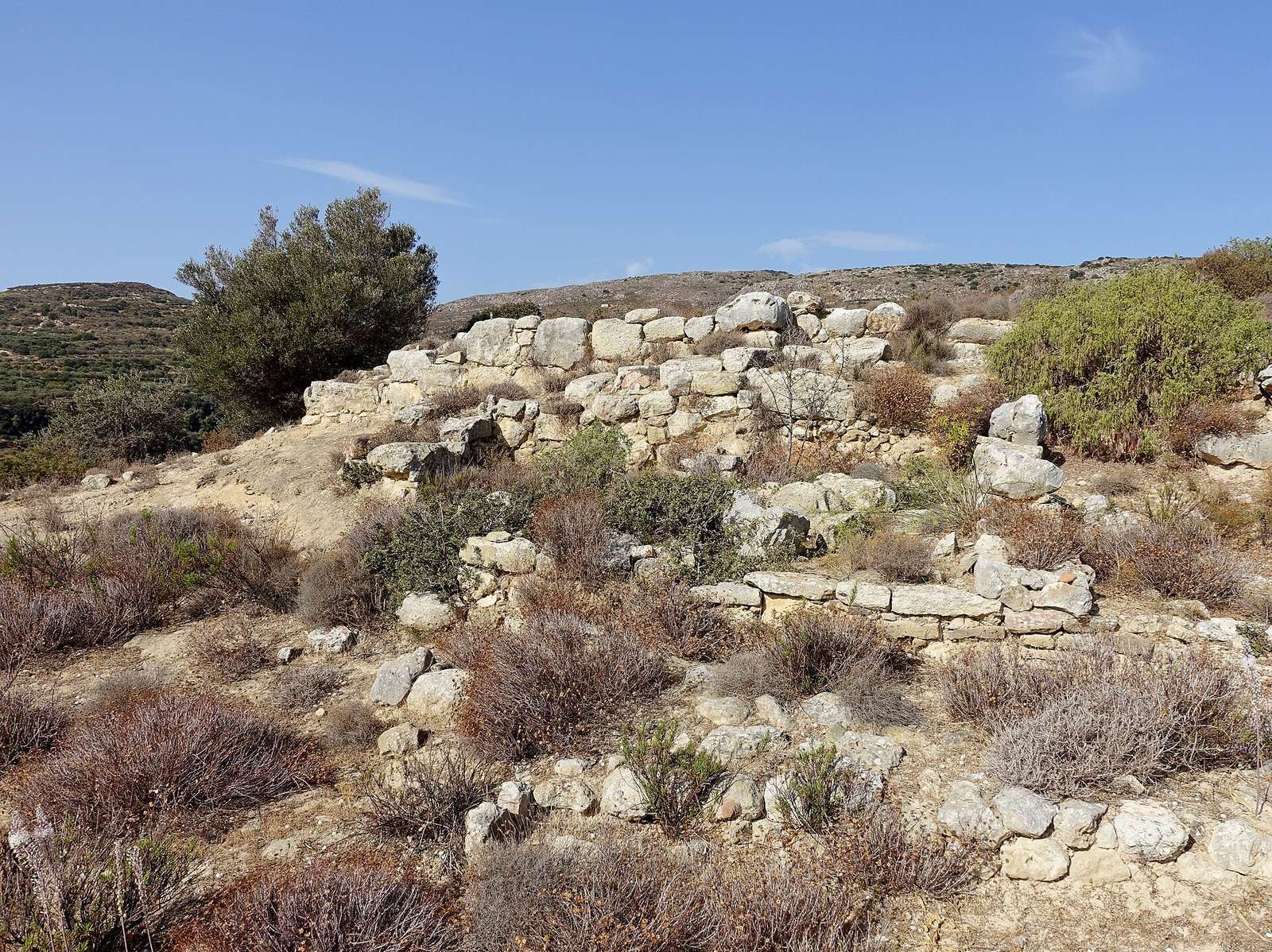
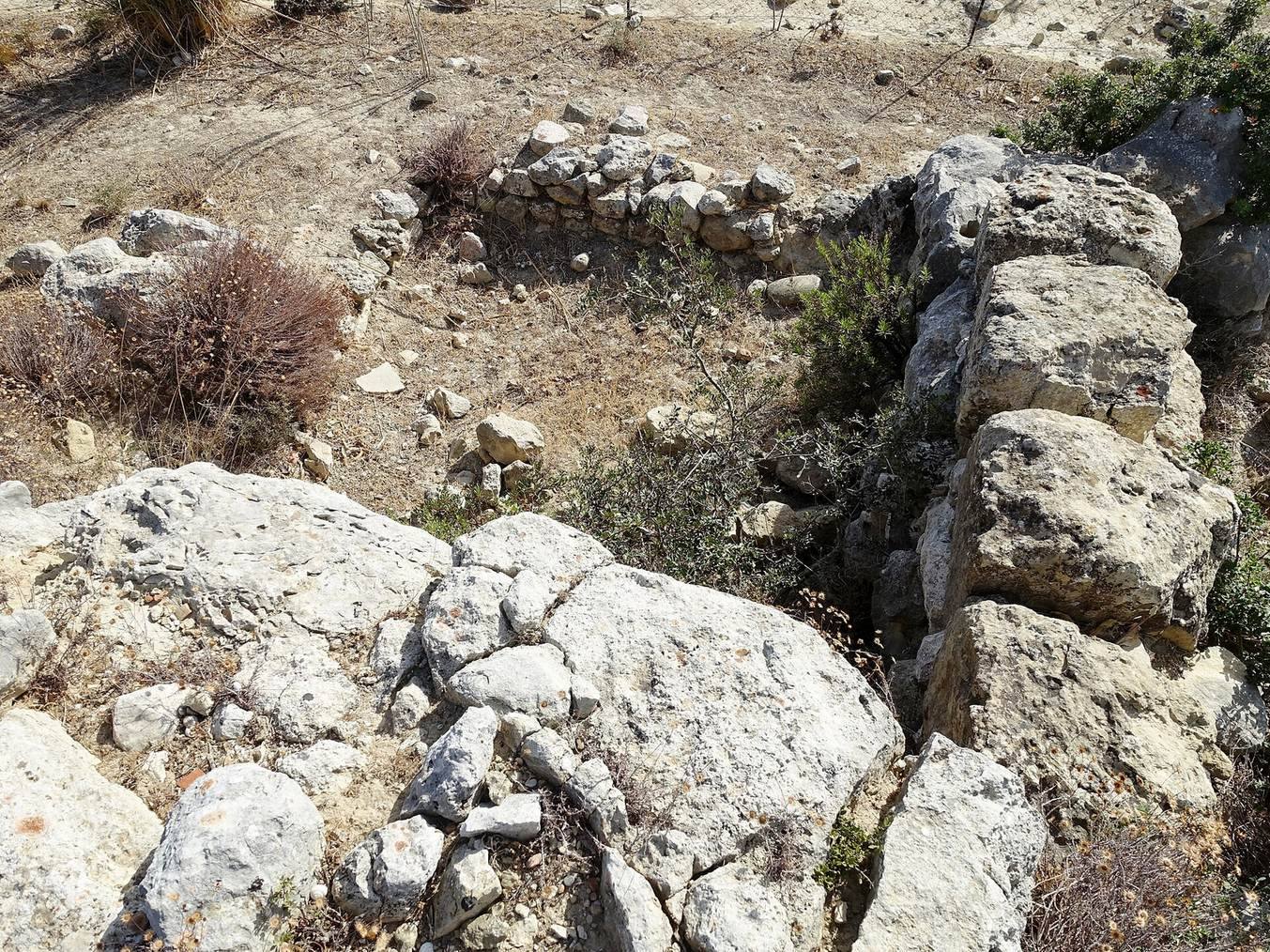
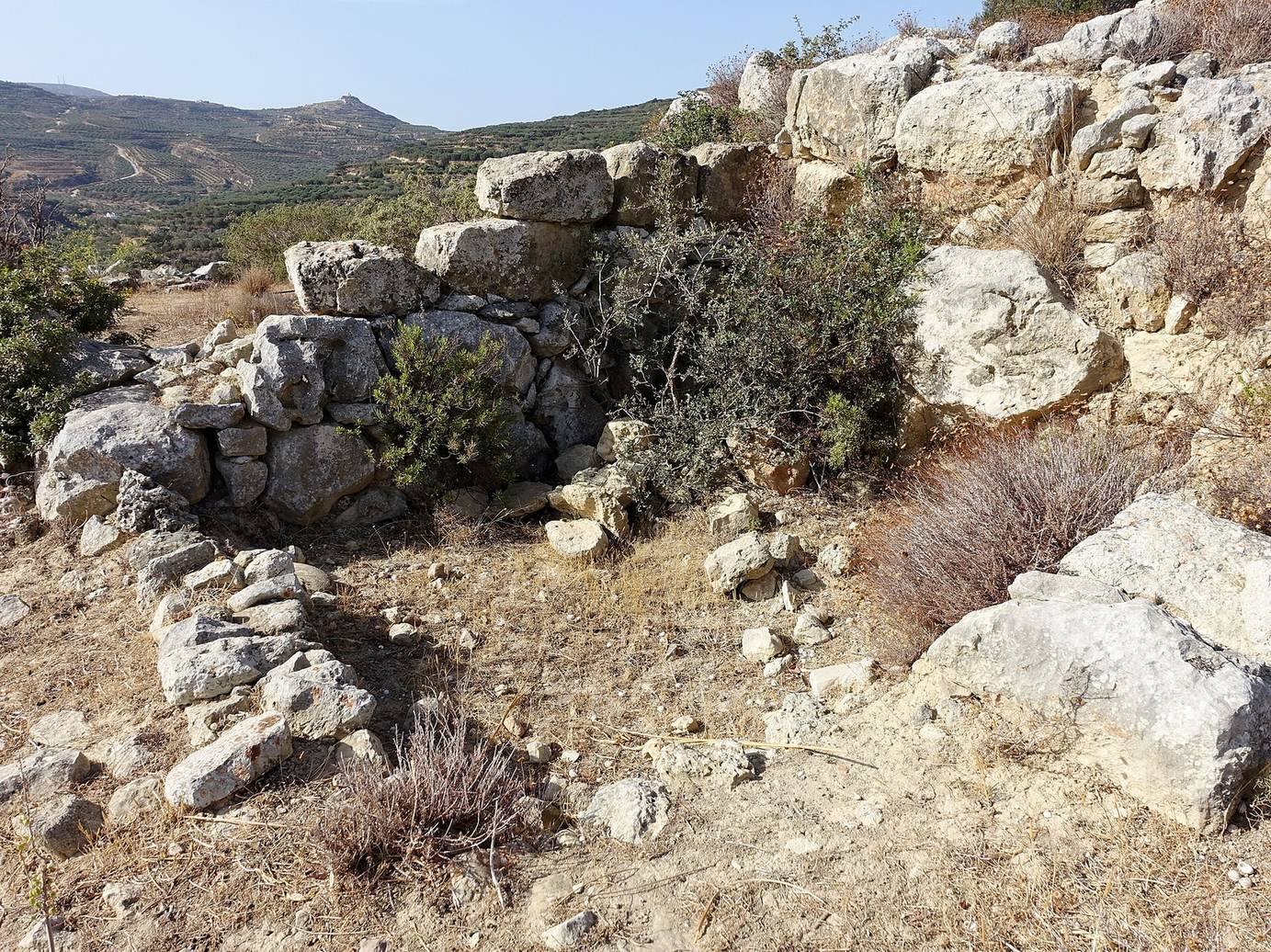
The remains form a terraced complex on Profitis Ilias hill, almost 300 metres above sea level and about 600 metres east of Agios Georgios. More than 30 rooms covered roughly 700 square metres across several levels. The uppermost terrace was better built than the lower ones, and the principal, highest-quality areas occupied the upper two levels. The remains are poorly preserved overall, especially in the lower part of the complex.
Access and room arrangement
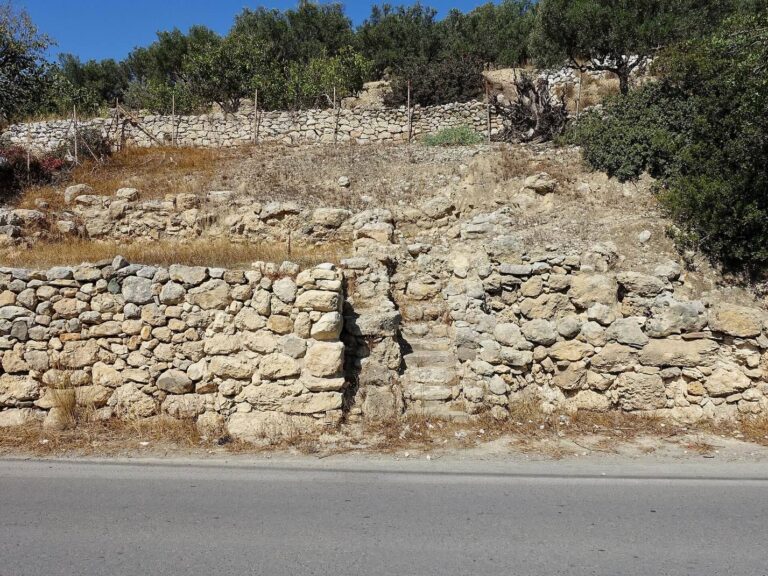
Rooms on each of the upper two levels were reached from a corridor on the east side. A staircase on the south linked the levels, and nine steps remain in their original positions. The entrance is thought to have been at the southeast, in Room Alpha. Room Psi lay on the uppermost level.
Storage and production areas
Storage rooms on the uppermost level contained pottery vessels, while millstones, a potter’s wheel, and wine-press equipment came from upper rooms. Loom weights found in five rooms on the second-highest level indicate textile production. A separate wine press occupied the lowest level, where a kitchen may also have been located.
Carved capital
A three-leaf capital, the uppermost part of a column, from a half-column attached to a wall was found at the site. Its form resembles a stone capital from the Palace of Knossos and was taken to indicate the building’s exceptional status.