Verrucole Castle: A Historic Fortress in San Romano, Italy
Visitor Information
Google Rating: 4.7
Popularity: Medium
Official Website: www.fortezzaverrucolearcheopark.it
Country: Italy
Civilization: Early Modern, Medieval European
Site type: Military
Remains: Castle
History
Verrucole Castle is located in the municipality of San Romano in Garfagnana, Italy. Its origins trace back to a fortified settlement established by the Gherardinghi family, counts documented from the year 991. This family built the initial inhabited and defensive core of the castle on a basaltic hill, which was known locally as “verruca,” referring to its high and rugged terrain.
During the 12th century, the Gherardinghi counts allied with three other families of Garfagnana and formed an alliance with the maritime republic of Pisa in 1170. This coalition aimed to oppose the Republic of Lucca’s salt tax, provoking Lucca to lay siege to the stronghold. After successfully capturing it, Lucca secured control over the area, though an imperial diploma issued in 1185 by Emperor Frederick I (Barbarossa) reaffirmed the castle, then called “Curia delle Verrucole,” as a possession of the Gherardinghi. Following the decline of this family, the fortress reverted to Lucca in 1296. Subsequently, Lucca entrusted its administration to the Guidiccioni family.
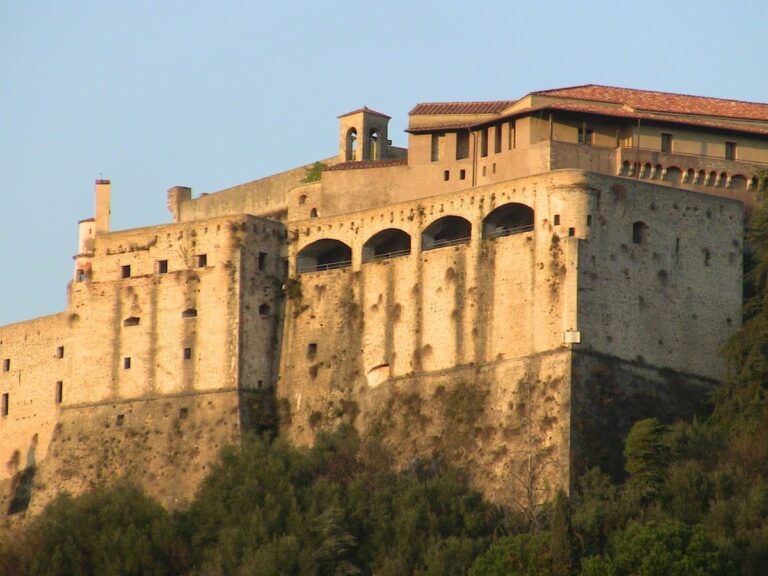
Ownership shifted again in the 14th century, from 1328 to 1345 when the Ghibelline marquis and mercenary leader Spinetta Malaspina held the fortress. Later, starting in 1446, the Este family of Ferrara acquired the castle as part of their expanding influence in the Garfagnana region. The Renaissance fortress visible today owes much to two periods of Este rule. Around 1450, Marquis Leonello d’Este initiated restoration and construction work, and nearly a century later, Alfonso II d’Este undertook further renovations and significant fortifications around 1564, adding two bastions to strengthen the defenses.
For more than four centuries, Verrucole remained a military stronghold under the Este dukes of Modena and Reggio, strategically placed to control the surrounding valley. Between 1522 and 1525, the notable poet and court official Ludovico Ariosto governed the area, overseeing the military presidia, including this fortress. Later visitors of historical note include Francesco II d’Este in 1674, while the 17th century witnessed the imprisonment of Captain Francesco Accorsini here by the Inquisition on charges involving alleged criminal and magical activities.
The fortress ceased to fulfill a military role in the late 18th century amid the French domination of the region. Following this period, it briefly became part of the Principality of Lucca and Piombino under Elisa Bonaparte, Napoleon’s sister. In 1866, the castle passed to private hands. In more recent history, the municipality of San Romano undertook its purchase in 1986 and launched extensive restoration and archaeological investigations in the 1990s. These efforts culminated in the fortress’s public opening in 2012, later complemented by improved access infrastructure commemorating the 530th anniversary of construction activities under Ercole I d’Este in 2019.
Remains
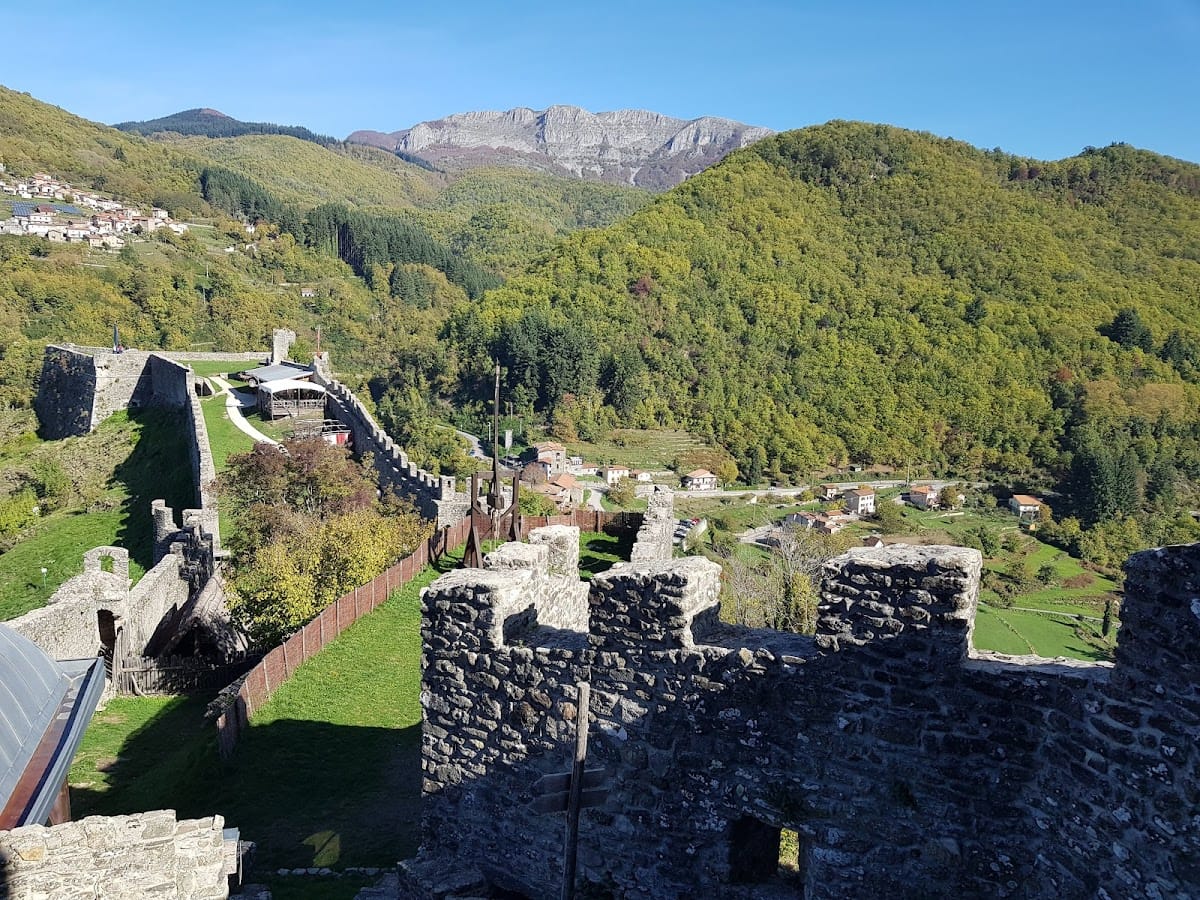
Verrucole Castle stands upon a basaltic hill characterized by its rocky prominence, which inspired its name derived from “verruca,” meaning a high, rugged peak. Archaeological layers include traces of a Bronze Age and medieval village, providing a deep historical context beneath the fortress ruins. The current structure mainly reflects Renaissance military architecture, constructed of local stone and masonry typical of the period.
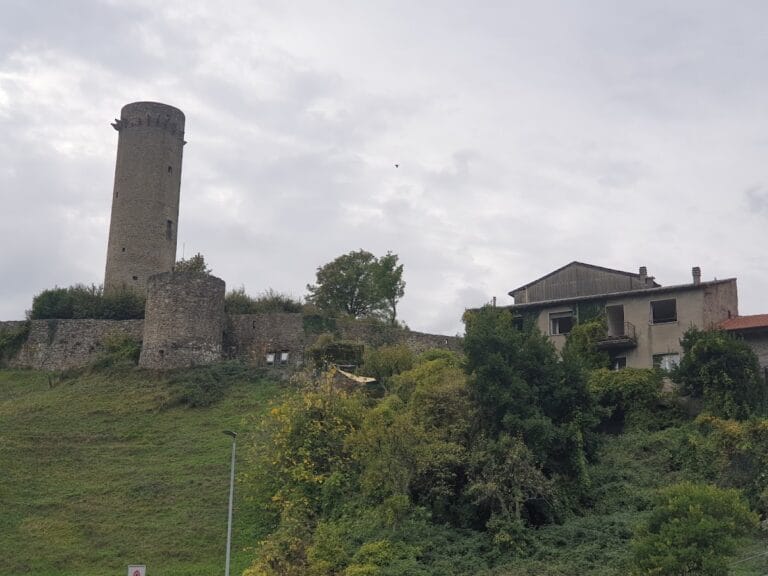
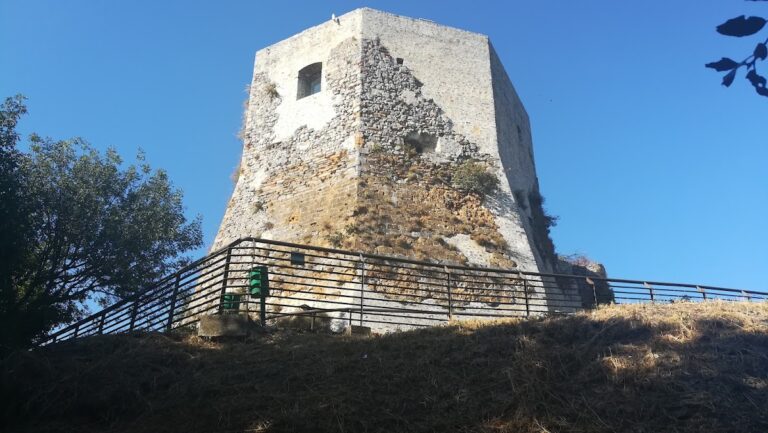
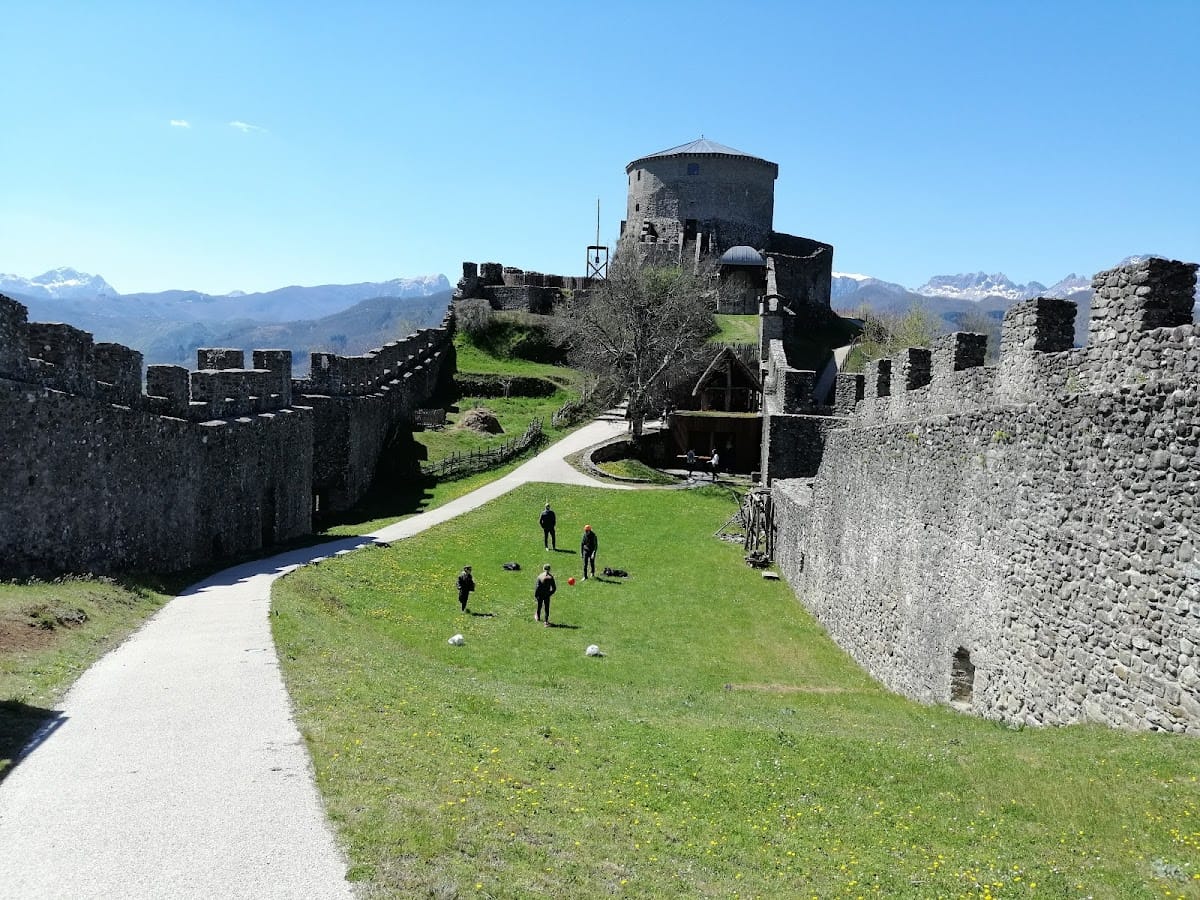
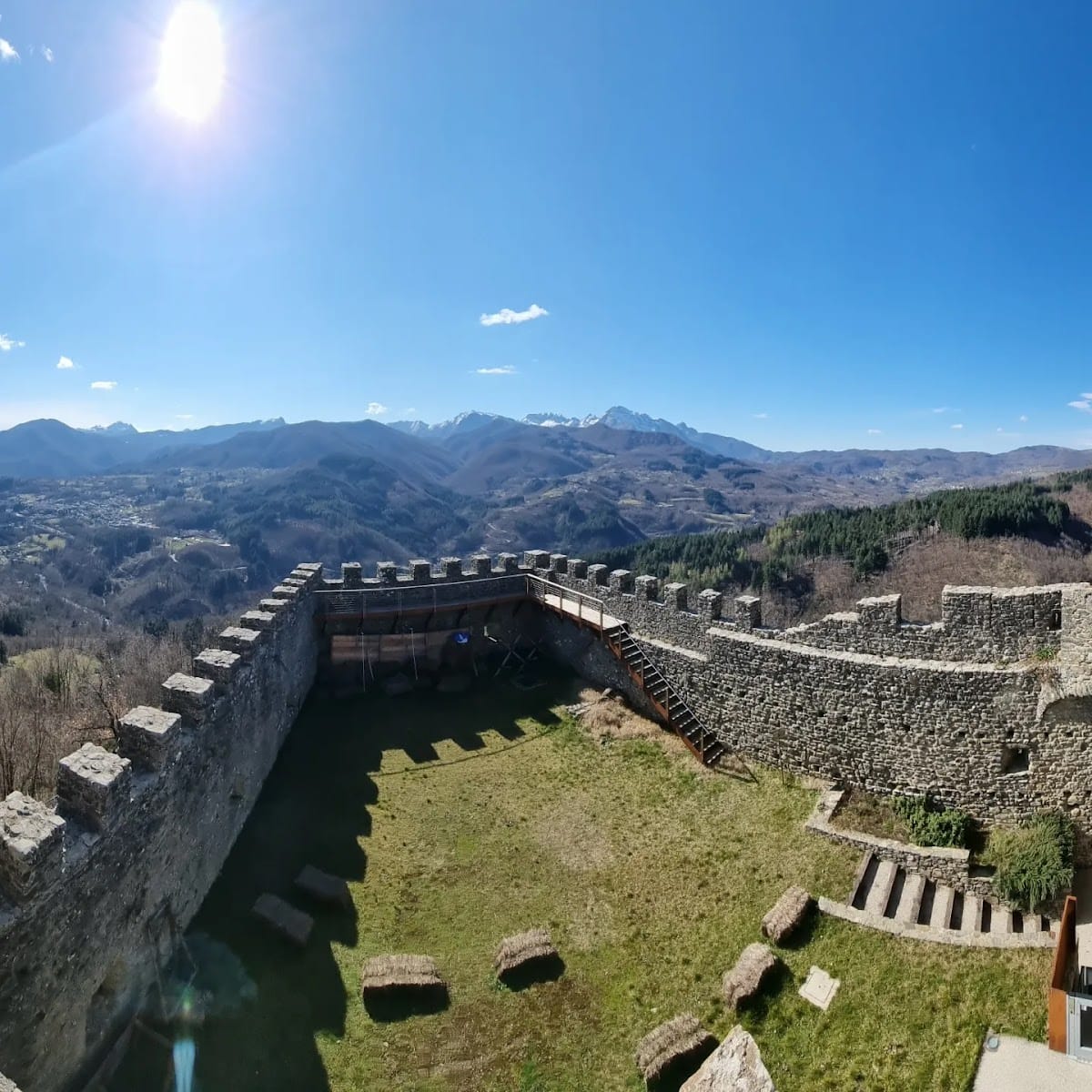
The castle’s layout revolves around two primary strongholds positioned at opposite ends of the hill: the Rocca Tonda, or round tower, and the Rocca Quadra, the square tower. The Rocca Tonda is a polygonal tower notable for its surviving Ghibelline merlons—crenellations shaped like swallowtails that are characteristic of medieval fortifications linked to the Ghibelline political faction. Recent excavations have revealed a cylindrical tower incorporated within this bastion. The Rocca Quadra’s remnants lie near the northeast bastion and include parts of a semicircular tower and a small building facing north.
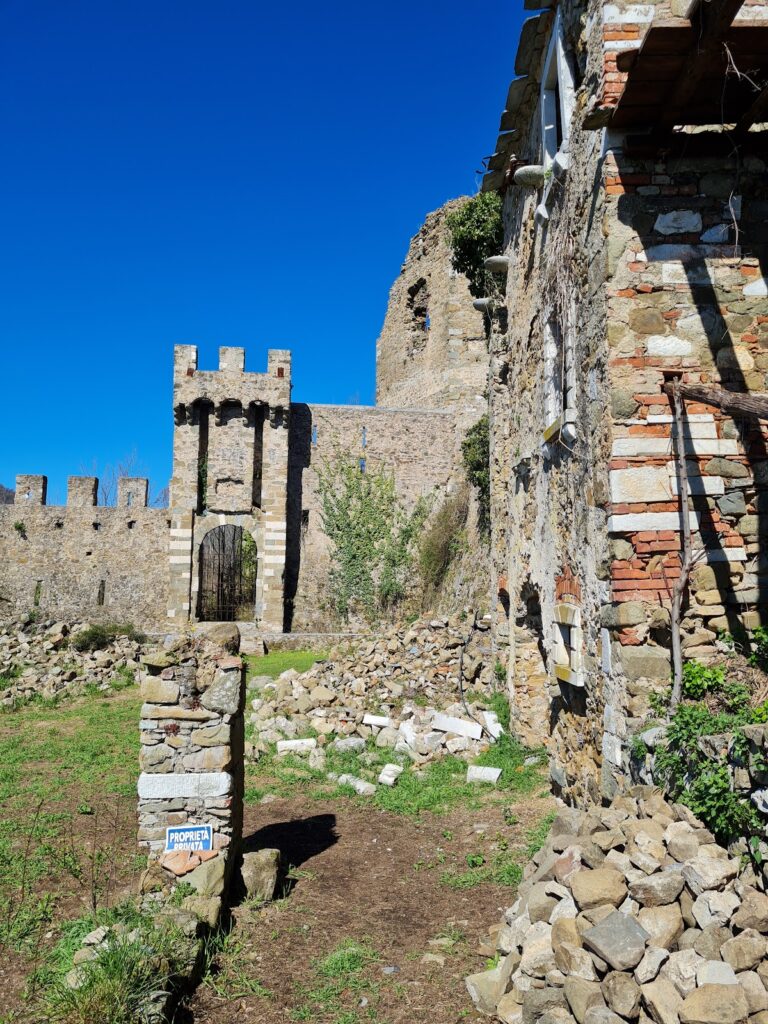
Originally, each of the two main towers was managed by a pair of castellans, each leading guard corps responsible for patrolling and defending their respective rocche (strongholds). The main entrance to the complex is through the ancient Porta Piana gate, which retains defensive elements such as a guardhouse and machicolations—openings through which defenders could drop projectiles or boiling substances on attackers below.
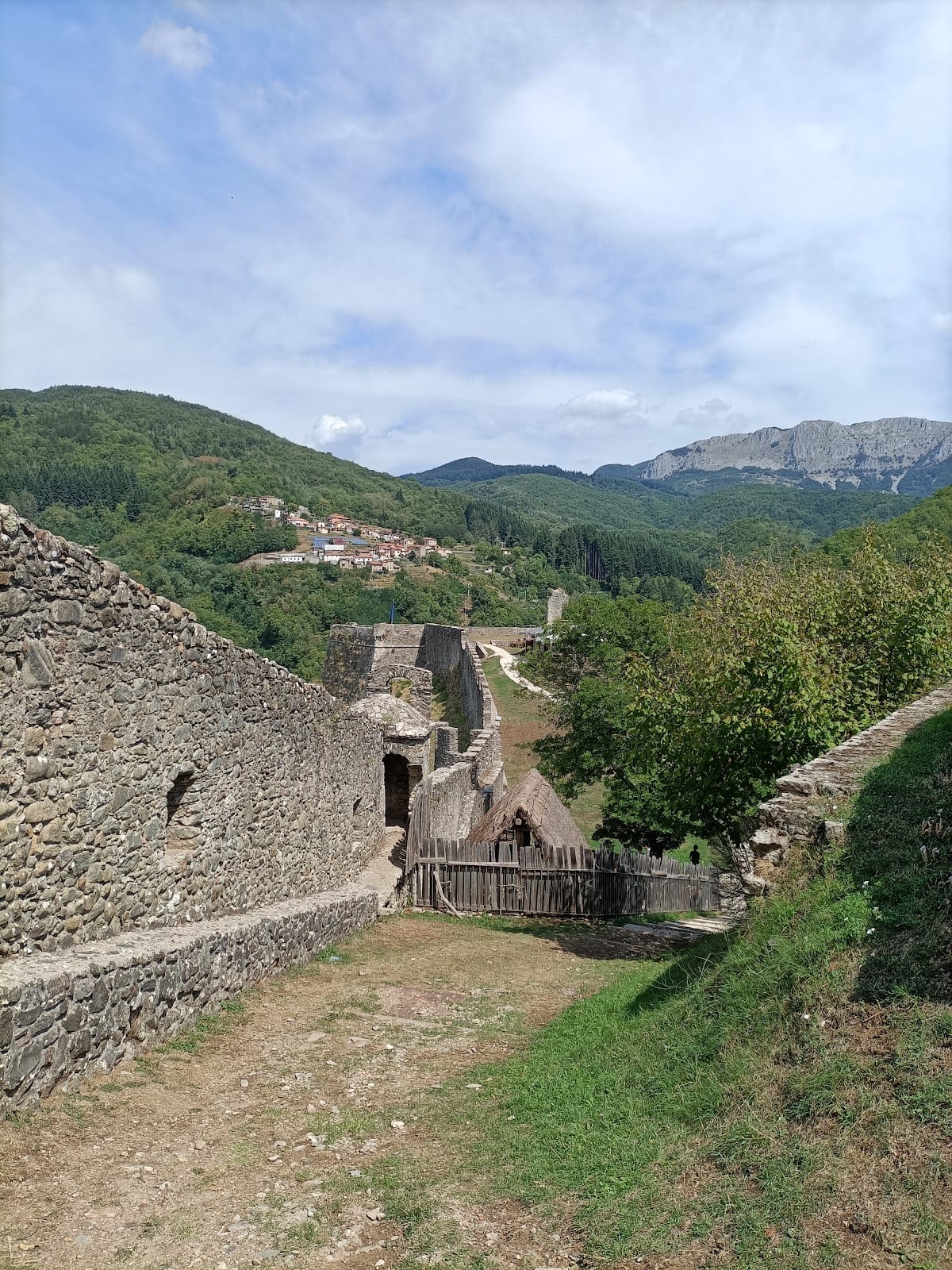
Visitors today can observe numerous defensive features, including crenellated curtain walls, casemates (enclosed vaults for shelter or artillery), and cannon embrasures designed for early modern gunpowder weaponry. Two 16th-century bastions stand out, oriented toward the Pania di Corfino massif, bolstering the fortress’s protective perimeter. Near the entrance to one casemate lie remains of a powder magazine and quarters for guards, structures that have been carefully restored to give insight into their original uses and now accommodate museum displays.
Ascending toward the Rocca Tonda, a small chapel once served military personnel stationed at the site. Adjacent to this tower, a narrow sally port—an emergency escape route hidden within the walls—is located beside a stone staircase, reflecting the defensive strategies employed during sieges. North of this sally port was the commander’s garden, which historically contained service buildings and a cistern for collecting rainwater, vital for sustaining those inside during long defensive standoffs. A gunpowder tower once stood to the west of the garden but was destroyed by lightning in 1683.
The restoration efforts between 1994 and 2000 have been integral to stabilizing the stonework, removing overgrowth, and recovering significant sections of the fortress. These included excavations around the Rocca Tonda, recovering the chapel, and reinforcing walls to preserve the structure. The powder magazine and guardhouse have been adapted for public interpretation, allowing visitors to grasp the fortress’s military function through carefully curated spaces. These remains collectively provide a vivid picture of the site’s strategic importance from medieval times through the Renaissance and its evolution as a militarized stronghold under successive rulers.
Nearby sites