Castle of Castelnuovo Magra: An Episcopal Residence and Defensive Castle-Palace in Italy



Site at a Glance
- Rating
- 4.5
- Popularity
- Low
- Country
- Italy
- Primary era
- Medieval
- Eras represented
- Medieval, Early Modern
- Civilizations
- Genoese, Republic of Florence
- Site type
- Military
- Remains
- Castle
On this page9 sections
History
The Castle of Castelnuovo Magra is a medieval castle-palace in Castelnuovo Magra, Italy, founded as a defensive post in the early thirteenth century and developed into an episcopal residence and administrative centre for the Diocese of Luni. Its later history combined religious and military functions, reflecting the changing control of the settlement in the Val di Magra.
Foundation and episcopal residence
Gualtiero II, bishop of Luni, established a defensive post at the beginning of the thirteenth century, at the same time as Castelnuovo was founded. Toward the end of that century, Enrico da Fucecchio, another bishop of Luni, commissioned the present castle-palace. It served as the residence of the bishop and the seat of the Diocese of Luni, the bishopric whose bishops controlled the residence and its associated administrative centre.
Florentine and Genoese phases
During the first half of the fifteenth century, when Castelnuovo was under the political domination of the Florentine Medici family, the episcopal palace was restored, with particular work focused on its quadrangular tower. In 1468, that tower received sandstone machicolations, projecting defensive structures supported on corbels that allowed defenders to observe or attack the ground immediately below.
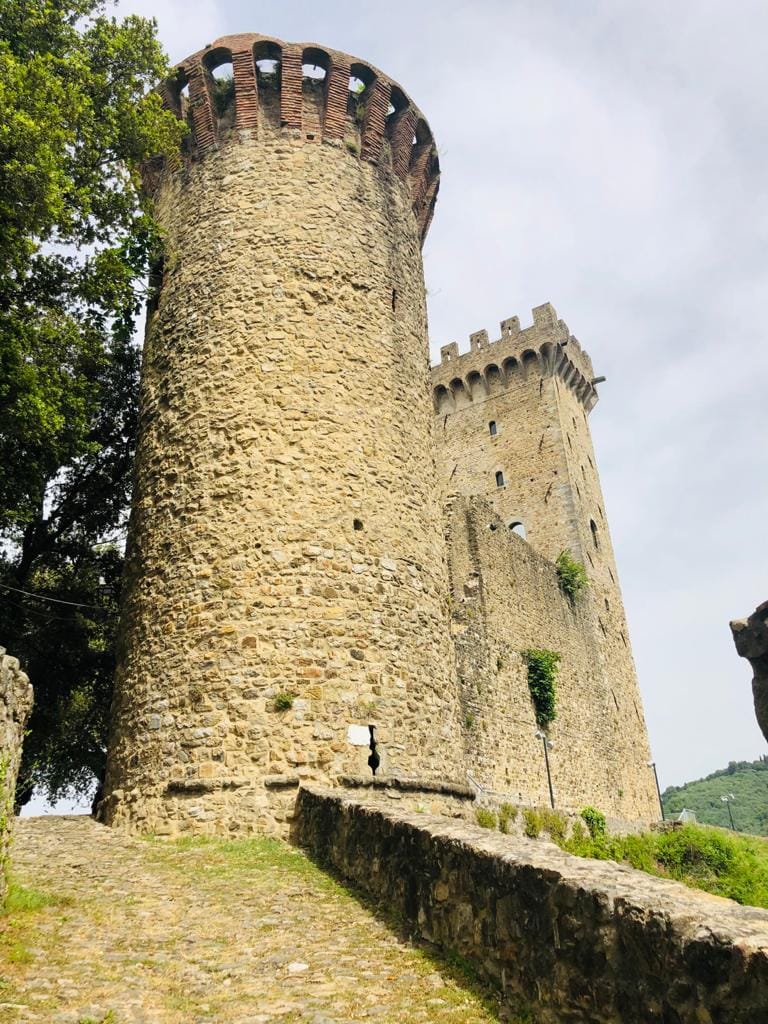
Under the Republic of Genoa, the maritime state that controlled the later sixteenth-century phase, a second tower was added. Its circular form and use as an ammunition depot strengthened the complex’s defensive role while it continued to function as an episcopal residence.
Abandonment and dismantling
The complex was used first by the Diocese of Luni and later by the community of Castelnuovo. The date of its abandonment is uncertain. Afterward, parts of the castle were dismantled, and the stones were reused in local houses. The last authorized removal took place in the nineteenth century, when building material from the complex was used for the choir of the parish church of Santa Maria Maddalena.
The Castle of Castelnuovo Magra is listed as Italian national heritage, preserving its place in the historical record of the settlement and the former Diocese of Luni.
Remains
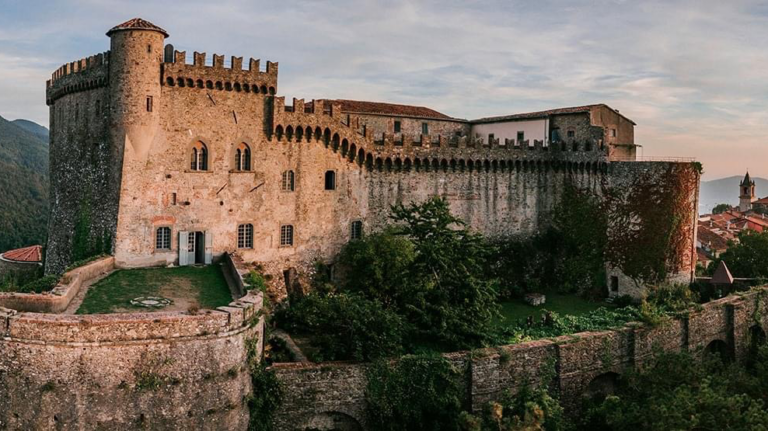
The surviving medieval complex stands in the historic centre of Castelnuovo Magra as a residential and defensive group. Its principal remains are a quadrangular tower, a circular tower, and sections of the perimeter walls. Together, these elements preserve the castle-palace’s combined episcopal and military character.
Towers and perimeter walls
Quadrangular tower
The quadrangular tower formed one of the principal building bodies of the complex. It was restored during the Florentine period and received sandstone machicolations in 1468. These projecting defensive features were positioned to enable observation and attacks directly beneath the tower. The tower remains as part of the medieval complex.
Circular tower
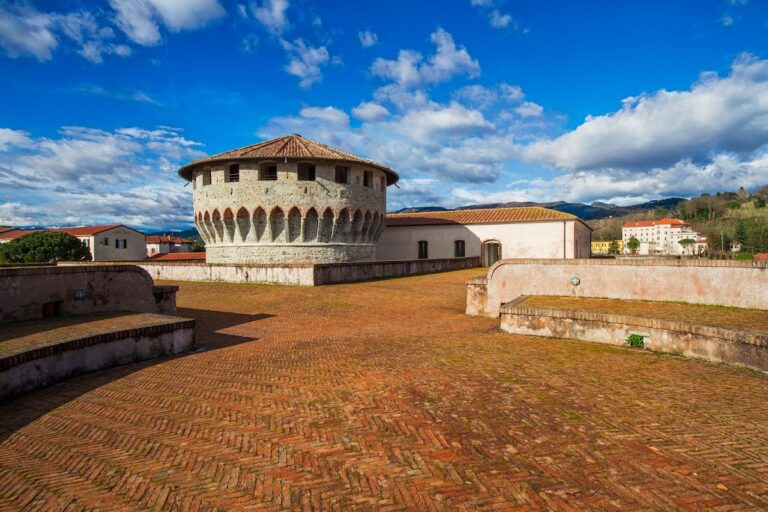
The circular tower belongs to the later Genoese phase and was built as an ammunition depot. Its machicolations are made of brick, distinguishing its defensive construction from the sandstone features of the quadrangular tower. The tower survives alongside the quadrangular tower and the remaining perimeter walls.
Residential and service spaces
The two principal building bodies contained reception rooms, additional rooms, and quarters for troops. The complex also included cellars, a mill, and a chapel, combining the spaces required for episcopal residence, administration, storage, and defence within the castle-palace.