Veleia: A Roman Municipality and Archaeological Site in Italy
Site at a Glance
- Rating
- 4.3
- Popularity
- Very Low
- Country
- Italy
- Primary era
- Classical
- External website
- Open
- Eras represented
- Classical
- Civilizations
- Roman
- Site type
- City
On this page17 sections
History
Veleia is an ancient Roman city in Italy, founded in 158 BC after Rome’s final subjugation of the Veleiates, a Ligurian people of northwestern Italy. Built in the Chero Valley behind the Roman colony of Piacenza, it became a prosperous municipality controlling a broad territory in the foothills between Parma, Piacenza, Libarna, and Lucca. Its principal period of civic and economic development came during the Augustan age, the period of Augustus’ rule and the first phase of the Roman Empire.
Foundation and Roman development
Veleia’s foundation followed Rome’s conquest of the Veleiates and the incorporation of their territory into the Roman world. The settlement developed as a municipality with authority over an extensive rural area, linking the foothill landscape with the surrounding Roman centers. During the Augustan age, its public buildings, economy, and civic organization expanded substantially.
The city is also mentioned by Pliny the Elder, the Roman author and naturalist, in his Naturalis Historia. Its later history is particularly well represented by inscriptions, including texts that illuminate local government, landholding, public life, and the relationship between Veleia and the wider Roman state.
Decline and burial
Veleia’s decline accelerated during the third century AD. The latest known epigraphic document dates to AD 276, while coins indicate that occupation may have continued into the fifth century. By about the fifth century, the city had fallen into ruin.
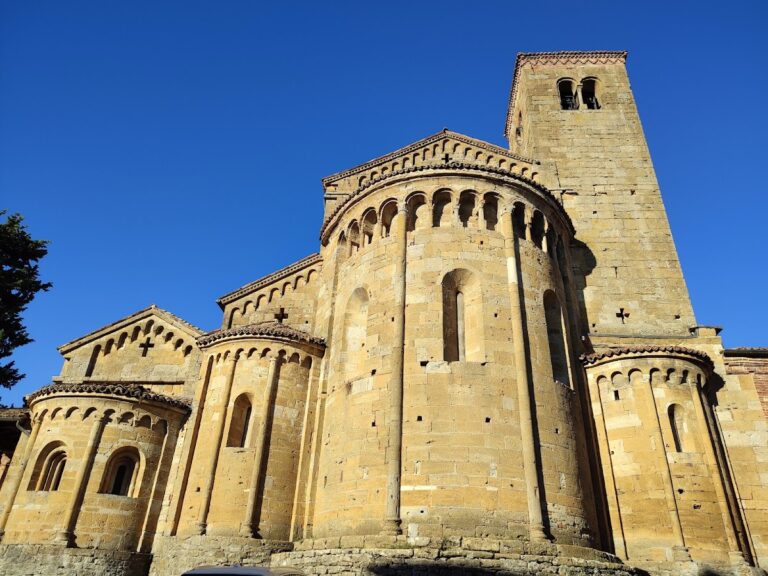
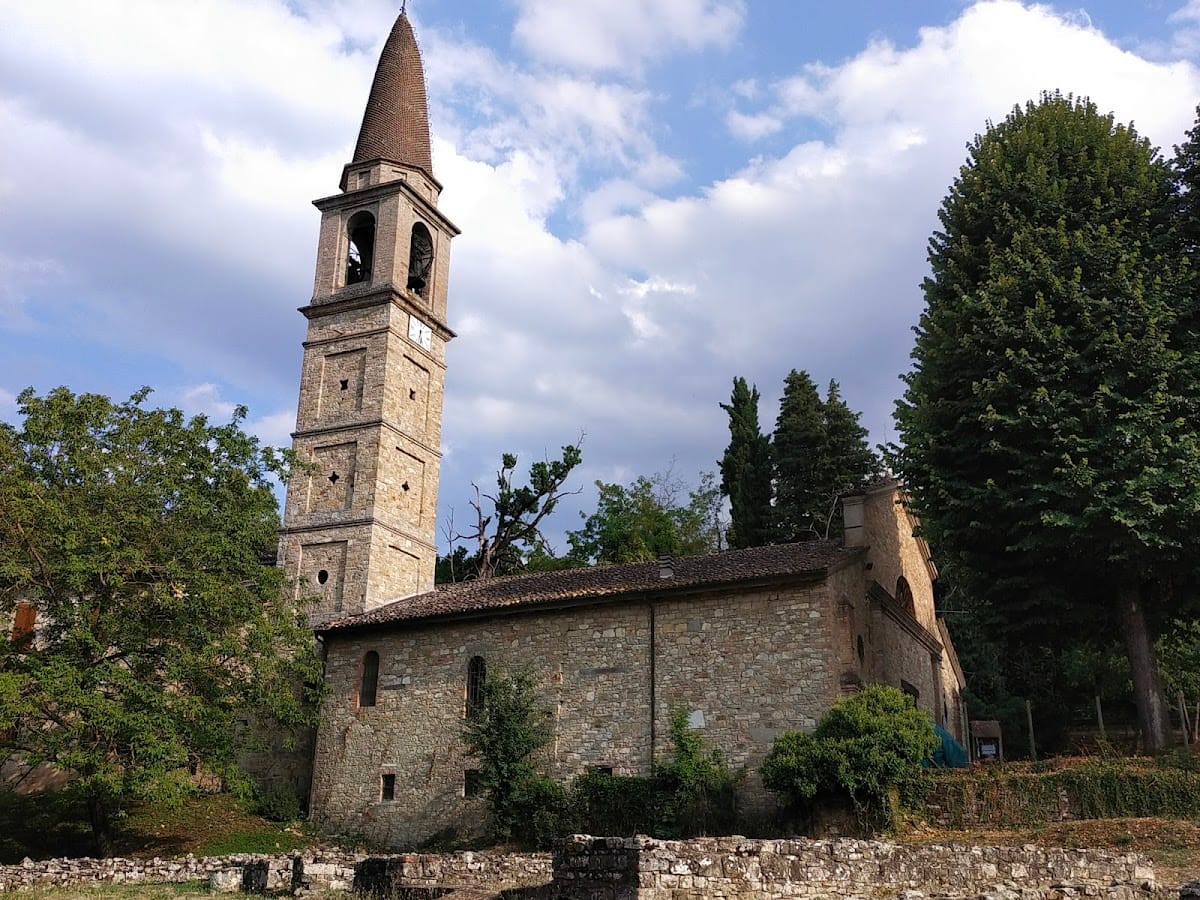
The surrounding mountains probably played a direct part in this transformation. A landslide may have buried the settlement suddenly, or repeated landslides may have gradually encouraged the depopulation of the area. The medieval parish church of Sant’Antonino now stands on the buried site, connecting the ancient settlement with the later history of the location.
Rediscovery and museum development
Modern knowledge of Veleia began to grow after the discovery of the Tabula Alimentaria Traianea in 1747. This large bronze inscription records Emperor Trajan’s Alimenta, a welfare and credit system in which loans to landowners generated interest for the support of children in need. The discovery led to the first excavation campaign in 1760, focused on the area where the tablet was found. A further major series of excavations began in 1816.
A small museum was established in 1953 on the ruins of the site’s calcidicum, a covered space associated with a basilica. Giorgio Monaco, who directed excavations from 1937 to 1957, was involved in this early museum phase. In 1975, a larger exhibition facility opened in the nineteenth-century building connected with the administration of the excavations. Under Mirella Marini Calvani, it brought together pre-Roman and Roman finds, casts of the Tabula Alimentaria Traianea and the Lex Rubria de Gallia Cisalpina, the honorary cippus of Lucius Sulpicius Nepos, and copies of statues from the Julio-Claudian imperial cycle.
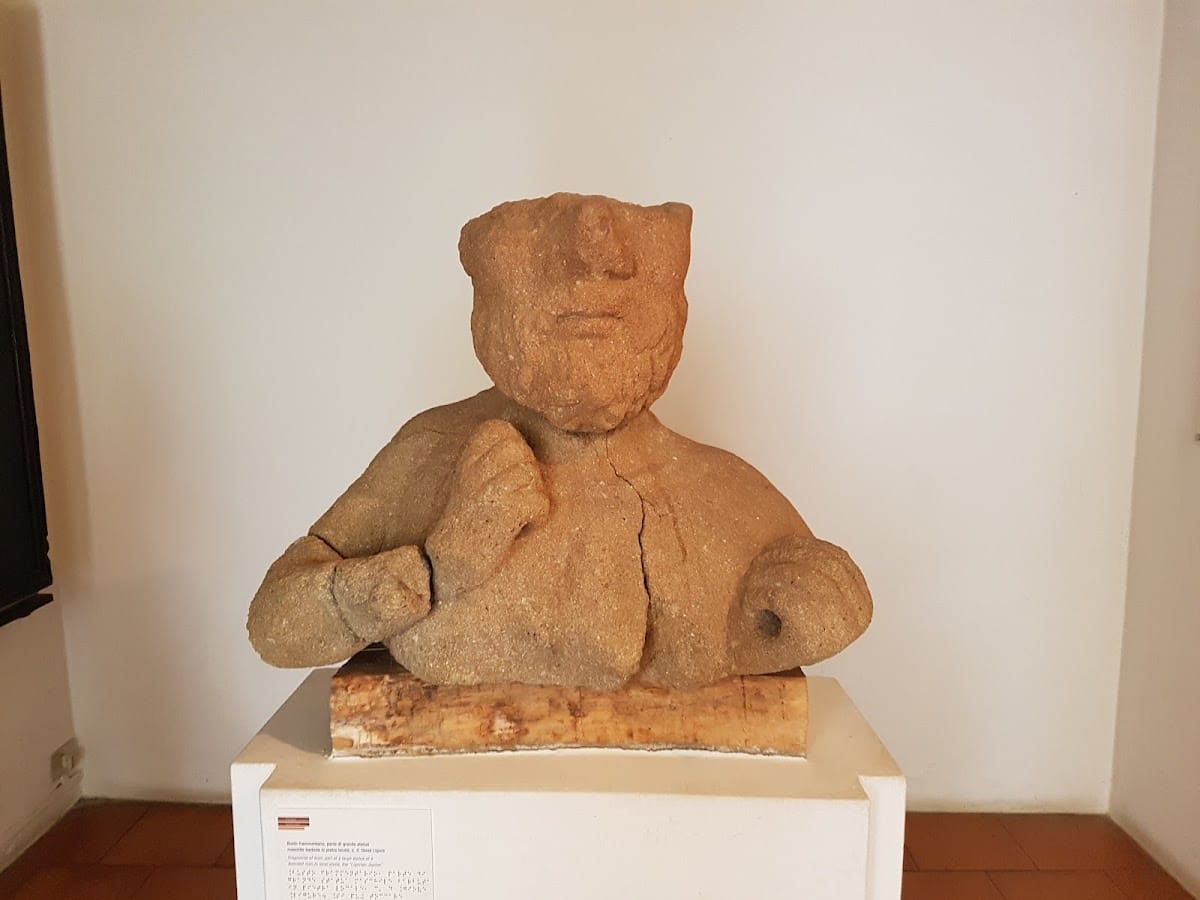
The Antiquarium and archaeological area were completely reorganized in 2010. The work introduced new interpretive panels, accessible routes, concealed display cases, and five thematic sections, while also restoring the statue known as the Ligurian Jupiter. The museum was administered through the Emilia-Romagna museum system of the Ministry of Cultural Heritage from December 2014, became part of a regional museum directorate in December 2019, and has belonged to the Monumental Complex of the Pilotta in Parma since June 2024.
Remains
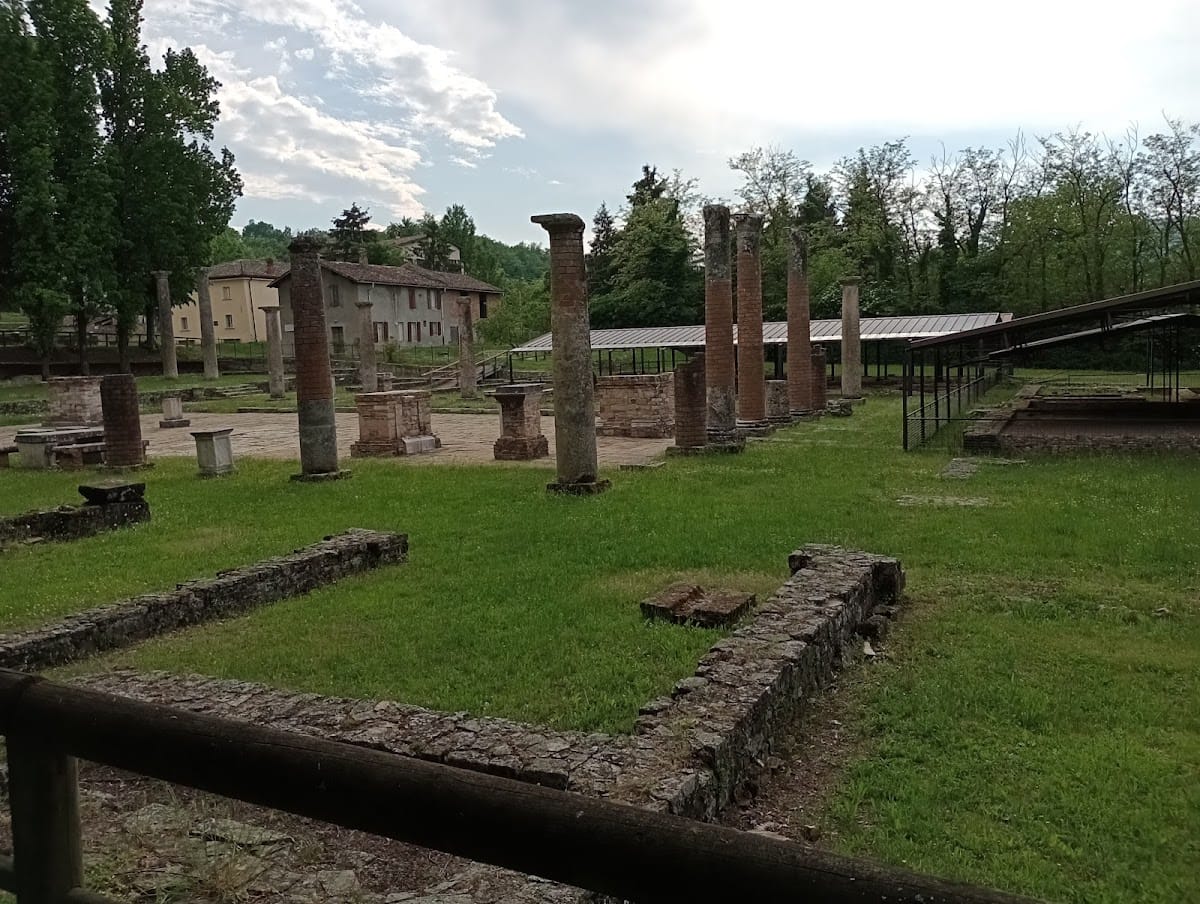
Veleia was laid out across a series of terraces, and excavations have revealed several phases of construction. The excavated area combines a public center with baths, water installations, domestic buildings, and remains associated with civic, religious, and funerary life. Much of the city’s visible form belongs to the period of its strongest development during the Augustan age, while later objects and inscriptions reflect its continued use into the Roman imperial period.
Public and civic buildings
Forum and basilica
The public center is organized around a Forum with a paved square, arcades, and tabernae, small shops or commercial rooms opening onto public spaces. A rectangular basilica closes the southern side. As a large public hall, the basilica served civic, judicial, and commercial purposes. A long floor inscription in the square honors Lucius Lucilius Priscus, while a pink limestone stone is dedicated to Augustus.
Thermal complex
A thermal complex lies southeast of the Forum. The baths were supplied by waters rich in bromine and iodine, linking the city’s public bathing facilities with the natural resources of the surrounding landscape.
Elliptical structure
Near the archaeological area is an elliptical structure interpreted as Veleia’s amphitheater, although its function remains uncertain. It has also been understood as a water cistern. The competing interpretations reflect the difficulty of assigning a definitive purpose to the surviving form.
Water supply and domestic areas
Water installations
A cistern upstream from the settlement supplied water downhill to several distribution systems. Surviving elements include lead pipes, bronze siphons, and fountain mouths. Together, these features show how water was collected, moved, and distributed through the terraced settlement.
Roman houses
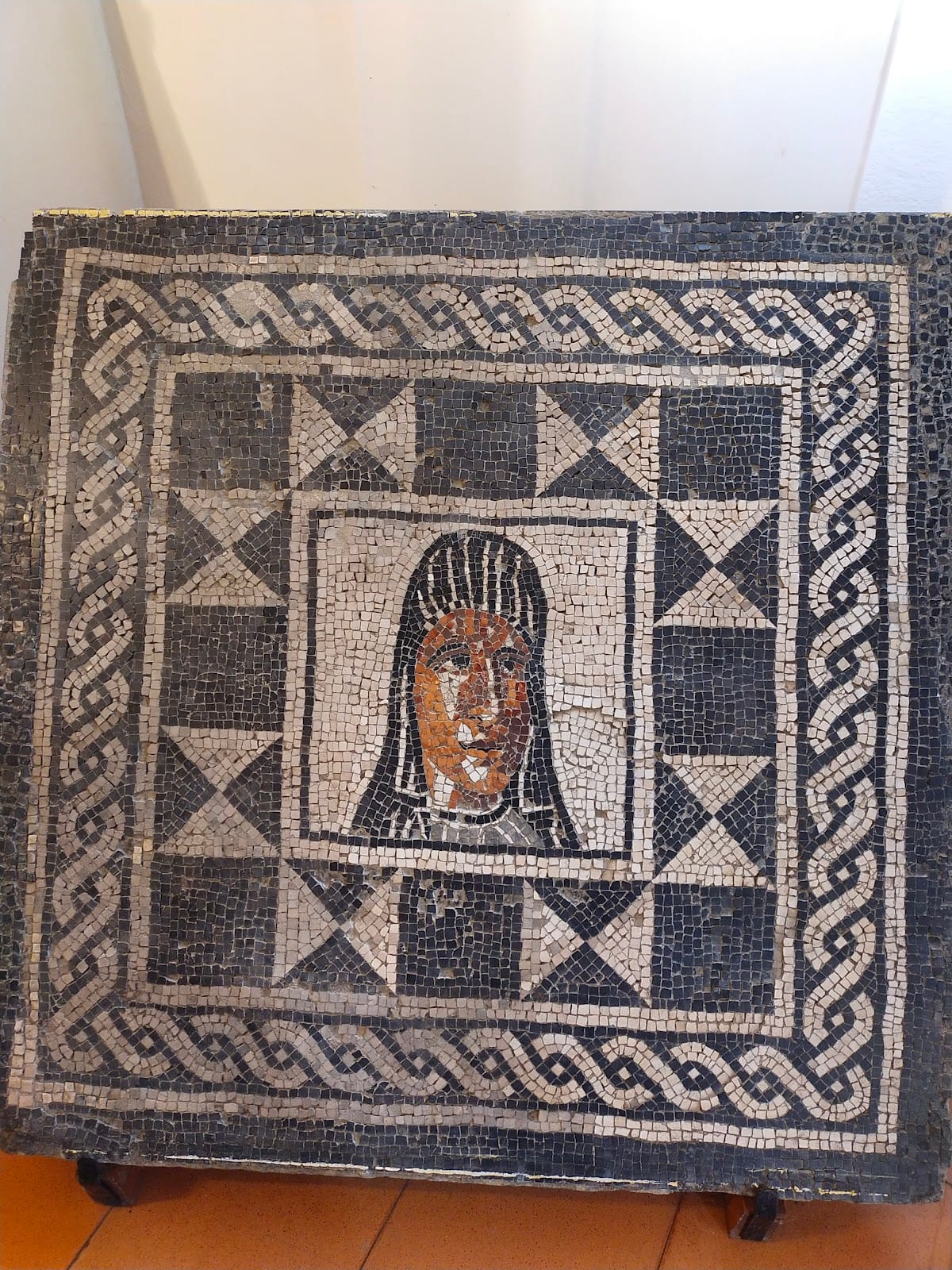
Residential areas contain domus, Roman urban houses with windows made from wooden frames and glass plates. Their floors included mosaics, and their interiors held valuable furnishings. Excavated domestic objects include a female bust set within a circular clipeus, a round shield-shaped frame used to enclose portraits or busts, along with a bronze appliqué showing a warrior, a furniture foot depicting a warrior in combat, a bronze jug inlaid with silver, and appliqués from beds.
Objects connected with personal care and bodily ornamentation provide evidence for the comforts and luxuries of domestic life. The houses also contain evidence of household cults, showing that religious practices formed part of the organization and use of private interiors.
Sculpture and inscriptions
Bronze and marble sculpture
Large figured bronzes from Veleia include a gilded bronze head probably representing Antoninus Pius, the emperor who ruled from AD 138 to 161, as well as a female head and a first-century AD Winged Victory. A second-century AD statuette of the Drunken Hercules was dedicated by L. Domitius Secundion. Most of these works were produced by workshops in northern Italy.
Other finds include a marble female herma, a bust or head mounted on a pillar-like support, and the bronze portrait of Baebia Bassilla. Objects associated with daily life and gladiatorial spectacle add further evidence for the range of activities represented at the settlement.
Tabula Alimentaria Traianea
The Tabula Alimentaria Traianea is a large bronze inscription discovered at Veleia and described as the largest known bronze inscription from the Roman era. Its entries identify landowners, property values, loan sums, estates, neighboring properties, land uses, and associated buildings. The information provides detailed evidence for agricultural organization in the Piacenza area at the beginning of the second century AD.
The tablet records Trajan’s Alimenta, whose loans were granted to landowners from the emperor’s personal funds. The interest supported poor boys and girls until they reached adulthood. Casts of the inscription are displayed in the Antiquarium, where copies and reproductions also represent related original finds and materials.
Lex Rubria de Gallia Cisalpina
The Lex Rubria de Gallia Cisalpina preserves part of a first-century BC law from the Roman Republic. Cisalpine Gaul was the province between the Alps and the Apennines before its full integration into Italy, and the law regulated special powers granted to local magistrates there. A plaster cast is displayed in the Antiquarium.
Antiquarium displays
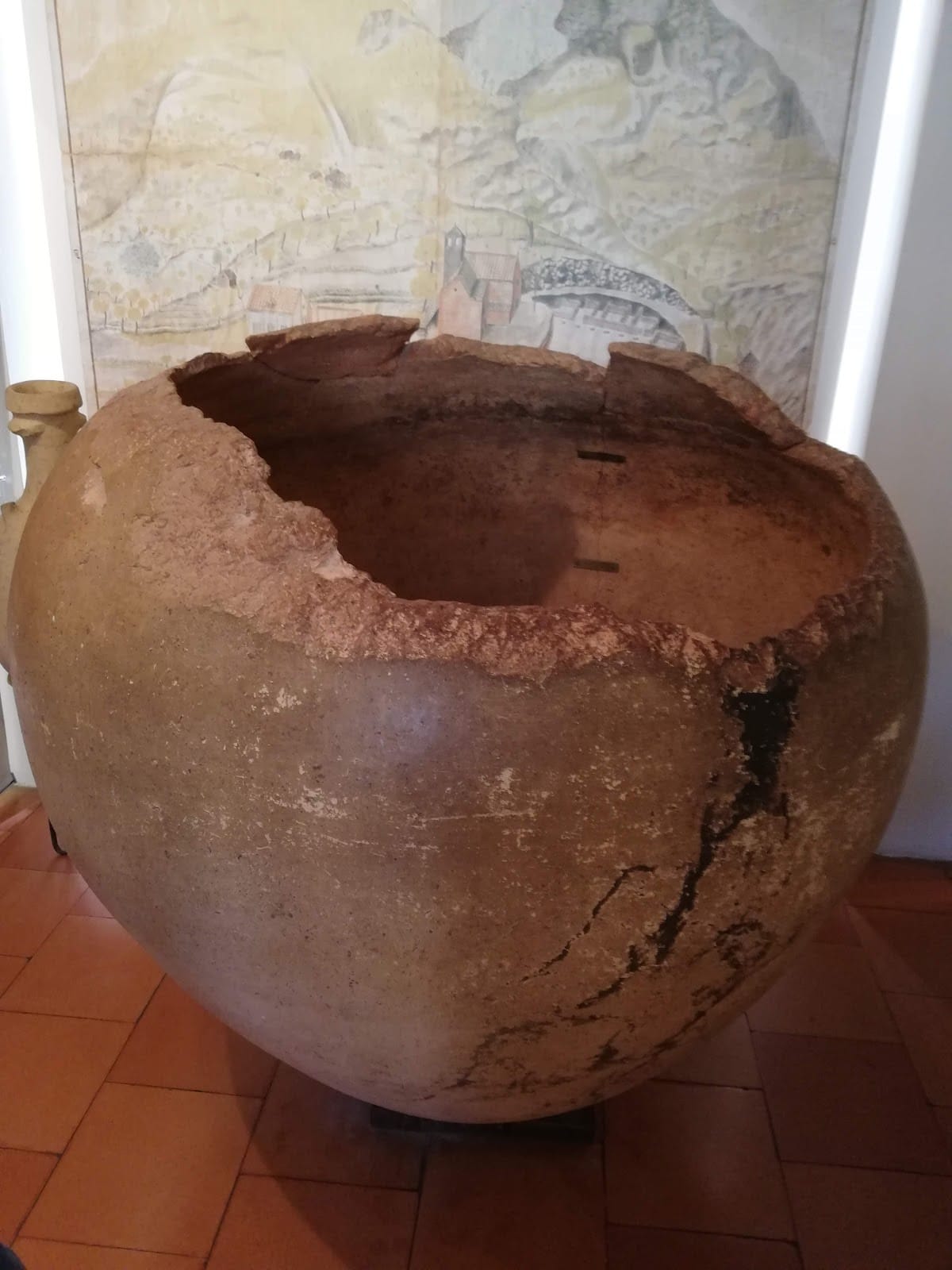
The Antiquarium occupies the nineteenth-century excavation-administration building west of the ancient basilica. Its displays bring together excavation finds, architectural fragments, ancient excavation drawings, casts, and reproductions in five thematic areas devoted to pre-Roman burials, cult practices, Roman public monuments, Roman private life, and Roman funerary cults.
The cult section includes the statue known as the so-called Ligurian Jupiter. The Roman public section presents the cast of Baebia Bassilla, casts of the Tabula Alimentaria Traianea and the Lex Rubria de Gallia Cisalpina, the Venator stele, an upright commemorative or funerary slab, and architectural material recovered during the excavations.