Vastseliina Castle: A Medieval Fortress in Estonia
Visitor Information
Google Rating: 4.7
Popularity: Medium
Official Website: www.vastseliinalinnus.ee
Country: Estonia
Civilization: Crusader, Early Modern
Site type: Military
Remains: Castle
History
Vastseliina Castle is located in the municipality of Vana-Vastseliina in modern Estonia. It was built in the mid-14th century by the Livonian Order, a crusading military order that succeeded the Sword Brothers and operated in the territories of medieval Livonia. The castle was established as a border fortress of the Bishopric of Tartu to secure and control the frontier between Livonian and Russian lands.
The foundation of Vastseliina Castle dates to March 25, 1342. Its construction was overseen by Burchard von Dreileben, the master of the Livonian Order at the time, despite the site being on bishopric lands. Originally named Neuhausen by the German builders, and later known as Novõi gorodok in Russian, the fortress was dedicated to the Virgin Mary. Its strategic position commanded the high ground at the meeting point of the Piusa River and the Meeksi stream, surrounded on three sides by water and defended with a moat, making it an important defensive stronghold on the volatile border with the Pskov territory of Novgorod Russia.
Throughout the late medieval period, Vastseliina Castle grew from a simple tower structure into a larger complex. Initially, it consisted of a rectangular main tower built around 1342. During the late 15th and early 16th centuries, several additions strengthened the fortress, including multiple wings, an enclosing outer bailey, and new towers with distinctive designs, such as the northeast tower decorated with Latin crosses. The castle also gained religious importance when its chapel housed a holy cross said to grant indulgences, a status confirmed by Pope Innocent VI in 1354. This made Vastseliina a destination for pilgrims as well as a military site and customs post where goods were controlled and stored, including contraband.
The castle withstood numerous military attacks over its history. Notably, it resisted a siege in 1501 led by Russian voivode Daniil Shchenya. However, on July 1, 1558, during the Livonian War, Russian forces under Prince Pjotr Shuyski captured the fortress following an attempted betrayal within. The castle remained under Russian control until 1582 before passing to Polish and later Swedish hands, reflecting the changing political landscape of the region.
In 1655, King Charles X of Sweden ordered partial restoration of the fortress, reinforcing its defenses during rising conflicts. This was short-lived, as Russian forces captured it again in 1656 amid the Russo-Swedish War. It was returned to Sweden in 1661, after which it served only as a minor military post. The advent of gunpowder artillery and evolving fortress designs made Vastseliina militarily outdated, and following the Great Northern War, it was abandoned and fell into ruin.
Archaeological excavations began in the late 19th century under Reinhold Guleke and resumed extensively in the 2000s with Heiki Valk among others. These investigations unearthed no evidence of earlier settlements beneath the castle but revealed a 16th–17th century cemetery, including mass graves containing victims of violent conflict. The site also holds a place in natural history for hosting Estonia’s first recorded white stork nest in 1841.
Remains
The surviving structures of Vastseliina Castle outline a complex layout typical of a medieval fortress expanded over centuries. It began with a massive stone main tower constructed around 1342, serving as the core defensive and residential building. This tower measured approximately 14.5 by 19 meters with walls between 3 and 4.5 meters thick, featuring three vaulted floors that housed a cellar, a chapel, and an armory. Above these were three levels designed for defense.
By the late 14th century, the castle was enlarged with a three-winged main building surrounding a rectangular inner courtyard. An outer bailey was added, enclosed within an additional defensive wall, increasing the fortress’s capacity and protective strength. This secondary enclosure further secured the site, particularly its least naturally defensible southern side, which was fortified with an earth-and-moat barrier.
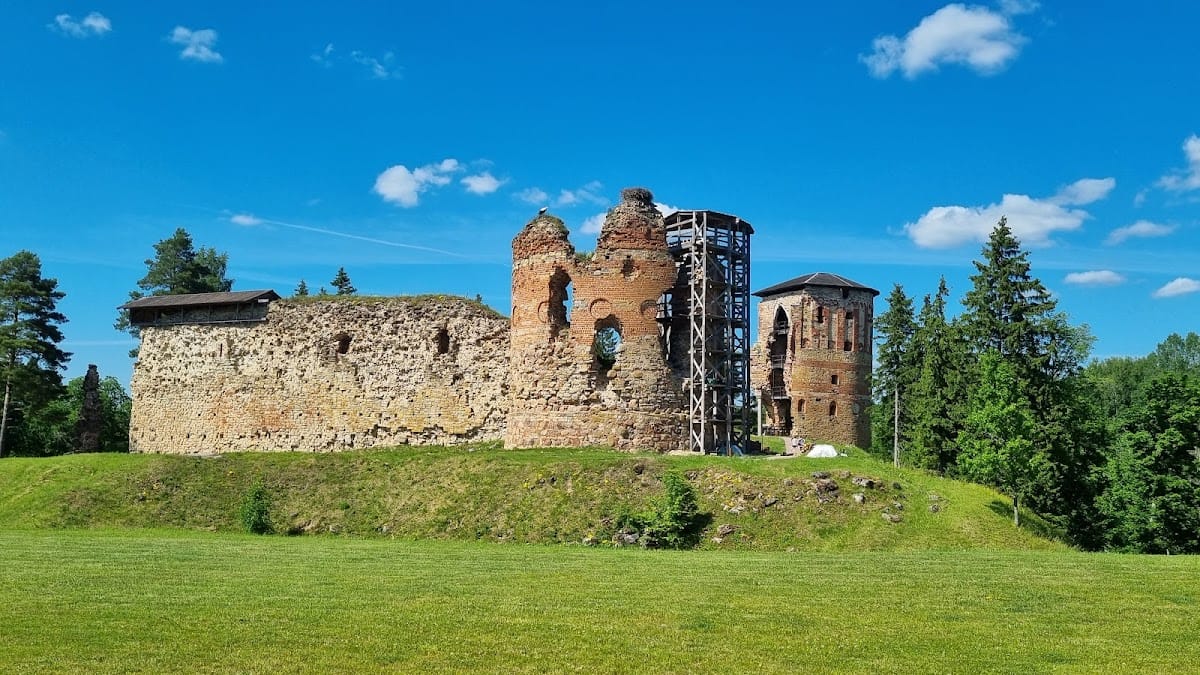
Further fortifications were made in the late 15th century and early 16th century, including a unique northeast tower adorned with Latin crosses, a feature unusual among regional castles. A Danish-style north tower and a rounded southeast tower designed for artillery defense appeared around this period, reflecting a shift toward resisting gunpowder weapons. The moat was deepened and widened, while the original wooden palisade was replaced by an outer stone wall called a zwinger, punctuated with small towers for enhanced protection. Additionally, an artillery tower was constructed in front of the southeast tower to strengthen the weakest sector of the defenses.
Archaeological work in the late 19th century and again in the early 21st revealed the castle’s layered history. Excavations uncovered numerous 17th-century Swedish and Russian coins in the outer bailey area, indicating continued activity or trade during that era. A burial ground dating to the 16th and 17th centuries was also found, containing 144 skeletons. Among these was a mass grave of six individuals displaying sharp-force injuries, suggesting violent deaths during warfare or conflict.
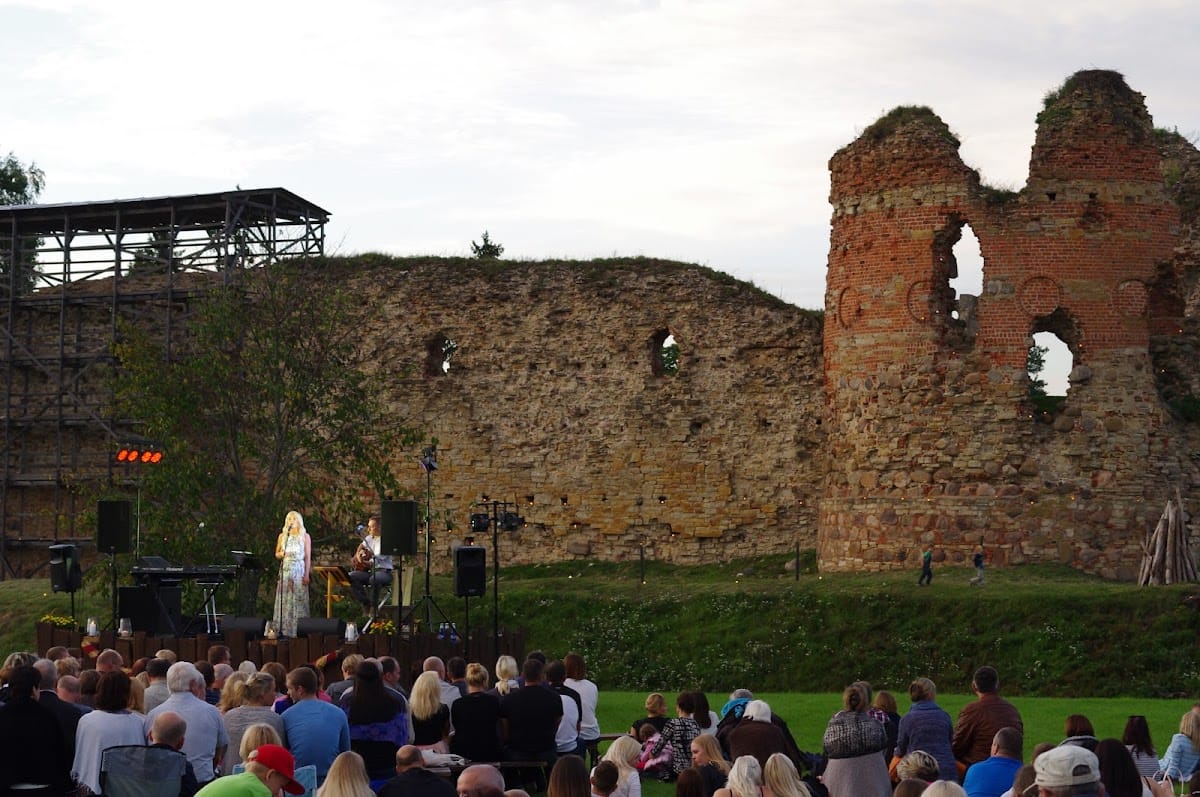
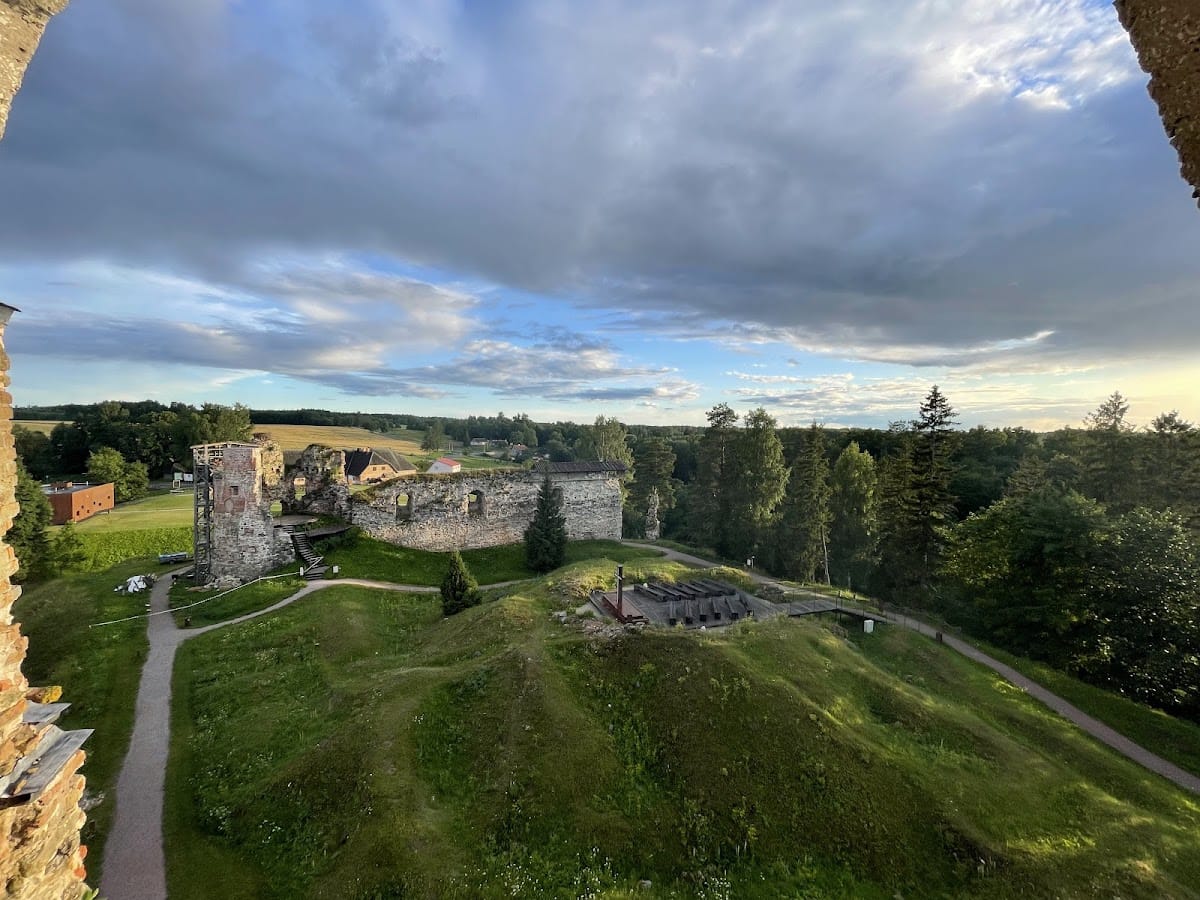
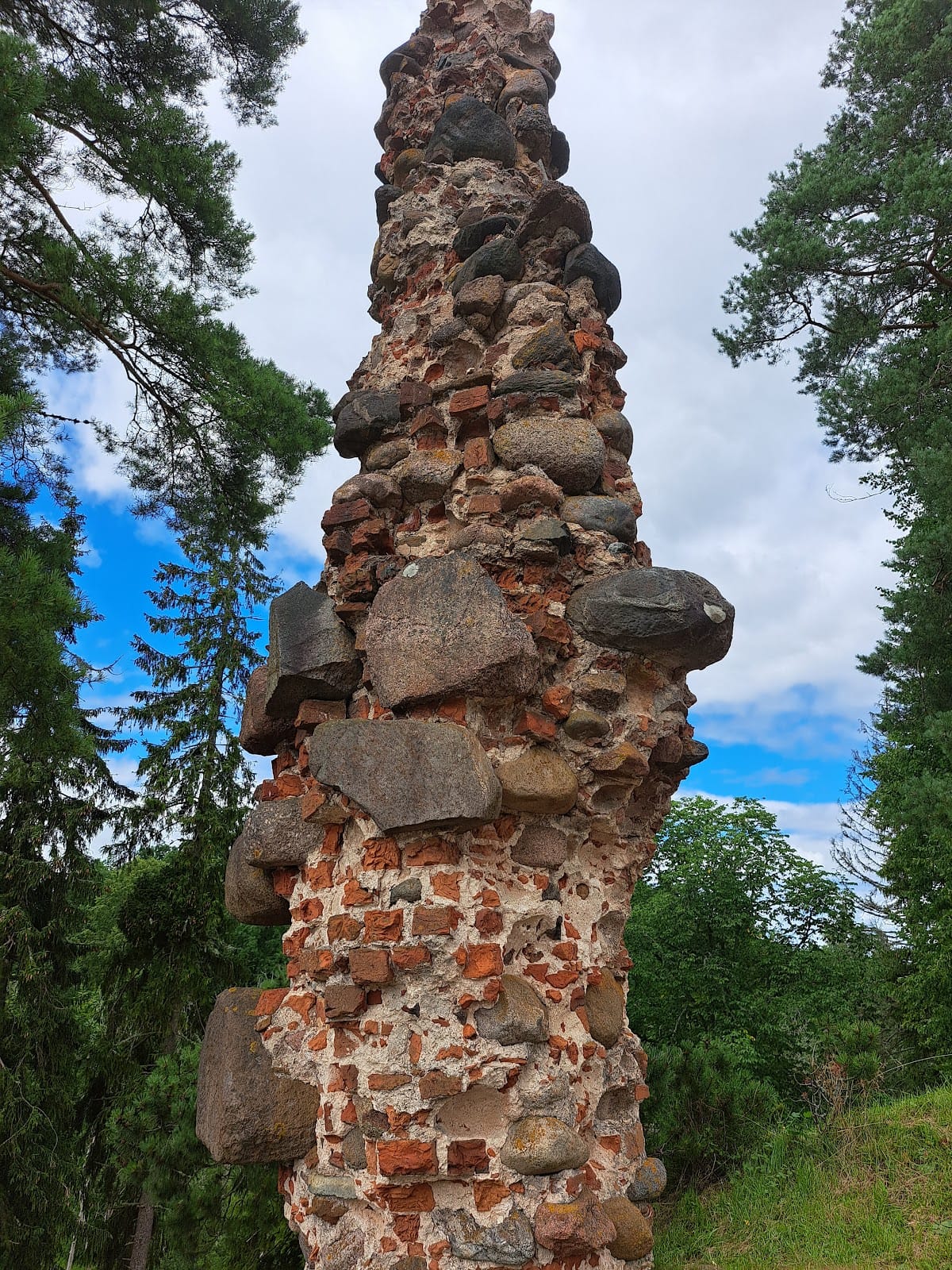
Today, the castle remains are fragmentary, consisting primarily of foundational walls and tower bases. The ruins have been partially leveled and marked with a large cross accompanied by seating. At the former chapel site within the main tower, visitors can experience a sound installation playing ecclesiastical music, lending a contemplative atmosphere to the remnants of this medieval fortress. Despite its ruinous state, Vastseliina Castle remains a prominent historical landmark reflecting its evolving military and religious roles over several centuries.