Vanî Mehmed Efendi Mosque: A Seventeenth-Century Ottoman Waterfront Mosque


Site at a Glance
- Rating
- 4.8
- Popularity
- Low
- Country
- Turkey
- Primary era
- Early Modern
- Eras represented
- Early Modern
- Civilizations
- Ottoman
- Site type
- Religious
- Remains
- Mosque
On this page5 sections
History
Vanî Mehmed Efendi Mosque is a seventeenth-century Ottoman mosque in Vaniköy, Istanbul, Türkiye. Vanî Mehmed Efendi commissioned it in 1665 during the reign of Sultan Mehmed IV, an Ottoman ruler who governed from 1648 to 1687.
Foundation of Vaniköy
Mehmed IV granted Vanî Mehmed Efendi an area near Üsküdar on the Bosphorus then known as Papaz Bahçesi or Papaz Korusu. Vanî developed the district and gave it the name Vaniköy. Beside the mosque, he built a waterside residence for himself and a medrese, an institution for Islamic religious and scholarly education. The mosque and residence have survived into the present.
Vanî Mehmed Efendi was a prominent Ottoman Islamic scholar, Quranic interpreter, and preacher. During Mehmed IV’s reign, he received the patronage of Köprülüzade Fazıl Ahmed Pasha.
Fire and Restoration
On 15 November 2020, a failure in the electrical installation caused a fire that burned the mosque’s wooden sections and damaged its calligraphic and illuminated works. An expert report held the foundation responsible for administering the mosque responsible for the failure in its administration.
Restoration began after November 2022. The work strengthened the structure and removed later reinforced-concrete additions together with fire-damaged wooden elements. The mosque reopened for worship on 16 June 2023 at a ceremony attended by President Recep Tayyip Erdoğan.
Remains
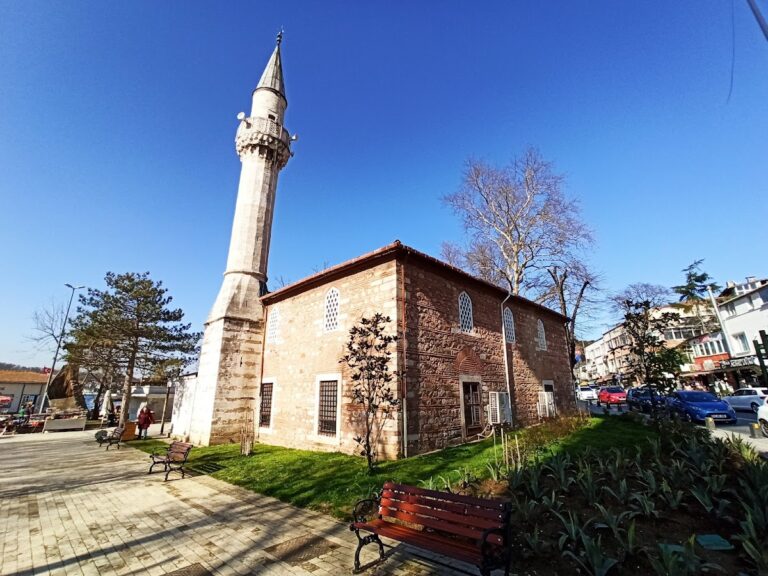
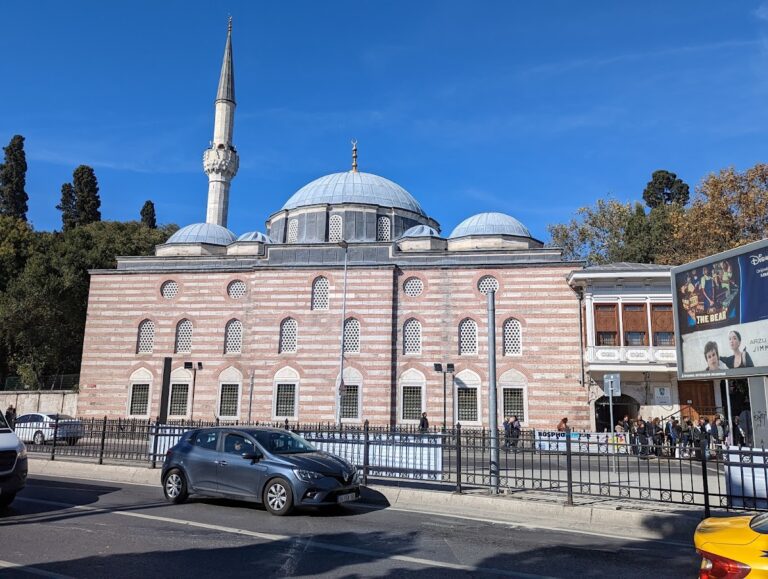
The mosque is a timber-framed waterfront building organized between the seaward edge and a grove-side porch. Its single-balcony minaret rises from a masonry base and has a reinforced-concrete shaft. A wall fountain stands on the seaward side, while the porch-like structure on the grove side is carried by tall columns.
Decorative Fabric and Repairs
The fire affected the mosque’s wooden fabric as well as its calligraphic and illumination decorations. During the restoration, the original hand-painted decorative work was conserved and reinstalled. Necessary areas were plastered with Khorasan mortar, a traditional lime-based mixture containing crushed ceramic or brick material, and the minaret’s conical cap was rebuilt.