Ujigami Shrine: A Heian-Period Shinto Shrine in Japan


Site at a Glance
- Rating
- 4.3
- Popularity
- Medium
- Country
- Japan
- Primary era
- Medieval
- External website
- Open
- Eras represented
- Medieval
- Civilizations
- Unclassified
- Site type
- Religious
- Remains
- Sanctuary
On this page15 sections
History
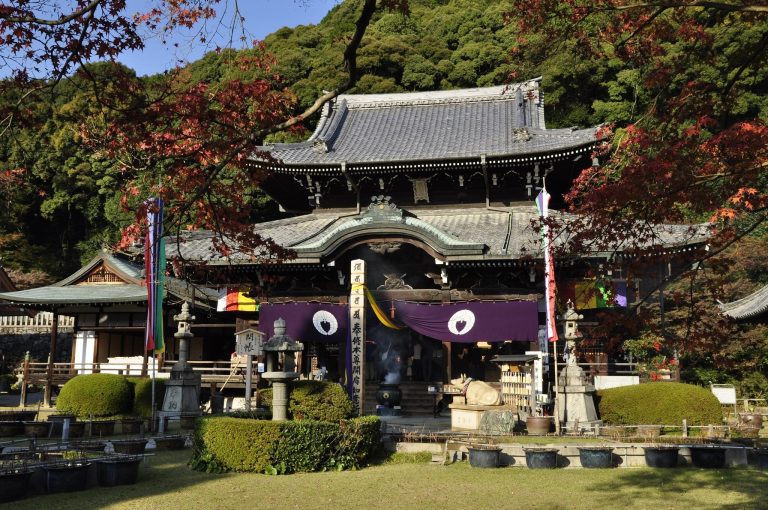
Ujigami Shrine is a Japanese Shinto shrine in Uji, Japan, whose main hall dates to around 1060 and represents late-Heian-period shrine architecture. Its foundation is unknown, but the surviving buildings and long association with nearby Byōdō-in make it an important place in the history of Japanese religious architecture. In 1994, the shrine became part of the UNESCO World Heritage property Historic Monuments of Ancient Kyoto.
Origins and sacred associations
Tradition places the shrine on the site of a detached palace belonging to Prince Uji no Wakiiratsuko, an imperial prince mentioned in the Yamashiro Fudoki. The former name Uji Rikyu Myojin is said to have come from this association. A large stone in the precinct, known as the Heaven-descended Stone or Iwagami-san, has also encouraged the theory that the shrine grew from iwakura worship, an early practice in which rocks or rock formations served as places of reverence for kami, the sacred beings of Shinto.
Ujigami Shrine is dedicated to Prince Uji no Wakiiratsuko, his father Emperor Ōjin, and his elder half-brother Emperor Nintoku. Prince Uji no Wakiiratsuko was made crown prince, but tradition says that he took his own life so that Nintoku could succeed to the throne. This succession story links the shrine’s religious identity to the imperial figures traditionally counted as Japan’s fifteenth and sixteenth emperors.
Recognition in the Engishiki
The Engishiki, a compilation of court rites, administrative procedures, and recognized shrines completed in 927, lists two shrines in Uji District of Yamashiro Province under the entry “Uji Shrine, two seats, hoe and quiver.” A Shikinaisha was a shrine included in this register, while a minor shrine belonged to its lower ranking category. One interpretation identifies the two seats with Uji Shrine and Ujigami Shrine. Another understands both seats as belonging to Ujigami Shrine, whose principal sanctuary may originally have consisted of two structures. The hoes and quivers refer to offerings from the imperial court during the Toshigoi festival, an imperial prayer for agricultural fertility.
Association with Byōdō-in
After Byōdō-in was established nearby in 1052, Ujigami Shrine and Uji Shrine came to be regarded as its guardian shrines. Ujigami Shrine was known as the Upper Shrine or Main Shrine, while Uji Shrine was called the Lower Shrine or Young Shrine. Together they were called Rikyukamisha, Uji Rikyu Myojin, or Uji Rikyu Hachiman Shrine. The two shrines were separated during the Meiji period, when Ujigami Shrine was classified as a village shrine under the modern system of shrine ranks.
Tree-ring analysis carried out in February 2004 by the Nara Research Institute for Cultural Properties and Uji City dated the timber of the main hall to around 1060. Dendrochronology determines the age of wood by comparing its annual growth rings with established tree-ring sequences. The result supports the building’s identification as the oldest surviving original Shinto shrine building and points to a close historical relationship with Byōdō-in.
Modern status and observances
The main hall and worship hall were designated Japanese National Treasures in 1952, with the main hall receiving designation on March 29 and the worship hall on November 22. Ujigami Shrine also retains its identity as a Shinto place of worship through an annual cycle of rites. These include New Year observances on January 1, day-waiting rites on January 15 and October 14, the spring grand festival from May 1 to 5 with its principal ceremony on May 5, a new-tea offering on June 1, the Hassaku festival on September 1, and the Niinamesai harvest thanksgiving on December 15. The new-tea ceremony is attended by Kamibayashi Shunsho, Fukujuen, Tsujiri Hyobei, and Nakamura Tokichi, with tea prepared by the Zuihōan school of sencha tea.
Remains
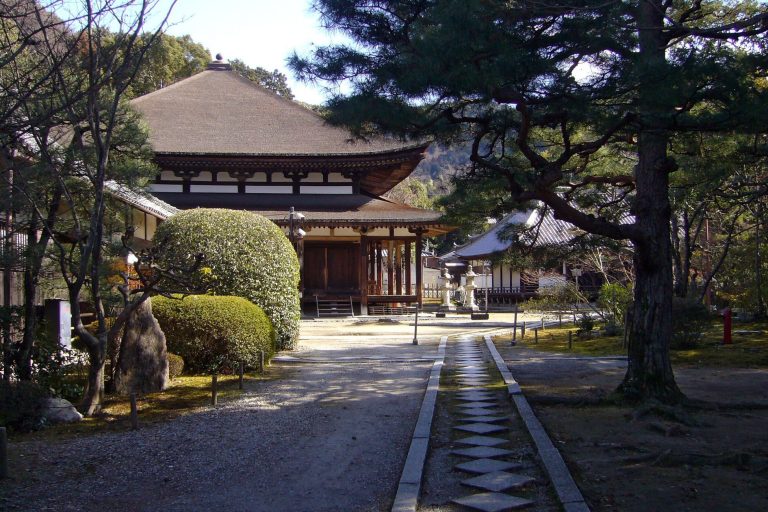
The precinct covers approximately 0.3 hectares and contains the main hall, worship hall, Kasuga Shrine, Heaven-descended Stone, Kirihara Water spring, front gate, and shrine office. The principal buildings preserve two different architectural phases: the late-Heian main hall and the early-Kamakura worship hall. Together they form the core of the surviving shrine complex.
Principal shrine buildings
Main hall
The main hall is a five-bay by three-bay building in the nagare-zukuri style, a shrine form characterized by an asymmetrical gabled roof projecting over the front. Here, “bay” means the interval between two pillars rather than a unit of measurement. The building has a cypress-bark roof and an outer five-bay by three-bay structure that protects three smaller sanctuaries arranged side by side.
Each inner sanctuary is a one-bay nagare-zukuri structure. From the viewer’s perspective, the sanctuary on the left side houses Uji no Wakiiratsuko, the central sanctuary houses Emperor Ōjin, and the sanctuary on the right side houses Emperor Nintoku. In the traditional naming system, these are the First, Second, and Third Sanctuaries. The outer enclosure and inner sanctuaries are structurally integrated, with the side surrounds and roof sections of the First and Third Sanctuaries shared with the enclosing structure.
The First and Third Sanctuaries are nearly identical in form and scale. Each has a three-step bracket system and frog-leg struts between the brackets, although stylistic details suggest that the First Sanctuary is earlier. The central sanctuary is smaller and uses boat-shaped brackets without frog-leg struts. Paintings remain on the inner faces of the sanctuary doors. Four panels are treated as artworks separately from the building and are Important Cultural Properties. Two show children in Chinese-style dress on the First Sanctuary, while two on the Third Sanctuary show attendants in court costume holding tablets. Much of the paint has flaked away, but the panels remain valuable examples of Heian-period sacred painting.
Worship hall
Built in the early Kamakura period, the worship hall is regarded as a surviving example of a residential-palace-style building. It has a gabled cypress-bark roof, a principal section six bays long and three bays deep, and one-bay porches at both ends. The outermost bay on the viewer’s left is narrower and forms a closed room with the adjoining porch. The porch at the right end also forms a room, leaving a broad central room measuring five bays by three bays.
The main roof is entered from the building’s long side, while lean-to roofs cover the porches at either end. The bends in the eaves where these roofs meet are called sugaruhafu, a characteristic roof form created by the junction of a lean-to and a gabled roof. A plank veranda surrounds the hall. Inside, the building has plank flooring, a ceiling, and extensive lattice shutters.
Subsidiary shrines
Kasuga Shrine
Kasuga Shrine is a one-bay nagare-zukuri building with a cypress-bark roof. It probably dates from the late Kamakura period and enshrines Takemikazuchi and Ame-no-Koyane.
Other subsidiary shrines
The precinct also contains Sumiyoshi Shrine, dedicated to the three Sumiyoshi deities; Kashii Shrine, dedicated to Empress Jingū and Takenouchi no Sukune; Takemoto Inari Shrine, dedicated to Ukanomitama; and Itsukushima Shrine, dedicated to Ichikishimahime. Kashii Shrine, Takemoto Inari Shrine, and Itsukushima Shrine are designated Kyoto Prefectural tangible cultural properties.
Sacred landscape features
Heaven-descended Stone
The Heaven-descended Stone, or Iwagami-san, is a large stone within the precinct. It has been described variously as a meteorite or as the surviving remnant of an earlier shrine. Its presence also underlies the theory that the site developed from a stone-centered form of iwakura worship.
Kirihara Water
Kirihara Water is a spring within the precinct and is identified as the only surviving one of the Uji Seven Famous Waters.