Kandani Shrine: A Historic Shinto Sanctuary in Sakaide, Japan


Site at a Glance
- Rating
- 4.2
- Popularity
- Low
- Country
- Japan
- Primary era
- Medieval
- External website
- Open
- Eras represented
- Medieval
- Civilizations
- Kamakura shogunate
- Site type
- Religious
- Remains
- Sanctuary
On this page14 sections
History
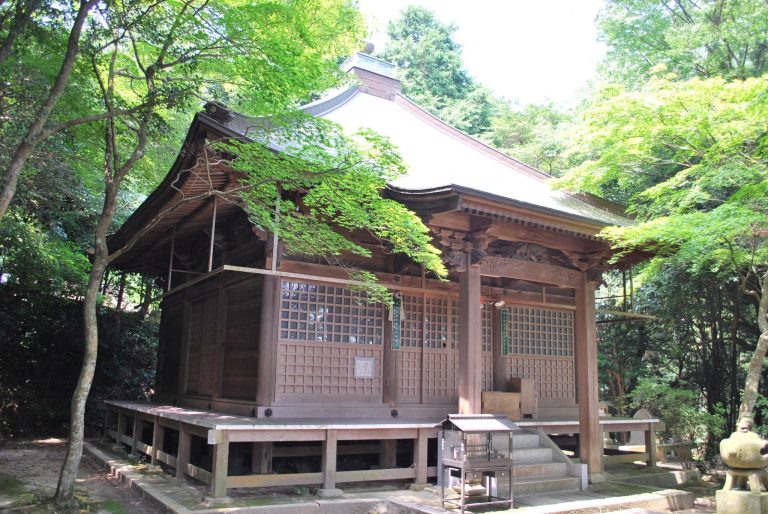
Kandani Shrine is a Shinto shrine in Japan, located in Sakaide, Kagawa Prefecture, at the foot of Shiramineyama in the Goshikidai range. Shrine tradition attributes its foundation to 812, when Ato no Otari, described as an uncle of Kukai, constructed the buildings and enshrined Kagu-tsuchi, Okitsuhiko no Mikoto, and Okitsuhime no Mikoto. Shinto is Japan’s indigenous religious tradition, centered on reverence for kami, or sacred beings and forces associated with nature, ancestors, places, and cultural traditions. The shrine stands in a valley historically called Kandani, meaning “divine valley.”
Foundation and early recognition
The shrine also came to honor four Kasuga deities, the kami traditionally associated with Kasuga Shrine in Nara: Futsunushi no Kami, Takemikazuchi no Kami, Amenokoya no Mikoto, and Hime-Ōkami. Its official standing rose from Junior Fifth Rank, Lower Grade, to Junior Fifth Rank, Upper Grade, in 865, and then to Senior Fifth Rank, Lower Grade, in 875.
Kandani Shrine appears in the 905 Engishiki register of deities as Kandani Shrine in Aya District of Sanuki Province. This made it a Shikinaisha, a shrine listed in the Engishiki, a tenth-century legal and ritual compendium whose register of officially recognized deities was compiled in the early tenth century. By 1219, a roof-beam inscription referred to the shrine as Kandani Daimyojin of Senior First Rank, showing that it had reached the highest rank and attracted regional devotion.
The Kamakura-period rebuilding
The present main hall was rebuilt over an earlier hall in 1219, during the early Kamakura period. Osabe Masanaga, an estate official, supervised the work. An ink inscription on a roof beam gives February 10 as the beginning of construction and names Masanaga, providing a securely dated record for the building.
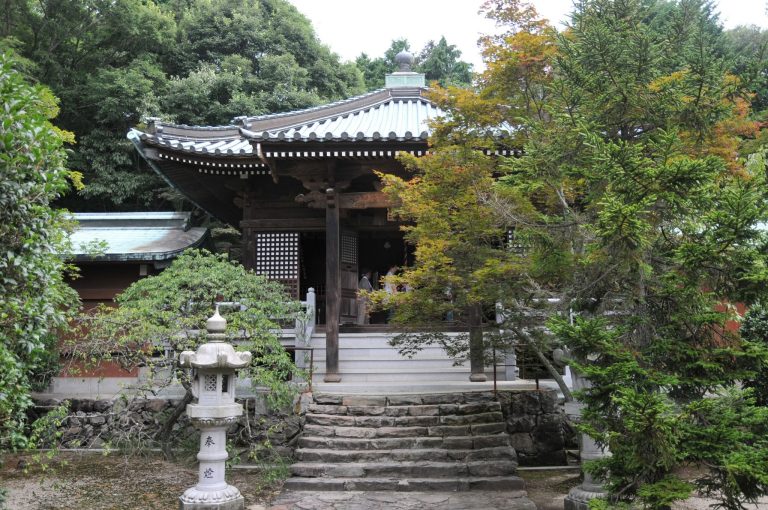
The hall is regarded as the oldest shrine-architecture example whose construction date is known with certainty, and as the oldest securely dated example of the Nagare-zukuri style. Nagare-zukuri is characterized by a gabled roof whose front slope extends forward to create a covered entrance. The building’s date and surviving form place Kandani Shrine within the early development of this major Shinto architectural tradition.
Fire, protection, and modern recognition
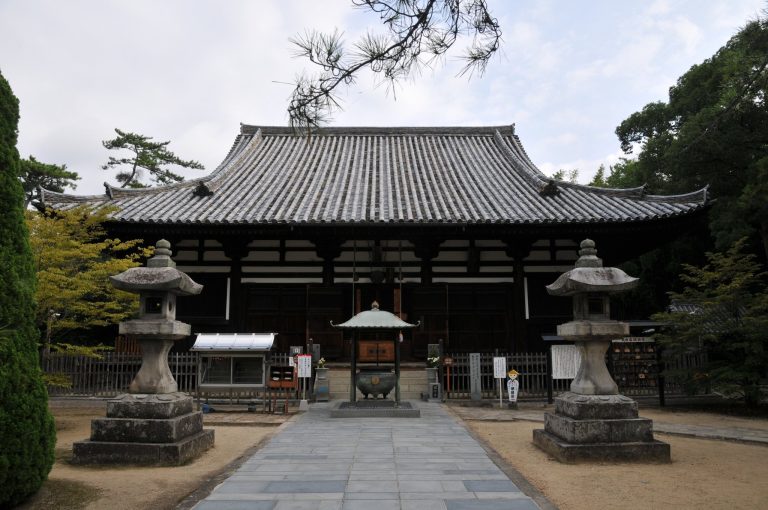
In 1927, a light used for worship ignited the worship hall. Local residents pulled the burning structure away from the main hall, allowing the older building to escape destruction. The present worship hall was reconstructed between 1928 and 1930.
The main hall was designated a Japanese National Treasure in 1955. In 1966, its wooden standing Zuijin statues were designated Important Cultural Properties. Zuijin are guardian figures traditionally placed at a shrine entrance or beside a shrine, often represented as armed court or warrior attendants. In the modern shrine-ranking system of the Meiji period, Kandani was classified as a Go-sha, or district shrine.
Lightning struck the main hall on September 27, 2022, burning approximately one-third of its roof. A preservation-repair project began with a groundbreaking ceremony on October 12, 2023, and was scheduled for completion in autumn 2025.
Remains
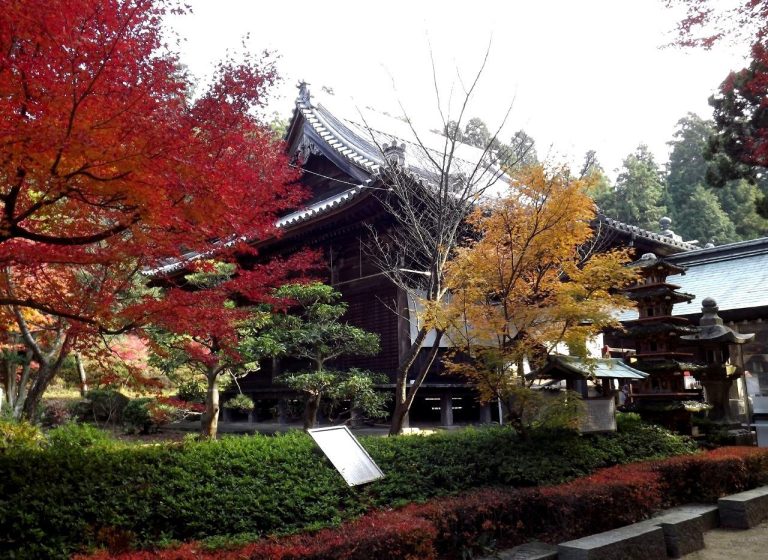
Kandani Shrine occupies a relatively small precinct in the Kandani valley. The Kandani River flows north of the buildings, while Shiramineyama rises at the foot of the Goshikidai range. The precinct contains the main hall, a reconstructed worship hall, a worship area, a hand-washing basin, stone pagodas, torii gates, subsidiary shrines, and a subsidiary shrine along the route leading to the main hall.
Historic shrine buildings
Main hall
The main hall, or honden, is a three-bay structure in the Nagare-zukuri style. It is also described as a four-column, three-bay form. Rebuilt in 1219 over an earlier hall, it preserves the roof-beam inscription that names Osabe Masanaga and records the start of construction on February 10. The building’s securely known date gives it an exceptional place in the history of shrine architecture. Its roof was partly burned by lightning in 2022, after which preservation repairs began.
Worship hall and precinct features
The worship hall was reconstructed between 1928 and 1930 after the 1927 fire. The precinct also includes a separate worship area, a hand-washing basin, stone pagodas, torii gates, and numerous subsidiary shrines. One subsidiary shrine stands along the route leading toward the main hall, forming part of the sequence of structures within the small precinct.
Sacred landscape and archaeological evidence
Eikoseki
About 50 meters behind the shrine buildings is Eikoseki, a large natural rock. It is an iwakura, a rock regarded in Japanese religious practice as a place where a kami is present or may be worshipped. Rituals were reportedly conducted around Eikoseki in antiquity, linking the natural feature with the shrine’s religious landscape.
Early pottery
Yayoi-period pottery has been discovered in the area around the shrine. These finds provide evidence of human activity in the surrounding landscape before the shrine’s traditional foundation in 812.
Guardian figures and cultural objects
Zuijin statues
The two wooden Zuijin are paired standing figures, one representing “Ah” and the other “Un.” They are considered works of the early Kamakura period and stand among the shrine’s associated cultural properties.
Manuscripts, masks, and scripture
The shrine’s associated objects include a hundred-verse linked-verse manuscript written on four half-sheets of torinoko paper. It was performed in front of the shrine in February 1493. Two bugaku masks represent Batto and Kanjo-raku. Bugaku is a traditional Japanese court dance accompanied by instrumental music, with performers commonly wearing carved masks.
Another important holding is a set of 600 handwritten volumes of the Mahaprajnaparamita Sutra, the Great Perfection of Wisdom scripture and a major body of Mahayana Buddhist literature. The volumes bear dated inscriptions from 1455 and 1481, preserving evidence of the shrine’s wider religious and literary associations.