Tvrdalj Castle: Petar Hektorović’s Fortified Renaissance Villa in Croatia


Site at a Glance
- Rating
- 4.6
- Popularity
- Medium
- Country
- Croatia
- Primary era
- Early Modern
- External website
- Open
- Eras represented
- Medieval, Early Modern, Modern
- Civilizations
- Habsburg, Venetian
- Site type
- Domestic
- Remains
- Castle
On this page13 sections
History
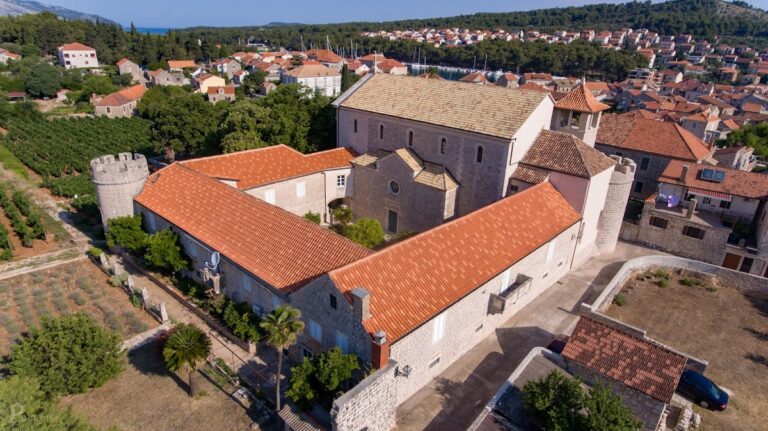
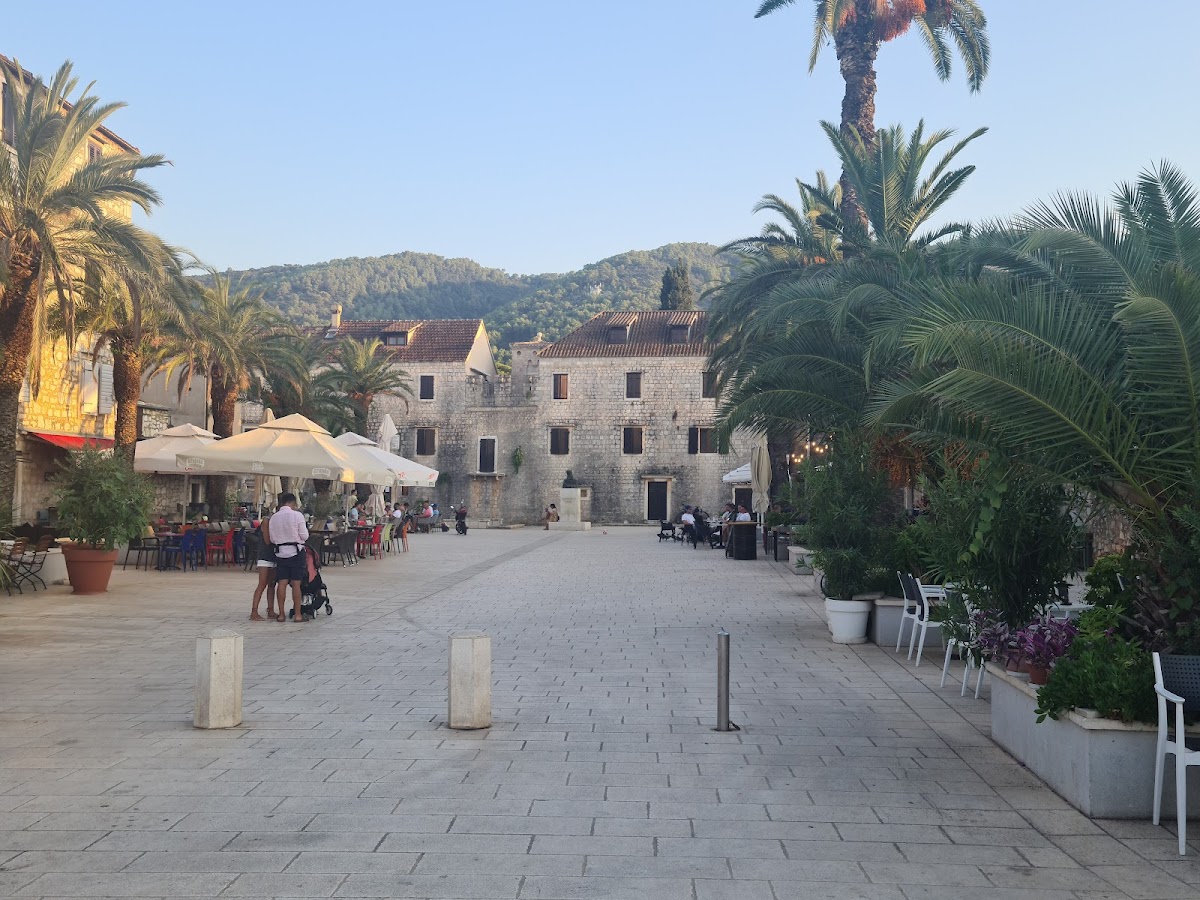
Tvrdalj Castle is a fortified Renaissance villa in Stari Grad, Croatia, built and transformed by the Croatian Renaissance nobleman and poet Petar Hektorović. Located on the western edge of the settlement beside the bay, it served as Hektorović’s summer residence and became a distinctive combination of aristocratic home, defensive complex, and place of hospitality.
Earlier Occupation and the Hektorović Estate
The site had already been known as Tvrdalj in 1448, when Hektor Hektorović received permission from the governor of Hvar to build there. The name was associated with a fortress or castle, suggesting that an earlier fortified structure may have occupied the location. The ground had also been used since antiquity. A Roman mosaic was found beneath the steps of the nearby Church of St Roch in 1898, and the villa was built on or near the remains of an ancient Roman country villa, including its baths.
Tvrdalj developed during a period when Stari Grad, then also called Old Hvar, was becoming a refuge and summer residence for noble families. The Dominican monastery was built in 1482, while the settlement gained handsome houses and a harbour capable of accommodating the largest ships. In 1553, the Venetian correspondent Giustinian described these features of the town, placing Tvrdalj within a wider phase of aristocratic development.
After the death of his father, Marin Hektorović, Petar Hektorović took control of the building works and reshaped the property as a summer palace according to his own design. By 1540, he had acquired relatives’ shares in the estate. His will later described Tvrdalj in detail and set out instructions for completing construction that remained unfinished at his death.
Construction, Attack, and Ruin
During the 1520s and 1530s, particular attention was given to accommodation for travellers and poor people. This charitable purpose formed part of Hektorović’s plan for the complex. In 1539, Ottoman forces, belonging to the Islamic empire that expanded across southeastern Europe and the eastern Mediterranean, attacked Stari Grad, burning and plundering much of the settlement. Hektorović fled to Italy, returned in 1541, and resumed work on the construction and fortification of Tvrdalj.
Stari Grad was attacked again in 1571, when Ottoman forces set Tvrdalj on fire. Hektorović died the following year. The damaged complex was then divided among his relatives, while his will continued to govern repairs and construction. Despite these instructions, the property remained in a ruined condition until gradual repairs began in the late seventeenth and early eighteenth centuries.
Later Alterations
Major changes followed in 1834, after the provisions of Venetian law protecting Hektorović’s building instructions ceased to apply. The southern wall was demolished, the area around the pool was vaulted, and additional floors and new two-storey houses were added. During the reconstruction of the harbour, the bay in front of the villa was filled, changing the relationship between the entrance and the water.
Further alterations took place in 1901. The eastern wall was demolished, and a house was built above the vault and cistern near the entrance area. These interventions changed parts of the original arrangement while leaving the principal fortified character and several elements of Hektorović’s design visible in the surviving complex.
Remains
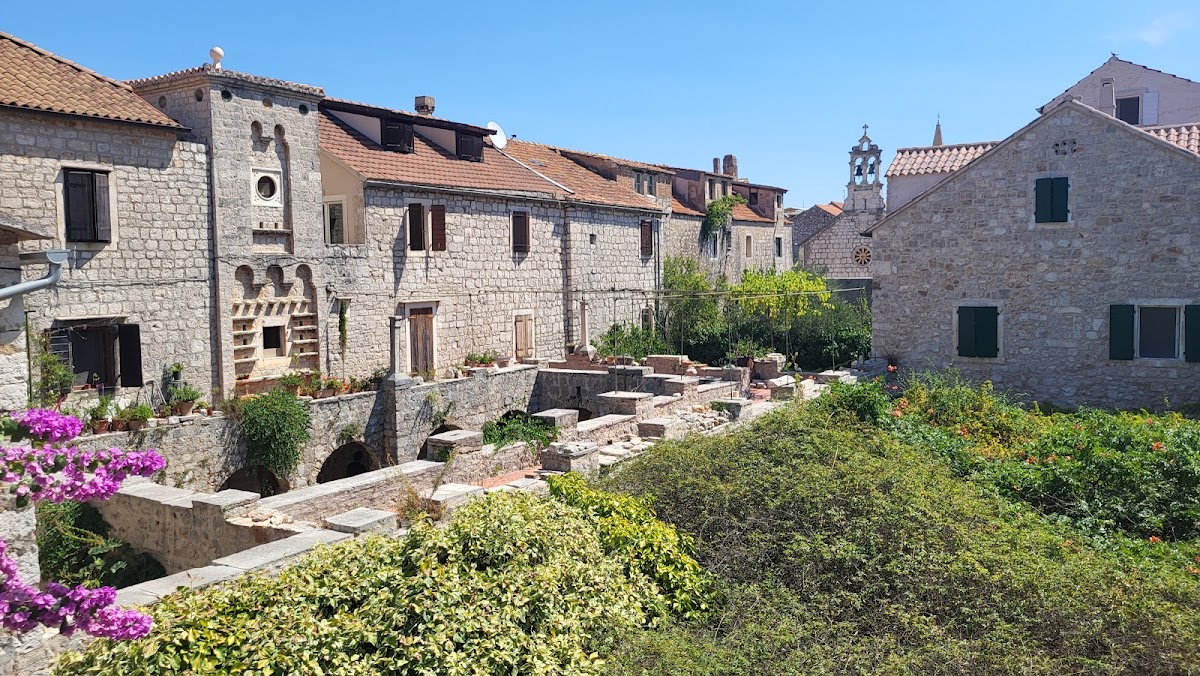
Tvrdalj is organized as a fortified residential complex around a central courtyard with a large rectangular fish pond. Its closed northern facade faces the sea, while a high defensive wall encloses the residential area. The architecture is simple and rustic, relying on defensive forms rather than the classical ornament and statues associated with fashionable aristocratic residences. The surviving layout also reflects a Christian reworking of the ancient Roman villa tradition, combining domestic, agricultural, charitable, and symbolic elements.
Courtyard and Garden
Fish Pond and Arcaded Terrace
The central courtyard contains the rectangular fish pond, where grey mullet lived in brackish water. A system supplied fresh seawater, allowing seawater and freshwater to mix. The pond may have incorporated remains of an ancient piscina or harbour installation. A rectangular arcaded terrace surrounded it, although sections of the passage were later vaulted. Hektorović interpreted the fish as symbols of Christ and the doves above them as symbols of the Holy Spirit, giving the pond a religious meaning within his conception of the complex as a metaphysical construction.
Dovecote, Aviary, and Rabbit Enclosure
A small tower with a dovecote stood on the northern side of the pond. Hektorović’s design also included an aviary and a rabbit enclosure. Together with the pond, these features connected Tvrdalj with the cultivated landscapes and enclosed animal spaces associated with descriptions of Roman villas.
Walled Garden
A large walled garden extended southward behind the main building. Flowers and trees grew there, while Hektorović cultivated herbs and medicinal plants. Domestic animals were also kept within the garden, making it part of the working household as well as an ornamental and productive space.
Fortifications and Residential Buildings
Sea-Facing Entrance and Defensive Walls
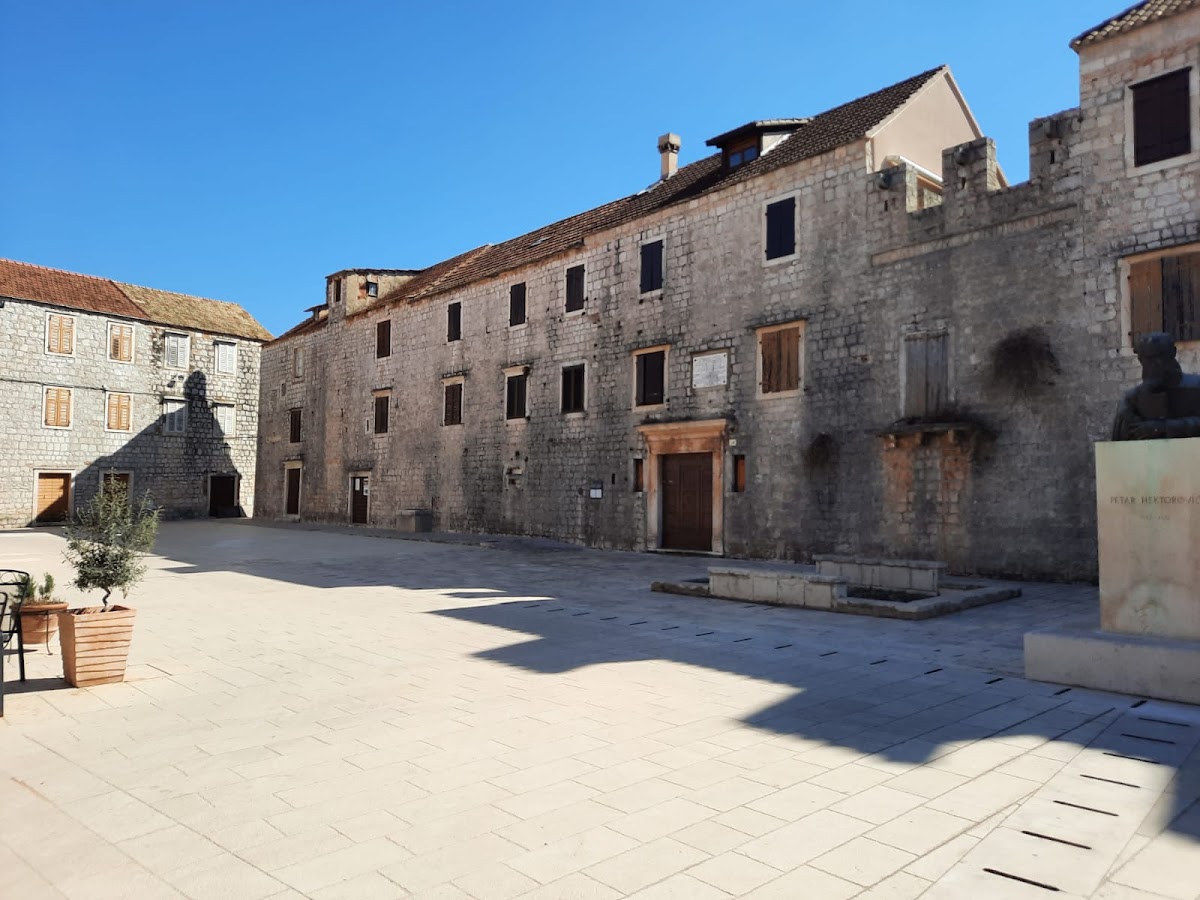
The principal entrance was a portal facing the sea. Before the bay was filled during nineteenth-century harbour reconstruction, shallow seawater reached the entrance and boats could approach it directly. Above the portal was the inscription “OMNIUM CONDITORI,” meaning “To the Creator of All.” A high defensive wall surrounded the residential complex. Its defenses included a ravelin, an outlying defensive work, and a rooftop altana, or loggia terrace, equipped with merlons, the raised sections between openings in a battlement.
The planned ravelin in the southeast corner and a castle-like structure in the southwest were not completed before the attack of 1571. The original design consisted mainly of single-storey buildings arranged around the courtyard. An altana on the northern wall stood above the complex, while buildings were later added on its eastern and western sides. The northeastern corner contained a two-storey retirata, a small defensive or service structure within the fortified complex. Later alterations raised much of Tvrdalj to two storeys.
Household and Charitable Accommodation
The house, kitchen, cellar, living quarters, service rooms, and servants’ rooms opened onto the central courtyard. The eastern side contained separate accommodation for travellers and poor people, reached through its own entrance. A Beguine, a member of a Christian lay religious community associated with charitable and caregiving work, lived in a small cell beneath the loggia terrace.
The eastern side was rebuilt again in 1901 above a vault and cistern near the entrance. The cistern remains part of that entrance area. The pool surrounds were also affected by the nineteenth-century vaulting, while the demolition of the southern and eastern walls altered the original enclosure.
Inscriptions and Humanist Meaning
Numerous inscriptions survive on the interior and exterior walls. Written in Latin, Croatian, and Italian, they are mostly moral in tone and express Renaissance humanist interests. The surviving Croatian texts are regarded as among the oldest of their kind. One inscription identifies Hektorović as the son of Marin and states that he built Tvrdalj at his own expense and through his own efforts for himself and his friends. Other texts refer to hospitality “for travellers” and “for the poor.”
Above a simple lavatory in the atrium, the inscription “SI TE NOSTI CUR SUPERBIS” asks, “Know what you are; then why are you proud?” A stone recess there contains a hole used for emptying chamber pots. Another Croatian moral text concerns sin, death, and judgement before God, while the Latin inscription “SCANDAT ET HIC SVRGENS IN SVA VOTA LABOR” is preserved among the carved texts.
Tvrdalj’s defensive walls, modest architectural treatment, fish pond, garden, animal enclosures, living spaces, and inscriptions form a unified expression of Hektorović’s design. The complex joined protection with residence, cultivation, hospitality, and religious reflection, preserving the character of a Renaissance villa shaped by its owner’s personal and humanist ideals.