Tower of Saint Nicholas Church in Szczecinek: Remnant of a Former Parish Church
Site at a Glance
- Popularity
- Very Low
- Country
- Poland
- Primary era
- Early Modern
- Eras represented
- Early Modern, Modern
- Civilizations
- Duchy of Pomerania, Holy Roman Empire, Kingdom of Prussia
- Site type
- Religious
- Remains
- Church
On this page7 sections
History
The Tower of Saint Nicholas Church in Szczecinek, Poland, is the surviving tower of a former parish church dedicated to Saint Nicholas. The church was completed in the sixteenth century and served a Protestant congregation associated with the Evangelical Church in Germany. Its religious tradition was Lutheran, a Protestant tradition associated with Martin Luther’s teachings, from the sixteenth century until 1909.
The church and tower before 1612
The tower may have been built on the site of an earlier church, constructed around 1310. At the end of the sixteenth century, after the tower had suffered damage, it was rebuilt or, more probably, heightened. Bricks from the Marientron monastery, a religious community and its buildings near Szczecinek, were used in this work. The monastery had been dismantled during the Reformation, the sixteenth-century movement that led to the emergence of Protestant churches. By 1612, both the tower and church had been rebuilt.
Demolition and museum use
The church was demolished in 1909, leaving the tower standing. Work to adapt it for museum use began in 1913, and the museum opened the following year. After the Second World War, local museum advocate Aleksander Stafiński helped establish the Szczecinek Region Museum in the tower in 1958. Its exhibitions moved to a new location in 2006.
Remains
Tower and former church plan
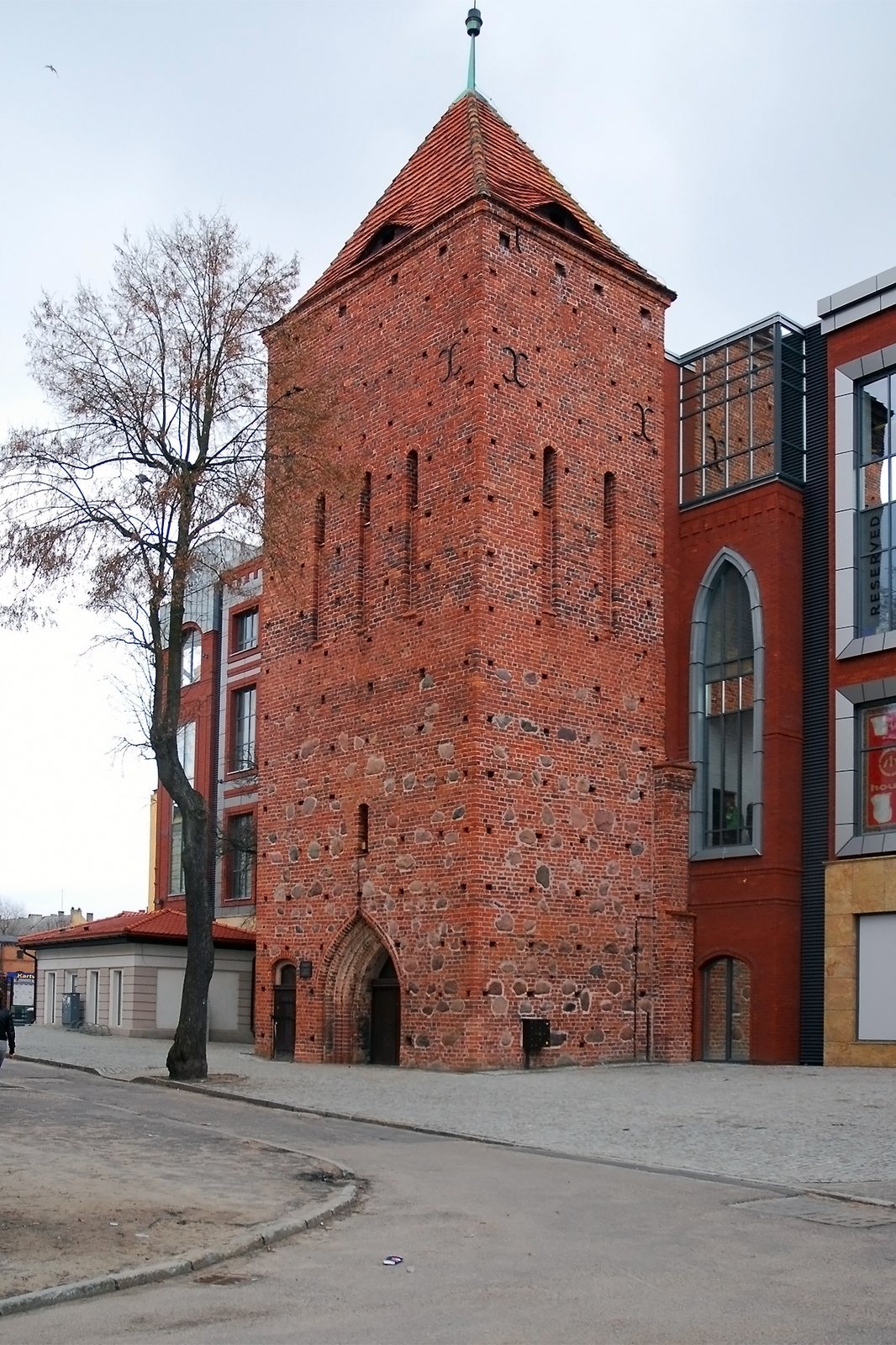
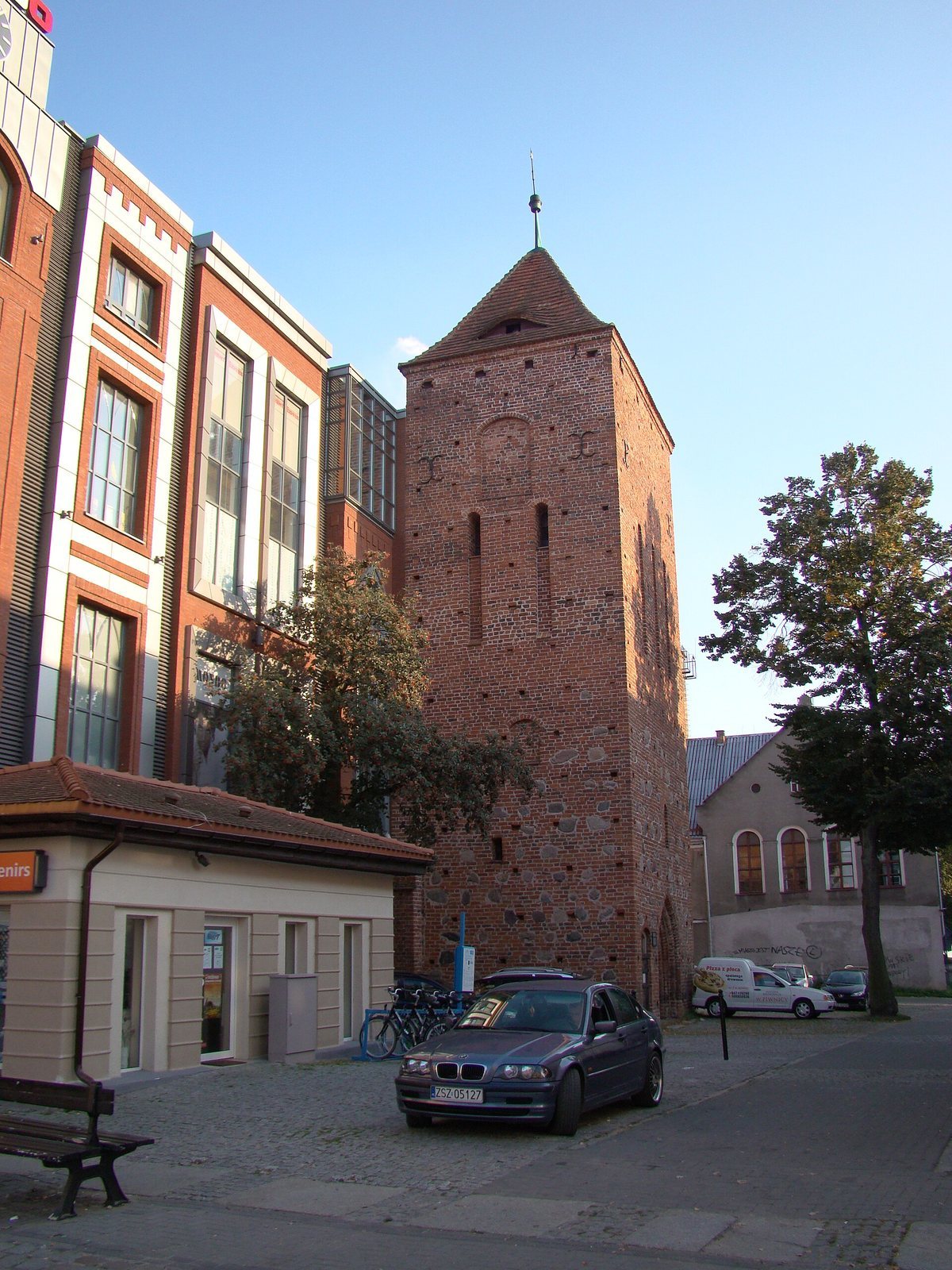
The surviving brick tower belonged to a Gothic church, in the medieval style associated with pointed arches and ribbed vaults. The church had a single nave, its main worship space, and a large, separate chancel, the area around the altar. Some parts of the tower’s lower walls are 2.5 metres thick. Its roof was once a Baroque helmet-shaped form with a rounded, bulbous profile; in the early nineteenth century, this was changed to a tent-shaped roof with straight slopes rising to a peak.
Church furnishings
The church’s modest furnishings included four Gothic silver chalices, cups used in Christian worship. Duchess Anna and Duchess Jadwiga, each a holder of a ducal title, funded one chalice apiece in the first half of the seventeenth century. Some of the church’s furnishings were transferred to the newly built St Mary’s Church.
Former church cemetery
In 2009, a three-storey Galeria Hosso building was constructed on the site of an earlier commercial building within the former church cemetery.