Church of Saint Casimir in Brokęcino: A Historic Timber Church
Site at a Glance
- Popularity
- Very Low
- Country
- Poland
- Primary era
- Early Modern
- Eras represented
- Early Modern, Modern
- Civilizations
- Brandenburg-Prussia, Duchy of Pomerania, German, Holy Roman Empire, Kingdom of Prussia
- Site type
- Religious
- Remains
- Church
On this page11 sections
History
Foundation and Protestant use
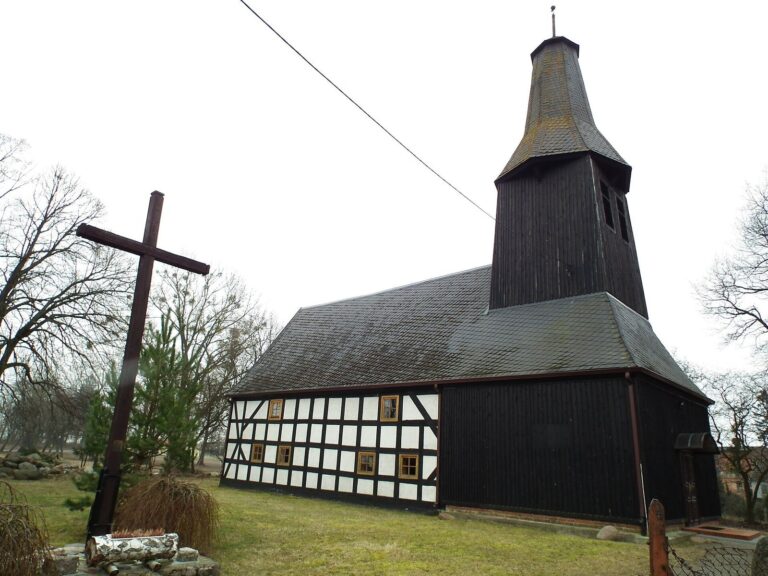
The Church of Saint Casimir in Brokęcino is a late-16th-century timber church in Poland. Built for local Protestants, it was probably completed in 1582 and may have been founded with the support of the Hertzberg family, local landowners. The congregation was affiliated with the Szczecinek synod, a regional church body.
Alterations and renovation
A tower was added in 1661, and the church was repaired in 1803. Renovation in 1913–1914 brought an extension on the east side and painted decoration. A further restoration took place in 1994.
Roman Catholic use
Catholics took over the church in 1945. It was blessed on 5 August 1946, and its main altar was consecrated on 24 September 1969. The church now serves as a Roman Catholic branch church within the parish of Our Lady of the Ransom of Captives in Okonek.
Remains
The church
Building and interior
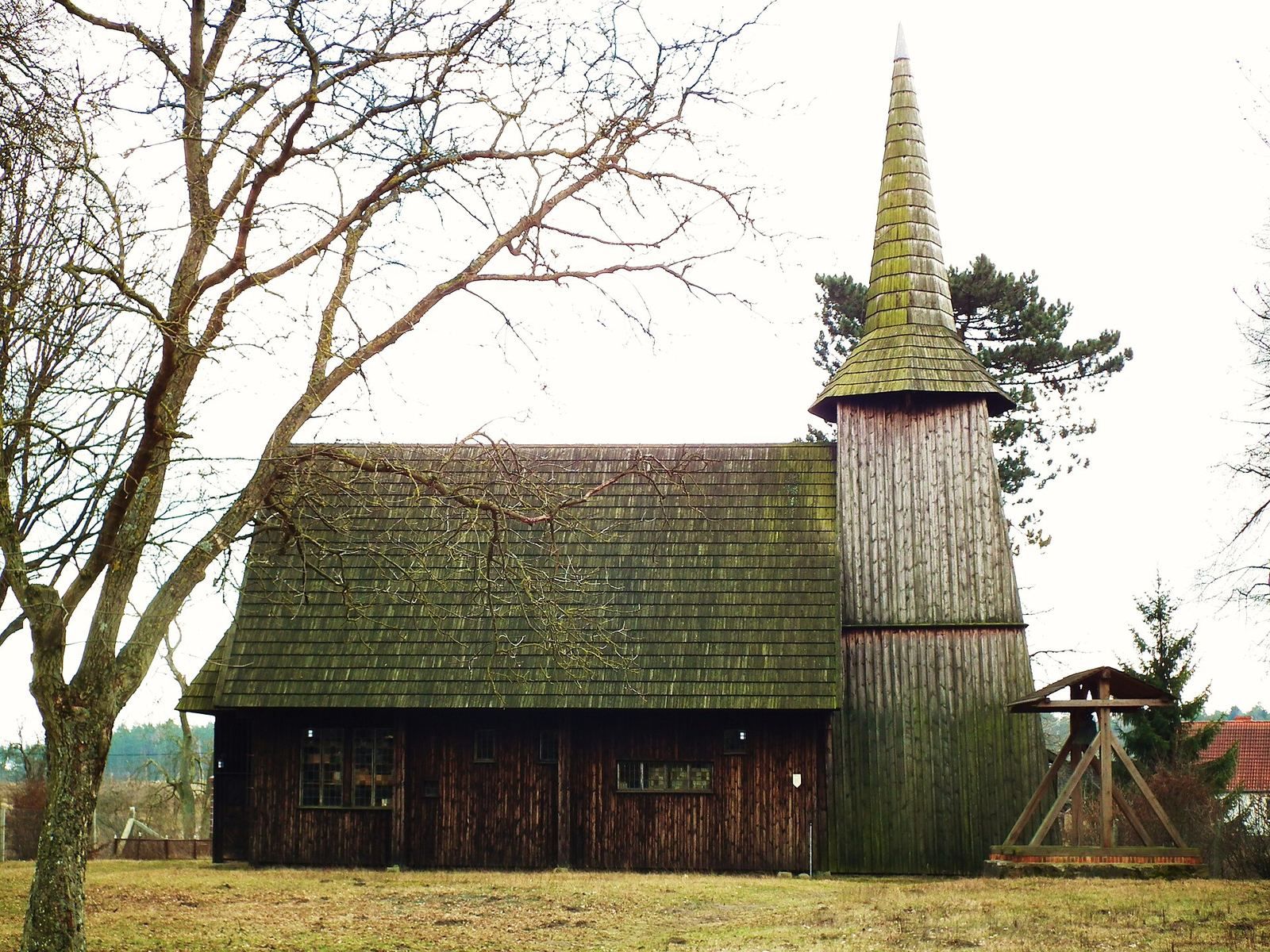
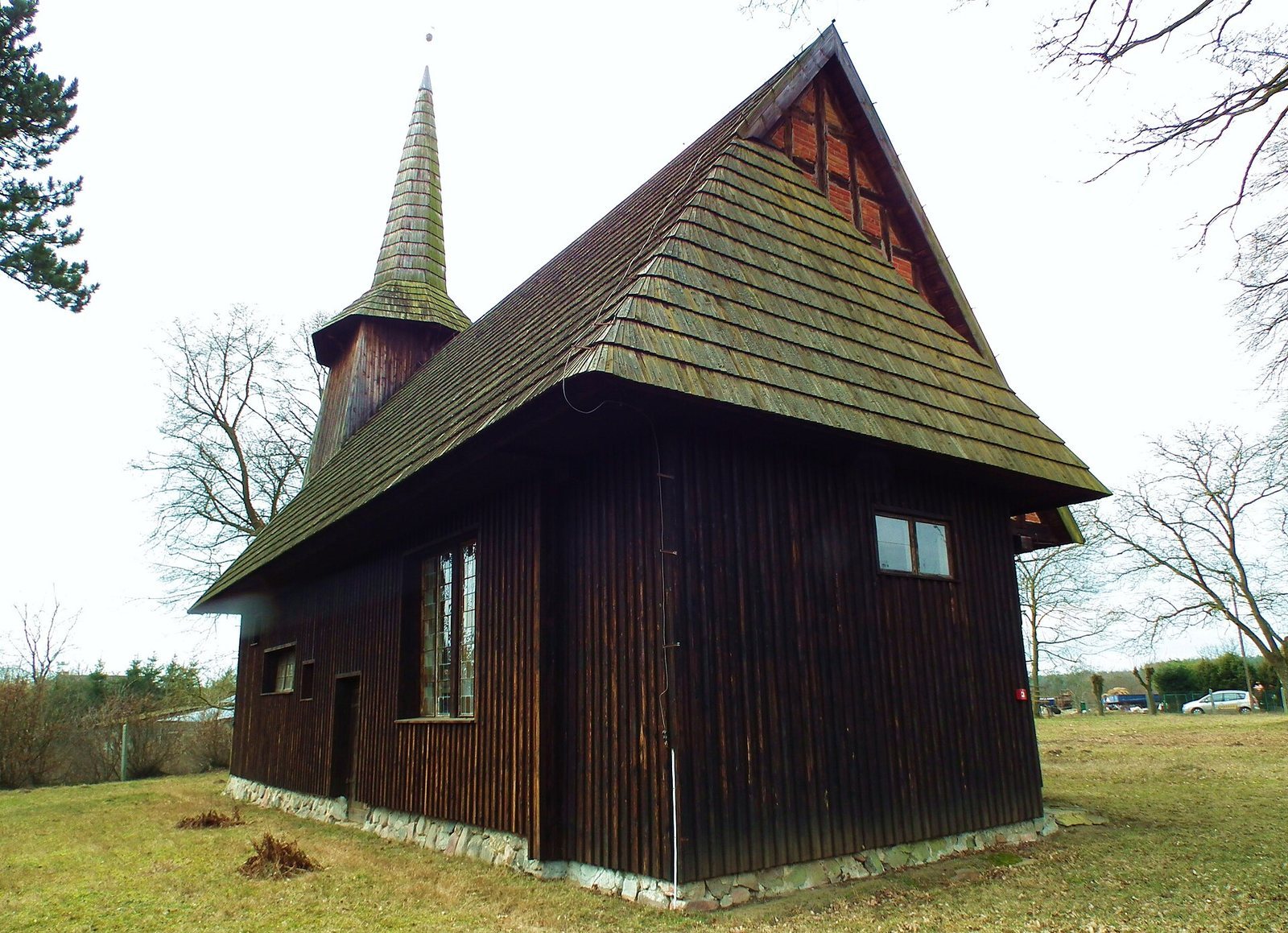
The church is a timber hall built with log construction on a base of fieldstone and brick. Wooden pegs and wedges join its timbers. The tower narrows toward its top and carries an octagonal, pointed spire covered with wooden shingles. The exterior is boarded, and the hall received its boarding during the 1994 restoration; the tower had been boarded from the beginning.
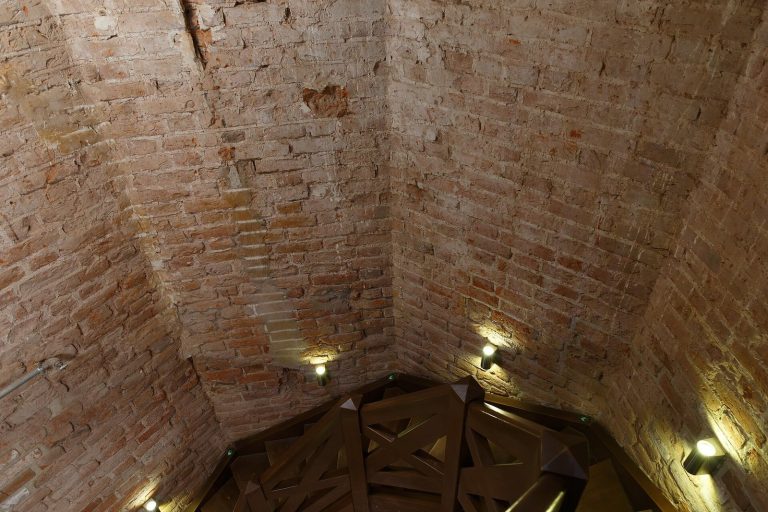
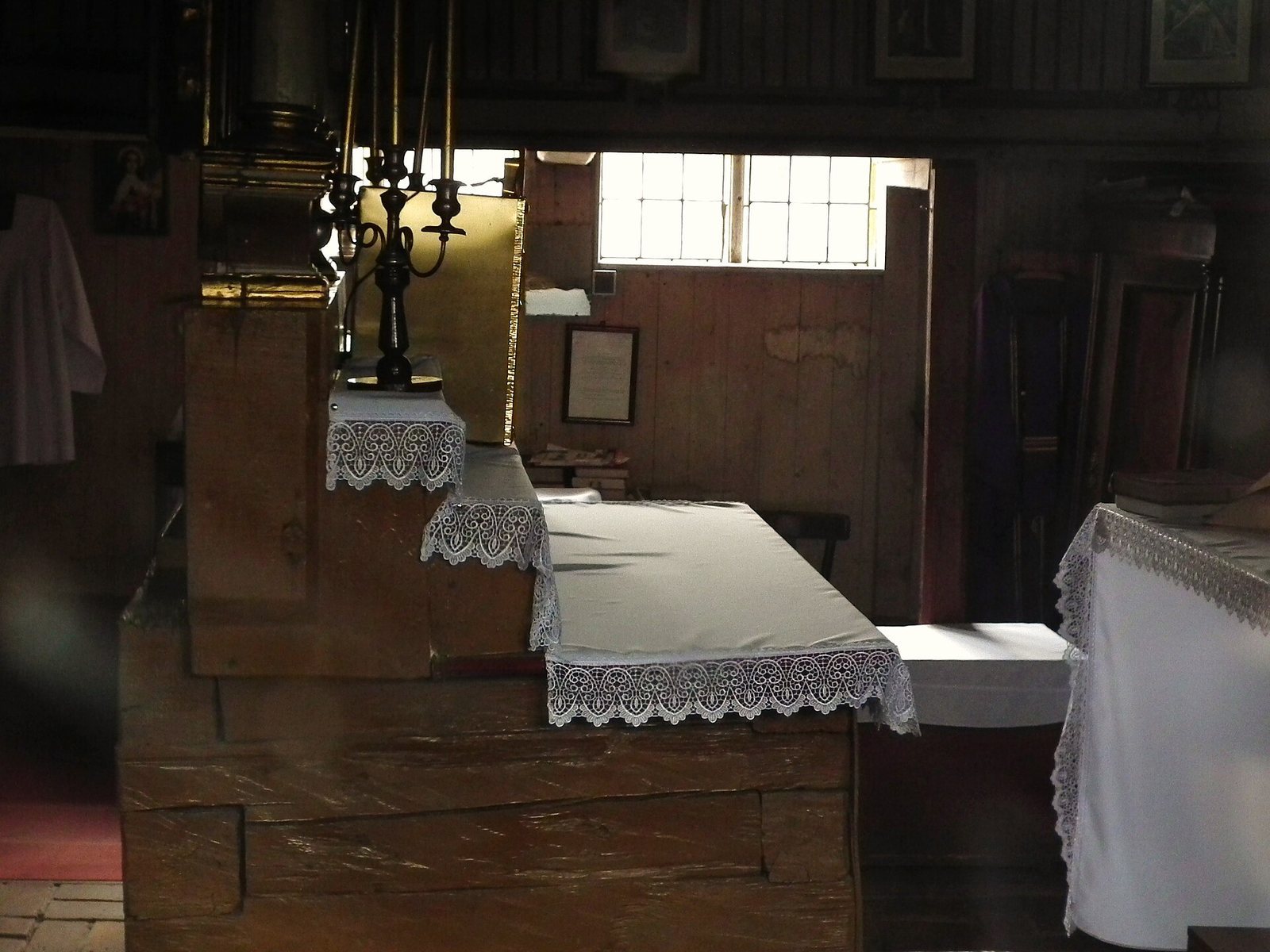
Inside, galleries and a choir with an organ date from 1913. The beamed ceiling has painted plant motifs and coffering. The roof shingles were replaced during the 1994 restoration.
Furnishings
The church’s furnishings date from the 17th and 18th centuries. Its main altar is in the Mannerist style, a European artistic style that developed after the Renaissance, and is probably the work of Jakub Funcke of Kołobrzeg. The pulpit, dated 1605, is in the Renaissance style, a cultural and artistic movement that began in the late medieval period; it bears painted images of the Evangelists. An epitaph commemorates Zofia von Seigern.
Nearby features
Bell tower
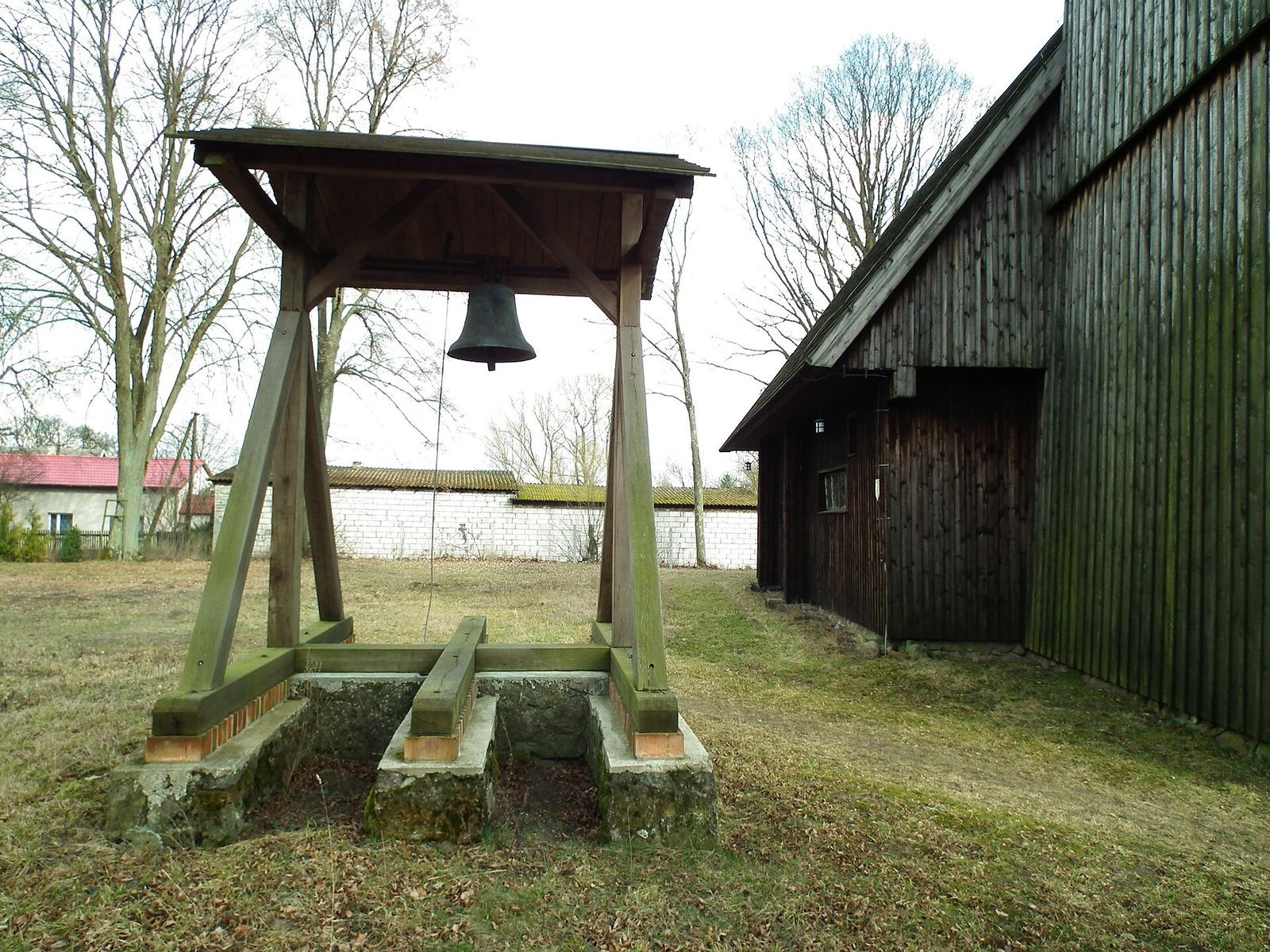
An open timber bell tower from the second half of the 19th century stands nearby. It has a gabled roof and contains a bell cast by Henninck Grape.
War memorial remnant
A pedestal beside the bell tower is the surviving remnant of a monument to the victims of the First World War.