Santa Maria Maddalena: A Baroque Parish Church in Genoa
Site at a Glance
- Popularity
- Medium
- Country
- Italy
- Primary era
- Early Modern
- Eras represented
- Early Modern, Modern
- Civilizations
- Genoese, Italian
- Site type
- Religious
- Remains
- Church
On this page12 sections
History
Santa Maria Maddalena is a Roman Catholic church in Genoa, Italy, rebuilt in 1585–1587 and remodeled in the Baroque style, a European artistic and architectural tradition especially associated with the seventeenth and eighteenth centuries. Its history began with a chapel established before the twelfth century, and the church later became a long-standing Somaschi house and parish.
Medieval chapel and urban growth
The early chapel stood between Luccoli and Fossatello, beside the Roman road now called Via della Maddalena. It lay outside Genoa’s Carolingian walls, named for the Frankish dynasty that ruled from the eighth through tenth centuries, and depended on the chapter of San Lorenzo. A fire damaged the chapel in 1140. A papal decree in 1150 confirmed its relationship with San Lorenzo, while records from the twelfth and thirteenth centuries state that the cathedral chapter appointed its senior cleric and canons, the chapter’s members. New city walls built in 1155–1160, known as the Barbarossa walls after Frederick I, a twelfth-century Holy Roman Emperor, brought the church within the expanded urban area.
Religious orders and rebuilding
In 1480 the church became a benefice entrusted to a holder for administration. It was made a parish in 1572 and assigned to the Theatines, a Catholic clerical order, who established a community of twelve. They soon found the church too small and moved to the nearby Basilica of San Siro in 1575. That year the church passed to the Somaschi, the Clerics Regular of Somasca, a Catholic congregation founded by Jerome Emiliani. A decree by Pope Gregory XIII formalized the transfer in June 1576, and the Somaschi took possession in October. They added their founder’s name to the church’s dedication. It is the order’s oldest community house outside Somasca.
Finding the building in poor condition, the Somaschi began repairs and enlargement in 1577. In 1581, local property owner Franco Lercari offered to finance an expansion in exchange for patronage rights, but a proposed single-nave design was not built. Gio Batta Spinola commissioned a complete rebuilding in 1585, and the work was finished in September 1587. The adjoining Somaschi college was completed in 1622. The order decided on another remodeling in 1635, with support from the Spinola family. Work paused in 1646, resumed in 1660, and was substantially complete by 1661.
Consecration and later history
Interior decoration continued in stages from the late seventeenth to the mid-eighteenth century, including a campaign in 1679. Archbishop of Genoa Giuseppe Maria Saporiti consecrated the church on 28 September 1755. The façade was rebuilt in 1911.
After religious orders were suppressed under Napoleonic rule in 1810, the Somaschi remained at the church as secular priests. Following the fall of the French Empire, they resumed wearing their religious habit. The church remains a Roman Catholic parish in the Archdiocese of Genoa, within its Centro Ovest district, and is dedicated to Mary Magdalene and Jerome Emiliani. At Pope Francis’s request, a Vatican decree issued on 3 July 2016 raised Mary Magdalene’s commemoration to the rank of a feast, a designated level of celebration in the Catholic calendar. It is observed on 22 July.
Remains
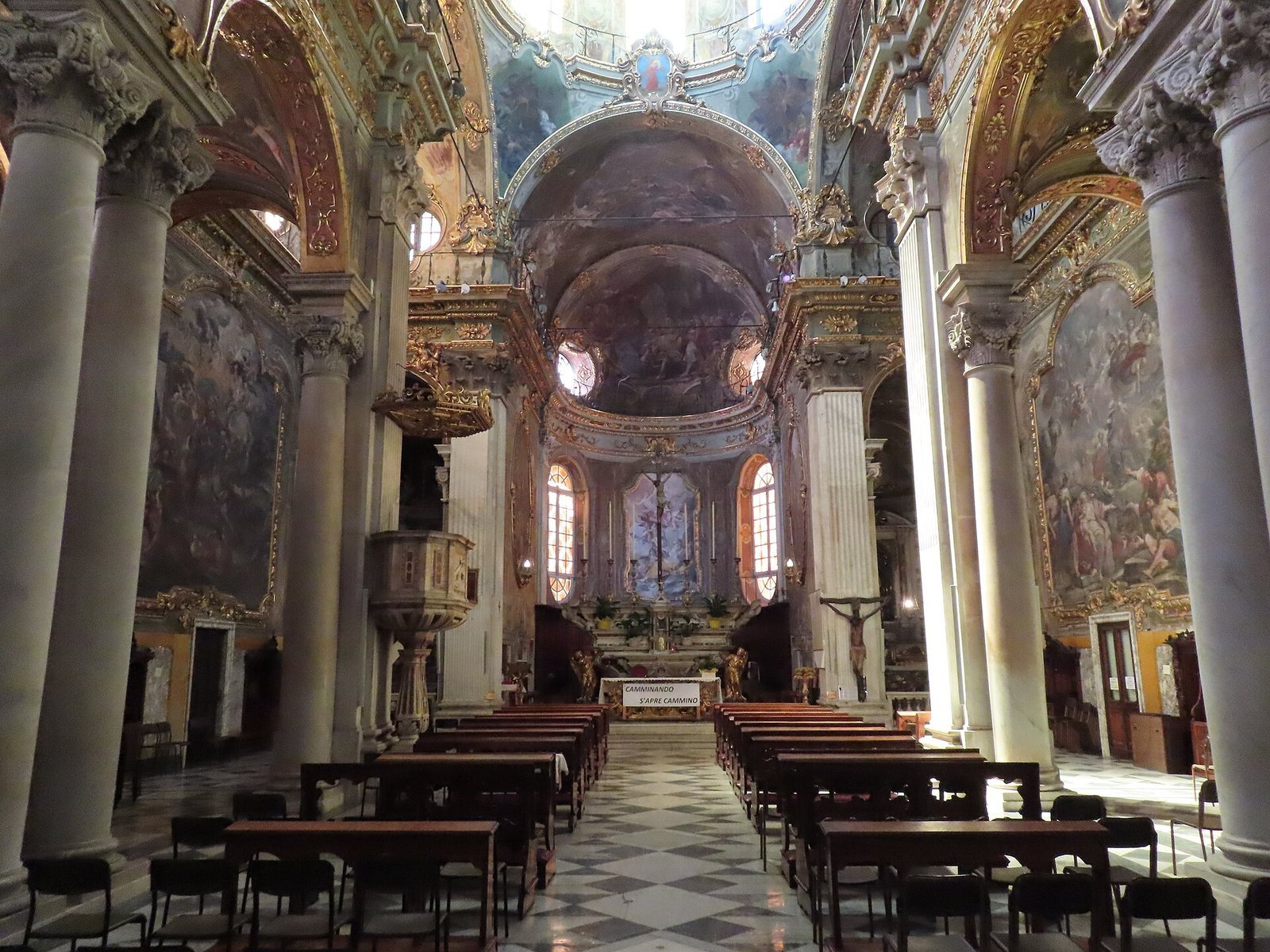
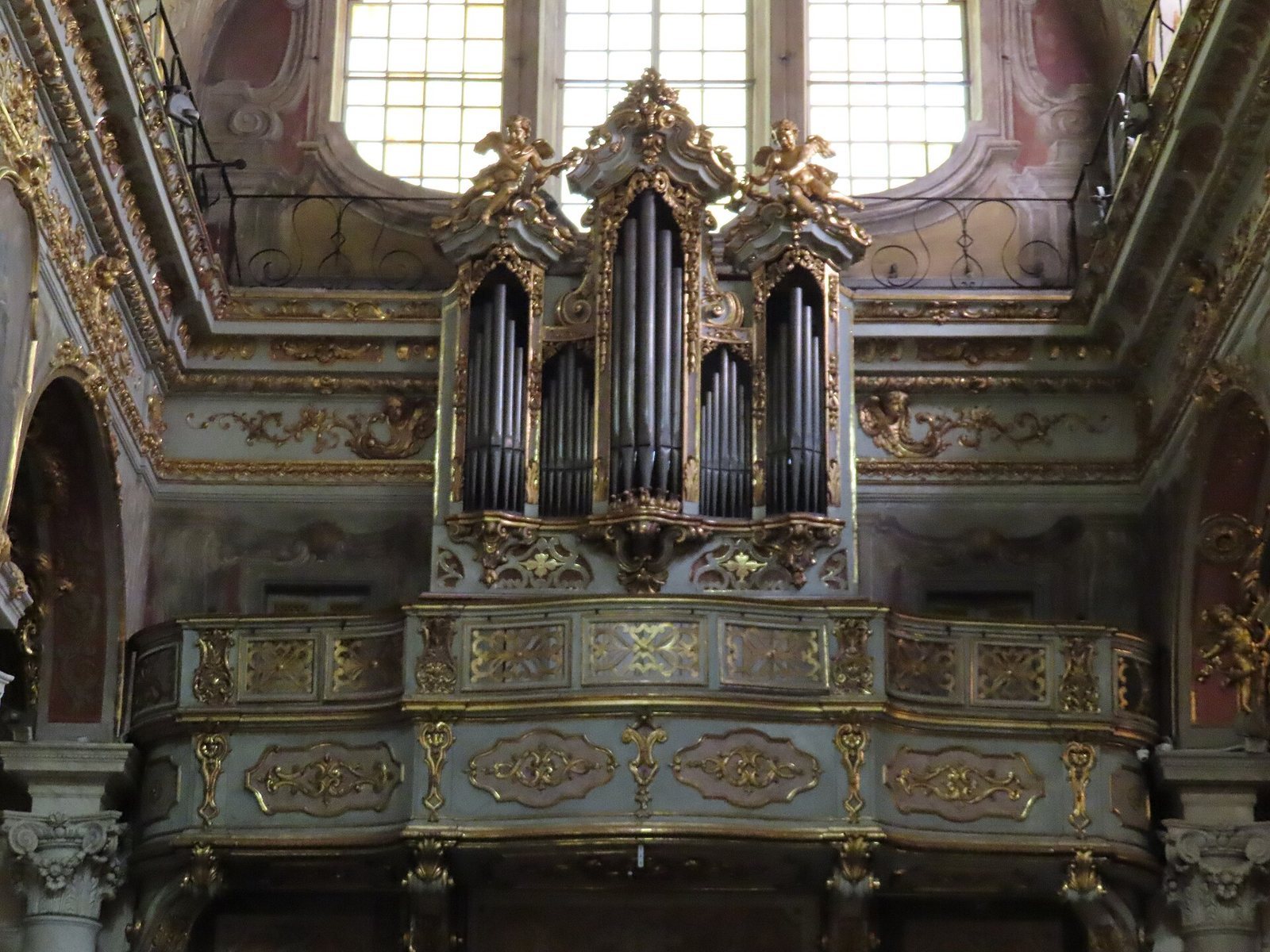
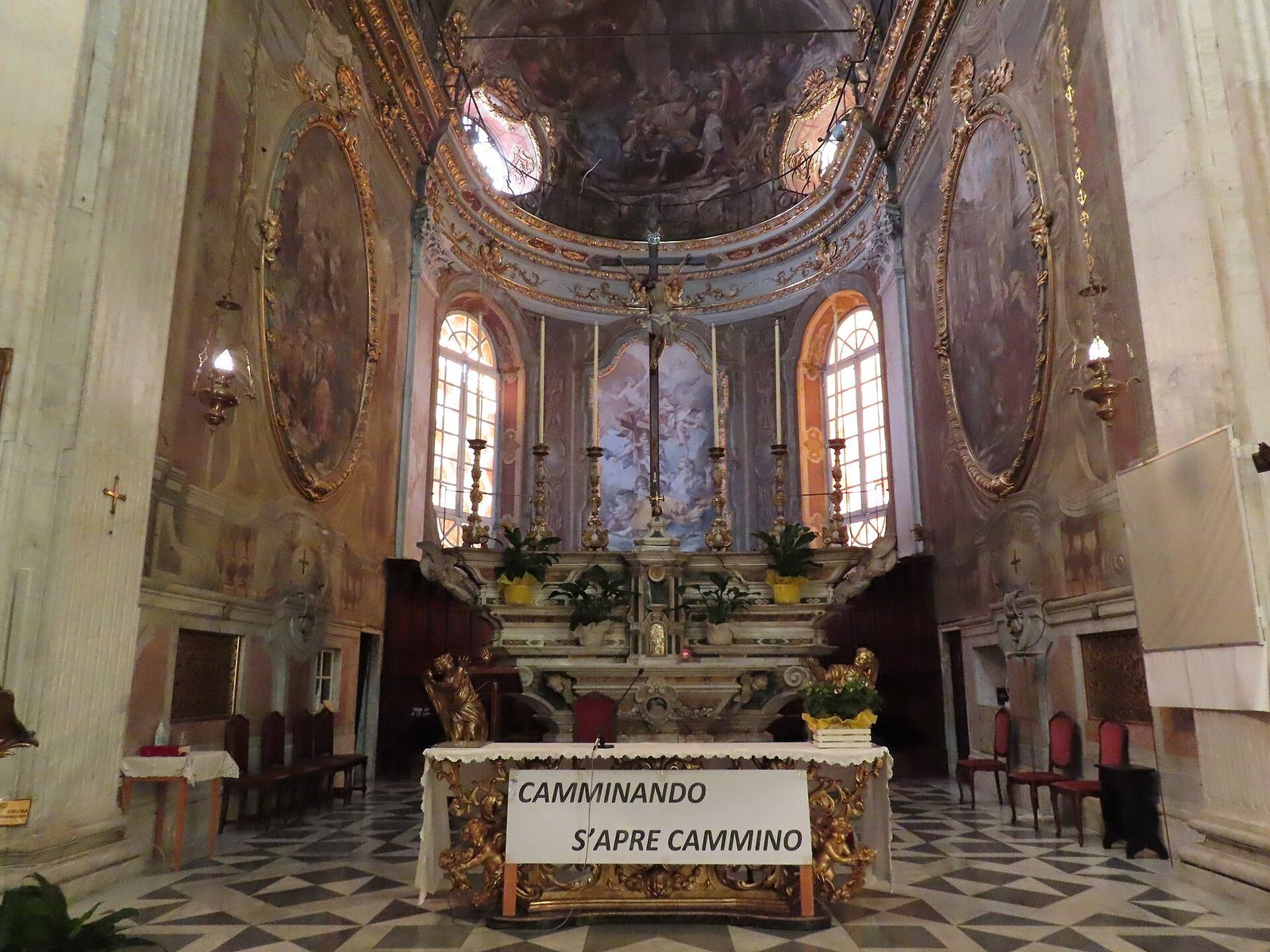
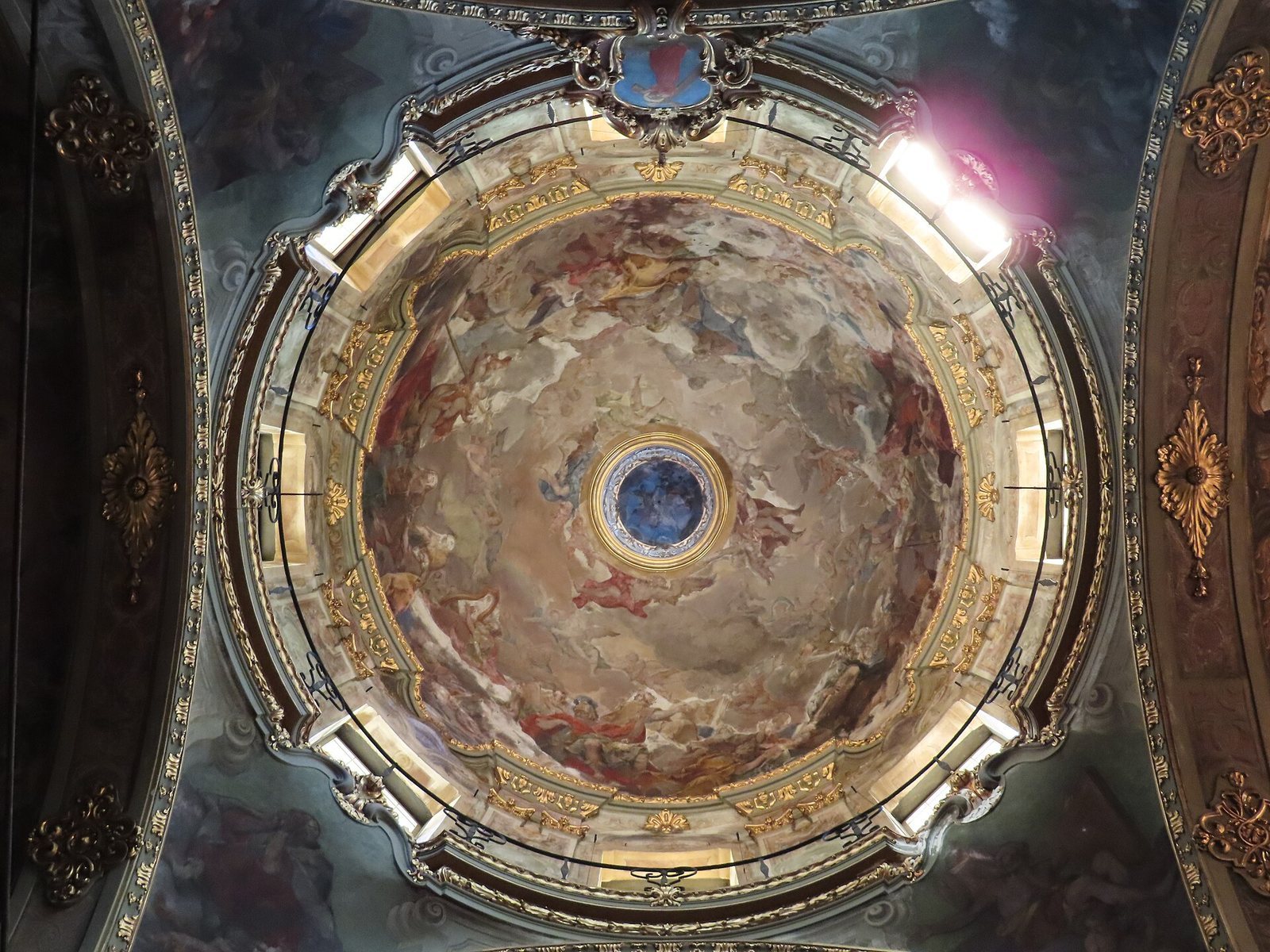
The church has a Baroque interior organized around a central nave, the main body of a church, and two side aisles. Paired columns divide the spaces, and a high dome rises over the transept, the crosswise part of the church. The side aisles are narrow and receive little light.
Exterior and plan
Portico and façade
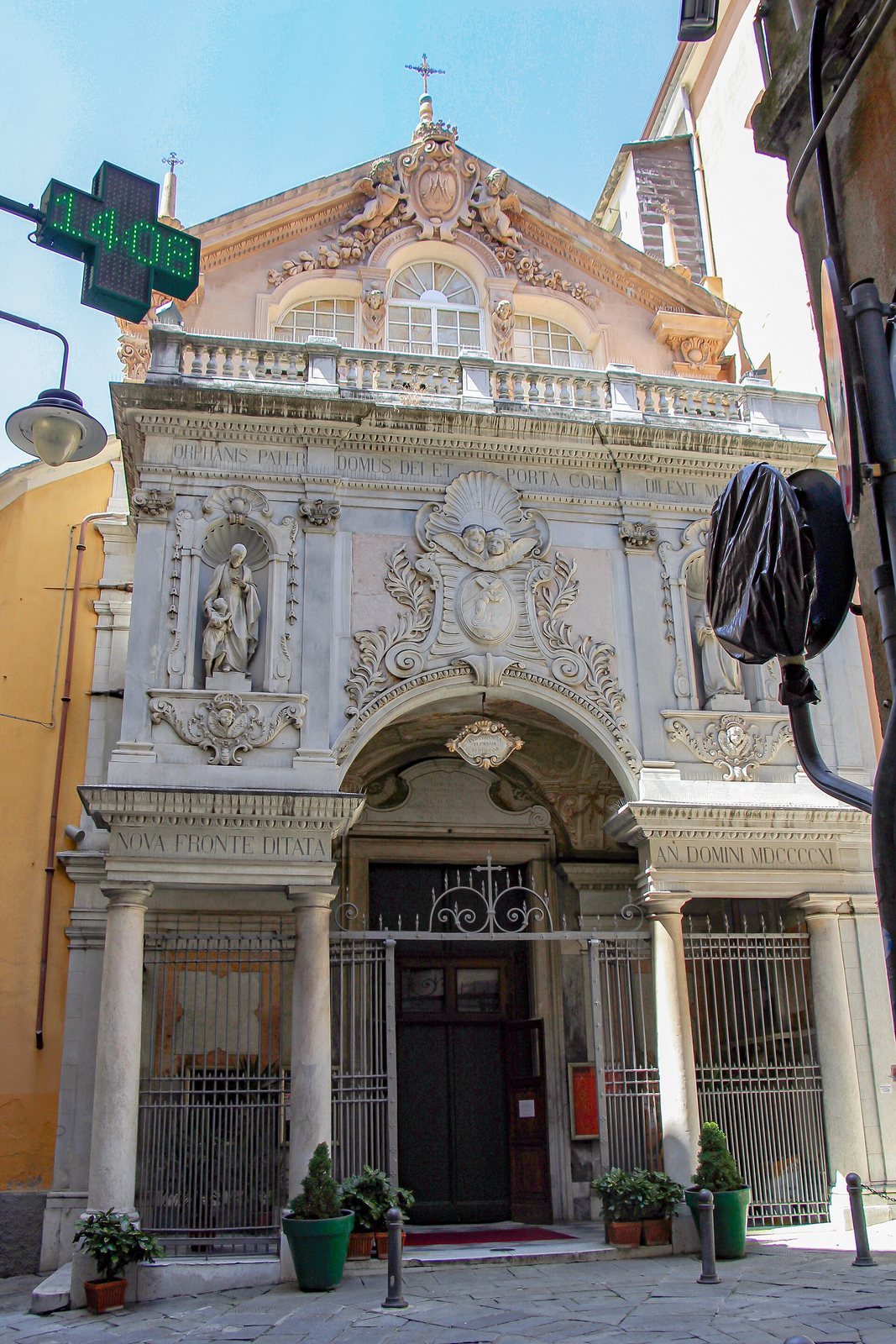
A portico supported by marble columns was built in front of the church, facing the small piazza. A fragment of it was reconstructed during a later restoration. Five fourteenth-century statues depicting the Virgin and Child and Faith, Hope, and Charity once stood on the portico’s balustrade. The façade has niches containing statues of the church’s two titular saints, Mary Magdalene and Jerome Emiliani.
Interior layout
The church’s earlier arrangement had a single nave, deep side chapels, paired pilasters, which are shallow columns attached to a wall, and a small presbytery, the area around the altar. Its orientation was reversed from that of the predecessor building to improve access from the newly built New Street. The present interior has three naves, with a high dome above the transept. Each side aisle contains three altars and ends in a chapel. The Somaschi college stands beside the church.
Interior decoration and artworks
Frescoes
The church’s vaulted ceilings carry frescoes, paintings made on wet plaster. Sebastiano Galeotti’s work, completed in 1729, covers the central nave, dome, presbytery, and apse, the terminal space behind the altar. The dome depicts the Glory of Saint Mary Magdalene. In 1737 Sigismondo Betti painted scenes from the life of Jerome Emiliani on the transept walls. Other eighteenth-century works are attributed to Giovanni Battista Parodi, Paolo Gerolamo Piola, Giovanni Battista Casone, Domenico Parodi, Giuseppe Palmieri, and Giacomo Antonio Boni. Casone’s fresco depicts Saint Francis of Paola. In 1712 Domenico Parodi painted the Marriage and Nativity of the Virgin and the Assumption in a chapel in the right nave. Boni’s frescoes include the Trinity and Angels.
Paintings in the chapels
Paintings preserved in the chapels include Bernardo Castello’s Madonna and Child with Saints Nicholas and Mary Magdalene, Santino Tagliafichi’s Penitent Magdalene of 1819, Aurelio Lomi’s Annunciation of 1602, and Jan Howart’s Saint Jerome with Three Holy Nuns. The chapels also contain paintings of the Passion of Christ by Enrico Vaymer and Giacomo Antonio Boni, including Boni’s work of 1717.
Sculpture
The church’s sculptural works include Agostino Storace’s painted wooden group of Saint Jerome Emiliani, the Crucifix, and angels, made in 1747. A seventeenth-century statue of the Madonna and Child is attributed to Tommaso Orsolino, who also made two shallow marble reliefs depicting the Nativity and Saint Paula of Rome.