Toompea Castle: Historic Fortress and Seat of Estonia’s Parliament
Visitor Information
Google Rating: 4.6
Popularity: Low
Official Website: www.riigikogu.ee
Country: Estonia
Civilization: Crusader, Early Modern, Modern
Site type: Military
Remains: Castle
History
Toompea Castle is situated on Toompea Hill in the center of Tallinn, Estonia. Originally a fortified site dating back to at least the early medieval period, it was initially established by local inhabitants before coming under Danish control in the 13th century.
The earliest known fortifications on the hill likely arose in the 1120s, creating a defensive tower on the steep elevation about 50 meters above sea level. The site gained prominence after the Danish victory at the Battle of Lindanise in 1219, when King Valdemar II ordered extensive improvements to the fortress. This early castle featured rectangular stone walls and was divided by the Danes into two main sections: a southern foreburg and a northern area housing the governor’s residence and a defensive tower. During this time, the fortress was the principal Danish stronghold in the Baltic region and was known as Castrum Danorum or Taani linn, with the latter name influencing the modern name Tallinn. The Russians called it Kolyvan.
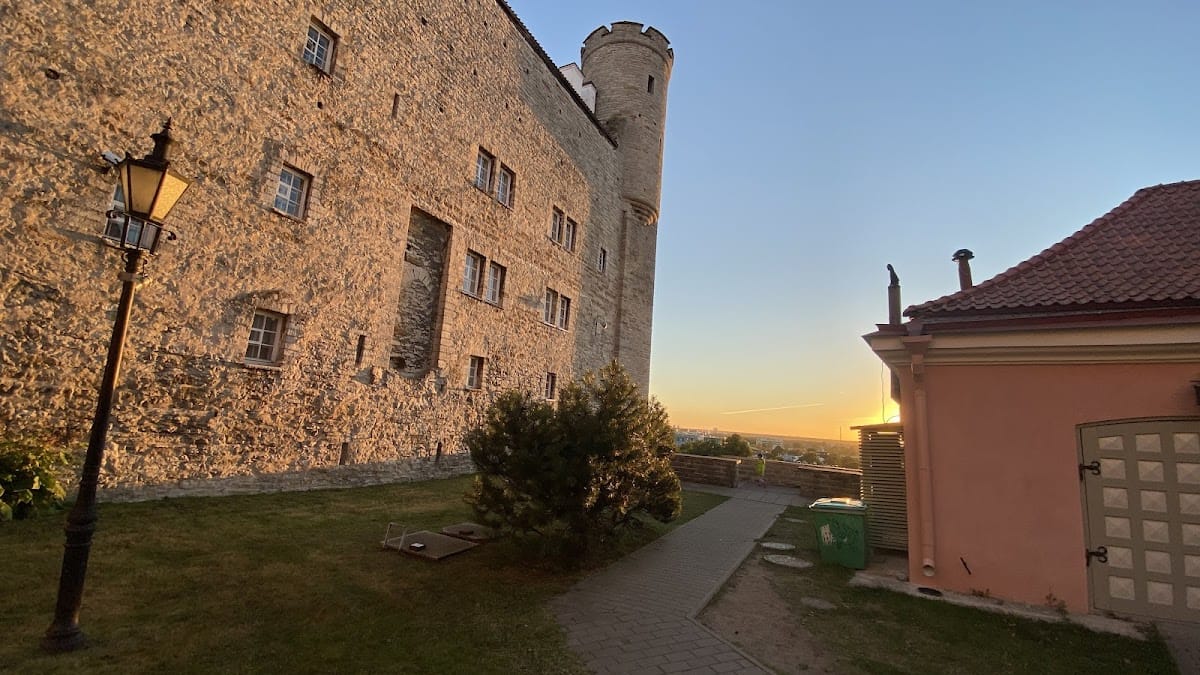
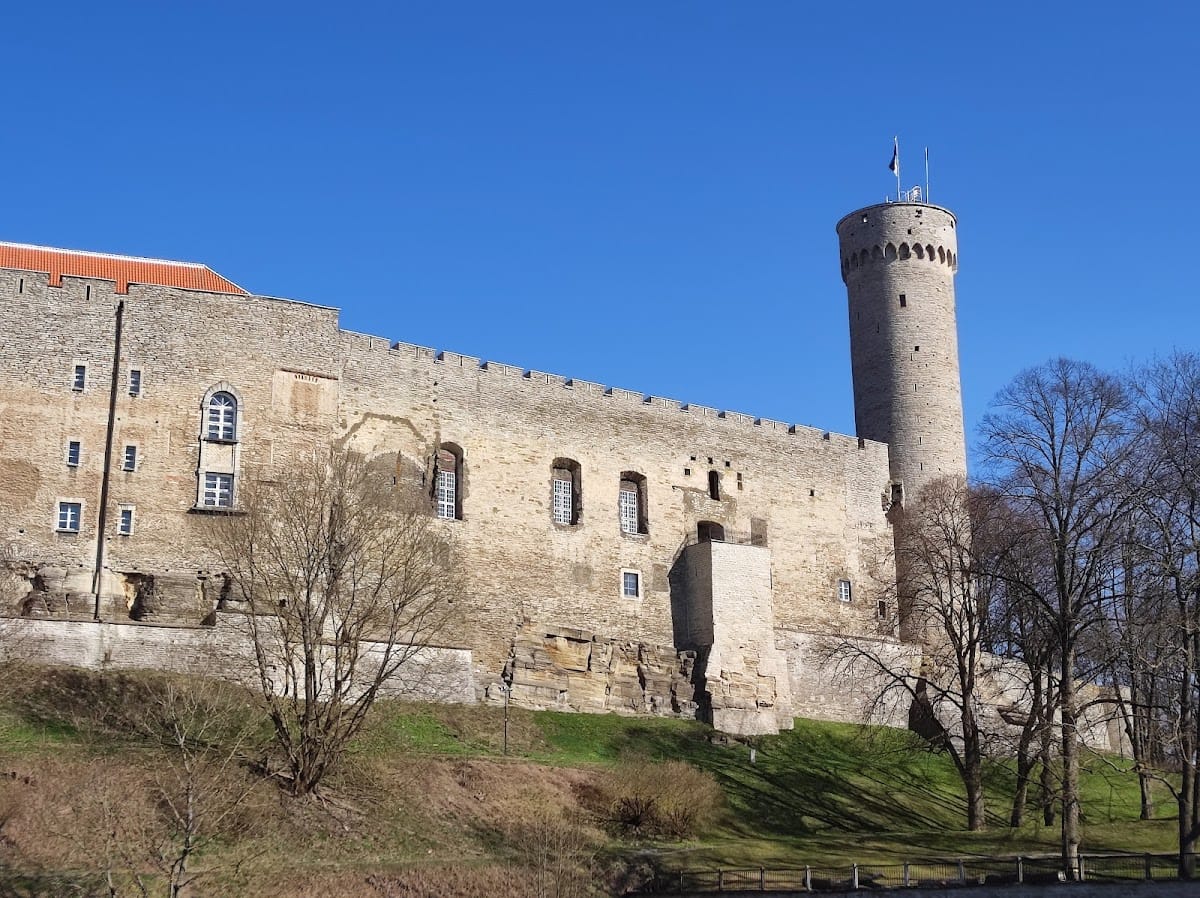
Control of Toompea Castle passed to the Livonian Brothers of the Sword in the 13th century; this military-religious order later merged with the Teutonic Order. After the castle was sold to the Teutonic Order in 1346, they added ecclesiastical features such as a chapel, a chapter house (meeting space for knights), and residential quarters for the knights. In the late 14th century, the prominent observation tower now known as Long Hermann (Pikk Hermann) was constructed on the southeast corner of the complex. Standing 48 meters tall, this tower was named after a legendary medieval hero and became the tallest and most recognizable structure within the castle. Other corner towers such as Landskrone, Pilsticker, and Stür den Kerl also formed part of the defensive system, though only the first two survive today.
In the mid-16th century, during the Livonian War, control of northern Estonia, including Toompea Castle, shifted to the Swedish crown in 1561. Under Swedish rule, the castle ceased functioning primarily as a military fortress. Instead, it was transformed into a ceremonial and administrative center. Notably, the State Hall was built along the western wall and completed in 1589. This hall served as a royal meeting place, including a documented encounter between King John III of Sweden and his son, Sigismund III of Poland.
Following Estonia’s incorporation into the Russian Empire in 1710, the castle’s military importance diminished further. Between 1767 and 1773, architect Johann Schultz oversaw a significant reconstruction. The deteriorated Stür den Kerl tower was demolished, and existing residential structures were converted into the Governor’s Palace. This rebuilding reflected a stylistic blend transitioning from Baroque to Classicism. Later, in 1843, the former convent house within the complex was repurposed as a prison by the provincial architect Johann Schlebach. This prison facility was destroyed during the February Revolution of 1917.
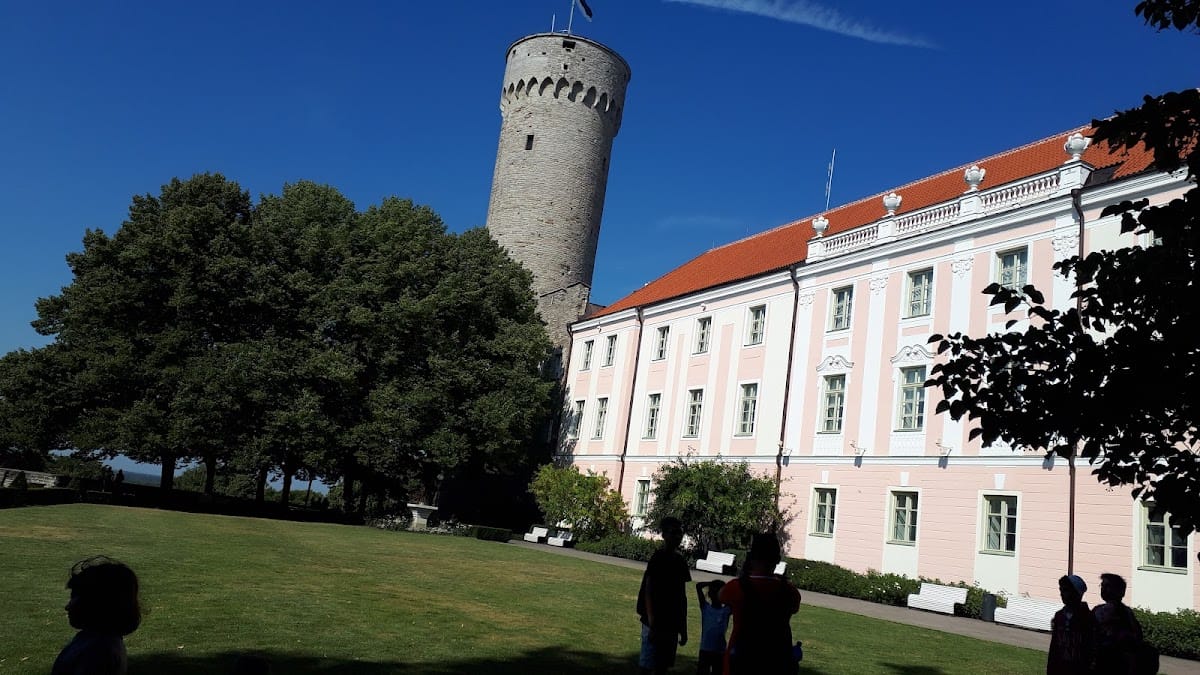
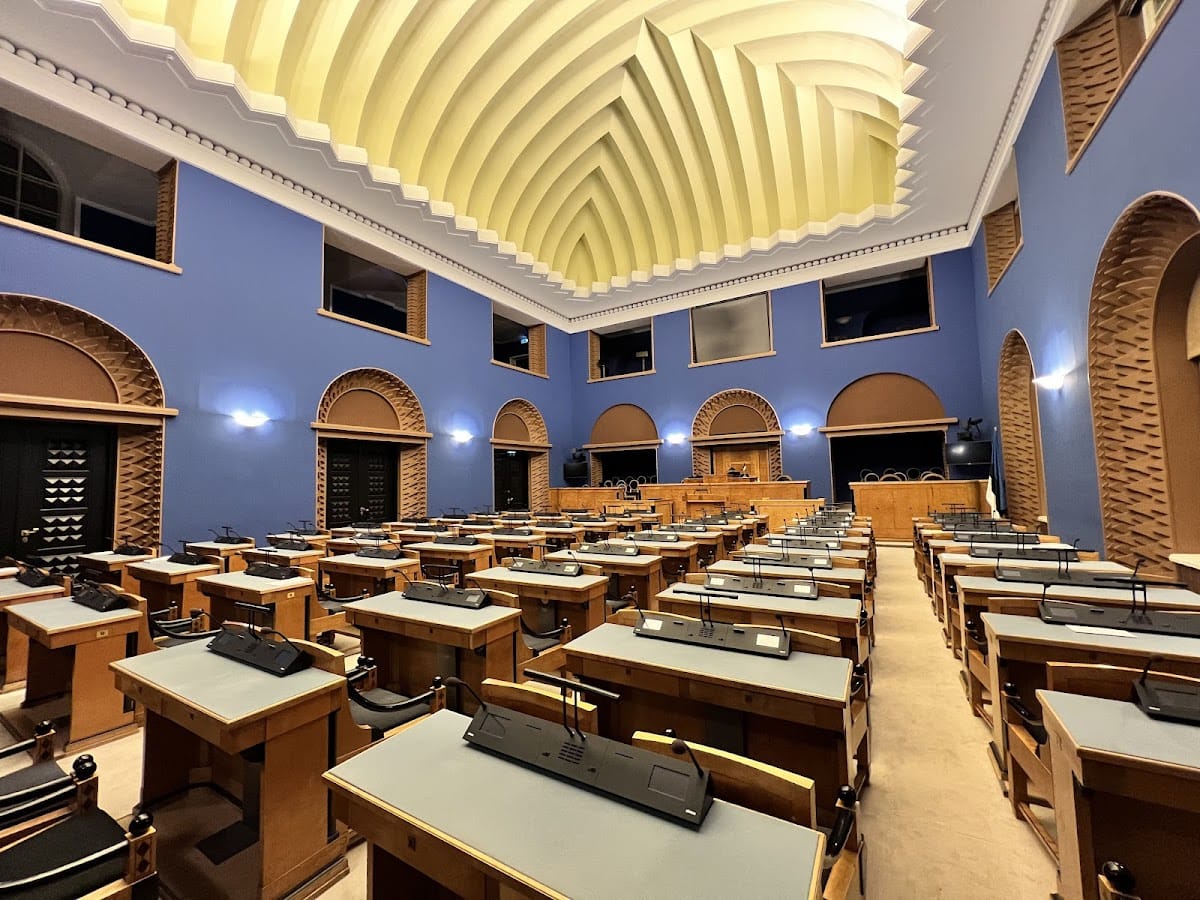
After Estonia declared independence in 1920, the medieval convent house’s foundations became the site for constructing the Estonian Parliament (Riigikogu) building. Architects Eugen Habermann and Herbert Johanson designed this structure, which was completed in 1922. While its exterior appears traditional, the interior showcases an expressionist style rare among parliamentary buildings worldwide. During the 1930s, an additional southern wing was constructed to house the Ministry of Internal Affairs. Designed initially by Konstantin Böhlau and August Tauk with later modifications by Alar Kotli, this wing was styled to harmonize with the earlier 18th-century buildings on the grounds. In 1935, a narrow three-story addition was attached to the west wall of the State Hall to accommodate officials. Today, the national flag of Estonia is ceremonially raised each sunrise atop the Long Hermann tower, acknowledging the site’s ongoing symbolic importance.
Remains
Toompea Castle’s complex features a layered layout that reflects its long history, originally centered around a rectangular stone-walled enclosure known as a kastel (a term for the core keep or fortress). This main enclosure is divided by an internal wall separating the southern foreburg—a fortified outer ward—from the northern section, where the governor’s residence and a defensive tower once stood. The thick stone masonry that forms the castle’s walls reveals medieval construction techniques aimed at both defense and administration.
Dominating the skyline is the imposing 48-meter-high observation tower called Long Hermann, built in the late 14th century. Constructed from massive stone blocks, this tower was intended as both a lookout and a symbol of authority. It remains the tallest structure in the complex and serves as the site where the Estonian national flag is raised every morning. The tower’s name derives from a medieval hero legend, linking the structure to local folklore.
Among the other surviving corner towers, Landskrone—meaning “Crown of the Land”—and Pilsticker, or “Arrow Sharpener,” stand as well-preserved remnants of the original defensive ring. Both are constructed using stone masonry consistent with the castle’s medieval origins. In contrast, the tower known as Stür den Kerl, translating to “Repel the Enemy,” was removed in the 18th century due to its poor condition, reflecting the shifting needs and structural changes of the castle over time.
The Governor’s Palace represents a later phase of construction and renovation during the Russian imperial era in the late 18th century. Rebuilt between 1767 and 1773 under Johann Schultz, this building blends Baroque and Classicist elements, marking a departure from the castle’s former military purpose and showing its adaptation into an administrative residence. The palace comprises reconstructed residential buildings converted for official use, and its architectural details reflect the stylistic transition of that period.
Another significant feature is the State Hall, erected by the Swedish authorities in 1589 along the western wall. This impressive hall served as a ceremonial meeting venue for royalty and high officials. Its location within the castle walls underscores the shift from fortress to governance center.
The foundations of a medieval convent house remain preserved beneath the modern structures. These foundations provided the base for the Estonian Parliament building completed in 1922. The parliamentary building’s exterior follows a traditional façade, while its interior is notable for its rare expressionist style, showing a unique architectural layering atop the medieval remains.
In the 1930s, the southern wing was added to accommodate the Ministry of Internal Affairs. This extension was designed to visually harmonize with the surrounding 18th-century buildings, maintaining architectural cohesion across the castle grounds. Additionally, a narrow three-story block was appended to the west side of the State Hall in 1935 to house officials, illustrating the continued evolution of the complex’s administrative functions.
The castle grounds also include the Governor’s Garden, adapted in the 20th century to complement the historical structures, as well as a public park established during the Russian imperial period to the southeast. Together, these landscaped areas frame the castle’s historic core.
Overall, Toompea Castle’s surviving features reveal a site that has evolved from a medieval stronghold and monastic center into an administrative palace and, ultimately, the seat of Estonia’s parliament, with each phase leaving its mark on the built environment.