Tomb of the Eagles: A Neolithic Chambered Tomb in Orkney
Site at a Glance
- Popularity
- High
- Country
- United Kingdom
- Primary era
- Stone Age
- Eras represented
- Stone Age, Modern
- Civilizations
- Unclassified
- Site type
- Burial
- Remains
- Tomb
On this page11 sections
History
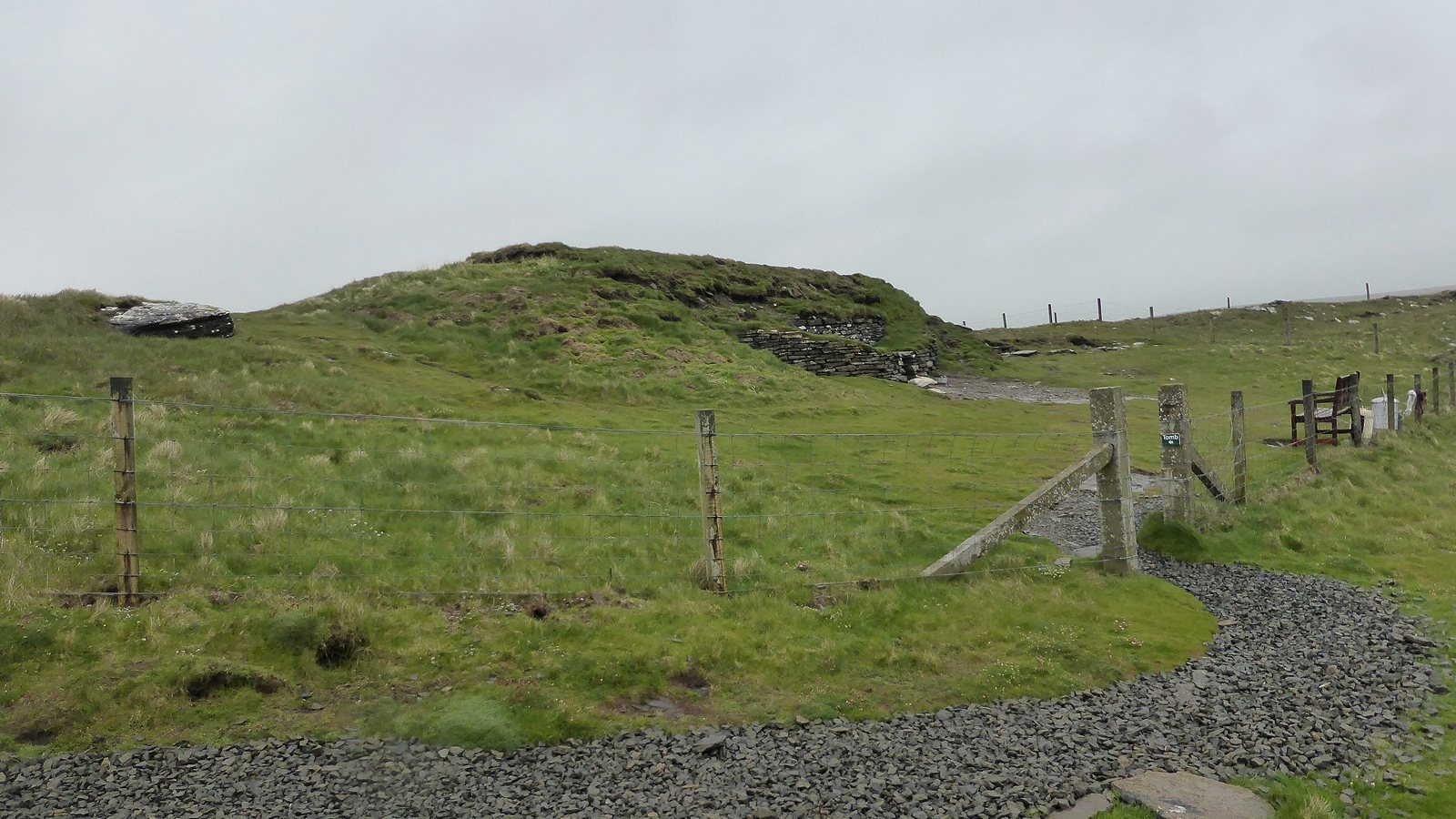
The Tomb of the Eagles is a chambered tomb built by Neolithic communities at Isbister, on the southern coast of South Ronaldsay in Orkney, United Kingdom. The Neolithic was the later part of the Stone Age, associated with farming and settled communities. The tomb’s construction date is uncertain, but it is placed around the transition from the fourth to the third millennium BC. Its hybrid design combines Orkney-Cromarty tombs, with long divided chambers, and Maeshowe-type tombs, with central chambers, side cells, and passage access. It remained in regular use for about 800 years.
Use and later burials
Radiocarbon evidence suggests that building the tomb may have taken as long as a century. After it ceased to be used as a burial place, its roof was removed and rubble was packed into the central chamber. The reason for these changes is unknown. Burials continued in the surrounding area: earthworks north of the tomb contained Bronze Age stone cists, small graves lined with stone. The Bronze Age was the period when bronze came into use for tools and other objects.
Discovery and later interpretation
Local farmer Ronald Simison found the tomb in 1958 while digging for flagstones. He excavated part of it, removed bones and skulls, and then filled the site back in. Professional investigation was delayed, partly because of funding difficulties. Simison carried out more excavation during the 1970s, and archaeologist John Hedges later undertook a full study, produced a technical report, and wrote a popular book that helped establish the name Tomb of the Eagles.
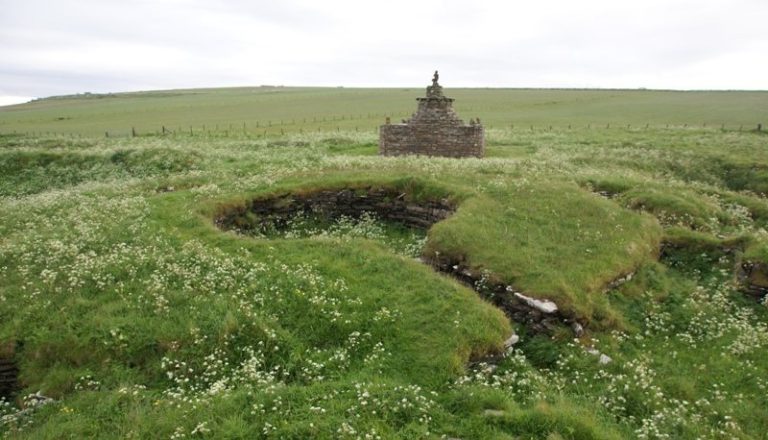
A concrete roof was added and the entrance walls rebuilt in 1987. The tomb is privately owned and has been managed by Orkney Islands Council since that year. Radiocarbon dating in 2006 placed the white-tailed sea eagle remains at about 2450–2050 BC, later than the tomb’s construction. This challenged the idea that the bird remains were a foundation deposit, meaning material deliberately placed during construction, sometimes for ritual purposes. The dating also supported the view that Orkney’s Neolithic tombs could remain in use across many generations. The eagle has been suggested as a possible totem animal, an animal regarded as symbolically linked to a community, for the people buried at Isbister.
Remains
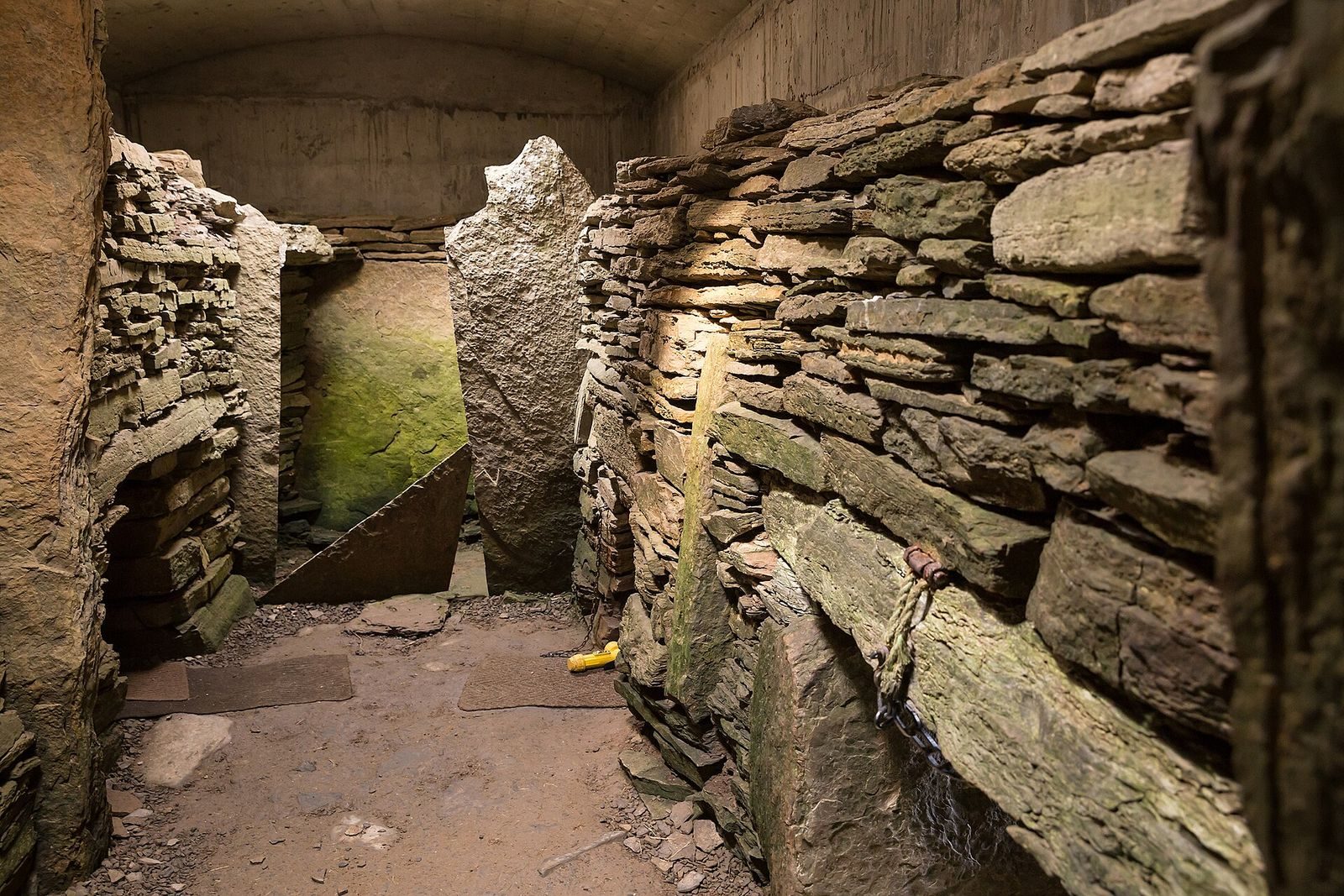
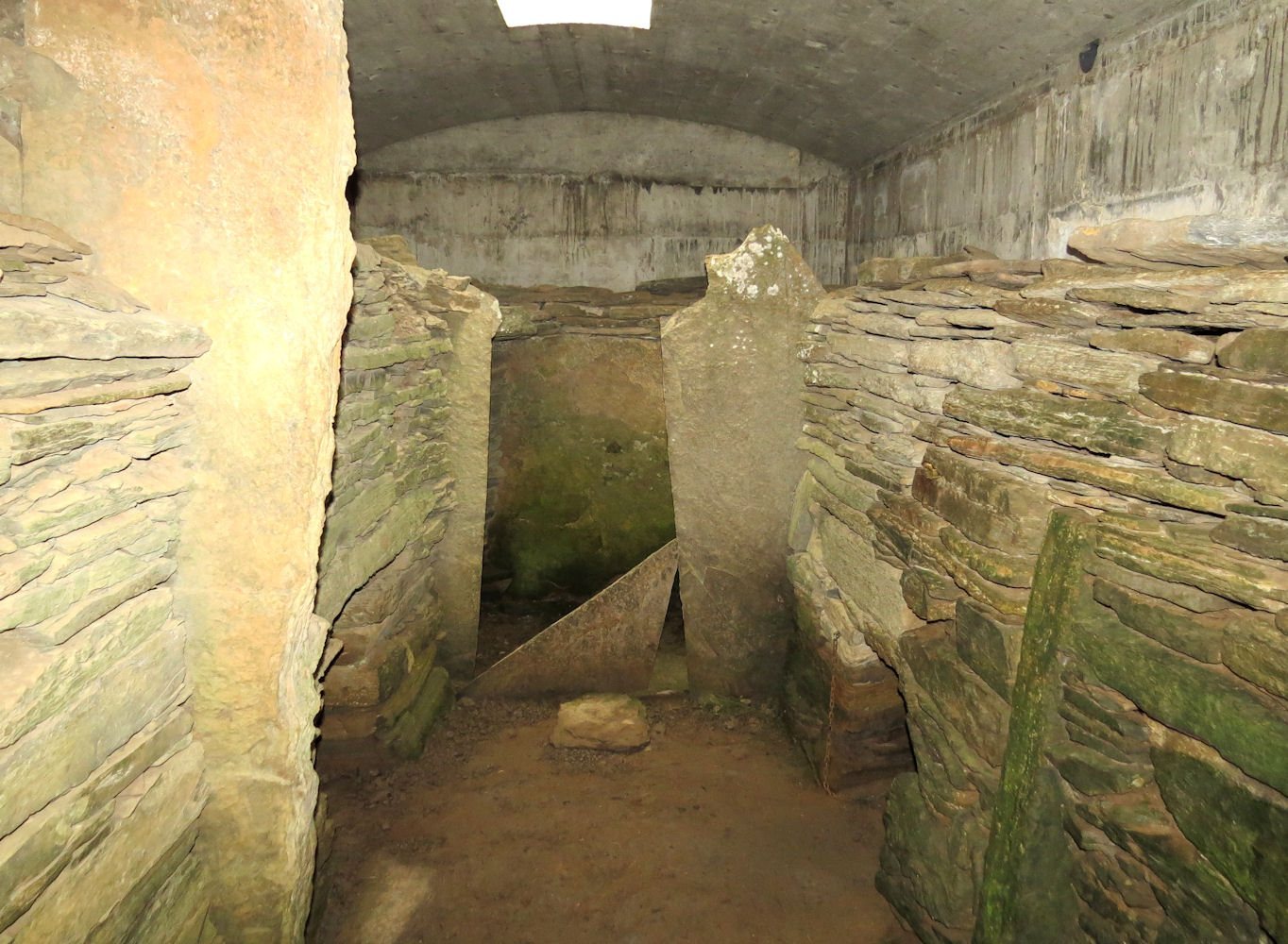
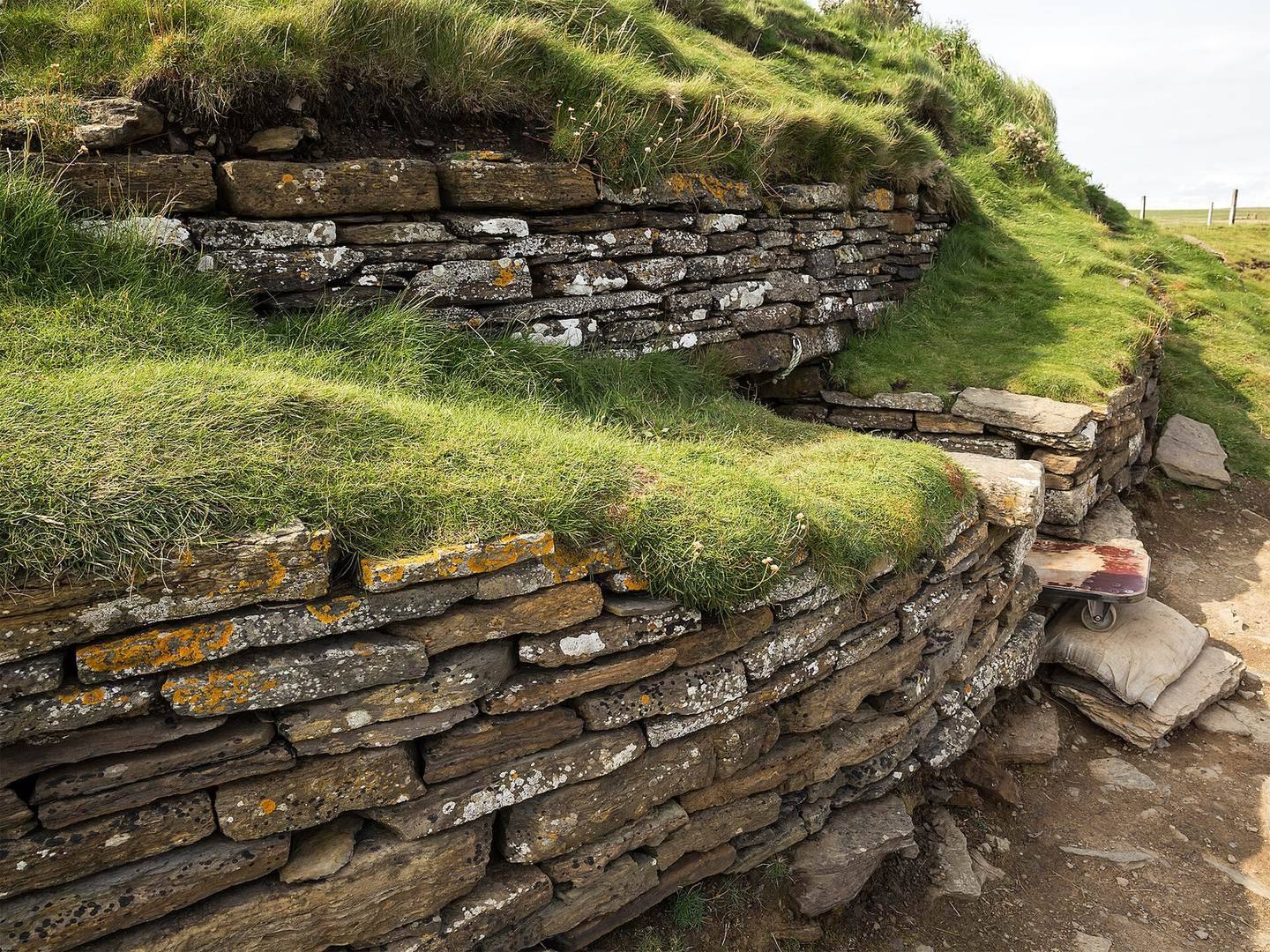
The tomb combines two chambered-tomb traditions in a structure built from dry-stone masonry, with stones fitted together without mortar. Its central chamber was originally covered by a corbelled vault, a roof formed from stone courses that project inward, beneath an oval cairn, or mound of stones. The reconstructed roof is concrete.
Chamber and entrance
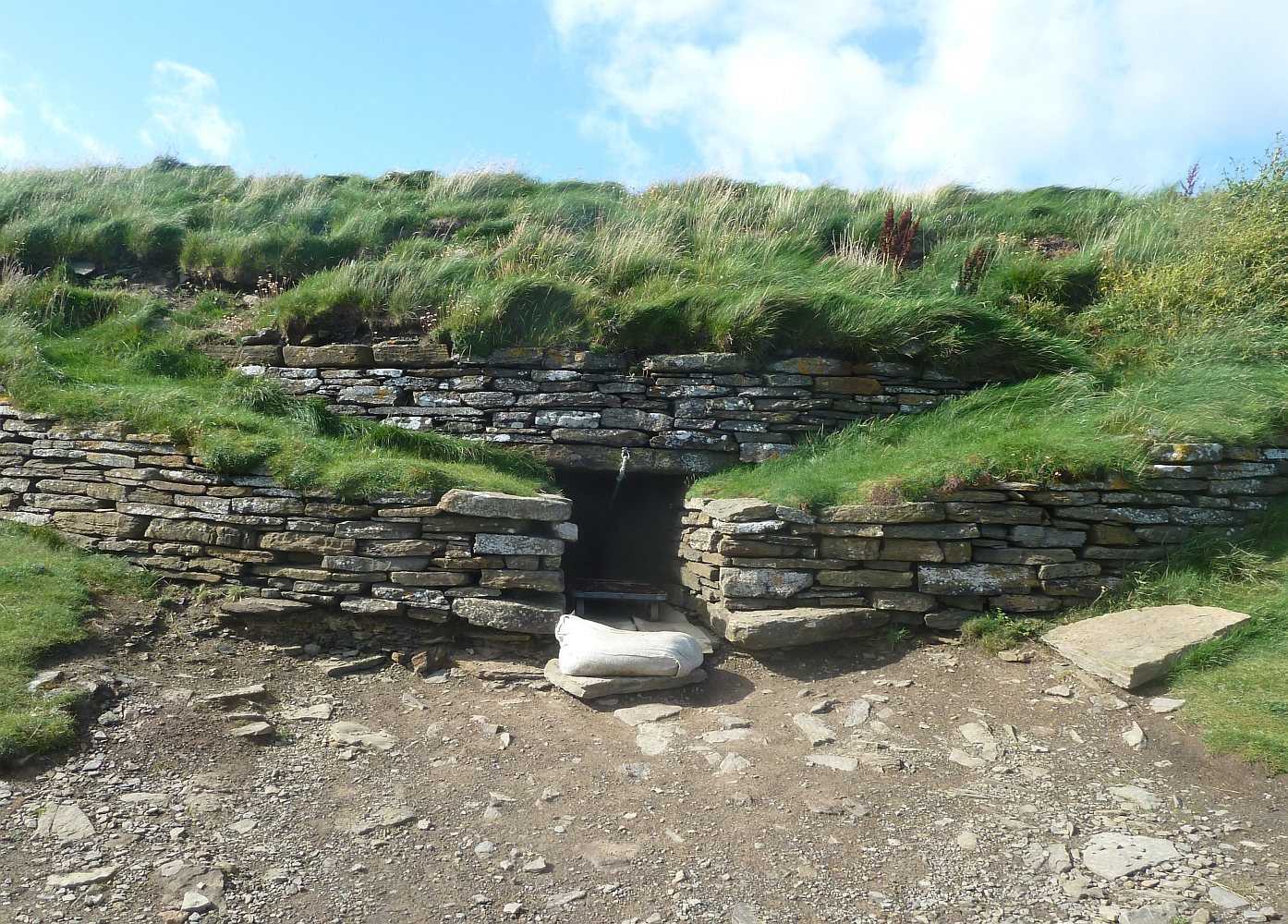
The long central chamber is divided into compartments by upright stones, with five cells around it: one at each end, two on the west side, and one on the east side north of the entrance. Threshold stones separate the end cells from the main chamber. The two western cells remained intact and are about 90 centimetres high. The central chamber was later packed with earth and stones, while the cells were left unfilled. Including the end cells, the tomb is about 8 metres long. Its entrance is centered on the east side and faces the North Sea. The passage is about 3 metres long, 85 centimetres high, and 70 centimetres wide. The surviving walls reach up to 2 metres; the monument’s recorded height is 2.75 metres.
Burial and associated finds
Human remains
Later excavation recovered about 16,000 human bones, representing roughly 338 people; no complete skeletons were found. Around 100 skulls were recovered, and 85 were later examined. Skulls were concentrated in side cells, especially the intact western pair. Other bones lay in the end cells and across the main chamber floor, particularly beside its walls. Some bone piles that seemed to represent single people proved to contain remains from several individuals. Human bones were also present in the chamber fill, including remains from at least 11 people.
Health and injury
Examination of the bones was interpreted as evidence of physically active lives, alongside injuries and illnesses also found in contemporary populations. A later study of 85 skulls found signs of violent injury in at least one-fifth, possibly caused by wooden clubs or stone axes. Some skulls, mostly those of women, have pronounced attachment areas for neck muscles at the back of the head. These were interpreted as signs that people carried loads on their backs using a strap over the head. A comparison of the skulls also found that women’s skulls were markedly smaller than men’s.
Unusual skull features
Some skulls have an unusual pattern of extra joint surfaces on the occipital condyles, the rounded projections at the skull’s base that meet the first neck vertebra. In a comparison of 585 skulls from different periods and places, only five had two such surfaces. At Isbister, 30 occipital condyles had two, while one skull had three; more than a third of the Isbister skulls showed this rare arrangement.
Animal remains
The animal bones included remains and talons from an estimated 8 to 20 birds, mostly white-tailed sea eagles. At least eight eagles were identified, with the total possibly reaching 14 or more.
Pottery and other objects
Finds made during Simison’s 1958 discovery lay on a ledge at the base of the outer wall. They included 30 human skulls, three stone axe heads, the upper part of a black-and-white club head, a small black bead, and a small, flat, oval piece of limestone shaped like a knife. Later excavation found many pottery fragments opposite the entrance, much of it Unstan Ware, a type of prehistoric pottery associated with Orkney, as well as 14 pendants.
The tomb’s design has been interpreted as evidence of sophisticated planning and engineering, together with knowledge of astronomy and mathematics. This assessment assumes that its builders had only primitive tools.