Košice Citadel: A Baroque Fortress in Slovakia
Site at a Glance
- Popularity
- Low
- Country
- Slovakia
- Primary era
- Early Modern
- Eras represented
- Early Modern
- Civilizations
- Habsburg, Hungarian
- Site type
- Military
- Remains
- Fort
On this page6 sections
History
Košice Citadel was a Baroque fortress in Košice, Slovakia, built south of the city walls as an outer defense. Construction began in 1671 amid repeated rebellions by politically privileged estates against Habsburg rule. The citadel was intended to protect the city and hold a garrison and artillery beyond its walls.
Military engineer Jakub von Holst designed the fortress. Building it required the demolition of houses in the southern suburb. Although unfinished, it could be defended by 1676.
Damage and demolition
During the Thököly uprising of 1682–1685, a revolt against Habsburg rule associated with the Hungarian nobleman Imre Thököly, the curtain wall facing the city was torn down. This left the citadel unusable, and its surrounding moat was never completed. In 1713, Habsburg ruler and Holy Roman Emperor Charles VI ordered the fortress demolished.
Archaeology and preservation
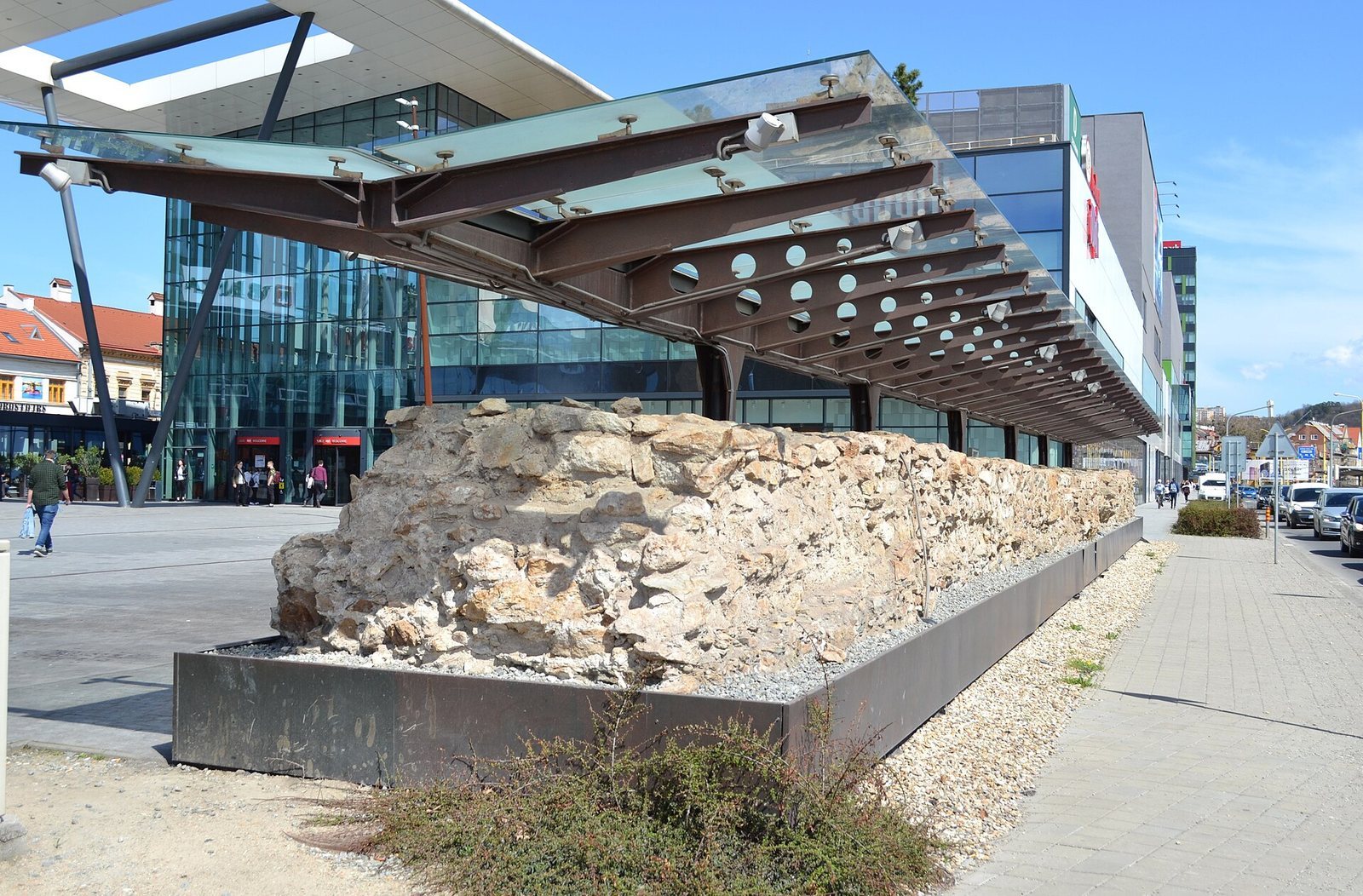
Official archaeological investigation began on February 8, 2008. In 2010, work ahead of construction at the Square of Liberators uncovered a bastion. The Monuments Board of the Slovak Republic decided to preserve the remains’ essential character and location; the discovery was considered unique in the national context. The citadel was designated a National Cultural Monument of Slovakia on May 21, 2010. In February 2021, the shopping center and the East Slovak Museum agreed that some remains would be moved to the museum grounds.
Remains
The citadel was an independent, star-shaped fortress with a pentagonal plan. Its earth-and-masonry defenses combined a thick rampart with a bastion projecting at each corner.
Pentagonal plan and defenses
Each of the five sides measured 203 metres, and the fortress with its outer defenses covered about 25 hectares. The rampart was 24.5 metres thick. Each bastion had a face measuring 90.5 metres, with its flank set 24.5 metres from the rampart’s outer perimeter.
Leopold Bastion
The uncovered bastion is called Leopold, apparently after Emperor Leopold I, who ruled during the citadel’s construction. Excavation exposed its faces and part of a flank; its northwest face is about 90 metres long. The other bastions were named Claudia, Montecuccoli, Cemetery, and Mill. Citadel remains are located in front of Aupark’s main entrance and in its underground parking area.