Tomb of Simeon the Just: A Jewish Burial Cave in Jerusalem
Site at a Glance
- Popularity
- Medium
- Country
- Israel
- Primary era
- Classical
- Eras represented
- Classical, Modern
- Civilizations
- Roman
- Site type
- Religious
- Remains
- Tomb
On this page8 sections
History
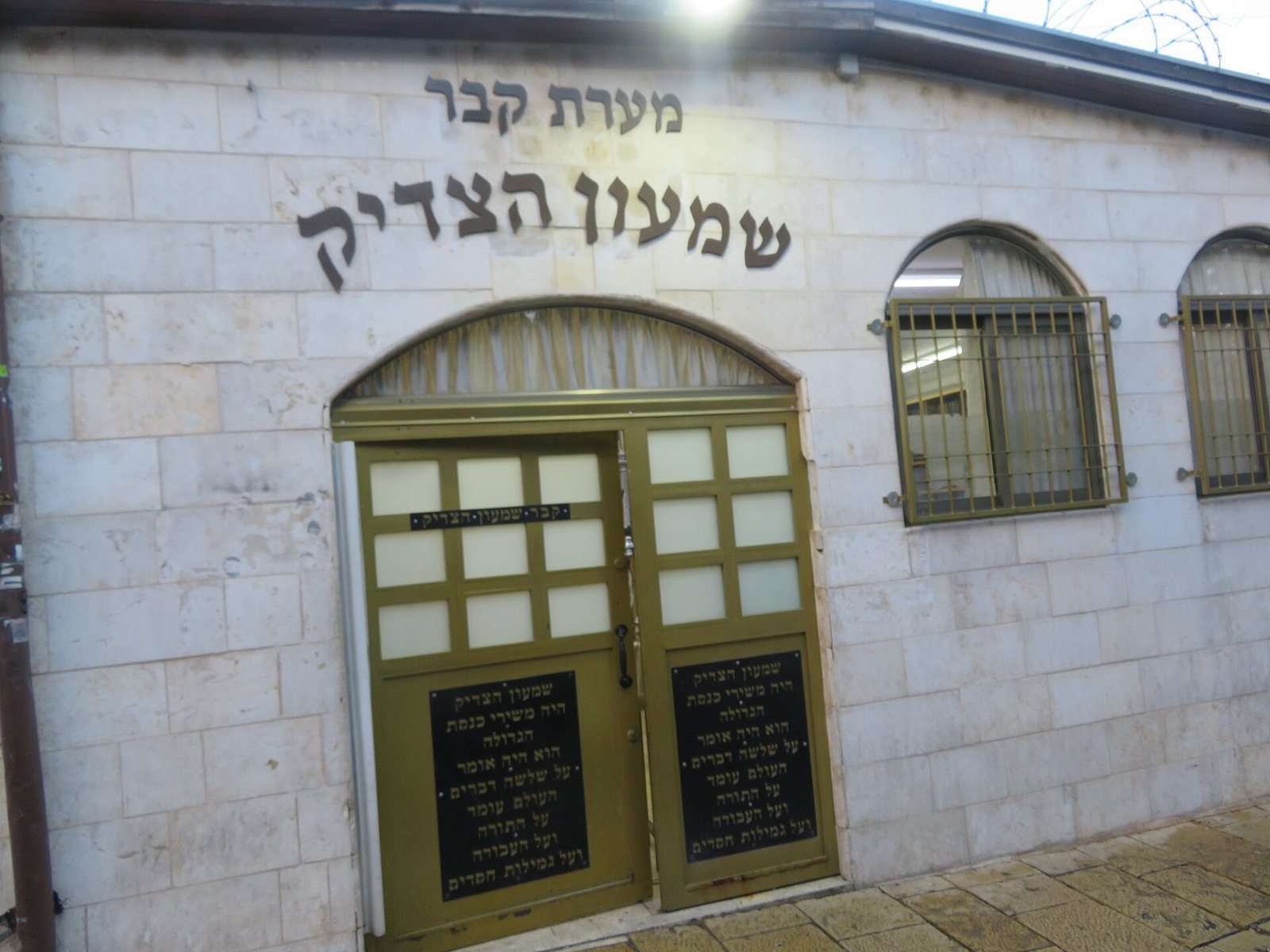
The Tomb of Simeon the Just is a burial cave in Jerusalem, Israel, revered in Jewish tradition as the tomb of Simeon the Just and his disciples. The burial is generally identified instead as the second-century CE grave of Julia Sabina, a Roman matron, placing it about five centuries after the period traditionally associated with Simeon. The cave became a sacred place for Jerusalem’s Jews and a setting for prayer, pilgrimage, and communal festivals.
Ancient burial and later identification
The burial’s original purpose is uncertain. Archaeologists Kloner and Zissu proposed that the cave may have been used to collect bones of people first buried elsewhere. They linked this possibility to Jerusalem’s third-wall extension in the first century CE, which brought existing tombs within the city despite Jewish law prohibiting burials inside its limits. They also suggested that a medieval ossuary, a container for human bones, bearing the common name Simeon may have helped create the cave’s association with Simeon the Just.
In 1871, the French archaeologist Clermont-Ganneau discovered a Latin inscription that led to the identification of the burial as Julia Sabina’s. He proposed that she may have been the wife or daughter of Julius Sabina, described as the senior centurion of the Roman Tenth Legion Fretensis. Similar lettering in another inscription informed his suggestion.
Medieval traditions
Jewish traditions placed Simeon’s tomb in Jerusalem, while other accounts located it elsewhere. In the twelfth century, Benjamin of Tudela put the tomb at Tymin, also called Timnathah, between Tiberias and Meiron. In the mid-thirteenth century, Rabbi Jacob, a messenger of Jehiel of Paris, described a cave of Simeon and his disciples near Jerusalem. Around 1490, Obadiah da Bertinoro placed Simeon’s tomb near Jerusalem among the burial places of the seventy elders.
Sacred use and communal celebrations
In 1641, Samuel ben David recorded that rabbis identified the cave as the burial place of Simeon and his wife, and associated its well with her ritual immersion. This tradition may explain an Arabic name for the cave translated as “the well of the Jewish woman.” Jerusalem’s Jews treated the site as sacred: a lamp burned there continually, and its courtyard hosted weddings for people unable to marry within the city.
Celebrations for Rabbi Shimon bar Yochai, a Jewish sage distinct from Simeon the Just, appear to have begun at the cave in the late eighteenth century and were established by the mid-nineteenth. These gatherings took place on Lag BaOmer, a Jewish festival day, particularly when travel to Meron, the northern village associated with Shimon bar Yochai’s traditional tomb, was difficult or impossible. Observances included prayers, candles, shared meals, singing, and upsherin, a traditional first-haircutting ceremony for boys. The festivities grew during the nineteenth century. Muslim vendors sold refreshments such as coffee, tamarind juice, roasted chickpeas, cotton candy, and ice cream, while local non-Jews and foreign visitors also came. During the Ottoman period, Jews, Christians, and Muslims attended communal celebrations at the site.
A local Arab owned the tomb and charged visitors to enter and pray until 1876, when Abraham Ashkenazi purchased it. Ashkenazi held the title of Rishon LeZion, chief Sephardi rabbi. In 1888, Yom Tov Lipa Weiss of a Hungarian kolel, an institution supporting religious study and scholars, worked to renovate the tomb.
Twentieth-century observances and preservation
Following the anti-Jewish pogroms, or violent attacks on Jewish communities, in Kishinev in 1903, a special gathering took place at the tomb. Rabbis of Jerusalem’s Sephardi community called on people to visit on 29 Tishrei, regarded as the anniversary of Simeon’s death, and pray for Jews abroad. The connection between the site and the modern Jewish community in Palestine, known as the New Yishuv, strengthened in the following decade. A 1910 report described Hebrew students visiting for Lag BaOmer. From 1912 to 1914, the Maccabi sports association organized processions there, with exercises and speeches opposing Christian missionary activity and supporting the revival of Hebrew.
After the Six-Day War, Israel’s Ministry of Religious Affairs renovated the tomb and the adjacent Cave of the Minor Sanhedrin. The tomb was declared a holy place in May 1969 under regulations issued by the Minister of Religious Affairs, and its status was reaffirmed under the 1981 Law for the Protection of Holy Places. The site’s mikveh, a bath used for Jewish ritual immersion, has also been refurbished.
Remains
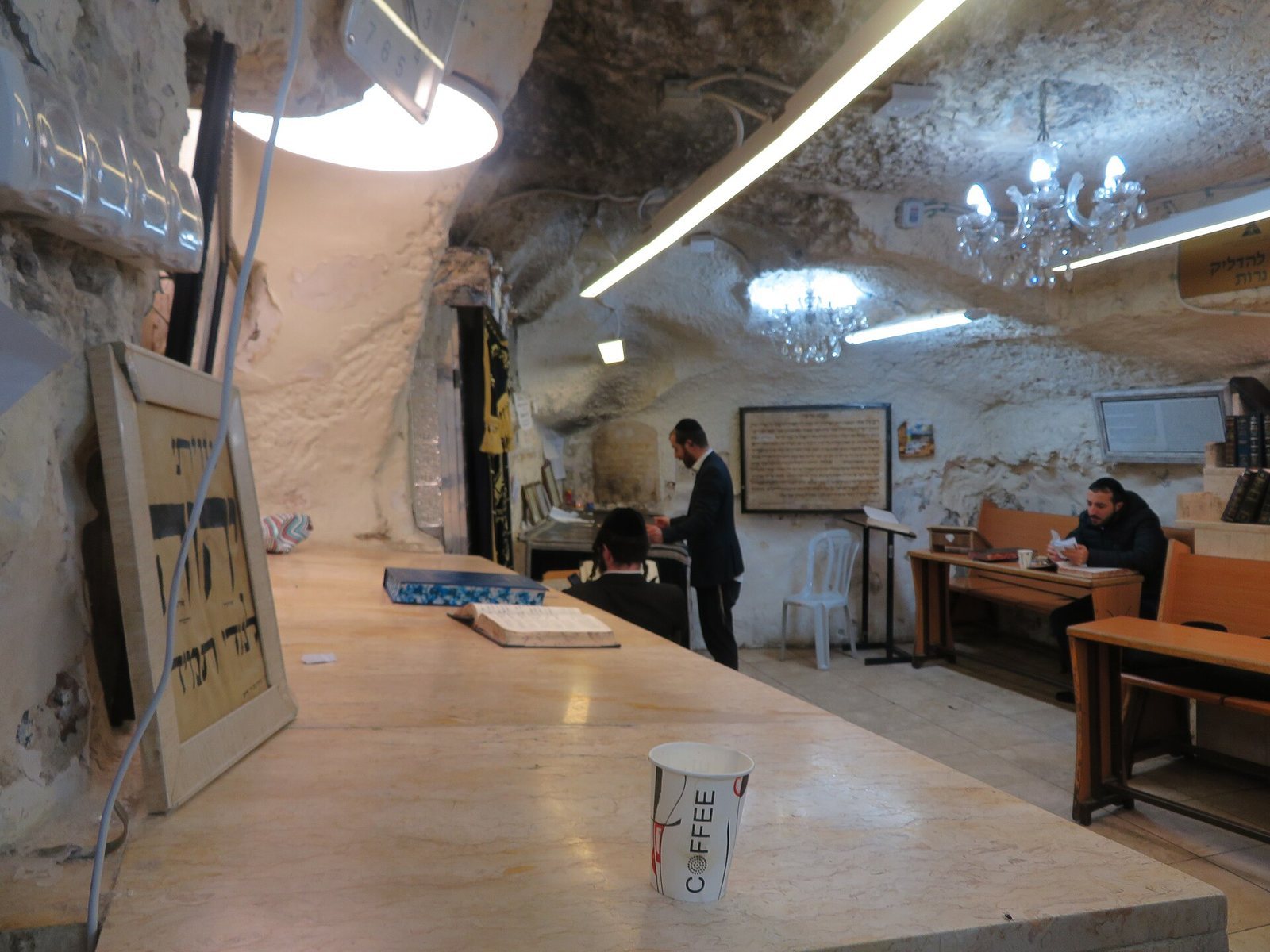
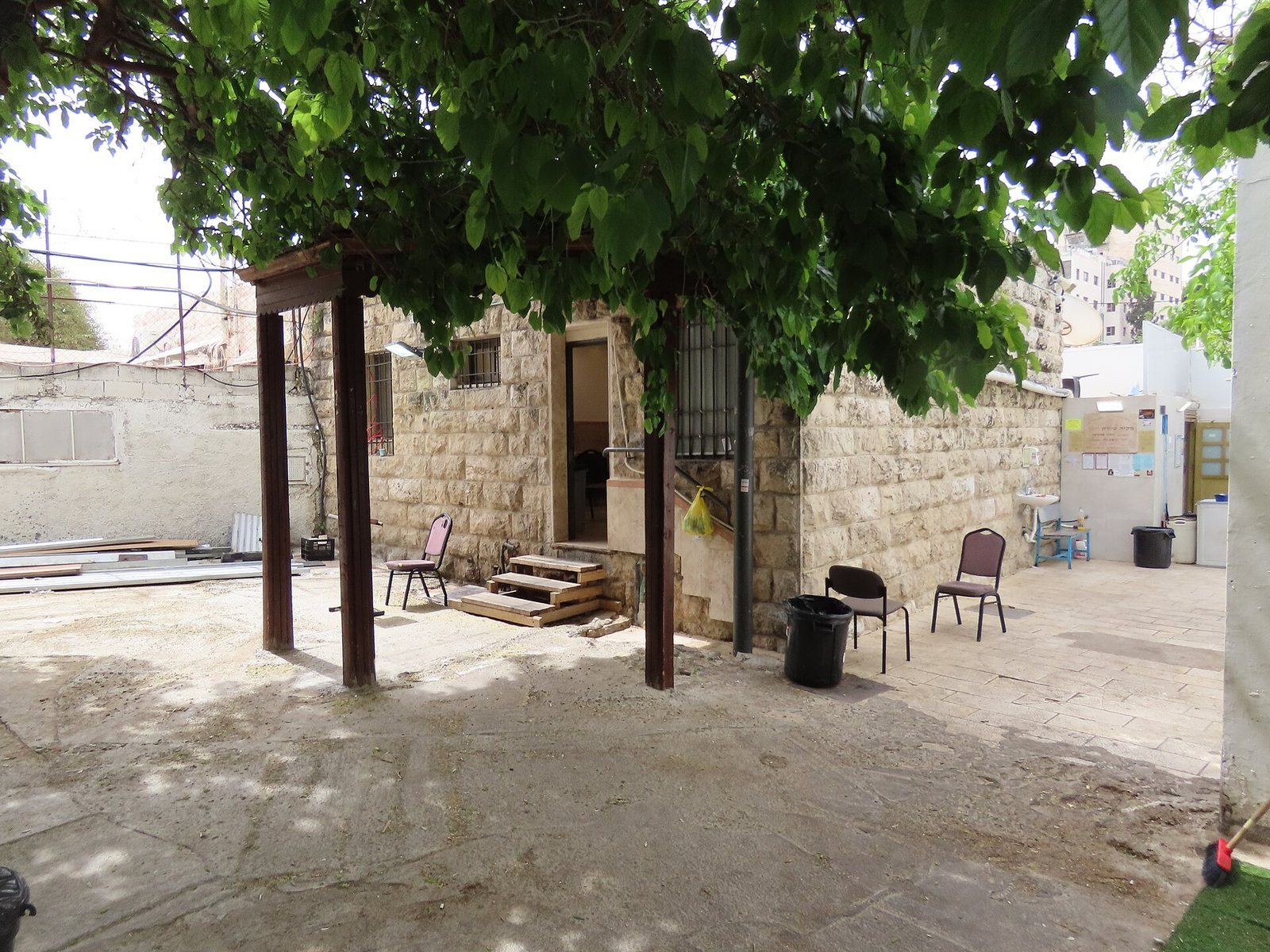
The surviving layout centers on a burial cave in the Shimon HaTzadik settlement, within Jerusalem’s Sheikh Jarrah neighborhood. The Cave of the Minor Sanhedrin, named for a Jewish council and court, lies beside it. The cave includes an antechamber, a low doorway, and a chamber; a well and a mikveh form part of its water features.
Cave and water features
A well inside the cave appears in a seventeenth-century description. The site also has a mikveh, a bath for Jewish ritual immersion, which has been refurbished.
Inscription
A Latin inscription is carved in formal lettering on the rear wall of the antechamber, above a low doorway and about two metres above the chamber floor. The text sits within a framed panel with triangular ends. Hammering badly damaged the inscription, though its first line, Juliae Sabinae, or “of Julia Sabina,” remained legible. A modern door blocks the passage containing it.