Mosque of Omar: An Ayyubid Sunni Mosque in Jerusalem

Site at a Glance
- Rating
- 4.5
- Popularity
- Low
- Country
- Israel
- Primary era
- Medieval
- Eras represented
- Medieval
- Civilizations
- Ayyubid, Mamluk
- Site type
- Religious
- Remains
- Mosque
On this page11 sections
History
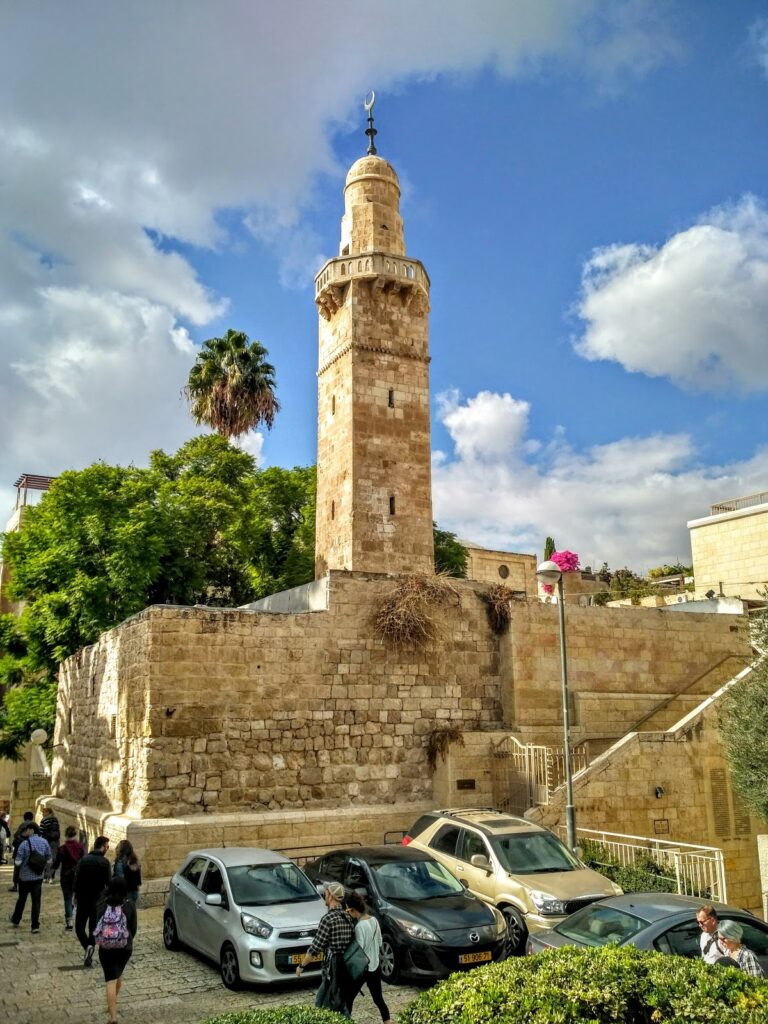
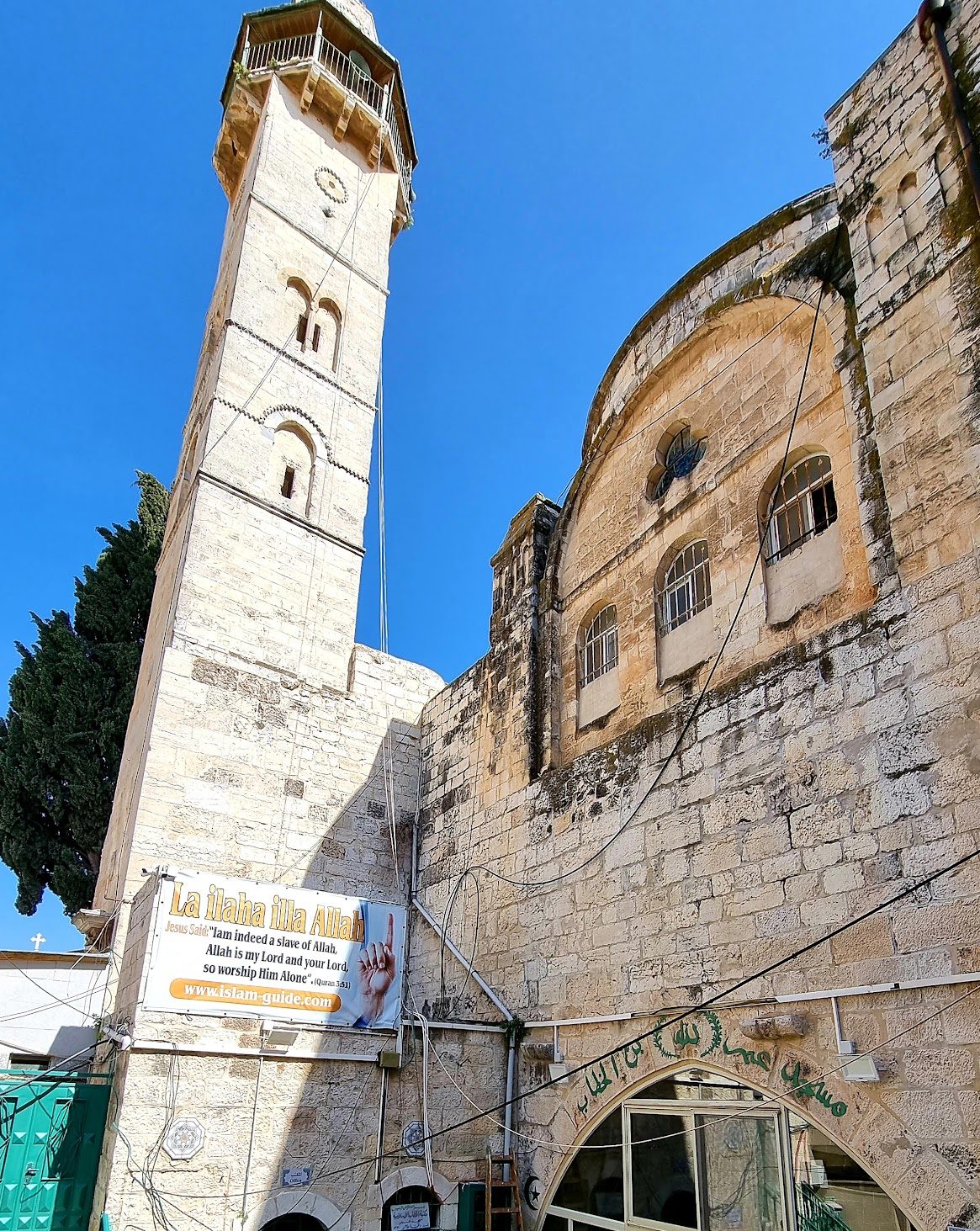
The Mosque of Omar is an active Sunni mosque in Jerusalem, Israel, built in its present form by the Ayyubid dynasty in 1193. It stands in the Muristan area of the Old City’s Christian Quarter, directly opposite the southern courtyard and main southern entrance of the Church of the Holy Sepulchre.
Omar’s prayer and Jerusalem’s surrender
Muslim tradition connects the site with Omar, also known as Umar ibn al-Khattab, the second caliph of the Rashidun Caliphate, who ruled from 634 to 644. The Rashidun were the first four caliphs recognized in Sunni Islam. During the Rashidun siege of Jerusalem in 637–638, the city surrendered to Omar, who is said to have prayed outside the Church of the Holy Sepulchre.
According to the tradition, Patriarch Sophronius, the Christian leader of Jerusalem, offered Omar the opportunity to pray inside the church. Omar declined because he did not want his prayer to establish a precedent that could threaten the church’s status as a Christian site. The tradition gives the mosque a commemorative connection with the surrender and with the relationship between the city’s Muslim and Christian communities.
The Ayyubid foundation
The present mosque was built in 1193 by Al-Afdal ibn Salah ad-Din, the Ayyubid sultan and son of Salah ad-Din, commonly known in English as Saladin. The Ayyubids were a Sunni Muslim dynasty founded by Saladin. Al-Afdal established the building to commemorate Omar’s prayer.
By that time, the entrance to the Church of the Holy Sepulchre had moved from the east to the south. This change followed repeated destructive events that affected the church and the Muslim mosques built around it during the eleventh and twelfth centuries. The mosque’s present position opposite the southern entrance therefore reflects a changed arrangement of the surrounding religious buildings.
Mamluk and Ottoman alterations
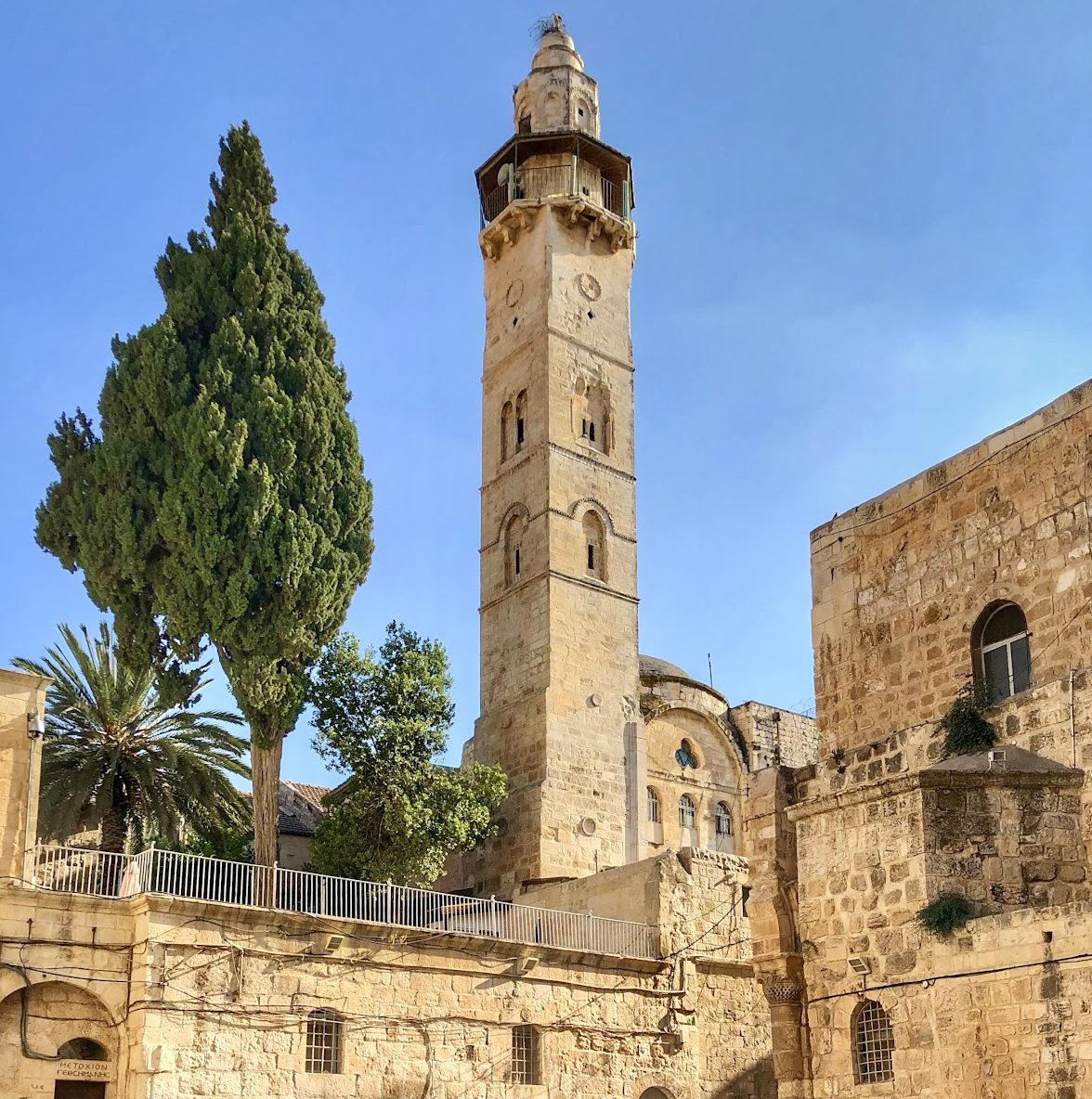
The mosque’s main structure belongs to the Ayyubid period, while its minaret was added later under Mamluk rule. The Mamluks governed Jerusalem and are associated with the tower’s fifteenth-century construction. The minaret was erected before 1465, possibly after the earthquake of 1458, and was later renovated during the reign of the Ottoman sultan Abdulmecid I, who ruled from 1839 to 1860.
The Mosque of Omar is sometimes incorrectly identified as Jerusalem’s Dome of the Rock. They are separate buildings with different histories and functions.
Remains
The surviving mosque occupies the Muristan directly opposite the southern side of the Church of the Holy Sepulchre. Its physical form combines an Ayyubid place of worship with a later Mamluk-period minaret, while the nearby church and its former eastern or outer atrium provide the setting for the site’s commemorative tradition.
The mosque and tower
Ayyubid mosque
The main building is an Islamic place of worship completed in its present form in 1193. Its construction belongs to the Ayyubid period and commemorates the prayer traditionally attributed to Omar outside the Church of the Holy Sepulchre. The mosque remains active as a Sunni place of worship.
Mamluk minaret
The mosque has one minaret, a tower associated with a mosque and traditionally used for the call to prayer. The tower is approximately 15 metres high and was erected before 1465 during the Mamluk period. It was later renovated under Abdulmecid I. A tradition holds that it was made higher than the domes of the Church of the Holy Sepulchre to express Islamic supremacy, although this remains a reported tradition rather than an established architectural fact.
Inscribed stone and surrounding religious buildings
Kufic inscription
A stone plate found in 1897 in the eastern or outer atrium of the former fourth-century Constantinian Church of the Holy Sepulchre bears a Kufic inscription. Kufic is an early angular style of Arabic script used frequently for monumental inscriptions. The text identifies the area as a mosque and connects the physical setting with the tradition of Omar’s prayer.
Related minaret of Al-Khanqah al-Salahiyya
On the northern side of the Church of the Holy Sepulchre stands the Mosque of Al-Khanqah al-Salahiyya, whose minaret is almost identical to that of the Mosque of Omar. That tower was erected in 1418, providing a second Mamluk-period minaret within the group of Muslim religious buildings surrounding the church.