Toga Shrine: The Ichinomiya of Mikawa in Japan


Site at a Glance
- Rating
- 4.3
- Popularity
- Medium
- Country
- Japan
- Primary era
- Early Modern
- External website
- Open
- Eras represented
- Early Modern, Modern
- Civilizations
- Japanese, Tokugawa
- Site type
- Religious
- Remains
- Sanctuary
On this page10 sections
History
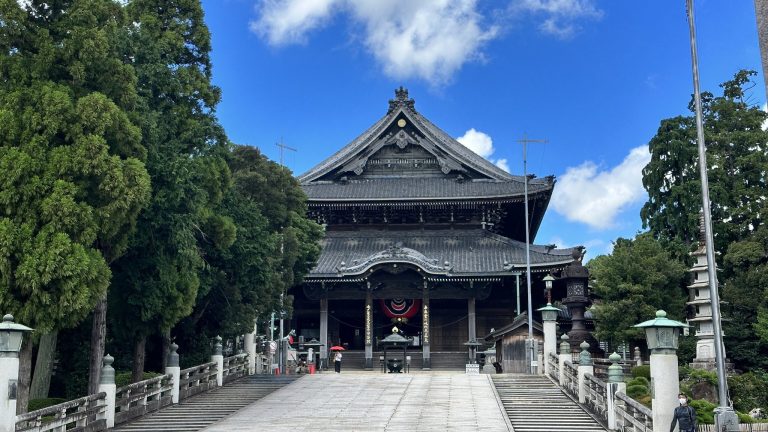
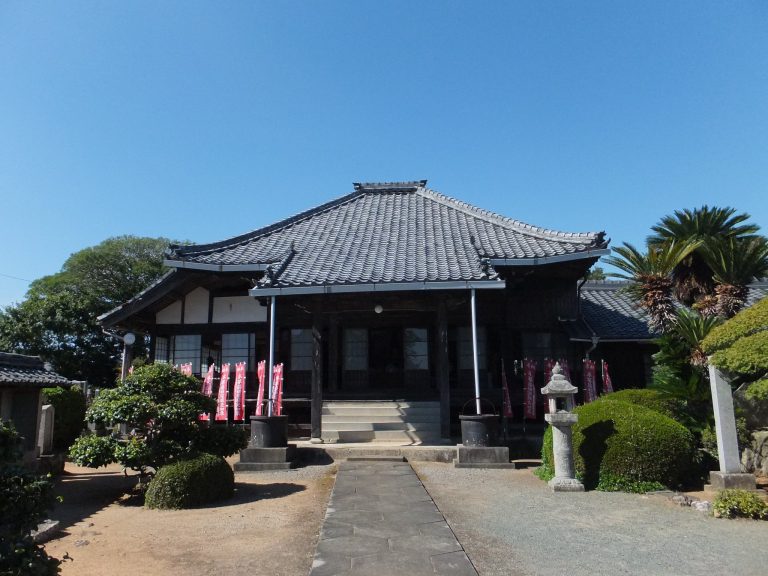
Toga Shrine is a Shinto shrine in Japan, located in Toyokawa, Aichi Prefecture. It comprises the Satomiya at the foot of Mount Hongū and the Okumiya on the mountain, and traditionally dates its foundation to the Taihō period, from 701 to 704. Toga was the ichinomiya, the highest-ranking shrine of the former province of Mikawa, and is regarded as a principal guardian shrine of the Tokai region.
Foundation traditions and ancient worship
The shrine’s foundation is associated with Emperor Monmu and his imperial envoy, Kusakado no Kinnobu. According to tradition, the emperor fell ill and sent Kusakado to Mount Hongū to pray for his recovery. The envoy lost his way, but the mountain deity appeared as an old man and showed him the route. Afterward, a sanctuary was established at the foot of the mountain, becoming the Satomiya, while the mountain sanctuary became the Okumiya.
A related tradition tells that Kusakado followed a sleeve carried along the Hō River and founded the shrine where it came to rest. He set up a seven-tiered altar and enclosed it with seven layers of sacred rope. These stories unite mountain and river worship and help explain Toga’s later connections with Shugendō, a Japanese mountain tradition combining ascetic practice, Buddhism, and local kami worship. They also reflect the historical blending of Buddhist and Shinto institutions and beliefs, while comparisons with other regional shrines have led to an interpretation of influence from the Kumano cult.
The earlier history of the shrine remains uncertain. Mount Hongū appears to have been revered as a sacred mountain from antiquity, with its rocks treated as sacred seats and burial mounds distributed around the mountain. One theory links the shrine to the ancient Hono kuni, a regional polity later incorporated into eastern Mikawa, and regards the hereditary Kusakado priestly family as descendants of the Hotsuwake lineage.
The enshrined kami is Ōkuninushi no Mikoto, a major Shinto deity associated with land formation, agriculture, medicine, and protective powers. A tradition says that after developing the land and travelling through various regions, Ōkuninushi came from Tajima Province to Mikawa, stayed on Mount Hongū, and chose it as his permanent dwelling. This story is connected with the expression “place of stopping,” which is associated with the name Toga.
Provincial rank and medieval development
Toga received successive promotions in divine rank during the ninth century. It held Junior Fifth Rank, Lower Grade, in 850, Junior Fifth Rank, Upper Grade, in 851, Senior Fifth Rank, Lower Grade, in 864, Senior Fifth Rank, Upper Grade, in 870, and Junior Fourth Rank, Upper Grade, in 876. From 851 onward, these promotions were recorded together with those of Chiryū Shrine. By the end of the period covered by the Six National Histories, the officially compiled chronicles of Japan extending from antiquity into the ninth century, the two shrines held the highest recorded rank in Mikawa.
The Engishiki, an early tenth-century compilation of court regulations and shrine registers, lists Toga as a Shikinaisha, meaning a shrine included in the official register. The entry places it in Hōin District of Mikawa Province. Toga also appears as a Senior First Rank shrine in the Mikawa provincial shrine register, and its position as Mikawa’s ichinomiya is documented by 1264.
In 1516, after a prayer by Makino Nobushige, the main shrine had its roof beams raised. Makino’s son was then appointed to a priestly office under the name Kusakado Nobumitsu, linking the Makino family with the shrine’s hereditary priestly tradition.
War, patronage, and the early modern period
During the Sengoku period, Honda Nobutoshi built Ichinomiya Fort nearby on the orders of Tokugawa Ieyasu. Imagawa forces besieged the fort, and tradition holds that Ieyasu arrived with a small force, defeated the larger Imagawa army, and encamped at Toga Shrine. The shrine therefore became associated with a military episode in the struggles that shaped political control of Mikawa.
Tokugawa Ieyasu granted Toga a land endowment of 100 koku in 1602, followed by a further 20 koku for the Okumiya in 1603. The lords of the Mikawa-Yoshida domain continued to revere the shrine during the Edo period. They sent representatives to its annual festival and sometimes attended special prayers in person. A seventeenth-century account lists two subordinate shrines at the Okumiya and eleven at the ichinomiya, along with one Junior Sixth Rank priest, ten unranked assistant priests, and twelve attendants.
The Satomiya was formerly associated with the Sōtō Zen temple Shōgen-in, while the Okumiya was linked with Jōshō-in. These associations reflect the Buddhist-Shinto institutional relationships that shaped the shrine before the modern separation of the two traditions.
Modern status and continuing rites
In 1871, under the Meiji-period shrine-ranking system, Toga was designated a Kokuhei Shōsha, a state-supported National Shrine of the Minor Rank. It is now a Beppyo Shrine, a shrine recognized as especially prominent by the Association of Shinto Shrines. Its continuing ritual calendar includes the principal festival from May 3 to May 5, with the formal annual festival on May 4. The ceremonies include offerings, horse purification, a procession carrying the mikoshi to Yatsukaho Shrine, and yabusame, a mounted archery rite performed along a course of about 200 metres. Children’s and youth kendo and archery offerings take place on May 5, followed by children’s rites and a closing pacification ceremony.
Several winter festivals preserve agricultural, divinatory, protective, and fire-related customs. The rice-field play on January 3 symbolically enacts ploughing, sowing, transplanting, weeding, and harvesting to pray for a good crop. Thirteen parishioners portray an official, a field owner, a miko, a shrine-associated ritual woman, and ten farmers.
At the Okumiya, the Hōin Festival on January 6 produces sacred seal ink from red earth, young trees beside the Hō River, and juice from daidai citrus offered at New Year. The chief priest receives the seal with a leaf on his forehead and distributes it to participants and worshippers as a prayer for safety and health. The Yumi-hajime Festival at the Satomiya on January 8 treats a target marked with the word “demon” as the embodiment of evil and shoots at it with a black wooden bow.
The Kayu-ura Festival, formerly called the Tube-Porridge Festival, is held at the Okumiya on January 15. Sacred water is used to cook porridge, which is placed in bamboo tubes representing twenty-seven crops or marine products. The amount left in each tube is read as a forecast for harvests and the year’s climate. At Yatsukaho Shrine on February 7, the Hi-mai Festival combines a sacred sword rite, fire-drilling, the transfer of fire to torches, and a fire dance performed by selected miko while ringing bells.
The shrine’s heritage designations include the Tamine bronze bell and the Okumiya sacred grove, both recognized at prefectural level, as well as the western approach stone torii and the Japanese saddle. Toyokawa also recognizes the rice-field play, porridge divination, and fire-dance festivals as intangible folk cultural properties.
Remains
Toga’s precinct covers approximately 90 hectares within a boundary of about 4,658 metres. It is organized around the front and western approaches, with the Satomiya below Mount Hongū and the Okumiya in the mountain’s summit area. The shrine’s main sacred landscape therefore extends from the settlement at the mountain’s foot to the mountain sanctuary above it.
Mount Hongū and sacred landscape
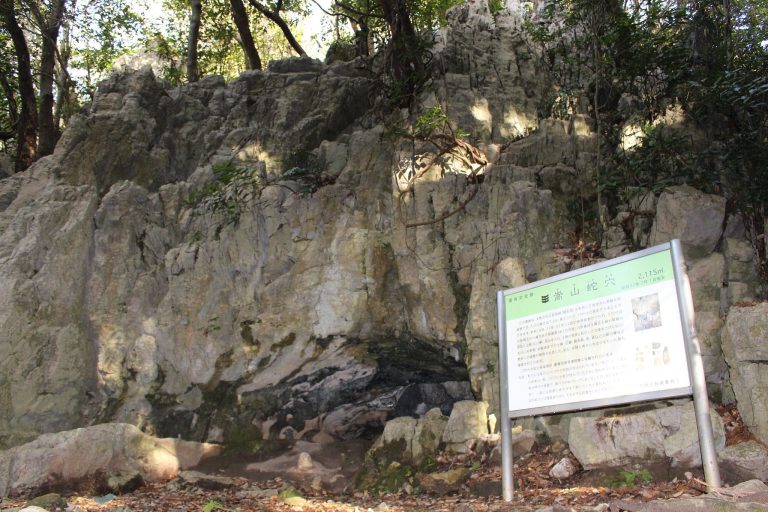
Mount Hongū rises to about 780 metres and is treated as the shrine’s sacred body. Its rocks are associated with ancient worship, while burial mounds around the mountain form part of the surrounding sacred landscape. The grounds also contain several sacred stones, including a pebble conglomerate stone approximately 2.6 metres high and 3.4 metres wide. It is described as the largest stone of its type in Japan. The sacred grove of the Okumiya and a large keyaki tree are also preserved as important natural features.
Approaches and entrance structures
The front approach contains the front torii, front gate, guest hall, shrine office, and taiko tower. The shrine office, built in 1959, stands on the former site of a sutra mound. The front torii was rebuilt about 30 metres south of its earlier position after the Isewan Typhoon.
The western approach includes the western torii, western gate, and archery ground. Its large torii was built in 1842 by Nagao Okitatsu, an accounting magistrate of the Okazaki domain, and originally stood at Ichida Village. After being affected by the Toyokawa air raid, it was moved in 1951 to its present position beside National Route 151.
Sanctuaries and subordinate shrines
The Satomiya and Okumiya share worship of Ōkuninushi. Within the inner precinct stands Mikawa Ebisu Shrine, dedicated to deities associated with business and household prosperity. Hachiman Shrine and Morimiden Shrine are also in the inner area, while Yatsukaho Shrine and Arahahaki Shrine occupy the outer area. Akiba Shrine and Gokoku Shrine stand in the Ichinomiya area, and Tsumori Shrine and Senuikawa Water Shrine are outlying shrines. Yatsukaho Shrine also serves as the temporary resting place of the mikoshi during the May 4 procession.
Archaeological and historic objects
An archaeological investigation of the former sutra mound in 1942 recovered an outer container for a sutra cylinder, a tortoiseshell-ground mirror decorated with paired sparrows, twelve Haji ware dishes, and two small knives. The ceramic container was made at the Sanage kiln and is estimated to date from the late Heian period.
The shrine preserves the Tamine dōtaku, a Yayoi-period bronze bell used as a ritual object. It may have been recovered from a burial mound in the surrounding area. Another surviving object is a Japanese saddle dating from the Muromachi period.