Sanbō-ji Temple: A Shingon Buddhist Temple in Tokyo


Site at a Glance
- Rating
- 4.2
- Popularity
- Low
- Country
- Japan
- Primary era
- Modern
- Eras represented
- Early Modern, Modern
- Civilizations
- Japanese, Tokugawa
- Site type
- Religious
On this page20 sections
History
Sanbō-ji Temple is a Shingon Buddhist temple in Nerima City, Tokyo, Japan, founded in 1394 by Kōson, a priest of Daigaku-ji in Kamakura. Formally known as Kichō-zan Mitsujō-in Sanbō-ji, it belongs to the Chizan branch of Shingon Buddhism, a Japanese school of Esoteric Buddhism centered on ritual practice, mandalas, and the cosmic Buddha Dainichi Nyorai. The temple is also called Shakujii Fudōson after Fudō Myōō, its principal deity and a wrathful Buddhist guardian traditionally associated with protection.
Foundation and relocation
Sanbō-ji was originally established near present-day Zenjō-in beside Shakujii Pond. Tradition identifies its original principal image as Shōgun Jizō, a form of Jizō associated with protection and military victory. The temple is also regarded as having been built with Shakujii Castle as a prayer temple of the Toyoshima clan.
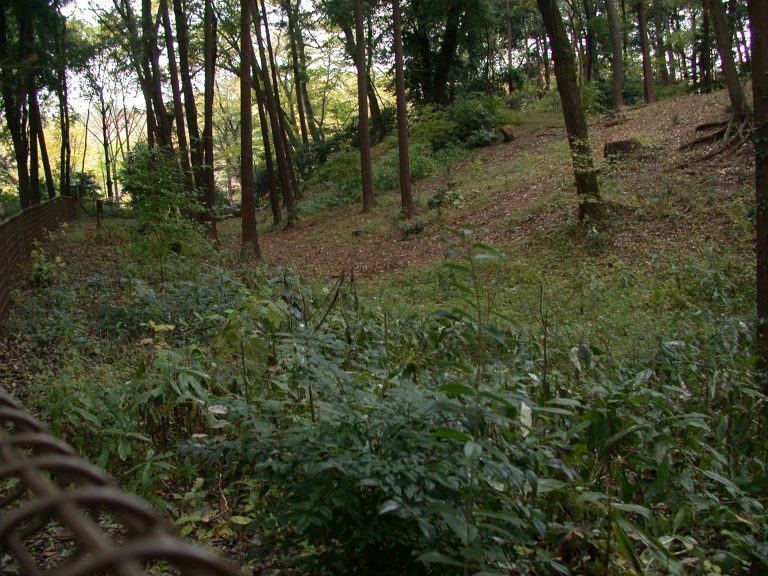
In 1477, the Toyoshima clan, including Toyoshima Yasutsune, was defeated by Ōta Dōkan in the Battle of Ekoda and Numabukurohara. Tradition holds that Dōkan then moved Sanbō-ji to its present location, at the site of the former Shakujii Castle. This relocation gave the temple its continuing association with the castle and the medieval history of the area.
Imperial and Tokugawa patronage
In 1547, Emperor Go-Nara issued an imperial document recognizing Sanbō-ji as an imperial prayer temple. During the Tenshō period, which lasted from 1573 to 1592, the Later Hōjō clan issued prohibitory edicts and confirmed the temple’s lands. In 1591, Tokugawa Ieyasu granted Sanbō-ji a red-seal estate yielding 10 koku of rice. A koku was a historical measure of rice yield used to assess land and stipends, while a red-seal estate was land granted under a shogunal document bearing the ruler’s red seal.
During the Edo period, Sanbō-ji held independent temple status, meaning that it was not subordinate to a head temple and had recognized standing in formal dealings. It also possessed direct audience privileges. The temple controlled six subtemples, Kyōgaku-in, Zenjō-in, Kanzō-in, Saishō-ji, Shōgaku-in, and Yakuō-in, along with more than 50 branch temples. It was one of the eleven major Shingon doctrinal seminaries in the Kantō region.
Tokugawa Iemitsu, the third Tokugawa shogun, used Sanbō-ji as a rest stop during falconry expeditions in 1625 and 1644. The main gate later became known as the Onari-mon, or “visit gate,” reflecting this connection with the shogun’s journeys.
Meiji contraction and twentieth-century rebuilding
The Meiji-period separation of Buddhism and Shinto, together with the confiscation of temple lands, forced Sanbō-ji to contract. On April 21, 1874, a fire destroyed its buildings and left the temple almost completely derelict.
A plan to rebuild the main hall was prepared in 1919, and construction began in 1922. The Kantō Earthquake and the Pacific War delayed the work, and the rebuilt hall was finally completed in 1953. In 1960, the temple accepted the relocation of a longhouse-style gate from Tōgetsu-en in Asahimachi. The gate had originally belonged to the residence of Katsu Kaishū. Its transfer was requested while Sanbō-ji’s abbot was serving as chairman of the Nerima Ward Board of Education.
Saishō-ji, once one of Sanbō-ji’s subtemples, was abolished after the Meiji Restoration and revived as a branch temple in 1981. The temple complex also includes Hōkikaku, a two-story mortuary facility completed in 1995 across the road from the main precinct.
Pilgrimage and religious associations
Sanbō-ji is associated with the Musashino Thirty-Three Kannon pilgrimage and with the Kantō Thirty-Six Fudō pilgrimage, in which it is the eleventh station. It is also the sixteenth station of both the Gofunai Eighty-Eight and Toshima Eighty-Eight pilgrimages. Kannon is the bodhisattva of compassion, while Fudō Myōō is regarded as an immovable protector in Esoteric Buddhist practice.
Sanbō-ji gave its name to Sanbō-ji Pond in nearby Shakujii Park. The present Itsukushima Shrine beside the pond was formerly a Benten shrine under the temple, and the pond was historically called Benten Pond. Benten, a Buddhist-Shinto deity associated with water, music, eloquence, and prosperity, remained linked to the pond until the Meiji-period separation of Buddhism and Shinto transformed the site into a Shinto shrine.
A former watercourse called the Sanbō-ji River, historically known as the Benten River, flowed from Sanbō-ji Pond to the Shakujii River. Until its spring water dried up, the pond served as the principal source of the Shakujii River.
Six-hundredth-anniversary projects
The Fundamental Great Pagoda and the Peace Great Kannon were initiated as projects commemorating Sanbō-ji’s six-hundredth anniversary. The pagoda was completed in 1996. Together, these projects added later religious monuments to a precinct whose history reaches back to the fourteenth century.
Remains
The surviving precinct combines halls, gates, a bell tower, Buddhist monuments, and later commemorative structures. Its buildings represent several phases of rebuilding and relocation, while the principal images and associated religious spaces continue to express Sanbō-ji’s Shingon identity.
Historic buildings and precinct features
Main hall
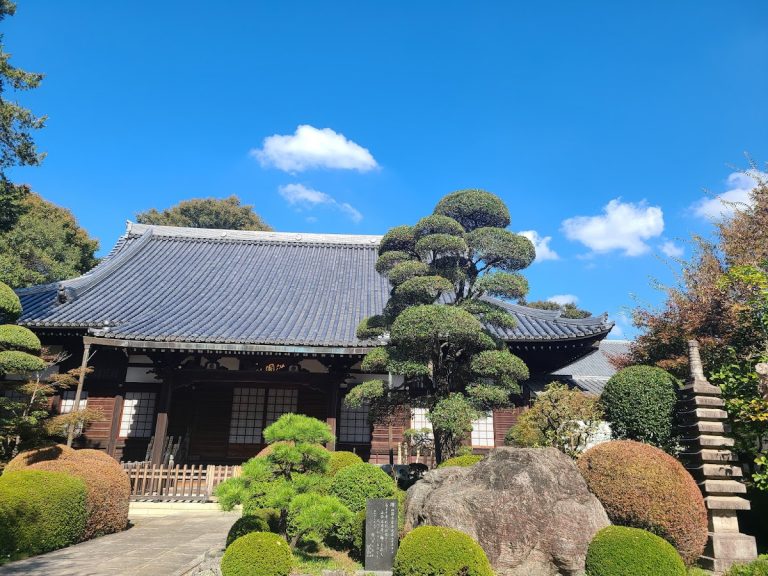
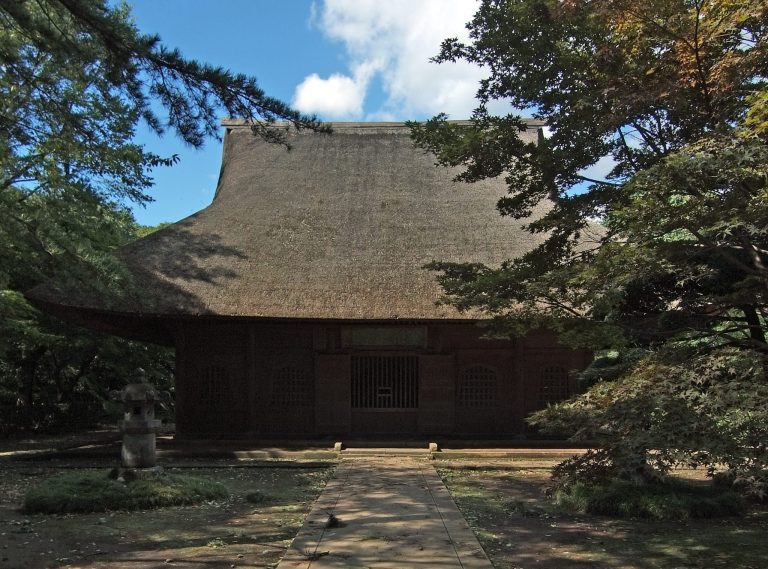
The main hall was begun in 1922 and structurally topped out in 1929. Delays caused by the Kantō Earthquake and the Pacific War extended the project, and the completed hall dates to 1953. It forms the principal rebuilt worship building of the modern temple.
Daishi-dō
The Daishi-dō, also called the inner sanctuary, was rebuilt in 1973 and relocated in 1990. Its present form therefore reflects both twentieth-century reconstruction and a later change of position within the temple complex.
Onari-mon
The Onari-mon was built in 1827 and is described as the oldest building in the temple precinct. Its name, meaning “visit gate,” recalls Tokugawa Iemitsu’s use of Sanbō-ji as a resting place during falconry expeditions.
Bell tower
The bell tower was rebuilt in 1973. Its bronze bell was cast in 1675 and is designated as a cultural property of Nerima City, preserving a seventeenth-century object within a later tower.
Nagaya-mon
The Nagaya-mon is a longhouse-style gate relocated to Sanbō-ji in 1960 from Tōgetsu-en in Asahimachi. It originally belonged to the residence of Katsu Kaishū, giving the gate a separate connection with the built history of the nineteenth-century residence from which it came.
Other precinct features
Other features include a Kannon-dō, a hall dedicated to Kannon, and a monument bearing the inscription “No guardian emissary may enter.” The precinct also contains a monument associated with Tajima Teppei, sericulture, and silk reeling.
Pagoda and Kannon monument
Fundamental Great Pagoda
The Fundamental Great Pagoda is a 17-meter-high wooden tahōtō, a Japanese pagoda with a square lower section and a rounded upper section. Completed in 1996, it was part of the temple’s six-hundredth-anniversary project. Its name refers to a tower symbolizing Dainichi Nyorai, the central cosmic Buddha of Esoteric Buddhism.
Peace Great Kannon
The Peace Great Kannon is a 9-meter-high statue of the Eleven-Headed Kannon. Conceived as part of the same anniversary project as the Fundamental Great Pagoda, it represents Kannon, the bodhisattva associated with compassion.
Daikoku-dō and Jizō-dō
Daikoku-dō
The Daikoku-dō was founded in 1929 by Yūken, Sanbō-ji’s thirty-third abbot, as a prayer for the temple’s revival. It incorporated the temple’s traditionally venerated collection of one thousand Jizō figures. The present building was rebuilt in 1984.
Jizō-dō
An independent Jizō-dō occupies the basement of the present Daikoku-dō. It contains a Jizō image and altar surrounded by numerous small wooden Jizō carvings. A large Rokudō Mandala covers the wall, depicting the six realms of existence in Buddhist cosmology; the painting was created by Eisuke Somekawa.