Thracian Tomb of Sveshtari: A Getic Royal Tomb in Bulgaria
Site at a Glance
- Popularity
- High
- Country
- Bulgaria
- Primary era
- Classical
- Eras represented
- Classical
- Civilizations
- Thracian
- Site type
- Burial
- Remains
- Tomb
On this page11 sections
History
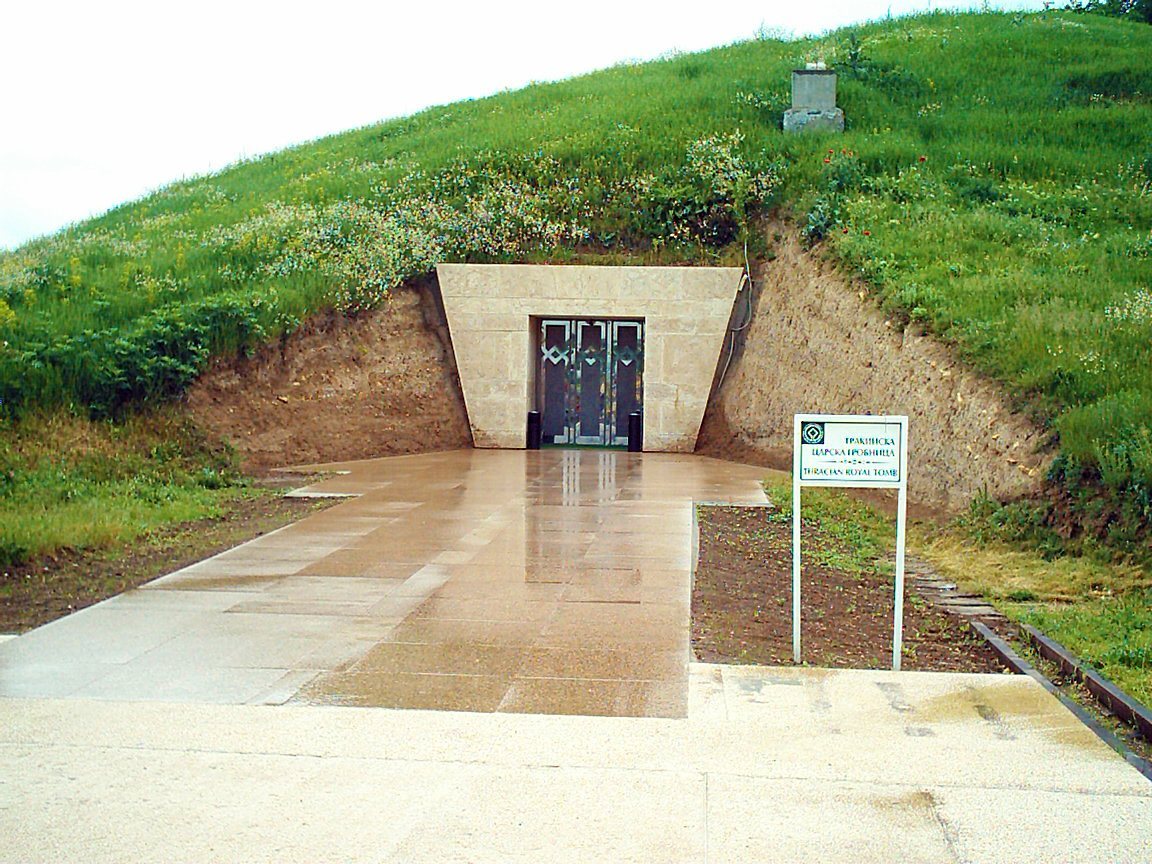
The Thracian Tomb of Sveshtari is a royal tomb built by the Getae in the first quarter of the 3rd century BC, 2.5 km southwest of Sveshtari in northeastern Bulgaria. Its Thracian-Hellenistic character belongs to the Hellenistic period, which followed Alexander’s conquests and saw Greek cultural influence spread widely. The tomb is thought to have been the burial place of Dromichaites (c. 300–c. 280 BC), a Getic ruler, and his wife, a daughter of Lysimachus, the Macedonian general and successor to Alexander.
Getic power and the tomb’s setting
The Getae were a Thracian people associated with the lower Danube. In the 5th century BC, they were federated within the Odrysian kingdom, a major Thracian state, although the nature of their relationship with it is uncertain. Campaigns by Macedonian king Philip II between 352 and 340 BC broke Odrysian authority, benefiting the Getae. By the second half of the 4th century BC, Getic groups occupied sites on both banks of the lower Danube. The region prospered, while Macedonian expansion encouraged greater political unity among Getic tribes.
Ancient geographers placed the Getae in accounts of the Hellenistic world and the Hyperboreans, a people of Greek tradition associated with a far-northern land. The tomb is thought to have stood near Helis, a Getic city. A large ancient settlement and dozens of Getic mound tombs lie in the surrounding area.
Discovery and heritage recognition
The tomb was discovered in late August 1982 during work on Mound 7 in the East Mound Necropolis, or cemetery, of Sboryanovo, at Ginina Mogila. Archaeologist Maria Chichikova led the excavation with Dr. Totyu Ivanov. In 2012, a treasure was found near Sveshtari among 150 tombs dated to the 4th century BC. It comprised a gold ring, 44 depictions of female figures and 100 gold buttons, and has been proposed as part of Helis.
The surrounding area was declared the Sboryanovo historical and archaeological reserve. In 1985, UNESCO inscribed the tomb as a World Heritage Site under criteria (i) and (iii); the listed property covers 647.6 hectares.
Remains
Tomb structure and decoration
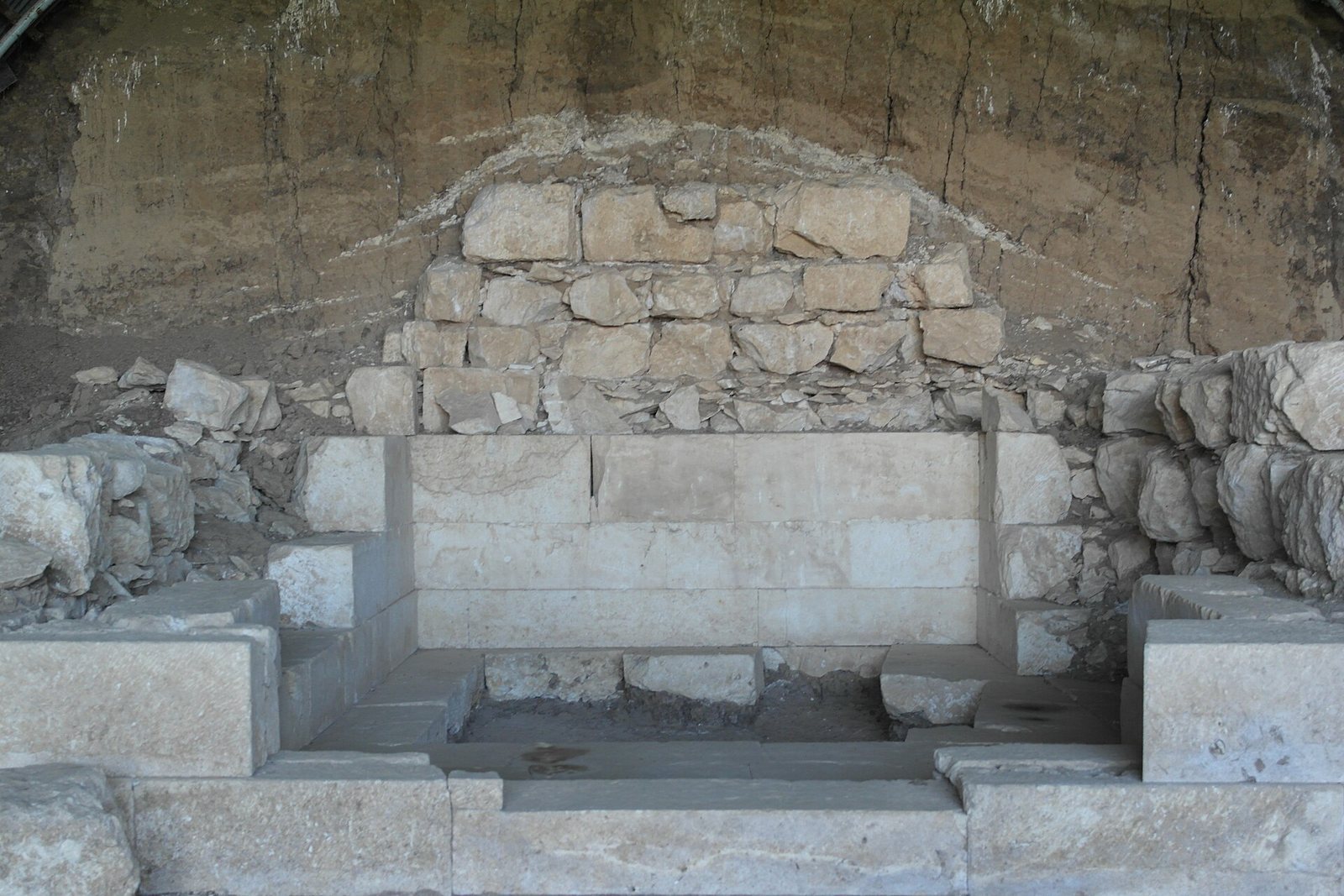
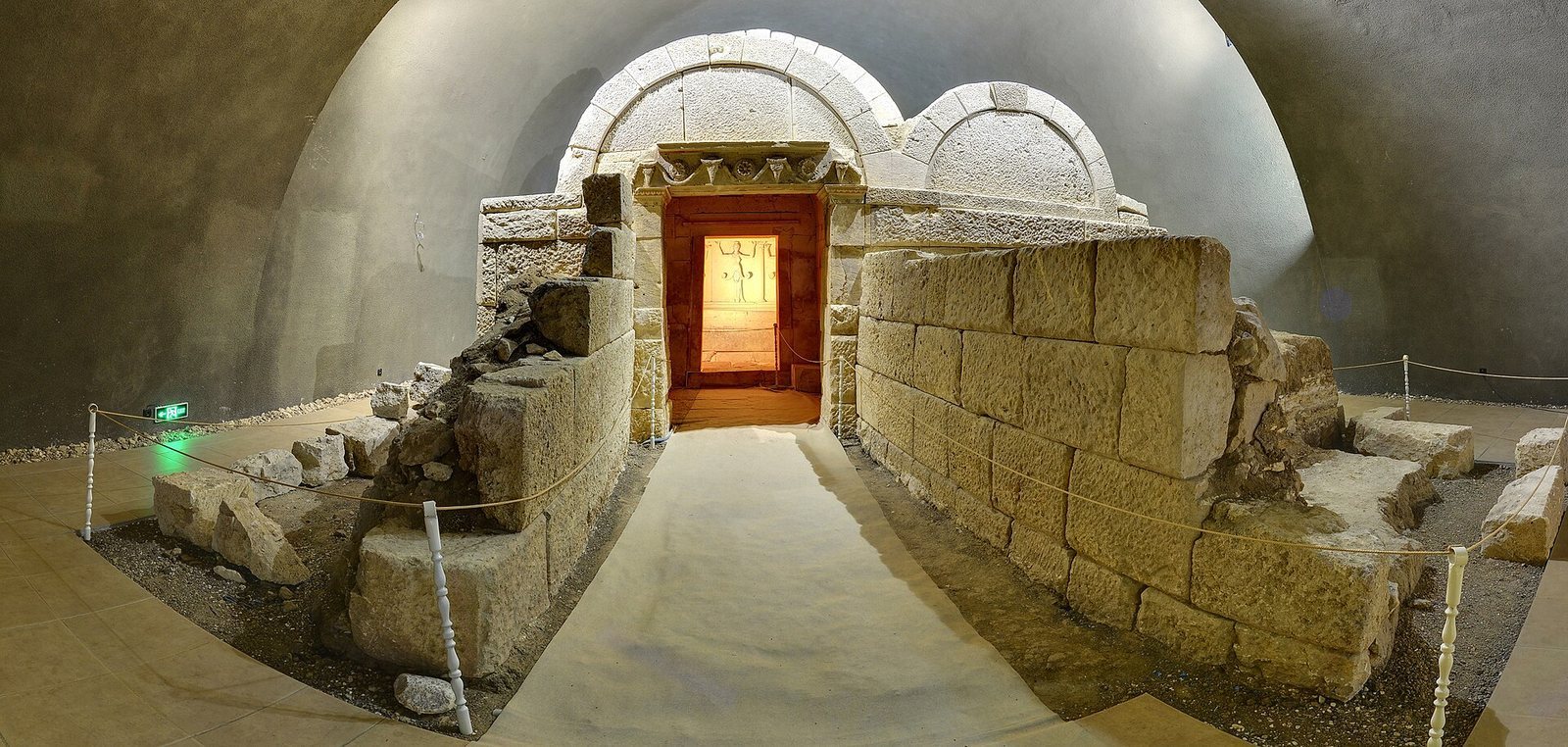
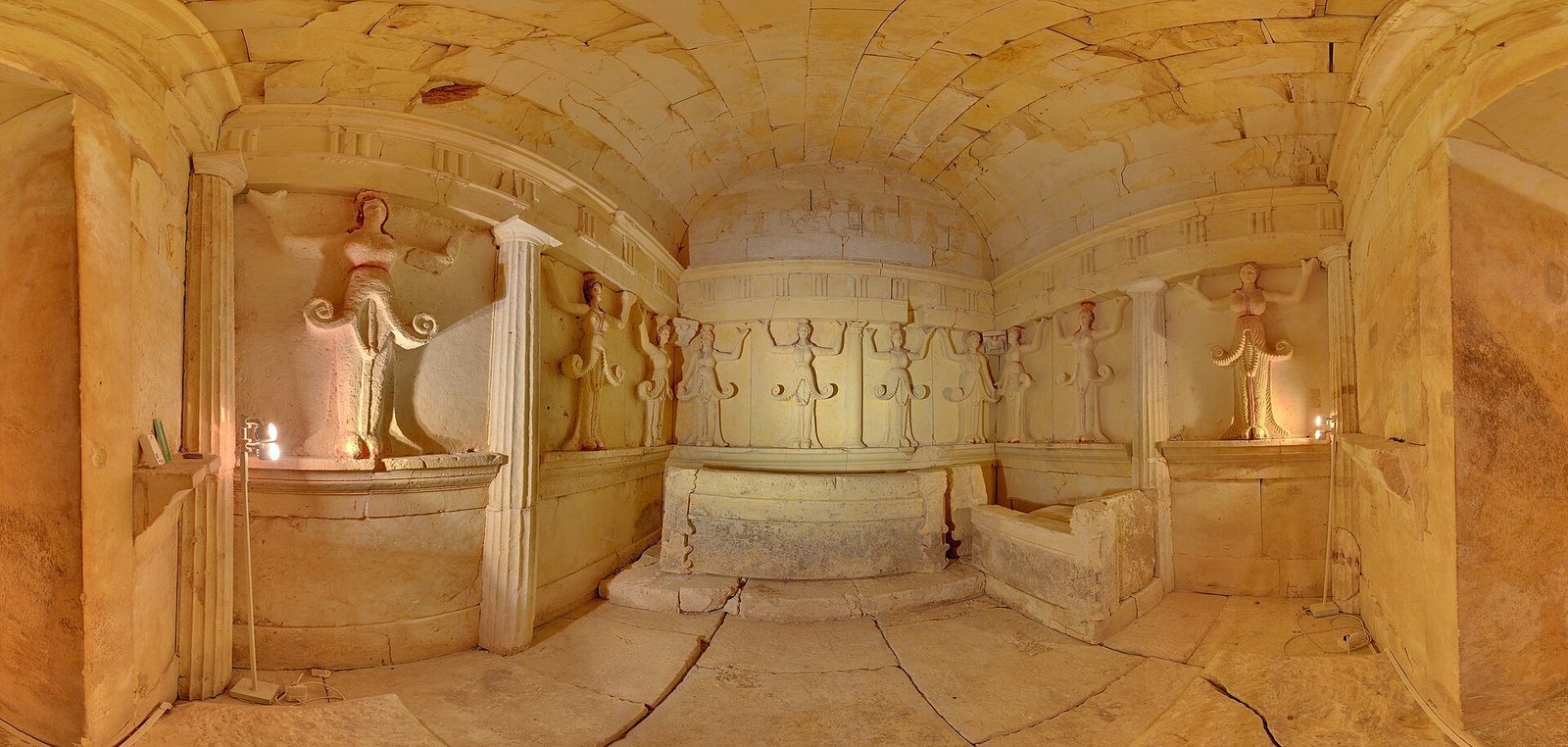
Smoothly dressed blocks of soft limestone form a corridor and three square chambers, covered by half-cylinder-shaped vaults. The surviving decoration and burial remains are concentrated in the central burial chamber.
Plan and entrance
The three chambers are an antechamber, a side room and a burial chamber. Columns with Ionic capitals, the carved tops of an ancient Greek column style, decorate the entrance. A slab above them bears a carved band showing stylized bull heads, rosettes and garlands.
Burial chamber decoration
Columns attached to the chamber walls form a colonnade. Ten caryatids, sculpted female figures used as supports, each 1.20 m high, hold blocks beneath the vault. They have raised arms, long pleated garments, belts below the breasts, turned-up hems shaped like flower cups, curling hair and basket-shaped headdresses. The figures combine human and plant forms and were painted in several colors; dark-brown paint remains on their hair, faces and clothing.
The vault’s lunette, a semicircular panel, shows a mounted ruler facing a goddess who offers him a golden wreath. Two armed attendants follow the ruler, while four women bearing different gifts follow the goddess. The scene represents the ruler’s intended deification or heroization, the treatment of a deceased person as a hero. The figures and painted scene remain unfinished: some hands are roughly carved, and the scene is outlined only in black chalk. This unfinished work has been interpreted as evidence that the ruler died suddenly. The ten high-relief figures and the lunette decoration are the only examples of their type yet found in Thracian lands.
Burial deposits and rites
Two stone beds, human bones and grave goods were found in the burial chamber. Beside one bed stands a sculpted façade resembling a small temple. The bones of five horses were also found; the animals had been killed at the tomb to accompany the ruler in the afterlife. Offerings and sacrifices may have been placed beside the chamber entrance. Precious-metal objects from the tomb were looted in antiquity.
The burial included a stepped grave pit, cremation and a La Tène-type fibula, an Iron Age Celtic brooch used to fasten clothing. A dog was laid on a stone with its head severed, a practice described as characteristic of the Getae.
Mounds and settlement
Mound landscape
Twenty-six mounds of varying sizes survive across a distance of 2 km. They form part of the broader burial landscape around the tomb.
Fortified settlement
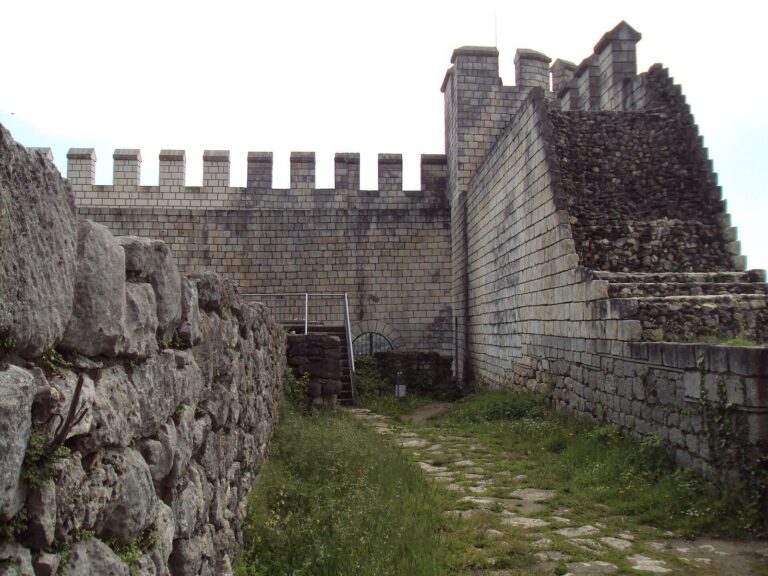
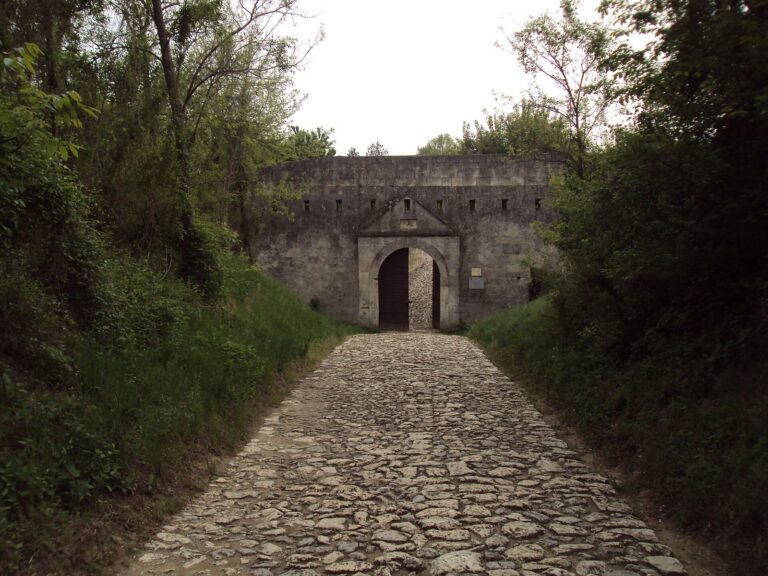
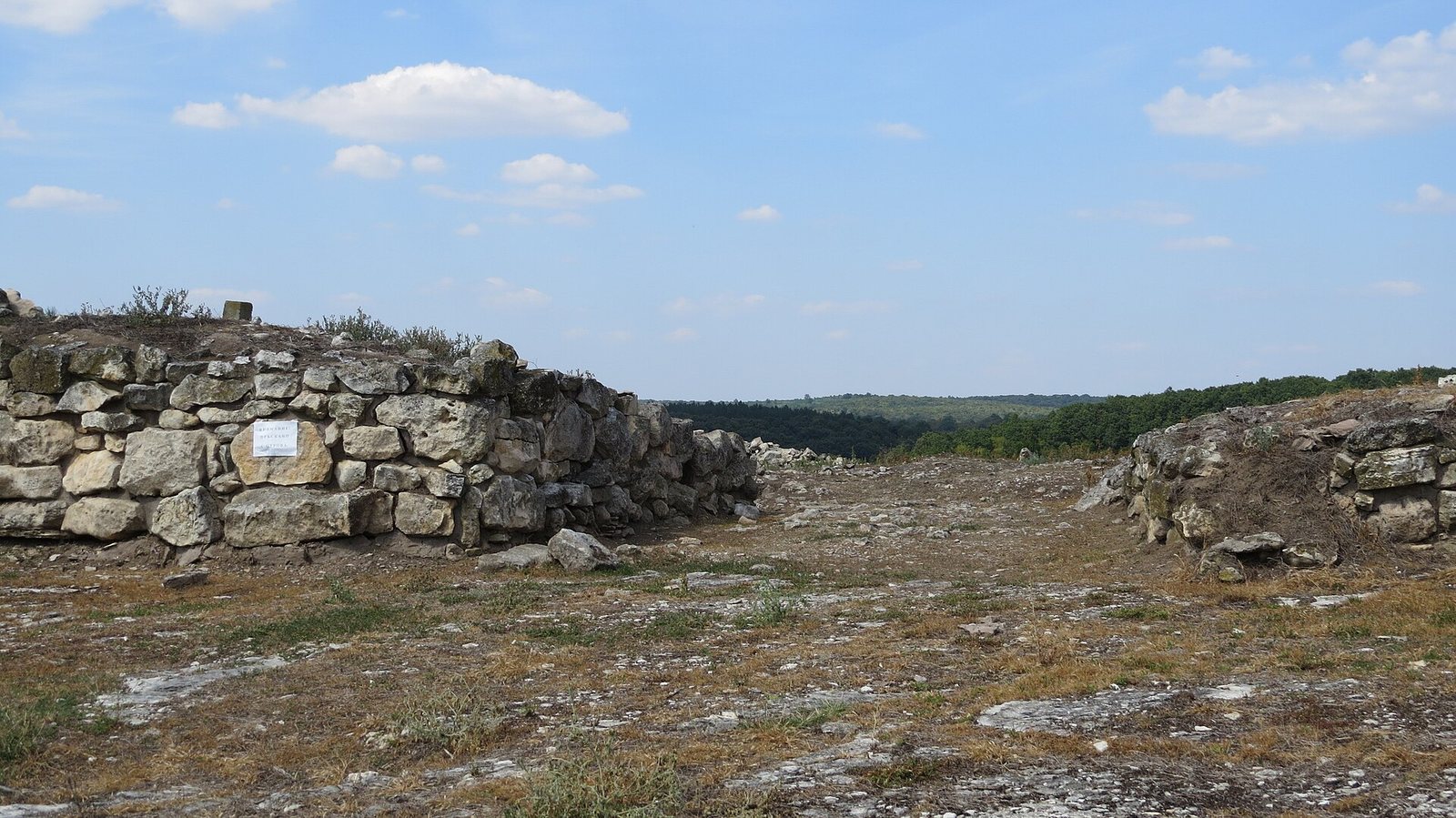
Nearby, the remains of a large fortified settlement occupy a plateau shaped like a peninsula by ravines of the Krapinets River. Its outer stone wall, up to 4 m thick, follows the plateau’s edges and enclosed about 10 hectares. A similarly constructed inner wall enclosed a roughly quadrilateral area of about 5 hectares. Dwellings were relatively closely spaced inside the defences and connected by thoroughfares. Stamps on large storage jars and coins date the settlement to around 335–250 BC.