Thommanon: A Hindu Temple at Angkor in Cambodia
Site at a Glance
- Rating
- 4.7
- Popularity
- Low
- Country
- Cambodia
- Primary era
- Medieval
- Eras represented
- Medieval
- Civilizations
- Unclassified
- Site type
- Religious
- Remains
- Temple
On this page11 sections
History
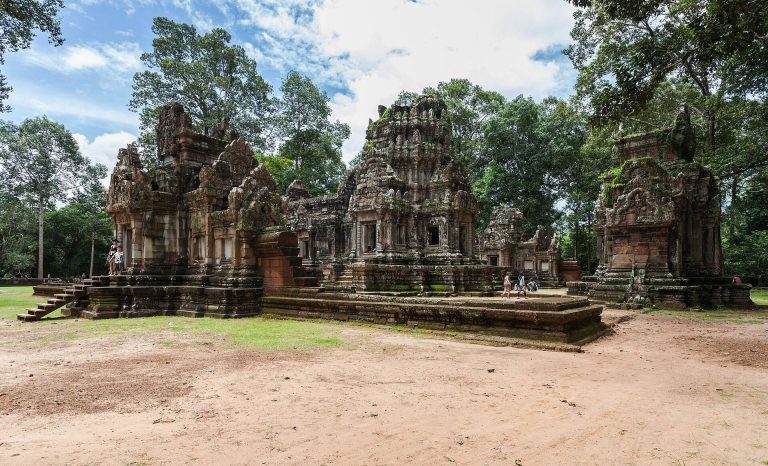
Thommanon is a Hindu temple at Angkor in Cambodia, built by the Khmer civilization during the first half of the twelfth century, probably under King Suryavarman II. Dedicated to Shiva and Vishnu, it reflects the coexistence of Shaivite and Vaishnavite worship in the Khmer religious landscape. Its construction belonged broadly to the period when work began at Angkor Wat and Beng Mealea.
Construction and religious setting
The exact date of construction remains uncertain. The prevailing attribution connects Thommanon with Suryavarman II, whose reign lasted from 1113 to 1150. Some interpretations instead associate the temple’s distinctive female figures with the reign of Jayavarman VI in the late eleventh or early twelfth century. Thommanon was one of a pair of temples built during this period.
Vaishnavism had entered Cambodia under Jayavarman II and his son Jayavarman III, both rulers of the Angkorian period. Shaivite worship was later incorporated alongside it at Thommanon and at several other temples. The name Thommanon was applied after construction and derives from Pali terms connected with religious law or teaching and eternal truth.
Restoration and heritage status
A major restoration took place in the 1960s under the direction of the French archaeologist Bernard-Philippe Grolier. Funded by the École française d’Extrême-Orient, the work used anastylosis, a restoration method that reassembles a damaged monument with its original architectural components wherever possible. Concrete ceilings were also added. Thommanon forms part of the Angkor UNESCO World Heritage Site, inscribed in 1992.
Remains
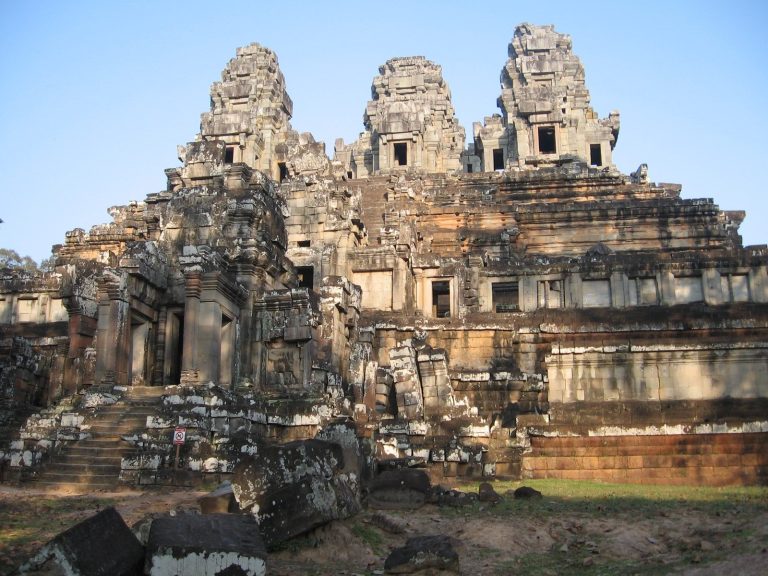
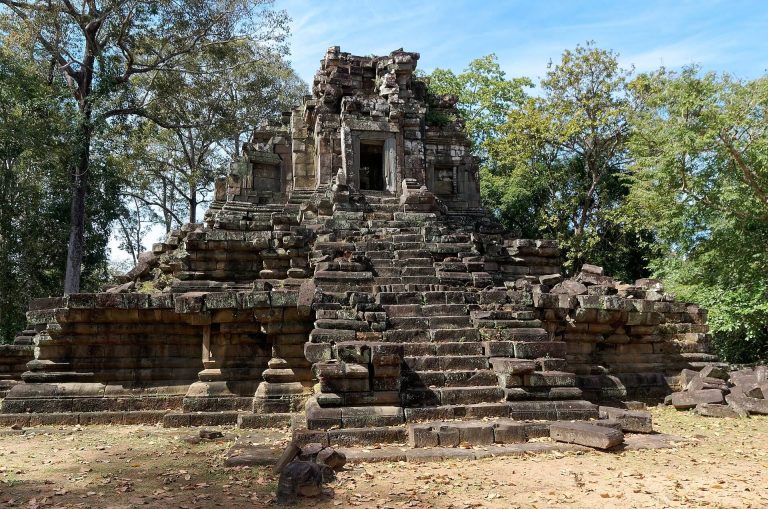
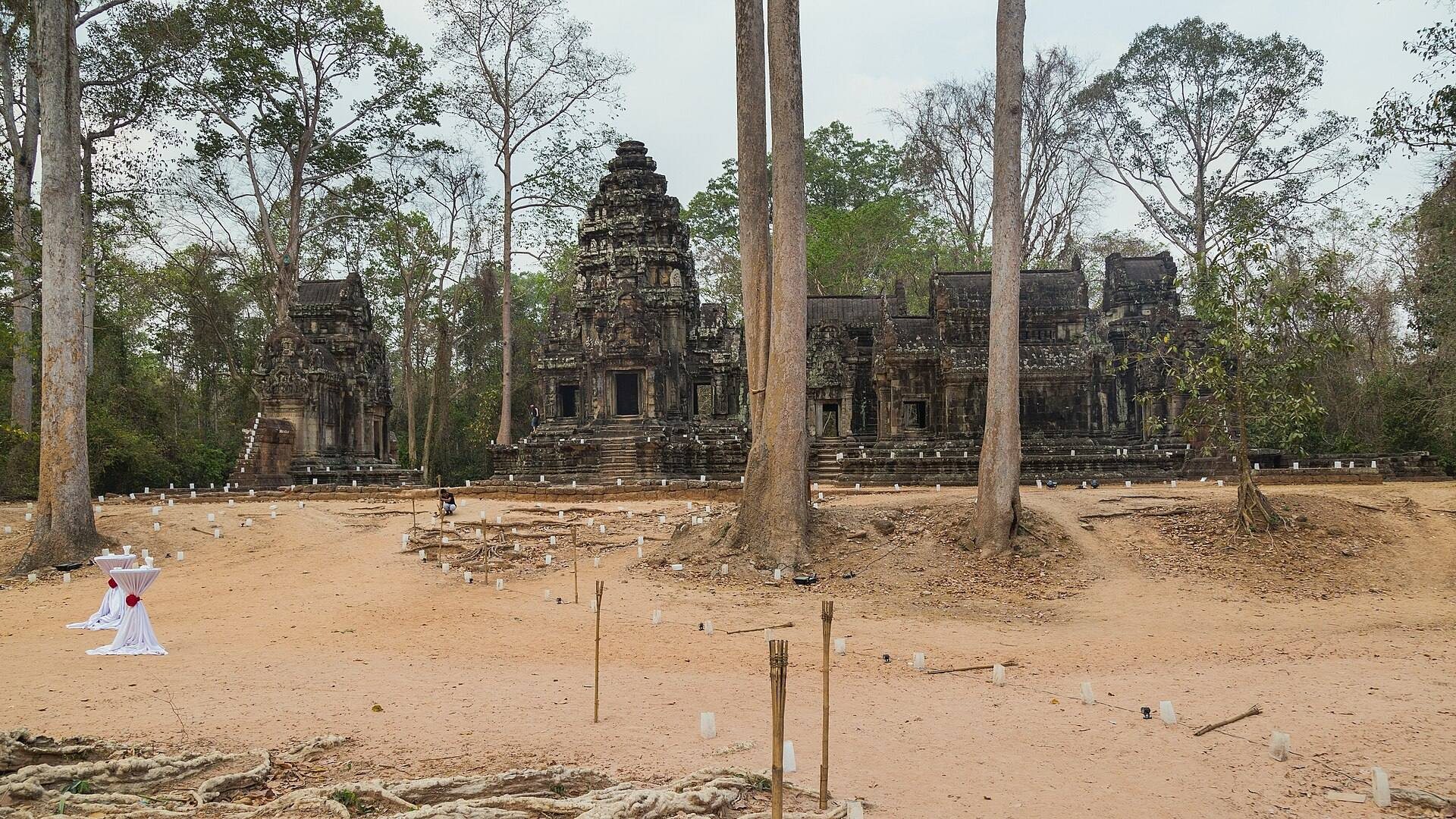
Thommanon is an east-west complex approximately 70 metres long, standing on a platform about 2 metres high. It is constructed mainly from sandstone, while laterite was used for the surrounding enclosure. The temple lies about 500 metres east of Angkor Thom’s Victory Gate, on the route toward Ta Keo. Chau Say Tevoda stands directly opposite it, immediately to the south, across the route.
Sanctuary and entrance buildings
Central sanctuary
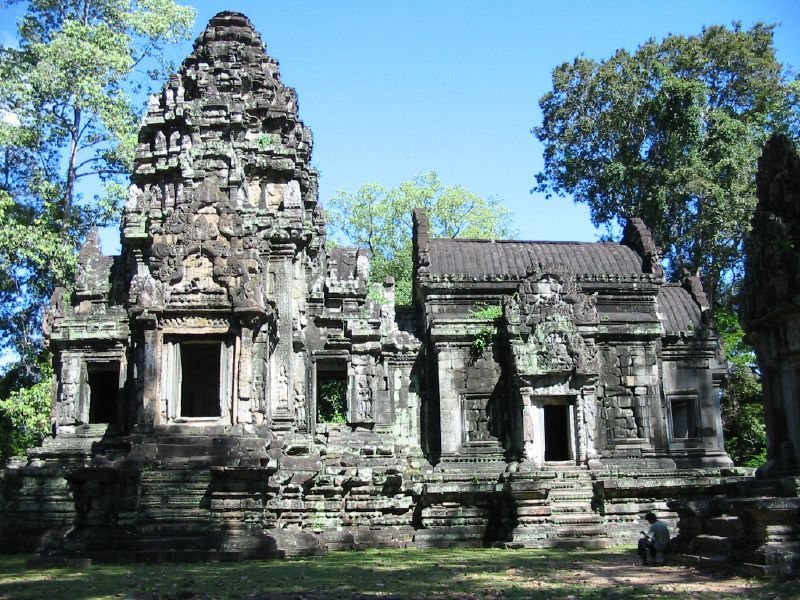
The principal sanctuary faces east and is crowned by a single prasat, a Khmer temple tower or sanctuary. A short antarala, or connecting corridor, joins the tower to the mandapa, an antechamber or pillared hall. The tower is the surviving remnant of the principal temple structure, and its form resembles the towers of Angkor Wat and Chau Say Tevoda.
Eastern gopura
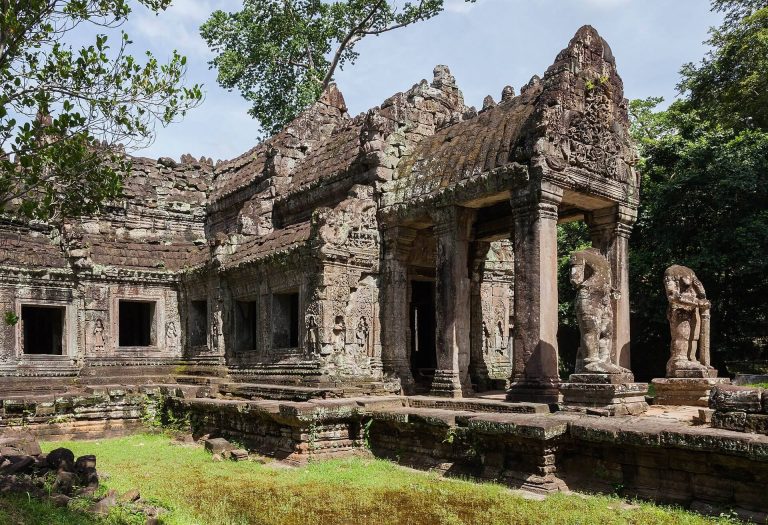
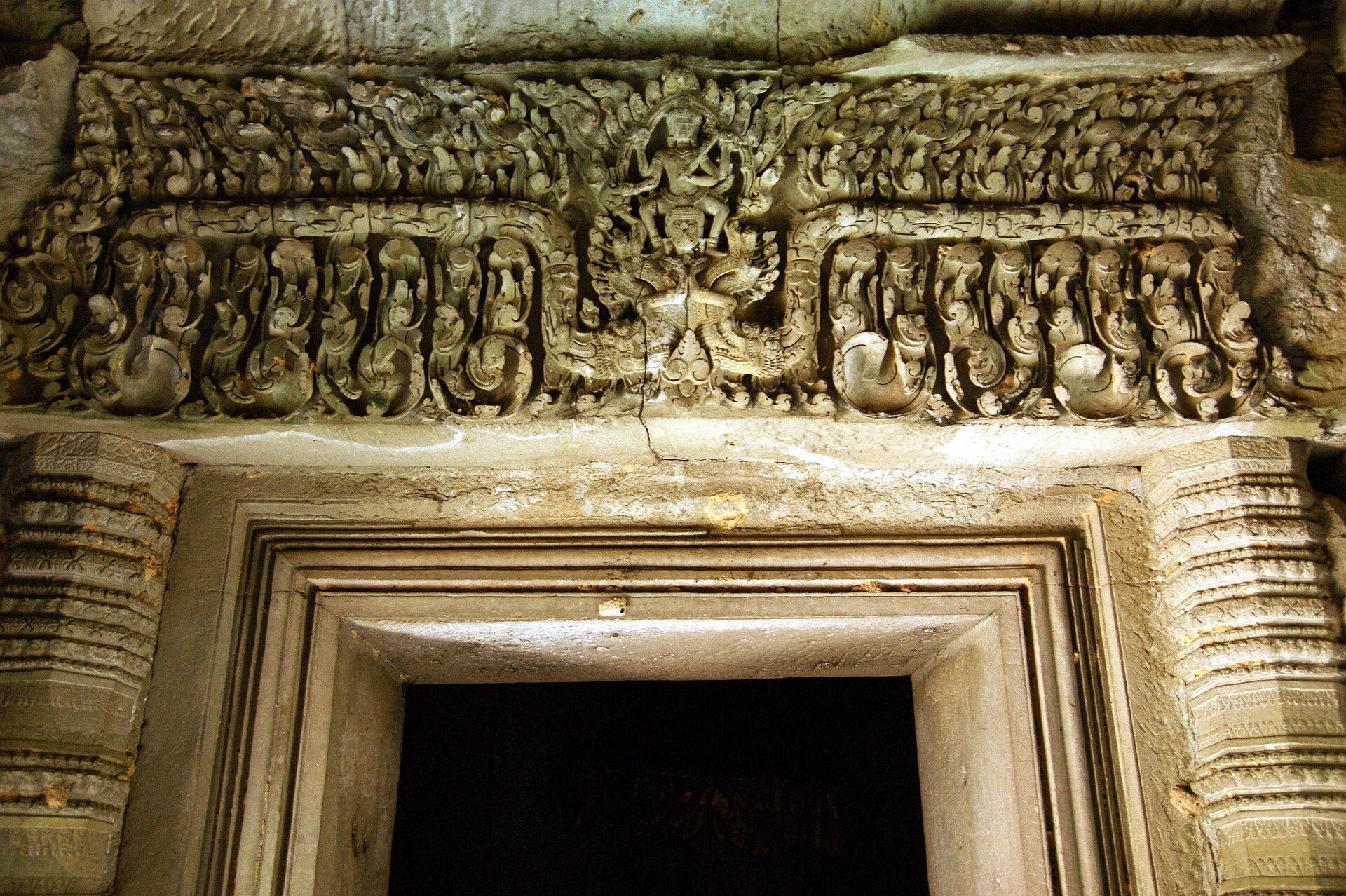
The eastern gopura, a monumental entrance structure, has three entrances and two side rooms. It leads through the mandapa toward the central sanctuary. A small cross-shaped terrace lay east of the approach from this gate. Every doorway at Thommanon has a carved pediment, and the eastern entrance retains mythological images of deities together with a meditating Buddha surrounded by lotuses.
Western gopura
A western gopura formed the opposite entrance to the complex. Thommanon is also described as having four principal sandstone buildings, comprising the eastern entrance, the mandapa, the central prasat, and the western entrance.
Library building
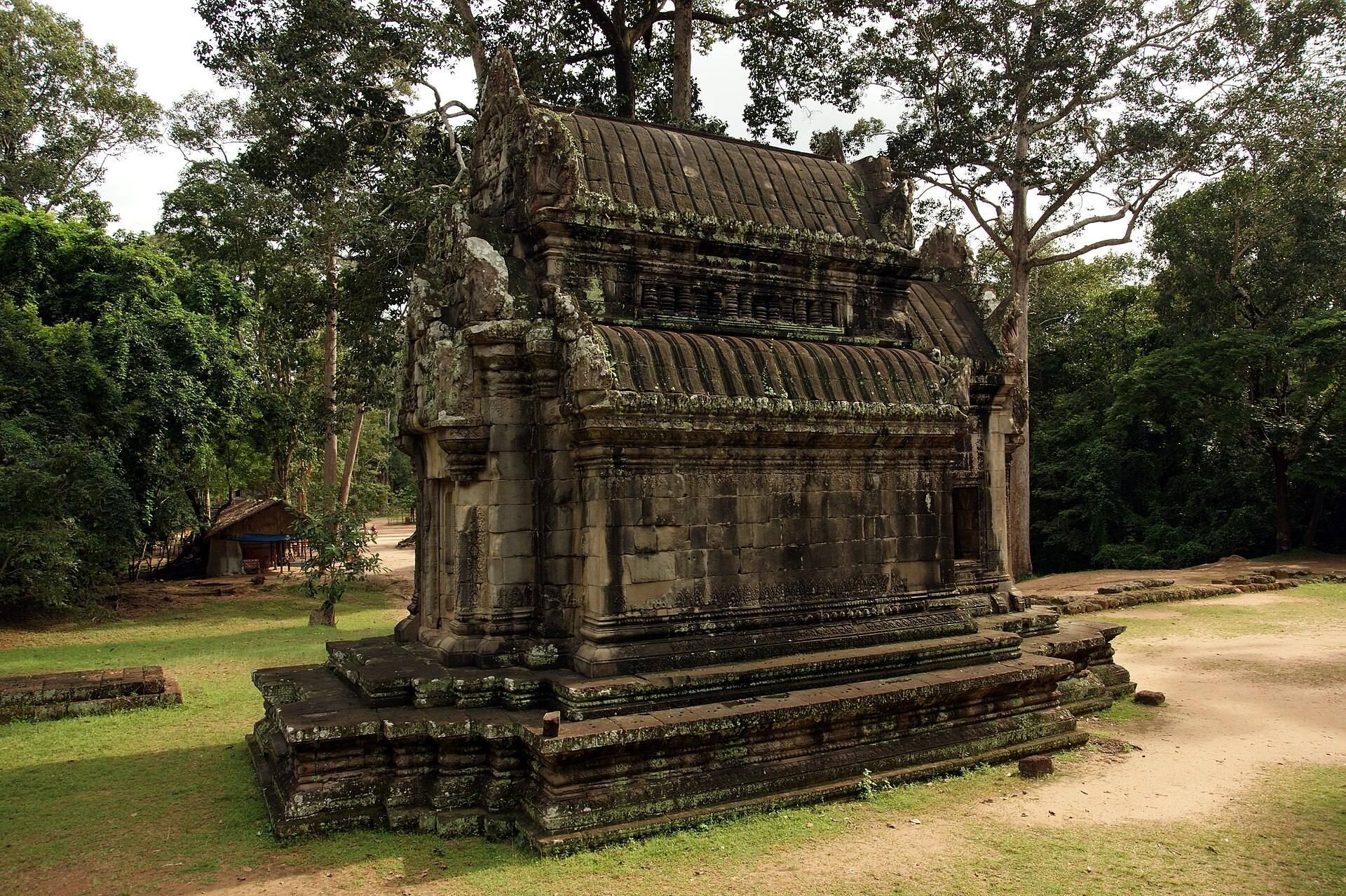
A separate library building stood to the south or southeast of the principal sanctuary. Its position formed part of the wider arrangement of buildings around the central temple.
Enclosure and relationship to Chau Say Tevoda
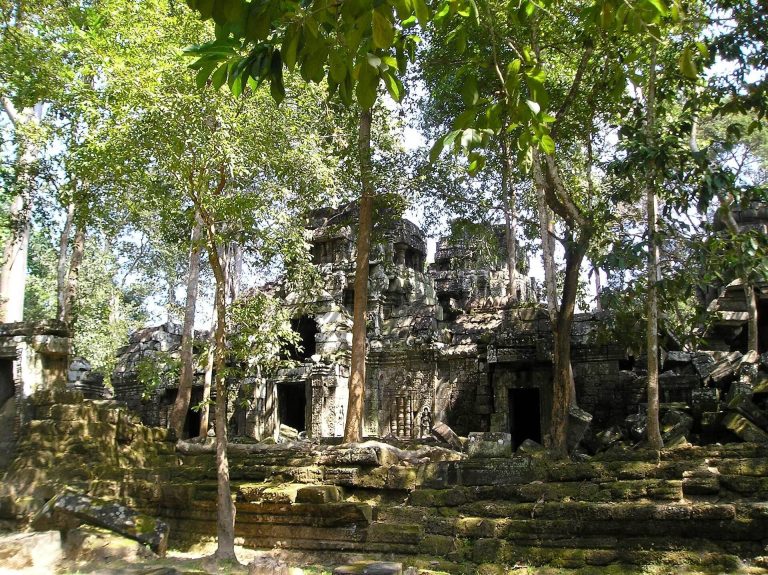
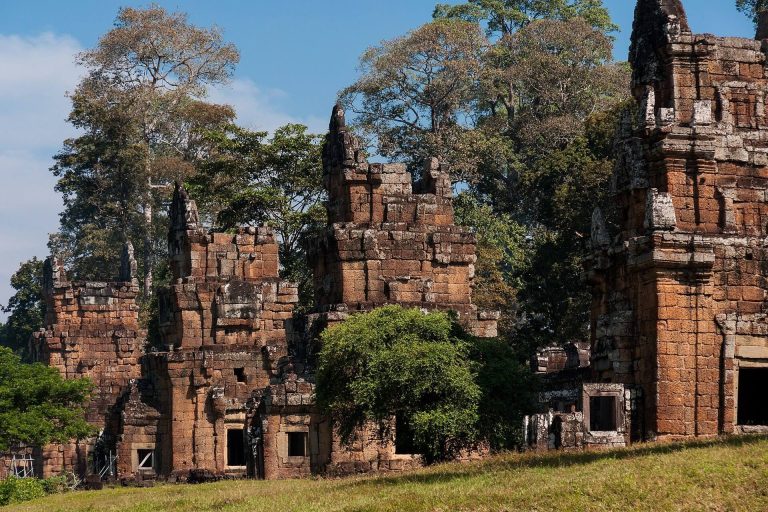
The surrounding enclosure wall has largely disappeared. The eastern and western entrance openings remain, along with traces of the laterite wall. Thommanon and Chau Say Tevoda may once have been connected by their central towers within a larger compound with substantial gates, although this reconstruction remains inferential.
Carved decoration
Thommanon’s carvings are particularly well preserved. The temple is in better condition than Chau Say Tevoda, a preservation attributed to the absence of stone-enclosed wooden beams in its superstructure and to the extensive use of sandstone rather than predominantly timber-based construction.
Numerous devatas, divine female figures used as architectural decoration in Khmer temples, cover the temple. They wear flower crowns, Cambodian sampot skirts, necklaces, belts, armlets, and anklets. Their complex hand gesture, called the devata mudra, holds a flower between the middle and ring fingers and the thumb, while the index finger and little finger extend. The same gesture is prominent at Angkor Wat.
The figures’ clothing includes two contrasting skirt types. One is an older pleated form associated with the Bakheng period and seen at Lolei and Phnom Bok around AD 900. The other has patterned folds and a projecting tail comparable to clothing depicted at Angkor Wat.