Teradani Chōshizuka Kofun: An Early Kofun-Period Burial Mound in Japan
Site at a Glance
- Rating
- 4.3
- Popularity
- Very Low
- Country
- Japan
- Primary era
- Classical
- External website
- Open
- Eras represented
- Classical
- Civilizations
- Yamato
- Site type
- Burial
- Remains
- Burial Mound
On this page7 sections
History
Teradani Chōshizuka Kofun is a large burial mound in Japan, located in Iwata, Shizuoka, and built by an ancient Japanese regional chiefly society during the latter half of the fourth century, in the early Kofun period. A kofun is a monumental burial mound built in Japan mainly between the third and seventh centuries. The Kofun period takes its name from these tombs and is associated with the emergence of powerful regional leaders and a more centralized political order. Teradani Chōshizuka Kofun is regarded as the burial place of a regional chiefly leader and is one of the notable large keyhole tombs of this early period.
The Chōshizuka Kofun Group
The mound stands in Teradani on the eastern bank of the Tenryū River, at the western edge of the Iwatahara Plateau. It belongs to the Chōshizuka Kofun Group, which contains about ten burial mounds. Kochōshizuka Kofun, a separate mound immediately northwest of Teradani Chōshizuka Kofun, was probably also built during the latter half of the fourth century. It may predate the larger mound, although the sequence is uncertain. Together, the two mounds reflect the concentration of elite burials in this area during the early Kofun period.
Robbery, surveys, and protection
The mound was robbed in 1880. During the robbery, approximately three square metres of stones bearing traces of vermilion were said to have been found about three metres below ground. The burial facility remains uncertain because no formal archaeological excavation has taken place. Objects recovered in the robbery included a triangular-rimmed bronze mirror decorated with divine beasts, a tomoe-shaped bronze object, and two bronze arrowheads.
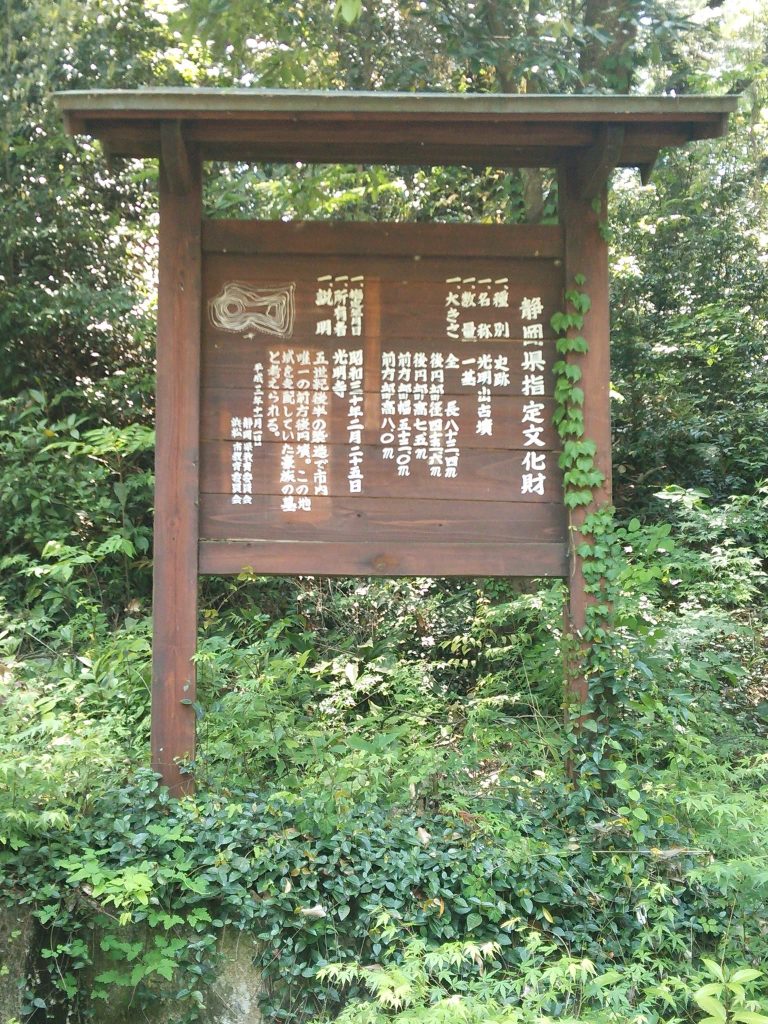
Shizuoka University surveyed the mound in 1954 and 1957, followed by a Kansai University survey in 1995, which was published that year. Teradani Chōshizuka Kofun and Kochōshizuka Kofun were designated together as a National Historic Site of Japan on November 7, 1956. The protected area was enlarged through an additional designation on April 21, 1979.
Remains
Teradani Chōshizuka Kofun
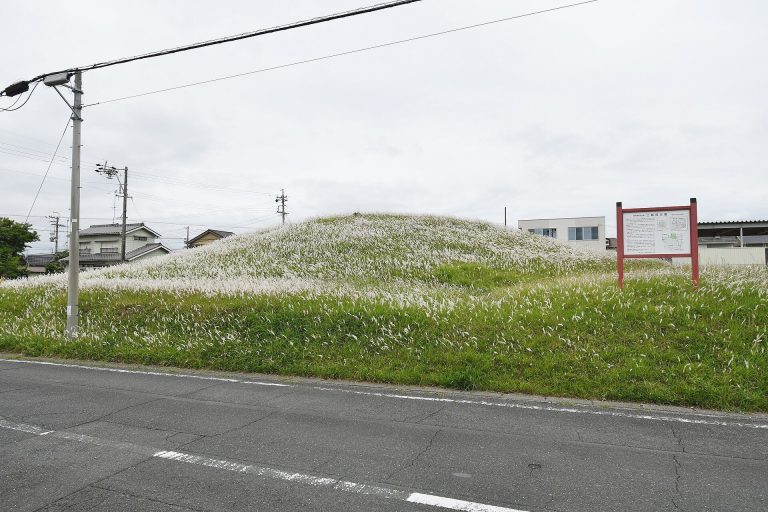
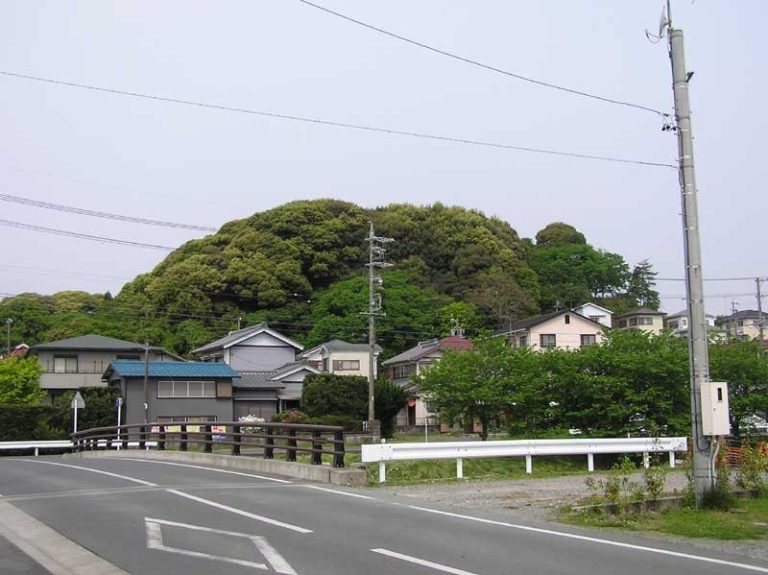
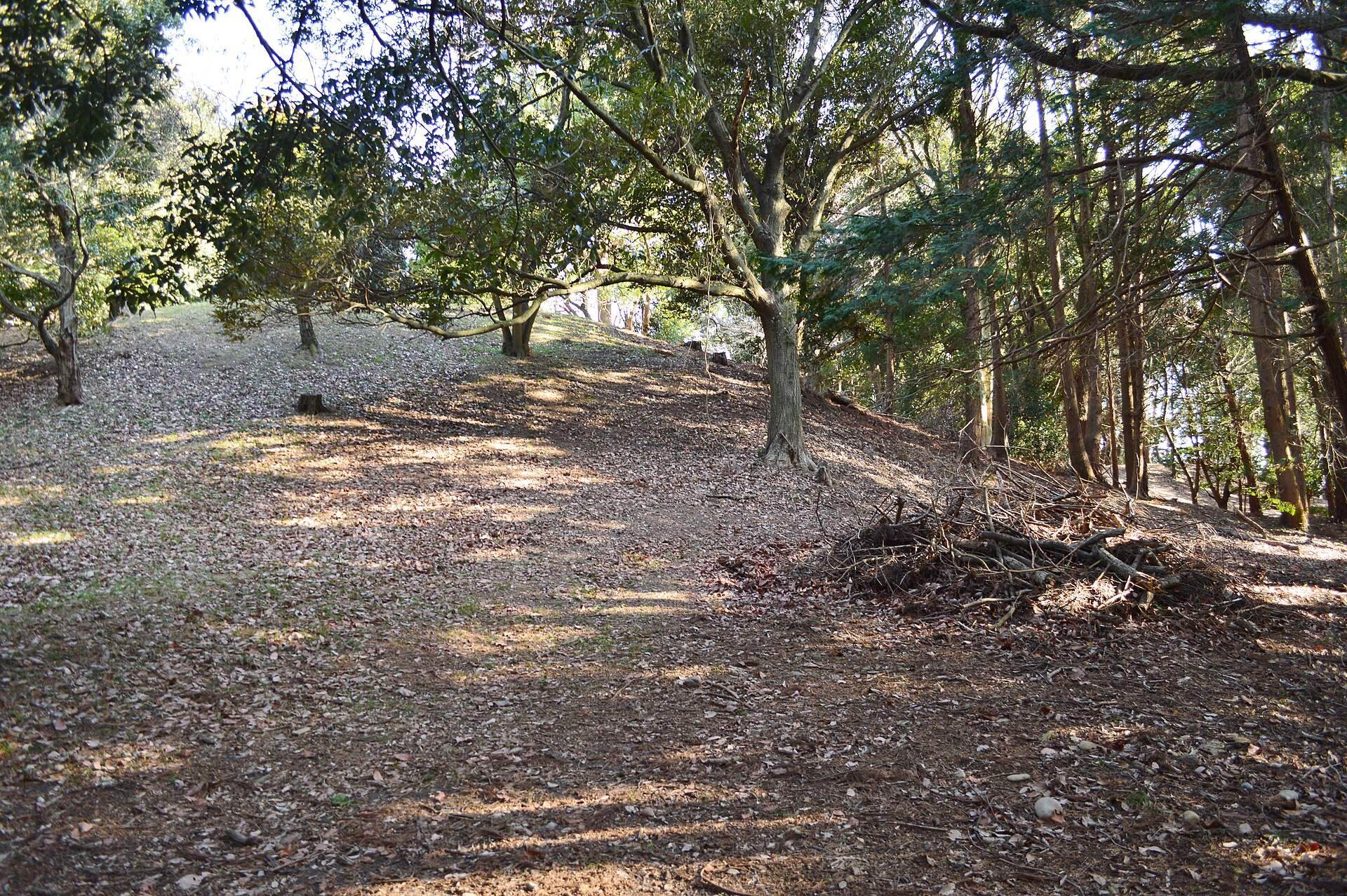
Teradani Chōshizuka Kofun is a 108-metre-long keyhole-shaped mound of the narrow-front type. This form, called zempō-kōen-fun, combines a rectangular front section with a rounded rear section when viewed from above. In the narrow-front type, the front section does not widen outward. The mound’s principal axis runs parallel to the edge of the plateau, while its front points south-southwest.
The rectangular front section is about 52 metres wide and 4.5 metres high. Behind it, the circular rear section measures approximately 58 metres across and rises about eight metres. A moat roughly ten metres wide surrounds the mound, and an earthen bank extends from the northern to the eastern side of the rear section. The surviving form gives the mound its characteristic relationship between the plateau edge, the circular rear area, and the narrow projecting front.
Burial finds
The position and construction of the burial facility remain uncertain. The stones associated with the 1880 robbery formed an area of about three square metres at a depth of approximately three metres and retained traces of vermilion. The recovered triangular-rimmed mirror is 17.0 centimetres in diameter. Its cast inscriptions refer to the sun and moon, while its decoration features divine beasts, mythical animals associated with this type of bronze funerary mirror.
A mirror made from the same mould has been found at Sakajiri No. 1 Mound in Gifu Prefecture and at Ōmaruyama Kofun in Yamanashi Prefecture. The Teradani mirror is held by the Tokyo National Museum. Together with the bronze arrowheads and the tomoe-shaped bronze object, it provides material evidence for the elite burial assemblage associated with the mound.
Kochōshizuka Kofun
Kochōshizuka Kofun is a separate front-and-rear square mound immediately northwest of Teradani Chōshizuka Kofun. Its two rectangular sections are joined together, producing a mound 46 metres long. The rear section is about five metres high. Its main axis runs perpendicular to that of Teradani Chōshizuka Kofun, and its front points east toward the plain.
A moat approximately ten metres wide extends around Kochōshizuka Kofun from its northern side to the eastern side of the front section. The mound’s form, orientation, and position within the group distinguish it from the larger keyhole-shaped tomb nearby. Its burial facility and grave goods remain unknown.