Akamonue Kofun: An Early Kofun-Period Burial Mound in Japan
Site at a Glance
- Rating
- 3.8
- Popularity
- Very Low
- Country
- Japan
- Primary era
- Classical
- External website
- Open
- Eras represented
- Classical
- Civilizations
- Unclassified
- Site type
- Burial
- Remains
- Burial Mound
On this page7 sections
History
Akamonue Kofun is a late-fourth-century keyhole-shaped burial mound in Hamamatsu, Japan, constructed during the early Kofun period, an era of large burial mounds conventionally dated from the third to the sixth centuries. The identity of the person buried there is unknown, but the mound’s position and rich grave goods suggest that it may have belonged to a powerful local elite.
Origins and regional connections
The mound was built with a rectangular front and circular rear, a form characteristic of early keyhole-shaped tumuli. Its bronze mirror has counterparts from Tsubai Ōtsukayama Kofun in Kyoto, Samida Takarazuka Kofun in Nara, Yoshijima Kofun in Hyogo, and Yukinoyama Kofun in Shiga. This distribution suggests that the buried individual had connections with the Kinai region, the area around the later political centers of Nara and Kyoto and an important center of early Japanese state formation.
The mirror belongs to a type associated with the Wei zhi, or Records of Wei, a third-century Chinese chronicle that includes an early written description of the Japanese archipelago. The chronicle states that Cao Rui, an emperor of China’s Wei dynasty, sent 100 bronze mirrors to Himiko, a ruler of Wa, in AD 239. Mirrors of this design were subsequently produced in Japan over a relatively short period.
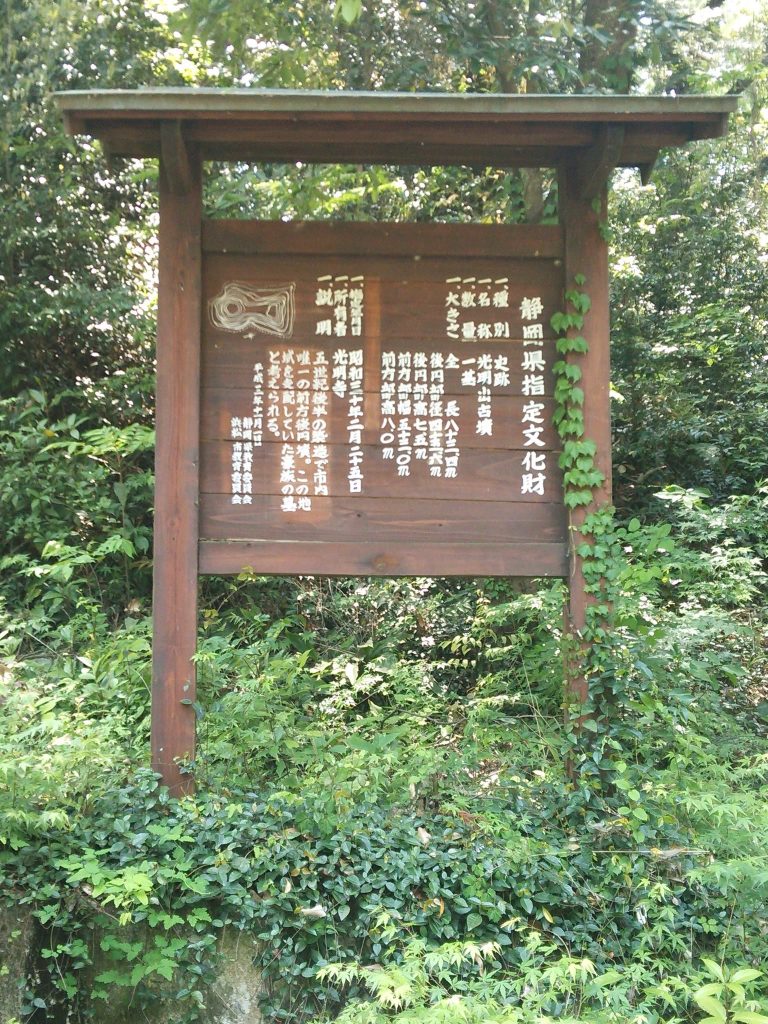
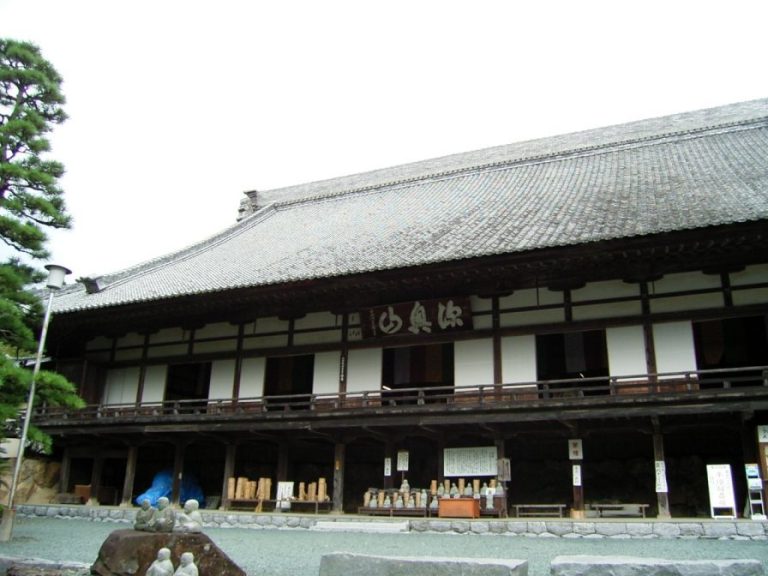
The name Akamonue derives from Ryūsen-in, a temple south of the tomb that is commonly known as Akamon-ji. The mound was designated a Shizuoka Prefecture Historic Site in 1979, and its excavated artifacts received collective designation as a Shizuoka Prefecture Tangible Cultural Property in 1990.
Excavation and preservation
Excavation took place from July 24 to August 7, 1961. Students from Shizuoka Prefectural Hamana High School, including members of its history club, participated for at least two days each. Parts of the mound had been damaged when air-raid shelters were dug during wartime, and evidence of earlier grave robbing was also found. The burial in the rear circular mound, however, remained intact. Excavation recovered a wooden coffin and numerous grave goods, bringing the burial’s regional connections and social standing into clearer view.
Remains
Mound and setting
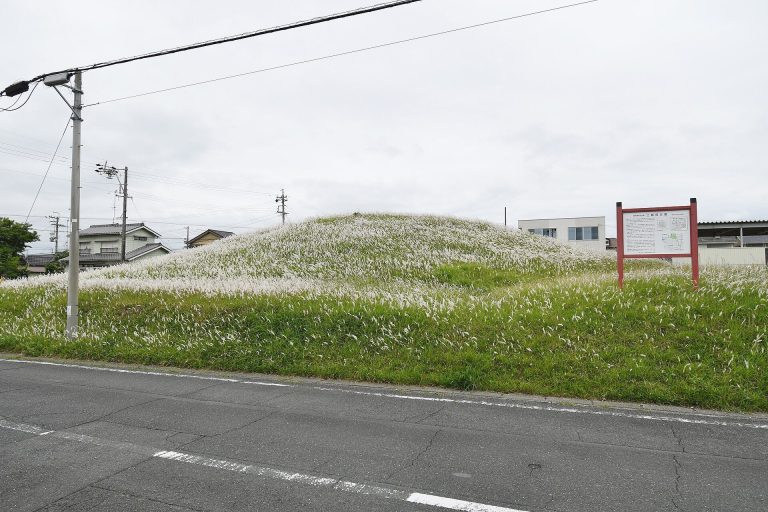
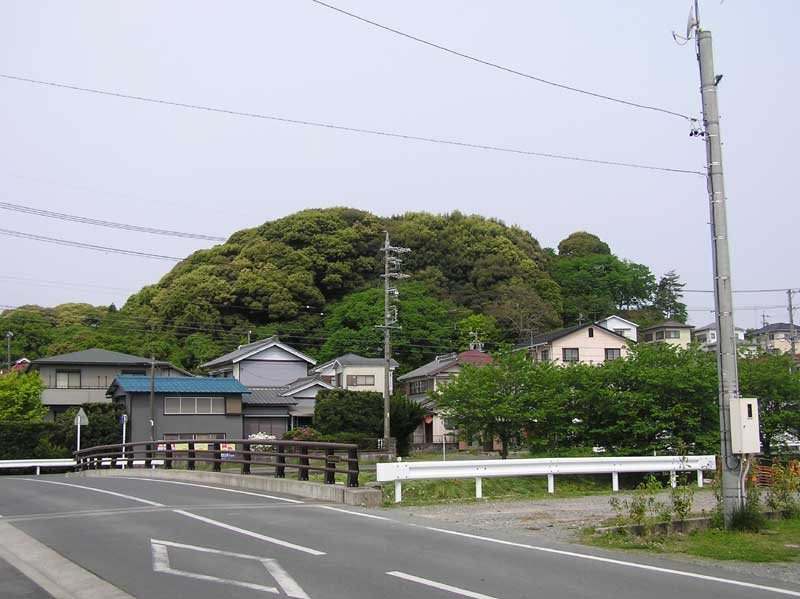
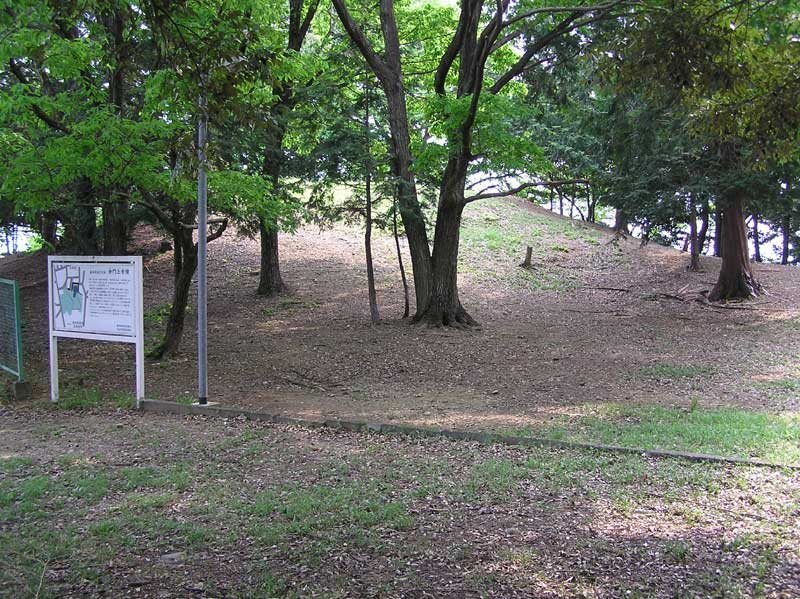
Akamonue Kofun has a keyhole plan, with a rectangular front section joined to a circular rear section. It measures 56.3 meters in length. The rear circular section is 36.2 meters in diameter and 4.9 meters high, while the front section is 14.7 meters wide and 1.15 meters high. Its low, narrow front is characteristic of early keyhole-shaped mounds.
The mound stands at an elevation of about 35 meters on the eastern edge of the Mikatagahara Plateau, on the Iwatabara Plateau east of the Tenryū River. The circular rear section lies at the northern end. Across pine woodland, the lowlands known as the Hamakita plain and the Iwatabara Plateau beyond the Tenryū River can be viewed from the mound. The southern and eastern sides form part of the wooded rear hill of Ryūsen-in, while residential development occupies the northern and western sides. Inariyama Kofun and Yamanoue Kofun lie several hundred meters to the northeast, and both remain unexcavated. Other burial mounds also survive nearby.
Burial and coffin
The burial was a direct earth burial, in which the coffin was placed directly in the ground rather than inside a separate stone chamber. The coffin, made from camphor wood, measures 5.58 meters in length. It was produced by cutting lengthwise through a tree more than one meter in diameter, giving it a split-bamboo shape. Its interior was painted vermilion. U-shaped clay was placed at the northern end, possibly to provide support.
Grave goods
The principal bronze object is a triangular-rimmed mirror, an ancient mirror type with a raised triangular edge and decorated designs. Its surface carries a floral crest and motifs of the sun, moon, a heavenly king, and four beasts. The burial also contained one iron sword, one straight sword, six tubular jasper beads, 30 bronze arrowheads, 11 iron arrowheads, three iron axe heads, two spearheads, one knife, and two unidentified iron objects. The excavated metal objects further included an iron hoe and a billhook.
The bronze mirror and bronze arrowheads were covered with woven materials. The arrowheads are thought to have been wrapped in silk cloth, while the mirror was probably enclosed in a netted textile. Some of the excavated artifacts are displayed at the Hamakita Citizens’ Museum in the Hamakita Cultural Center, and a replica of the principal bronze mirror is displayed at the Information Plaza in Nayuta Hamakita.