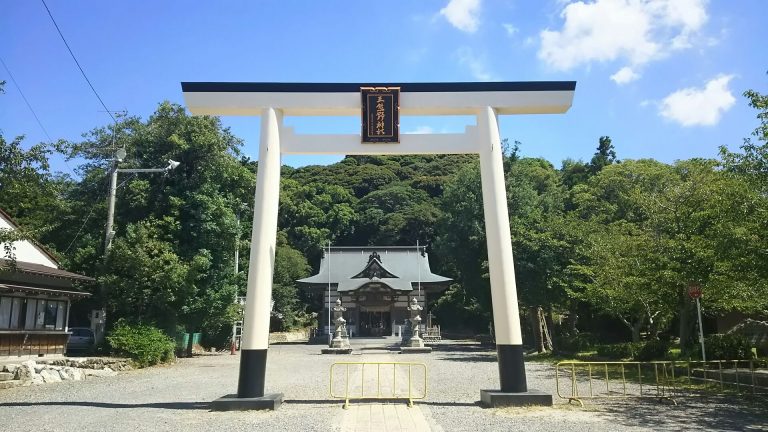
Kasui-sai: A Soto Zen Buddhist Temple in Fukuroi, Japan


Site at a Glance
- Rating
- 4.3
- Popularity
- Medium
- Country
- Japan
- Primary era
- Medieval
- External website
- Open
- Eras represented
- Medieval
- Civilizations
- Ashikaga shogunate
- Site type
- Religious
- Remains
- Monastery
On this page11 sections
History
Kasui-sai is a Soto Zen Buddhist temple in Fukuroi, Japan, founded in 1401 during the early Muromachi period by a Zen master. Soto is a major school of Zen Buddhism that emphasizes seated meditation and disciplined monastic practice. Originally called Toyoken, the temple later became associated with Tokugawa Ieyasu and acquired the name Kasui-sai through a story about its eleventh abbot.
Foundation and the Sleeping Abbot
The temple’s present name is linked to a meeting between the eleventh abbot and Tokugawa Ieyasu at Hamamatsu Castle. After Ieyasu invited the abbot there, the two reminisced until the abbot fell asleep. Ieyasu regarded this as evidence of their close and trusting relationship, saying that the abbot should sleep peacefully. The abbot subsequently became known as the “Sleeping Abbot,” and the temple gradually came to be called Kasui-sai.
Another tradition connects Kasui-sai with Ieyasu’s flight from the army of Takeda Shingen after the Battle of Mikatagahara. Takeda Shingen was a major sixteenth-century warlord whose forces fought Ieyasu during Japan’s civil wars. Ieyasu is traditionally said to have hidden in a cave on the temple grounds during the escape, preserving the episode within the temple’s historical memory.
Regional Soto Authority
Kasui-sai gained an important administrative role in 1583, when Ieyasu appointed it to the office of Sōroku. This office supervised Soto temples and clergy within a defined region, in this case the four provinces of Mikawa, Totomi, Suruga, and Izu. During the early-modern period, Kasui-sai established itself as the Great Sōroku of Tōkai, with authority comparable to that of the three major Soto temples known as the Kan-Sansatsu.
Religious Developments and Continuing Roles
In 1873, following the government’s separation of Buddhism and Shinto at Mount Akiha, Sanshakubo Daigongen was transferred to Kasui-sai. This religious manifestation associated with Mount Akiha was connected with protection against fire and disasters, giving the temple an additional protective role.
Kasui-sai is one of the Three Mountains of Enshu, the historical name for western Shizuoka Prefecture, and is the thirtieth temple on the Thirty-Three Kannon Pilgrimage of Enshu. The pilgrimage is a regional circuit devoted to Kannon, the Buddhist bodhisattva associated with compassion. Kasui-sai also functions as a Buddhist training institution with a monks’ hall. Its cultural-property holdings include registered tangible cultural properties, a prefecturally designated structure, and prefecturally designated calligraphic and craft works. A document bearing Takeda Shingen’s dragon seal is municipally designated as a cultural property and is not publicly accessible.
Remains
Temple Compound
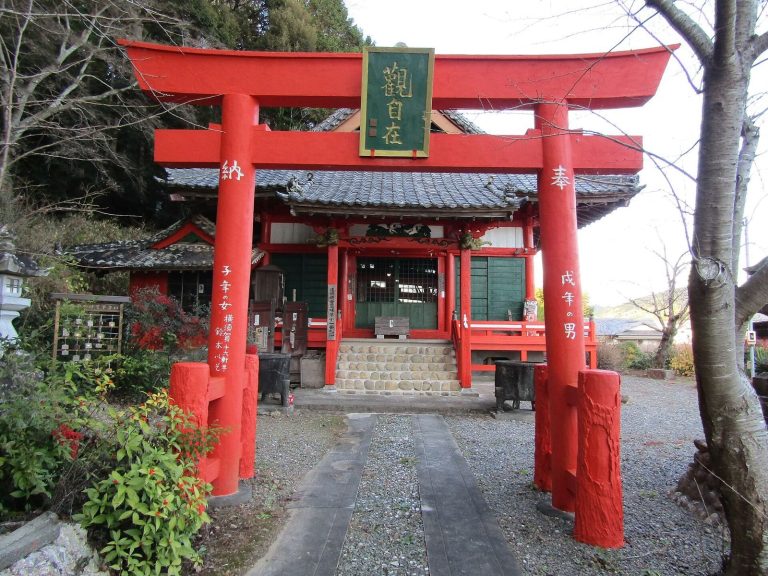
Kasui-sai bears the mountain name Banshozan and uses a crest showing three hollyhock leaves within a circle. Its principal image is the Sacred Kannon, a particularly revered form of Kannon. The main hall forms part of the temple complex, while the compound also includes buildings and features associated with religious practice and the temple’s cultural history.
Zuiryukaku
Zuiryukaku is one of the structures within the compound and is a registered tangible cultural property, a Japanese designation for historically or artistically significant structures and objects entered on a national register.
Temple Lavatory
A building identified as the temple lavatory is also part of the compound. It is included among Kasui-sai’s registered tangible cultural properties, preserving a functional element of the historic temple environment.
Gokoku Tower
Gokoku Tower stands within the temple grounds as a designated cultural-property building. It forms part of the surviving architectural group associated with Kasui-sai.
Six-Character Cave
The cave associated with Ieyasu’s flight from Takeda Shingen’s army survives on the temple grounds. It is known as the Six-Character Cave of Advancement and remains a physical feature connected with the tradition surrounding Ieyasu’s escape after the Battle of Mikatagahara.
Monastic and Garden Areas
A monks’ hall forms part of Kasui-sai’s facilities for religious training, reflecting the temple’s continuing role as a Buddhist training institution. On the hills east of the temple, Kasui Lily Garden covers approximately 100,000 square metres. The garden contains about two million lilies representing 150 varieties, and peonies are also noted for their beauty in early summer.