Tenno-no-mori Kofun: A Kofun-Period Burial Mound in Kyoto
Site at a Glance
- Rating
- 4.1
- Popularity
- Very Low
- Country
- Japan
- Primary era
- Classical
- External website
- Open
- Eras represented
- Classical
- Civilizations
- Yamato
- Site type
- Burial
- Remains
- Burial Mound
On this page8 sections
History
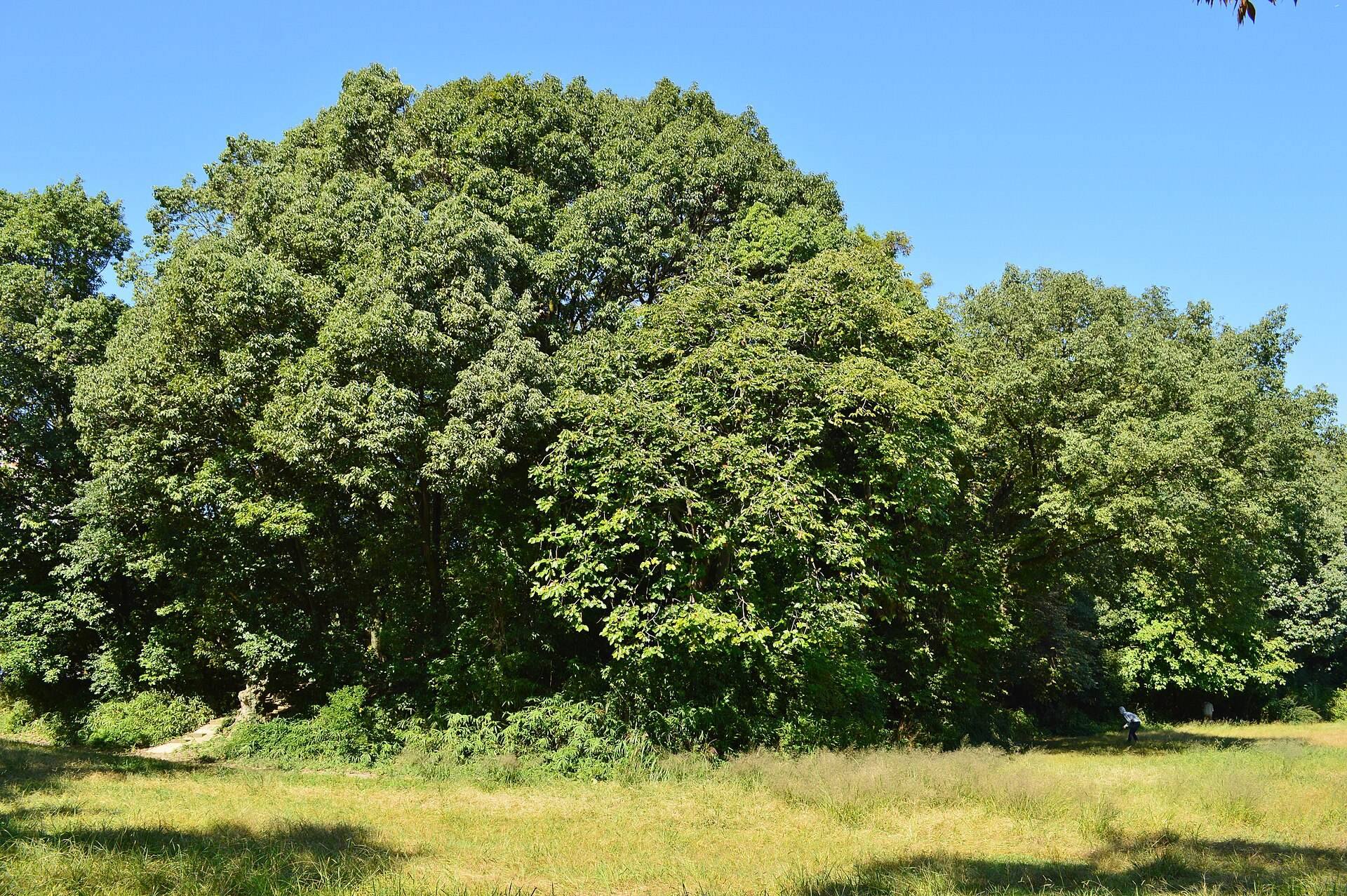
Tenno-no-mori Kofun is a Kofun-period burial mound in Kyoto, Japan, built by the society of the Kofun period around the end of the fourth century or the beginning of the middle Kofun period. Standing at the foot of a hill on the right bank of the Katsura River, along the western edge of the Kyoto Basin, it is regarded as the burial place of a powerful leader who controlled this part of the riverbank.
Construction and Regional Power
The mound was created as chief tombs in the Mukoh Hills were changing from keyhole-shaped monuments to round mounds. Its large keyhole form therefore provides evidence for the political conditions of the area and points to the regional importance of the person buried there. The identity of that individual remains unknown because the burial facility inside the mound has not been investigated.
Medieval Tradition
From the medieval period, local tradition identified the mound as the tomb of Emperor Montoku, who ruled from 850 to 858 during the Heian period, the era of the imperial court based at Heian-kyo, later known as Kyoto. The name Tenno-no-mori, meaning the emperor’s grove, and the surrounding place name Goryo are traditionally understood to reflect this belief. The tradition remains distinct from the archaeological interpretation, which does not identify the buried person.
Protection and Archaeology
Tenno-no-mori Kofun became a National Historic Site on March 8, 1922. In 2016, it was incorporated into the Otokuni Kofun Cluster, a group of burial mounds designated together as a national historic site in southern Kyoto Prefecture. The cluster includes the previously designated Igeyama Kofun and Terado-Otsuka Kofun, together with eight additional mounds, while the national designation of Tenno-no-mori Kofun continues. The surrounding land was acquired for public ownership in 1981 and 1982. Excavations followed in 1988 and 1989, and the mound was conserved and developed as a historic park that opened in 1994.
Remains
Mound Form and Dimensions
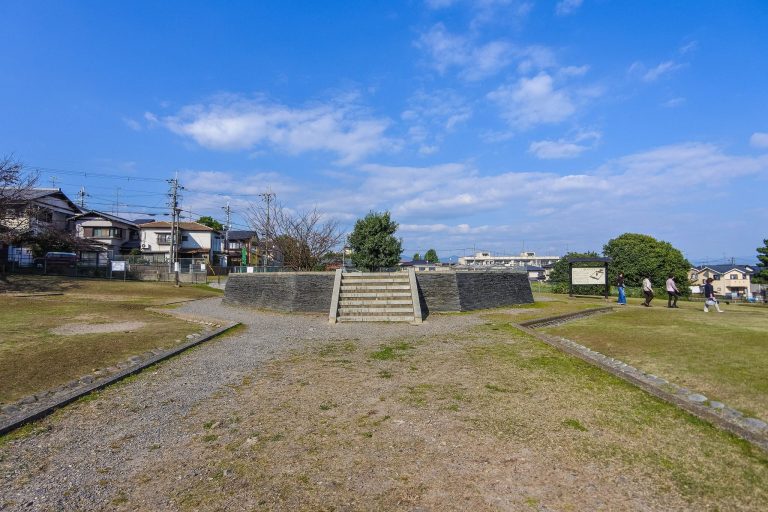
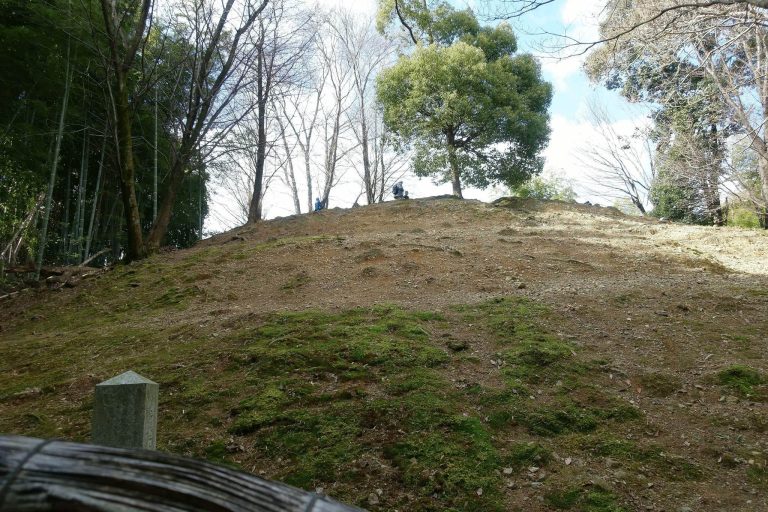
Tenno-no-mori Kofun is a keyhole-shaped mound, a burial monument combining a circular rear section with a rectangular projecting front. It is aligned toward the south-southeast and measures approximately 83 meters overall. The front section does not broaden toward its outer end, giving the mound a mirror-handle form. Its two-tiered circular rear section is 50.5 meters wide and 7.2 meters high, while the two-tiered rectangular front section is 33.5 meters wide and 4.8 meters high.
Surface Construction
The mound was built in two tiers. Fukiishi, stones laid over an earthen mound to protect and stabilize its surface, covered parts of the exterior. Rows of haniwa, clay objects placed on or around burial mounds, also stood on the mound. The surviving forms include cylindrical haniwa and morning-glory-shaped examples. A boundary resembling a moat has been recognized around the mound.
Burial Area and Preservation
The burial facility remains unexcavated, so its structure and the identity of the person buried within it are unknown. The mound itself survives in good condition and forms the principal physical feature of the historic park. Its preserved two-tiered profile, surface stones, and haniwa provide the main visible evidence of the monument’s construction and its place within the Kofun-period landscape.