Tennei-ji Temple: A Soto Zen Monastic Center in Aizuwakamatsu

Site at a Glance
- Rating
- 4
- Popularity
- Low
- Country
- Japan
- Primary era
- Medieval
- Eras represented
- Medieval, Modern
- Civilizations
- Unclassified
- Site type
- Religious
- Remains
- Monastery
On this page8 sections
History
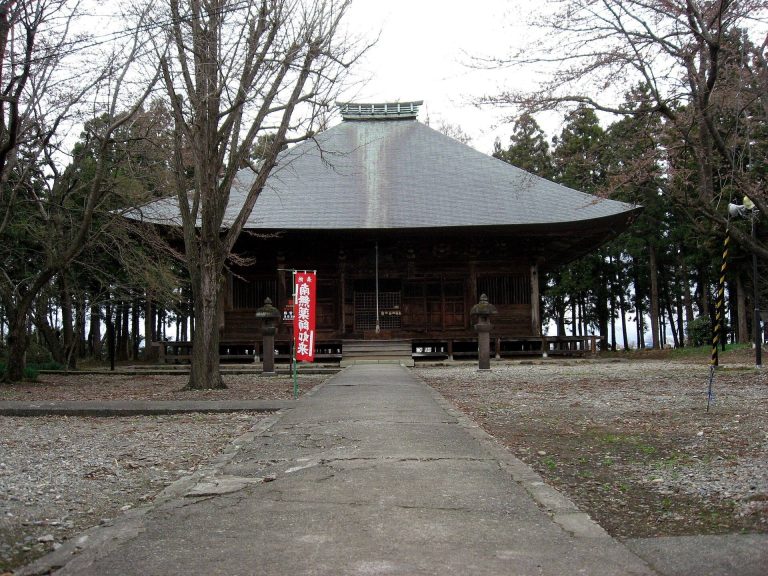
Tennei-ji Temple is a Soto Zen temple in Aizuwakamatsu, Japan, founded in 1447 in Higashiyama, Aizu Kurokawa, by Ashina Morinobu for the Zen master Nanei Kenshu. Ketto Nosho served as its invited founding abbot, the monk appointed as the new temple’s first religious leader. Named Banshozan, the temple became an important religious institution in the Aizu region.
Foundation and Ashina Patronage
Soto Zen, a major Japanese school of Zen Buddhism centered on seated meditation called zazen, gave Tennei-ji its religious identity. The temple later served as the Soto Zen monastic registrar’s office for Aizu, supervising aspects of the Buddhist clergy and affiliated temples. It was said to oversee 33 branch temples and 12 monastic training halls, while about 1,000 itinerant monks were housed there at its height.
Tennei-ji became the Ashina family’s ancestral temple as the medieval warrior family consolidated its rule in Aizu. Ashina Moriuji, a sixteenth-century head of the family regarded as a major figure in establishing Ashina regional power, is recorded as having donated 100 kan of coins to the temple.
Conflict and the Ashina Succession
The death of Ashina Kameomaru in 1586 ended the Ashina bloodline and sharpened the struggle between the Date and Satake families for control of Aizu. Satake Yoshishige’s second son, Yoshihiro, took the Ashina name after marrying Ashina Moritaka’s daughter in 1587.
After the Ashina defeat at the Battle of Suriagehara in 1589, Date Masamune, a powerful late-sixteenth-century warlord, expelled Yoshihiro, later known as Ashina Morishige, from Aizu Kurokawa. Tennei-ji temporarily burned during the battle, disrupting the temple that had been connected with Ashina authority.
Connections with Kakunodate
Yoshihiro fled to Hitachi Province and later received Edosaki, assessed at 45,000 koku, from Toyotomi Hideyoshi. A koku was a premodern measure of agricultural production conventionally linked to the rice needed to support one person for a year. After the Battle of Sekigahara, Yoshihiro entered the Akita domain with his father, Satake Yoshishige, and brother, Satake Yoshinobu, in 1602. He changed his name to Yoshikatsu and received 16,000 koku in Kakunodate.
In Kakunodate, Yoshikatsu planned the town and established another Tennei-ji at the foot of Hanabayama, east of the castle town. It served as his family temple and as a branch of the Aizu temple. The Aizu, Kyoto, and Kakunodate temples consequently shared the name Banshozan Tennei-ji. Although the Aizu temple lost Ashina patronage, local people continued to support and maintain it, allowing the institution to survive into the modern era.
Memorials to the Shinsengumi
A grave at the rear of the temple is associated with Kondo Isami, commander of the Shinsengumi, a special police force loyal to the shogunate during the Boshin War of 1868–1869. The conflict ended the Tokugawa shogunate and established imperial rule. Tradition holds that Hijikata Toshizo, the Shinsengumi’s vice-commander, buried part of Kondo’s remains at the site.
A memorial festival for Kondo takes place at the grave on April 25, his death anniversary. A stone memorial to Hijikata stands beside Kondo’s gravestone. It replaced an earlier wooden memorial, and a new stone was erected in 2020.
Remains
Tennei-ji stands in the Ishiyama-Tennei area of Higashiyama, Aizuwakamatsu, Fukushima Prefecture. The surviving physical evidence includes foundation stones from the pre-1589 main hall and memorial features at the rear of the temple grounds.
Main Hall Foundations
The foundation stones represent the pre-1589 main hall, whose temple fabric was affected by the fire during the Battle of Suriagehara. They preserve a physical link to the Aizu temple before that conflict and to the period when Tennei-ji was associated with the Ashina family.
Kondo and Hijikata Memorials
Behind the temple grounds, Kondo Isami’s grave is accompanied by a stone stele commemorating Hijikata Toshizo. The grave and adjoining memorial preserve the site’s association with the Shinsengumi and with the tradition concerning the burial of part of Kondo’s remains.