Tenmondai-Kōnai Kofun: A Terminal Kofun-Period Burial Mound in Japan
Site at a Glance
- Rating
- 3.6
- Popularity
- Very Low
- Country
- Japan
- Primary era
- Medieval
- External website
- Open
- Eras represented
- Medieval
- Civilizations
- Yamato
- Site type
- Burial
- Remains
- Burial Mound
On this page8 sections
History
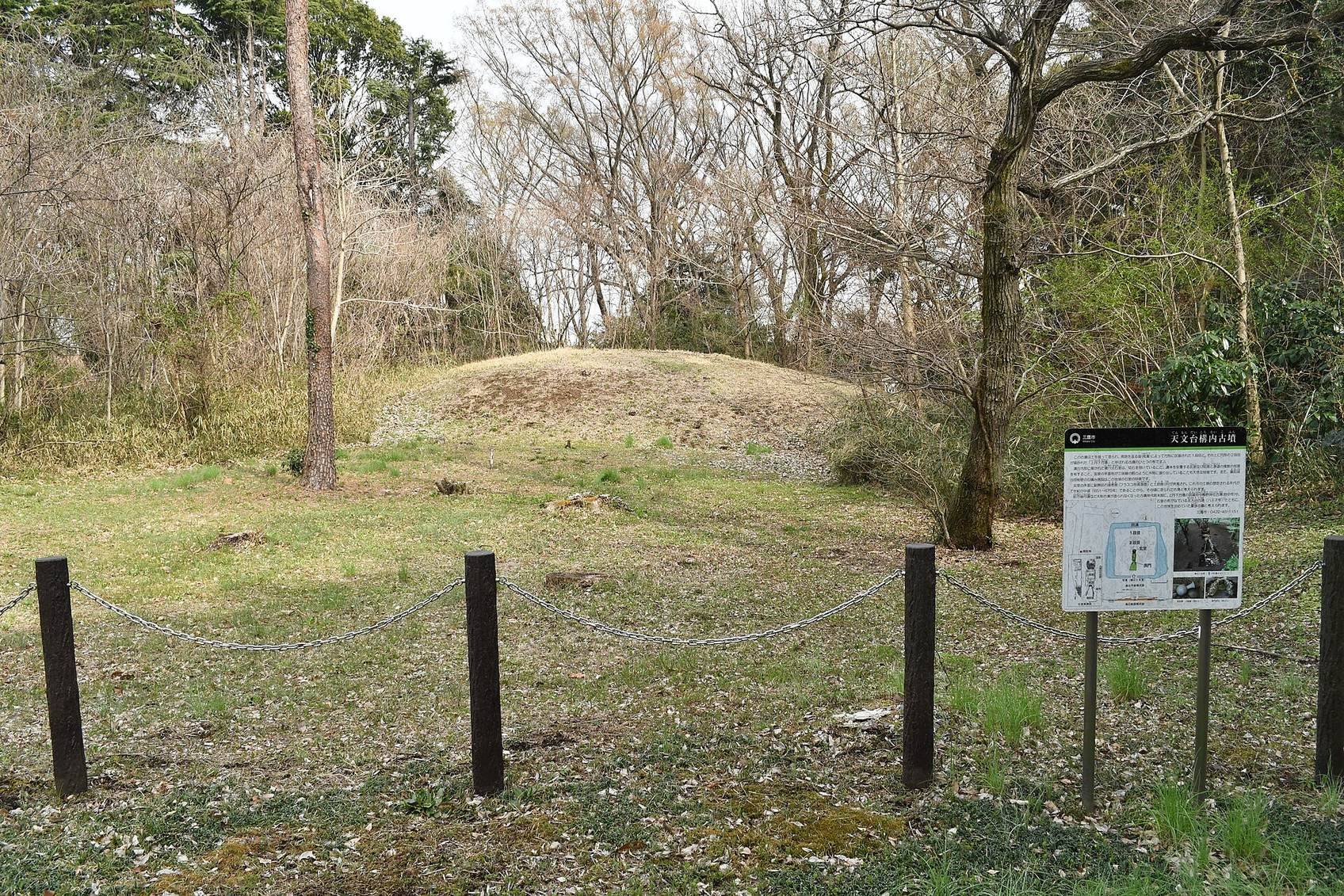
Tenmondai-Kōnai Kofun is a Japanese burial mound in Mitaka, Japan, constructed during the third quarter of the seventh century, in the terminal phase of the Kofun period. The Kofun period was an era of elite mound burial before the fully developed centralized state. The monument occupies the Mitaka Campus of the National Astronomical Observatory and is associated with the powerful local leadership of the Tama region.
From Fuji Mound to Kofun
Late-Edo-period geographical works described the mound as a Fuji mound rather than as a kofun, the Japanese term for a burial mound. Women were forbidden to climb it, and local tradition held that it had once served as a lookout in the falconry grounds of the Kofu lord. The mound’s burial function was established only after an excavation in 1970 by the Mitaka City History Compilation Committee revealed a horizontal stone chamber, a burial chamber entered through a passage.
The 1970 investigation did not bring the site to wider academic attention, and Tenmondai-Kōnai Kofun remained little known for several decades. Confirmation surveys of kofun in the Tama region by the Tokyo Metropolitan Board of Education between 1992 and 1994 changed that situation. The resulting report introduced the monument to academic circles, prompting further examination of its unusual form and stone chamber.
Research and Dating
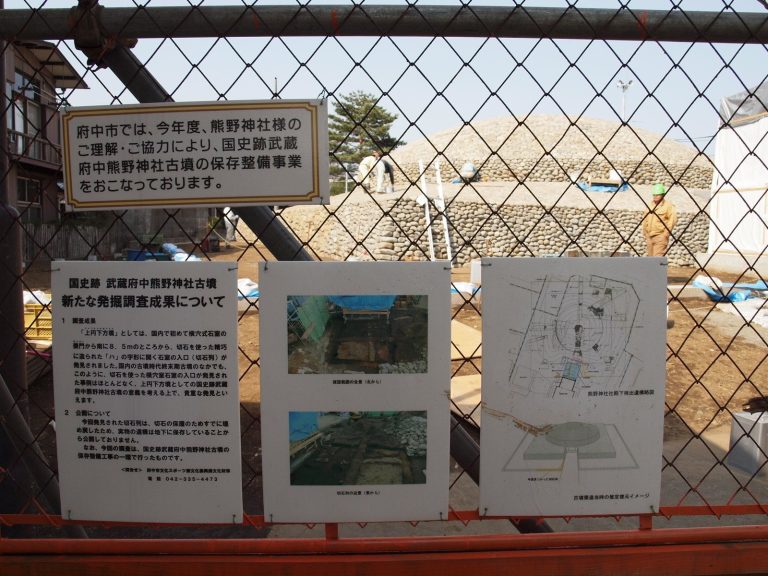
Interest increased after excavations began in 2003 at Musashi-Fuchu Kumano Shrine Kofun, whose horizontal stone chamber closely resembles that of Tenmondai-Kōnai Kofun. Continuous excavation and research at Tenmondai-Kōnai Kofun followed from fiscal year 2004. A mound survey took place in December 2004. Excavation in February 2006 clarified the chamber’s complete multiple-room arrangement and its rounded, bulging burial chamber, while a further investigation in November of that year examined the mound and its surrounding moat.
Work in October and November 2007 established that Tenmondai-Kōnai Kofun was the fourth known example in Japan of an upper-circular, lower-square kofun. In this form, a circular mound is combined with a square lower section or enclosing arrangement. At Tenmondai-Kōnai Kofun, the circular mound is enclosed by a square moat rather than resting on a raised, stone-faced square platform. This distinction has led to the alternative classification “square-base circular mound.”
An excavation in August 2008 recovered a Sue ware jar and a Haji ware bowl from the burial chamber. Sue ware was a high-fired ceramic associated with elite and ritual contexts, while Haji ware was a lower-fired earthenware used for vessels and funerary purposes. Both objects are considered to date from the third quarter of the seventh century, broadly supporting the construction date inferred from the form of the chamber.
A Regional Elite Tomb
Tenmondai-Kōnai Kofun is regarded as a terminal Kofun-period tomb. Its multiple-room, bulging-chamber design can be compared with the tombs at Musashi-Fuchu Kumano Shrine and the Kofun at Kitaotani, and its construction is commonly placed slightly after Musashi-Fuchu Kumano Shrine Kofun. In scale and form, it is considered second only to Musashi-Fuchu Kumano Shrine Kofun among the major kofun of the Tama region.
Multiple-room, bulging-chamber tombs are especially common in the Chikugo area of northern Kyushu from the late sixth century onward. One interpretation proposes that the design spread under northern Kyushu influence and began to be used from the end of the sixth century in northern Musashi and along the Tama River in southern Musashi. The exceptionally large tombs of this type in the Tama region are understood as burial forms adopted for powerful local leaders.
Numerous tunnel tombs, which are side-entered rock-cut or underground burial facilities rather than large raised mounds, were built near the kofun from the middle or later seventh century onward. Tenmondai-Kōnai Kofun is therefore considered the burial place of a powerful Tama leader who stood above the groups responsible for constructing those tombs. It lies within the Tenmondai-Kōnai archaeological site, a multi-period area containing remains from the Paleolithic period through the early modern period. Abundant springs and water resources around the site supported settlement over a long span of time.
Remains
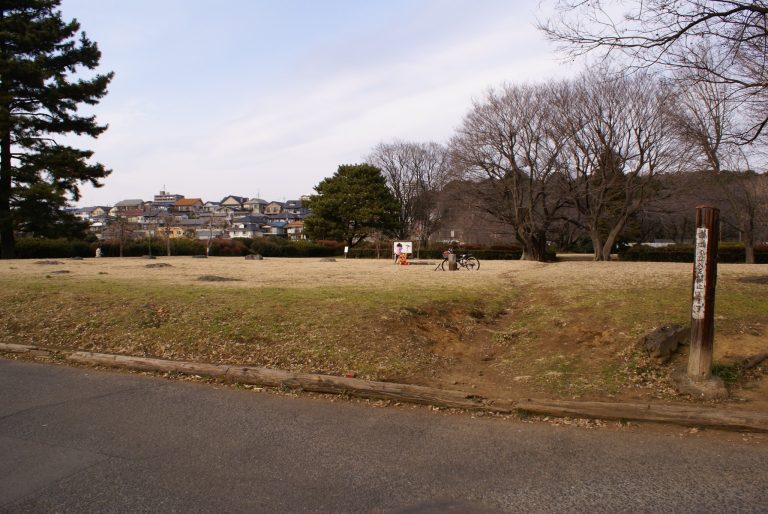
Tenmondai-Kōnai Kofun stands at the edge of the Musashino Upland. The Kokubunji Cliff Line, a river-terrace escarpment formed along the Nogawa River valley, extends from the northwest toward the southeast of the mound, while a tributary valley lies to its east. A smaller valley is situated south of the mound, where the ground is somewhat lower. Tunnel-tomb groups occur around the kofun, including along the nearby valleys.
Mound and Moat
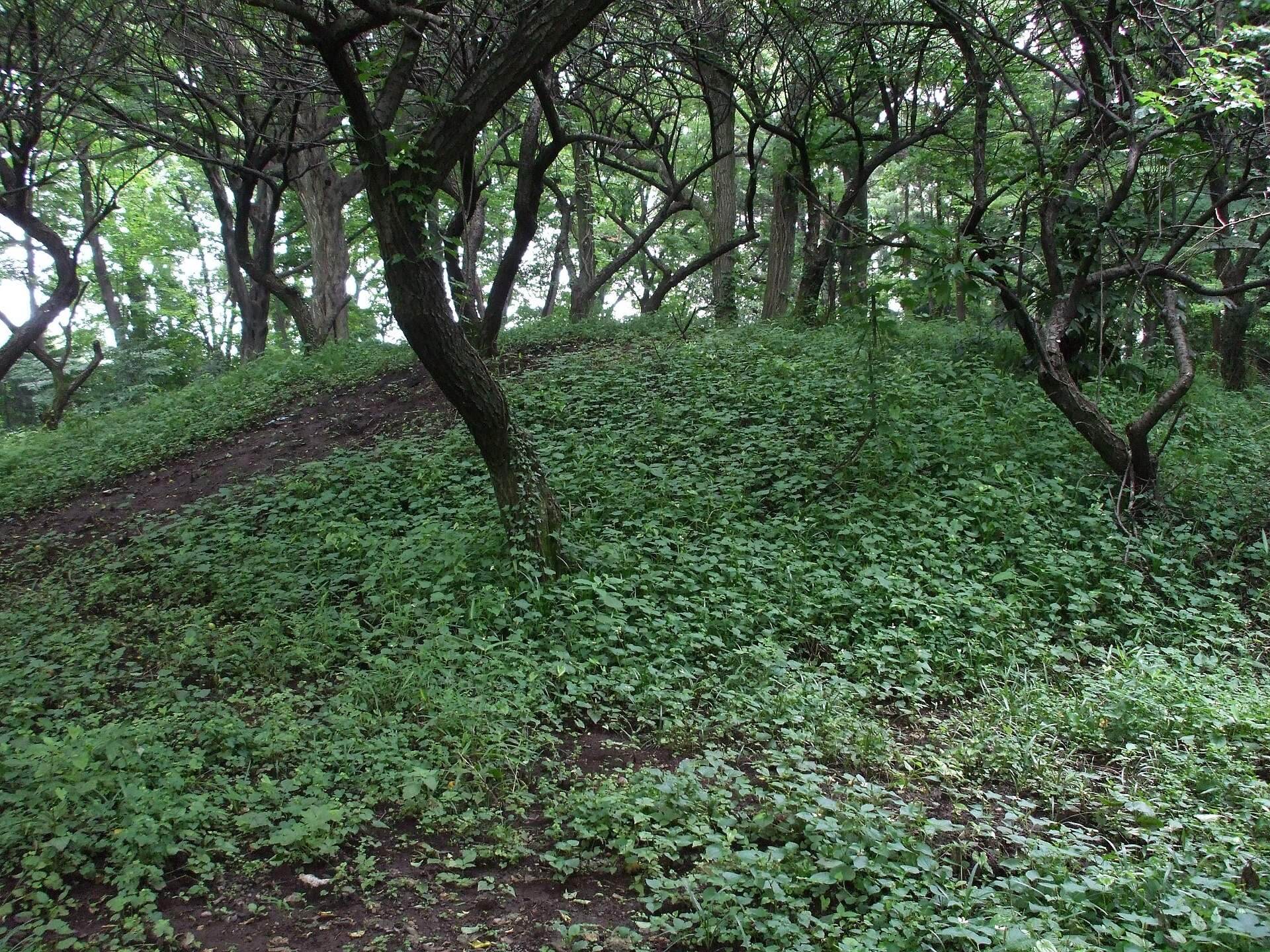
The monument combines a square lower section with a circular upper mound. The lower section measures approximately 27 to 28 metres on each side. Above it, the circular mound is about 18 metres in diameter and survives to a height of 2.2 metres; its original height is estimated at roughly 3.7 metres. Stone facing survives on parts of the mound and may originally have covered the whole structure.
The mound was formed with rammed earth, a technique in which soil is compacted in successive layers. Alternating layers of Kanto loam and black soil were pressed together to create the body of the monument. A moat runs along the east, north, and west sides, reaching a maximum width of 7.5 metres and a maximum depth of 1.8 metres. Its width and depth vary, and the presence of a moat along the southern side remains uncertain. The square moat around the circular mound gives the monument its proposed square-base circular classification.
Horizontal Stone Chamber
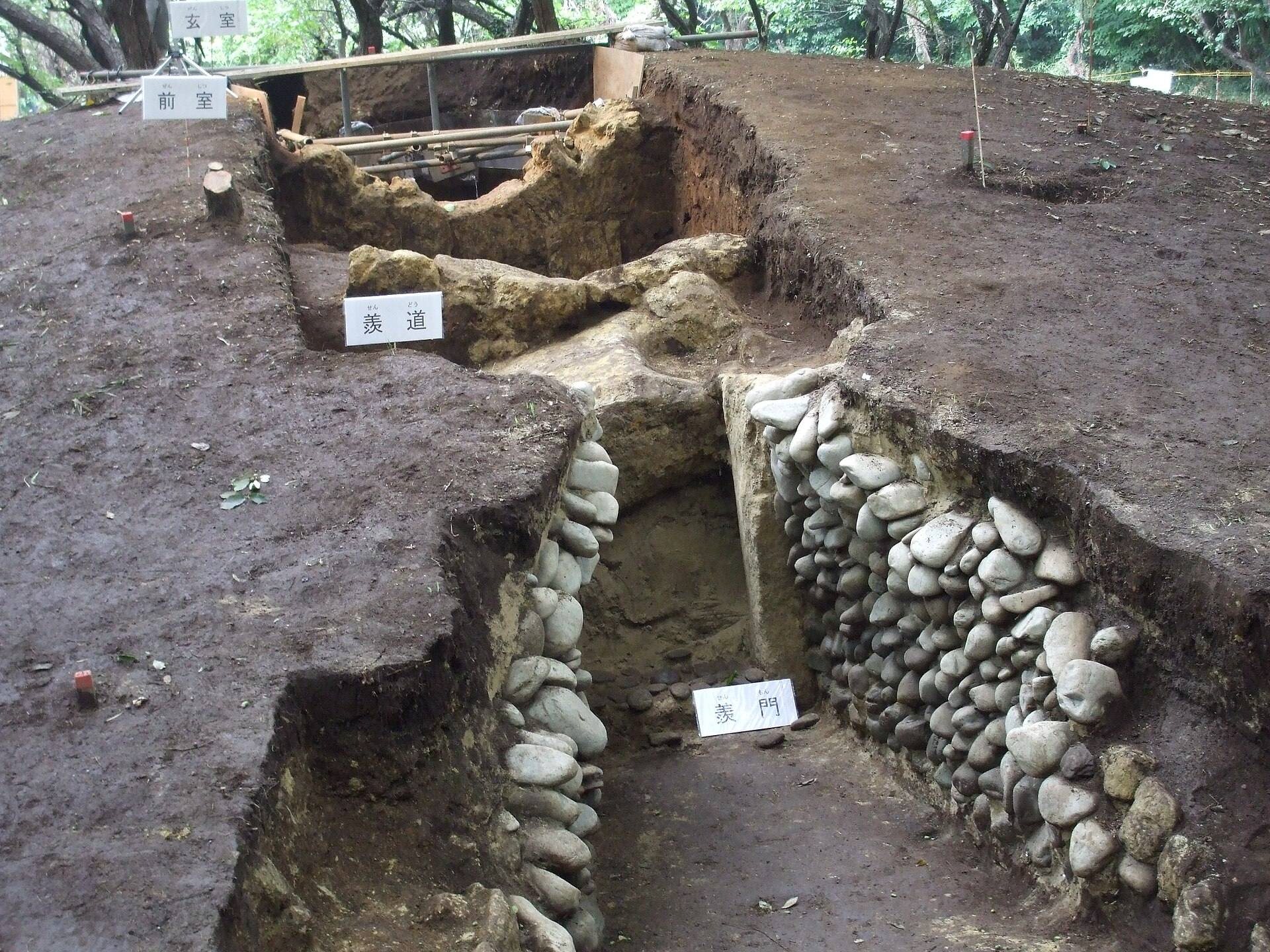
The burial facility is a horizontal stone chamber approximately 6.9 metres long. It consists of an entrance passage, a front chamber, and a burial chamber, creating a multiple-room plan. The space before the chamber opens in a V-shaped form. The burial chamber has a rounded, bulging plan and was built from extremely soft siltstone blocks, a fine-grained sedimentary rock. River stones paved its floor.
The foundation trench beneath the chamber extends about 40 centimetres into the ground, substantially less than the more than 1.5 metres recorded at Musashi-Fuchu Kumano Shrine Kofun. The burial chamber’s form was clarified in 2006, after the 1970 excavation had revealed the horizontal chamber without identifying the burial chamber itself. All ceiling stones have collapsed, and earth now fills the chamber. Excavation inside it took place during fiscal year 2008, while investigation of the main burial facility remains incomplete.
Recovered Ceramics
The excavated material includes Sue ware and Haji ware recovered from the moat and burial chamber. The burial chamber produced the Sue ware jar and Haji ware bowl dated to approximately the third quarter of the seventh century. Their date and funerary context help connect the surviving chamber’s construction to the final phase of the Kofun-period mound-building tradition.