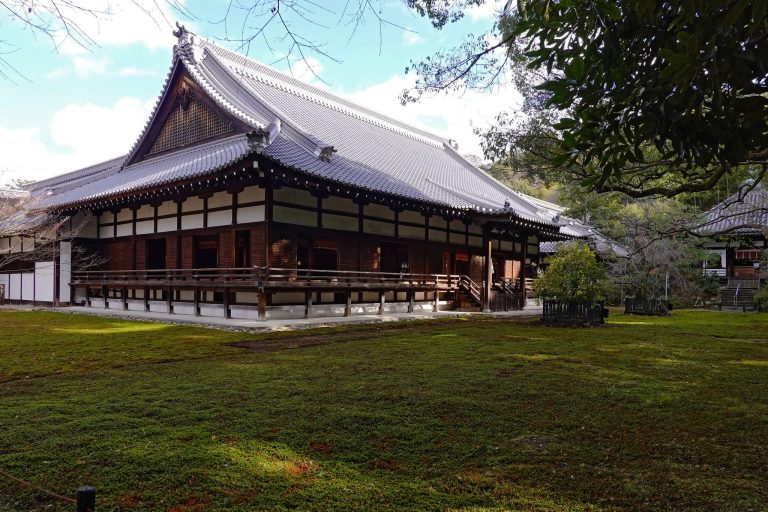
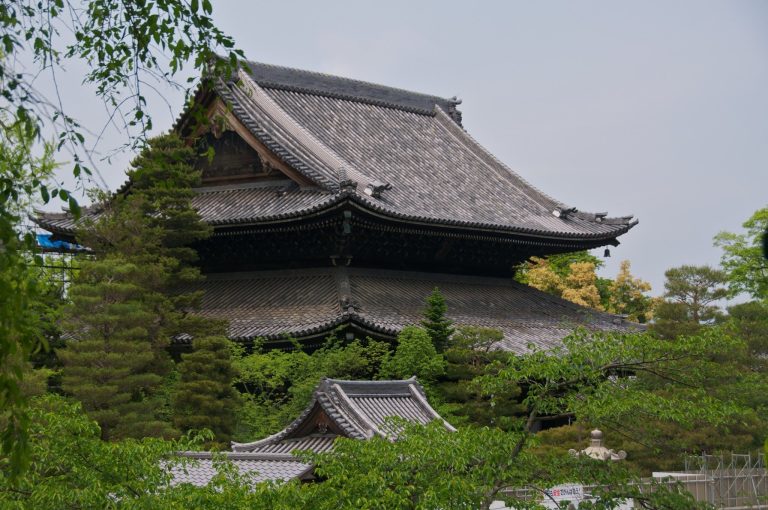
Tenju-an: A Rinzai Zen Memorial Temple in Kyoto


Site at a Glance
- Rating
- 4.6
- Popularity
- Medium
- Country
- Japan
- Primary era
- Unclassified
- External website
- Open
- Eras represented
- Unclassified
- Civilizations
- Unclassified
- Site type
- Religious
- Remains
- Monastery
On this page13 sections
History
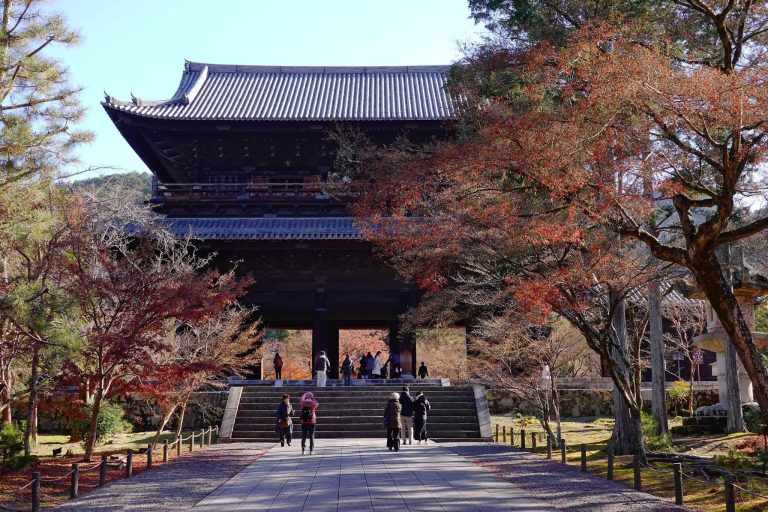
Tenju-an is a Rinzai Zen temple in Kyoto, Japan, founded in 1340 within the medieval Japanese Buddhist tradition. It belongs to the Nanzenji branch and functions as a subtemple, a temple institution historically affiliated with a larger head temple. Its mountain name is Zuiryuzan, and its principal image is Shakyamuni Buddha.
Foundation as a memorial temple
Tenju-an was established to commemorate Mukan Fumon, the founding abbot of Nanzenji. Mukan died at Ryogin-an, a subtemple of Tofukuji, in 1292. In 1339, Kokan Shiren, the fifteenth abbot of Nanzenji, received permission from retired Emperor Kogon to create a memorial temple for him. The institution was built for that purpose the following year.
Mukan Fumon was a prominent Zen monk. He is also known by the honorific title Daimei Kokushi, meaning “National Teacher of Great Illumination.” The temple’s foundation therefore linked its religious identity directly to the memory of Nanzenji’s first abbot.
Destruction and revival
Tenju-an was destroyed in fires that affected Nanzenji in 1393 and 1447. It was burned again during the Onin War, the civil conflict fought mainly in Kyoto from 1467 to 1477. The temple subsequently declined during the Sengoku period, an era of prolonged political and military struggle among regional powers.
Hosokawa Yusai revived Tenju-an in 1602. Yusai was a warrior, literary figure, and tea practitioner whose activity connected the temple’s later history with the cultural world of early modern Japan. Tenju-an is associated with Important Cultural Properties that include portraits, a Buddhist robe, and painted panels in the abbot’s quarters.
Remains
Tenju-an’s surviving cultural remains are centered on religious images, memorial portraits, a formal Buddhist robe, calligraphy, and painted panels in the abbot’s quarters. Together, these works preserve associations with Mukan Fumon, his teachers and successors, and the temple’s revival under Hosokawa Yusai.
Portraits and sculpture
Mukan Fumon
A wooden statue represents Mukan Fumon, also called Daimei Kokushi. A silk portrait of him carries his own inscription and was painted during his lifetime. It is described as the only surviving lifetime portrait of Mukan Fumon, giving the image a direct connection with the monk commemorated by Tenju-an.
Enni
A paper painting in ink with light colors depicts Enni, the teacher of Mukan Fumon. Enni, also known as Shoichi Kokushi, was a major Japanese Zen monk of the thirteenth century who studied in China. The image bears Enni’s own inscription and is considered one of the earliest surviving self-inscribed portraits of him.
Heiden Jikin
Two silk portraits depict Heiden Jikin, a Dharma disciple of Dozan Genjo and a successor in Mukan Fumon’s Dharma lineage. The portraits show Heiden in the final period of his life and are distinguished by finely detailed brushwork.
Hosokawa Yusai and Hosokawa Maria
Silk portraits depict Hosokawa Yusai and his wife, Hosokawa Maria. Yusai’s portrait bears an inscription by Ishin Sūden, a Zen monk who advised Tokugawa Ieyasu and took part in the early Tokugawa administration.
Painted panels and textile
Abbot’s quarters
The abbot’s quarters contain 32 paper panels painted in ink. Sixteen panels in the central room present Zen-themed scenes, while eight panels in the upper room depict the Four Sages of Shangshan, four legendary recluses associated with ancient China. Eight panels in the lower room show pine trees and cranes.
Nine-panel Buddhist robe
A nine-panel kesa, the patchwork robe worn by Buddhist monastics, is traditionally said to have belonged to Mukan Fumon. It is also said to have been given to him by his teacher during his stay in Song China. The robe combines patterned damask in its field sections with dark-blue satin in its strip sections, and its embroidery represents sacred figures, flowers, and birds.
Calligraphy
Tenju-an also preserves a calligraphic work titled Tenba fu by Ike Taiga, an eighteenth-century Japanese painter and calligrapher. The work copies Tianma fu, a composition by Mi Fu, the celebrated Northern Song painter and calligrapher.