Temple of Apollo at Pompeii: An Ancient Religious Sanctuary
Site at a Glance
- Popularity
- High
- Country
- Italy
- Primary era
- Classical
- Eras represented
- Iron Age, Classical
- Civilizations
- Roman, Samnite
- Site type
- Religious
- Remains
- Temple
On this page13 sections
History
The Temple of Apollo is an ancient sanctuary west of the Forum at Pompeii, Italy. Its origins may reach back to the eighth or seventh century BCE, while the earliest known temple building dates to the sixth century BCE. The sanctuary became one of Pompeii’s principal religious centers and was rebuilt in several successive periods.
Early worship and rebuilding
Before the first known temple was built, the site was an open-air place with altars. Apollo’s worship, brought from Greece, had taken root in Pompeii by the sixth century BCE. Etruscans who extended their power to the city around 525 BCE also adopted its Apollo cult. Apollo remained especially important until the mid-second century BCE, when Jupiter, chief god of Roman state religion, gained precedence. Apollo’s cult nevertheless continued to attract worshippers.
During the Samnite period, the temple was completely rebuilt on the order of Oppius Campanus, a quaestor, or magistrate whose duties commonly included financial administration. An inscription in Oscan, an Italic language spoken by the Samnites and neighboring peoples, names him in connection with the work. The temple’s principal form dates to the second century BCE, around 120 BCE.
Roman changes and the end of use
In the age of Augustus, Rome’s first emperor, who ruled from 27 BCE to AD 14, a wall was constructed to screen the sanctuary from nearby houses. It was later made narrower to create more space for the Forum. Games called the Ludi Apollinares were held in Apollo’s honor during this period. Their purpose is uncertain, though they may have sought the god’s protection for Pompeii or its commercial activities.
The earthquake of AD 62 severely damaged the temple. Repairs remained in progress when Vesuvius erupted in AD 79, and the sanctuary was out of use at the time of the eruption.
Rediscovery and heritage status
The temple was rediscovered along with the Forum in the early nineteenth century. Excavation began in February 1817. At first, the building was identified as the Temple of Venus and then as the Temple of Mercury; finds made during excavation helped establish its identity as the Temple of Apollo. The sanctuary forms part of the Archaeological Areas of Pompeii, Herculaneum and Torre Annunziata, inscribed on the UNESCO World Heritage List in 1997.
Remains
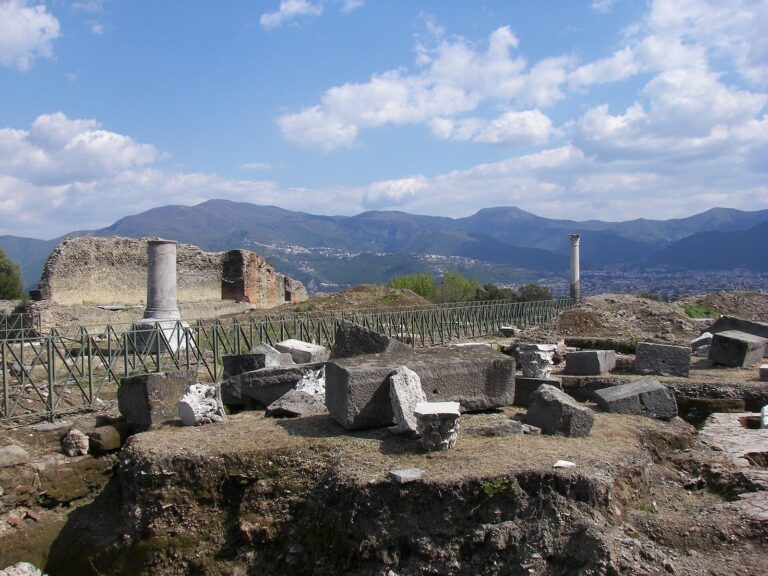
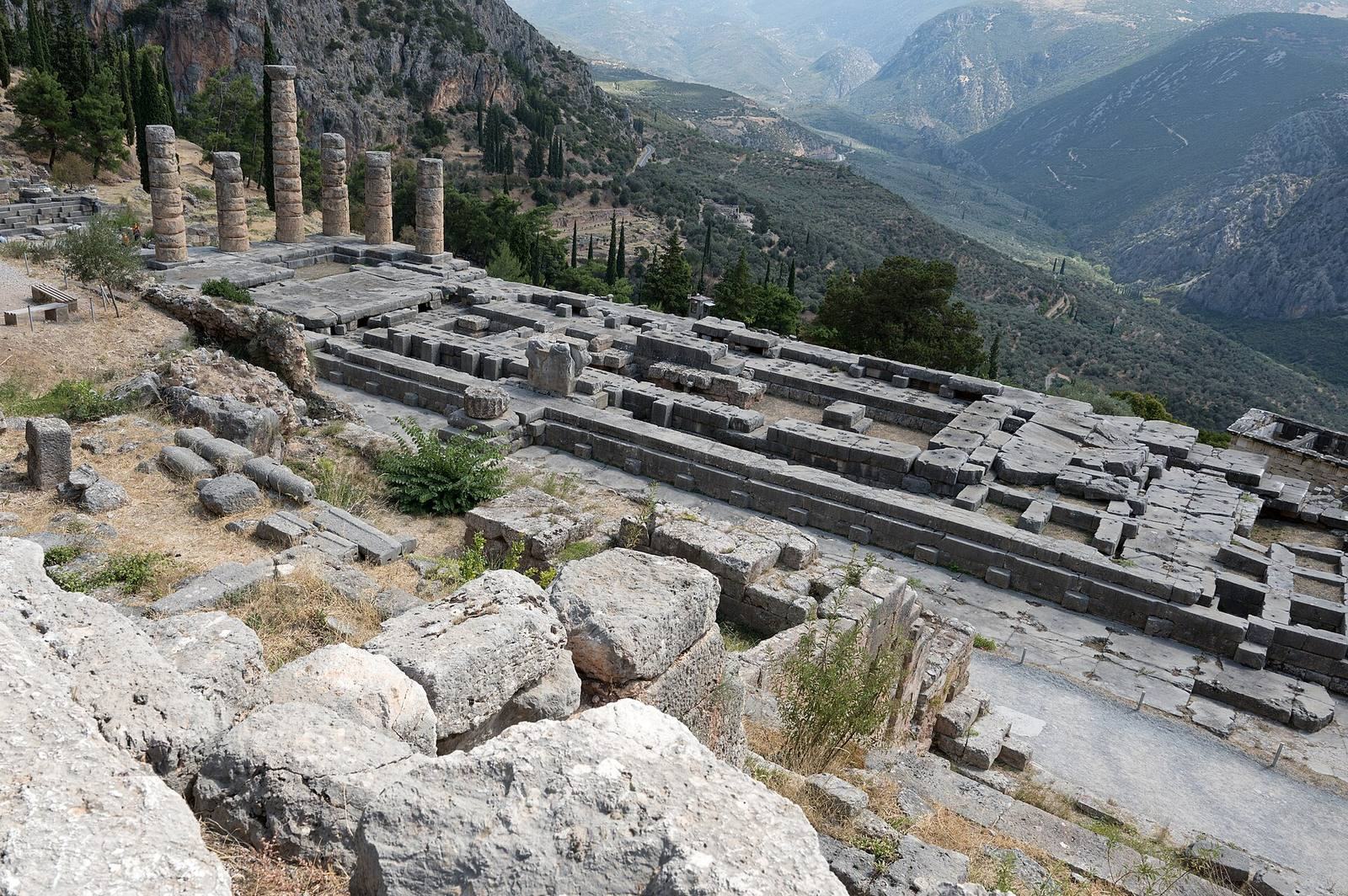
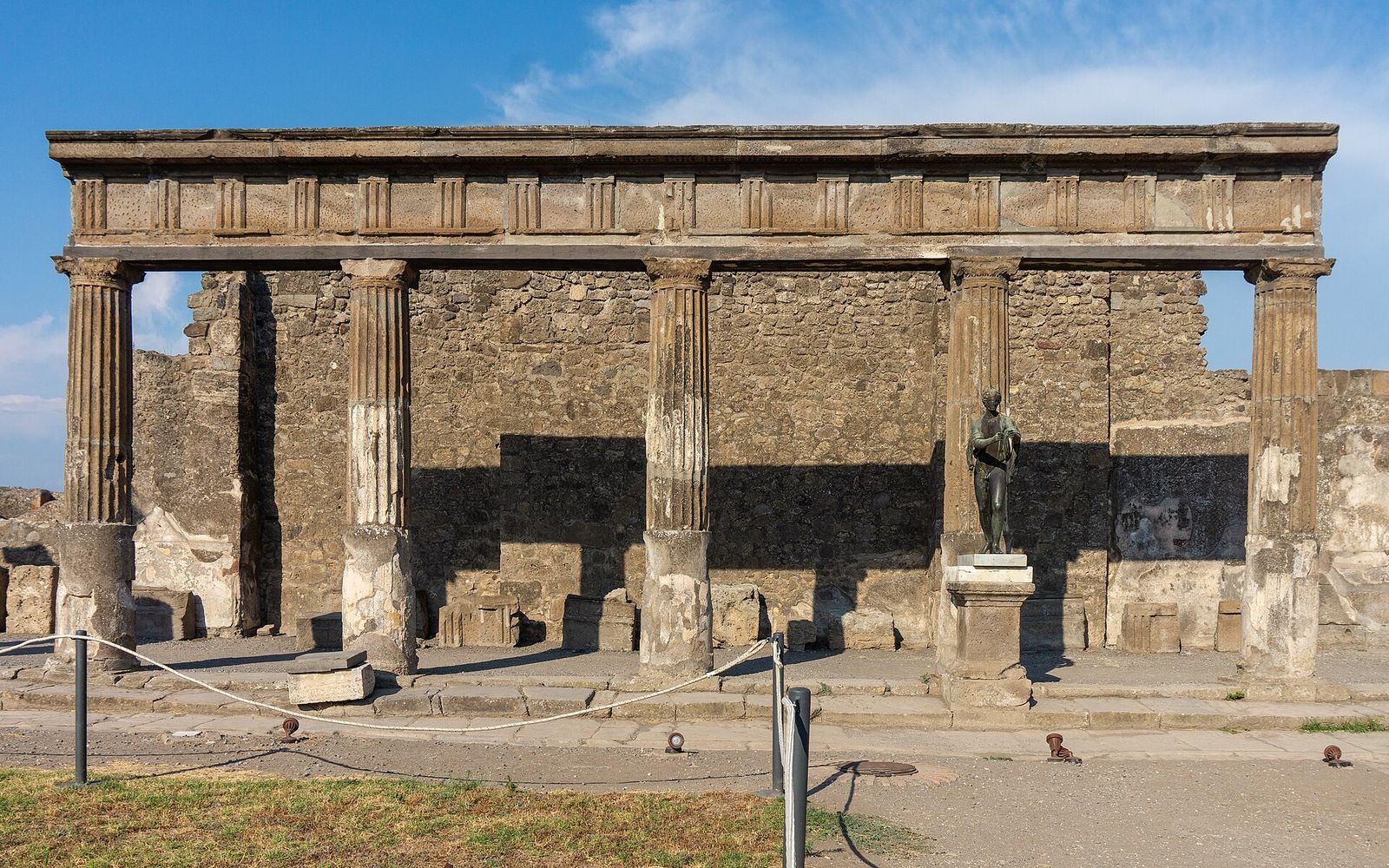
The sanctuary occupies a walled precinct in Pompeii’s southwestern quarter, west of the Forum. A courtyard enclosed the temple, which stood at its rear on a raised base. A colonnade framed the precinct, while surviving architectural details include stonework, stucco, painted surfaces and decorated paving.
Precinct and colonnade
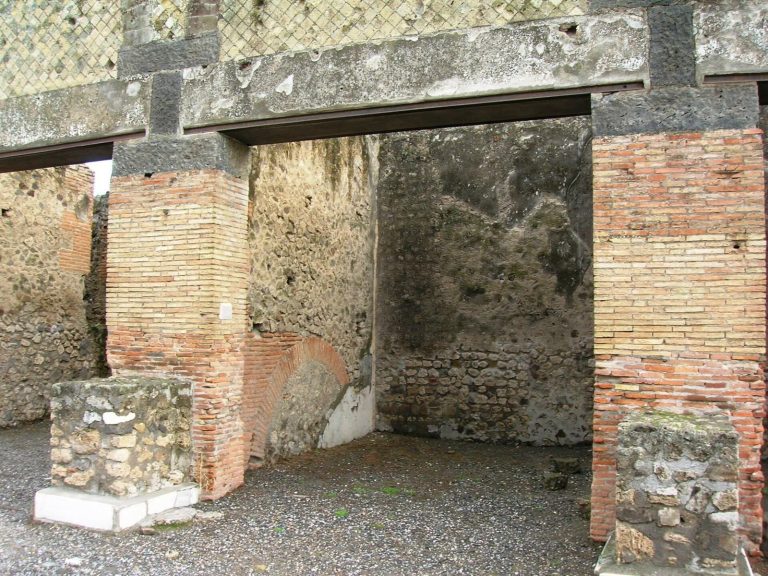
The enclosure wall was faced with irregularly set stones. About ten entrances are thought to have led into the precinct before later changes sealed them and turned them into niches. Frescoes in the niches depict episodes from the Trojan War. Around the courtyard stood 48 fluted columns of Nocera tuff. They originally had Ionic capitals with scroll-shaped tops; after the AD 62 earthquake, stucco columns with leafy Corinthian capitals replaced them. These were painted yellow, red and dark blue. The horizontal beam above the columns was first decorated with alternating panels and grooved blocks, then with griffins supporting leafy wreaths. A second, smaller tier of columns may have stood above it; those columns were removed during restoration after the earthquake.
Temple and ritual fittings
Temple building
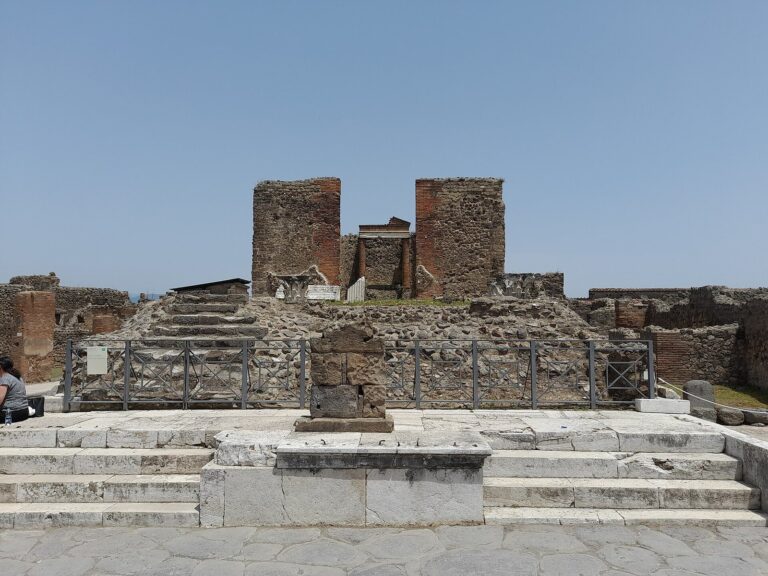
Steps led from the courtyard to the temple’s raised base. The building had columns around its central shrine, which was set back within the surrounding colonnade and shifted toward the sixth column rather than placed at the center. The base was first built of limestone and later remade in volcanic tuff.
Altar and sundial
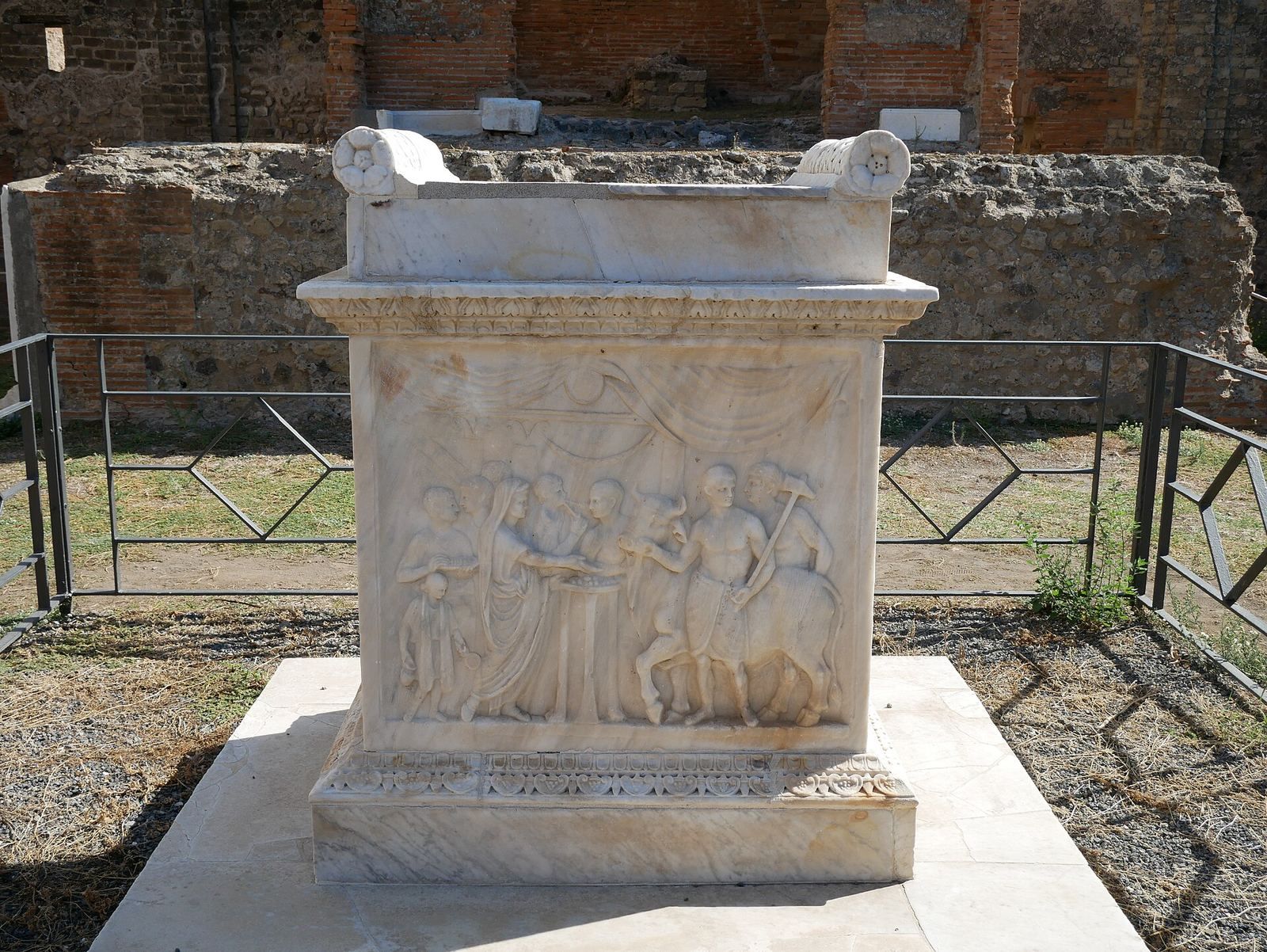
In front of the steps stands a white-marble altar on a travertine base. Its Latin inscription names the four magistrates who dedicated it. Beside the steps, an Ionic column with a scroll-shaped capital supports a sundial. An inscribed plaque records a donation by two magistrates.
Earlier sacred features and paving
To the left of the central shrine stood an omphalos, a sacred stone representing the world’s center, made from blocks of tuff. Two rectangular pieces of lava rock may have served as altars before the sixth-century BCE temple was built. The second-century BCE pavement combines white and green stones in a meander pattern with a strip of slate.
Sculpture and public measures
Statues and cult images
Statues once stood on pedestals in front of the portico colonnade. Finds include images of Venus and Hermaphroditus, a bronze Apollo shown as an archer, a young Hermes wearing a Greek cloak, and a bust of Artemis with a bow. The Apollo bronze was probably commissioned by Lucius Mummius after the destruction of Corinth in 146 BCE. Artemis was the Greek goddess whom Roman religion identified with Diana. The original statues are kept in the National Archaeological Museum of Naples; copies of the Apollo and Artemis images stand where the originals were found.
Official measures
A niche in the eastern enclosure wall, facing the Forum, held the mensa ponderaria, a public table used to check official measures. Its bench had nine holes of different sizes. The measures were first inscribed in Oscan, then erased and replaced with Roman standards.