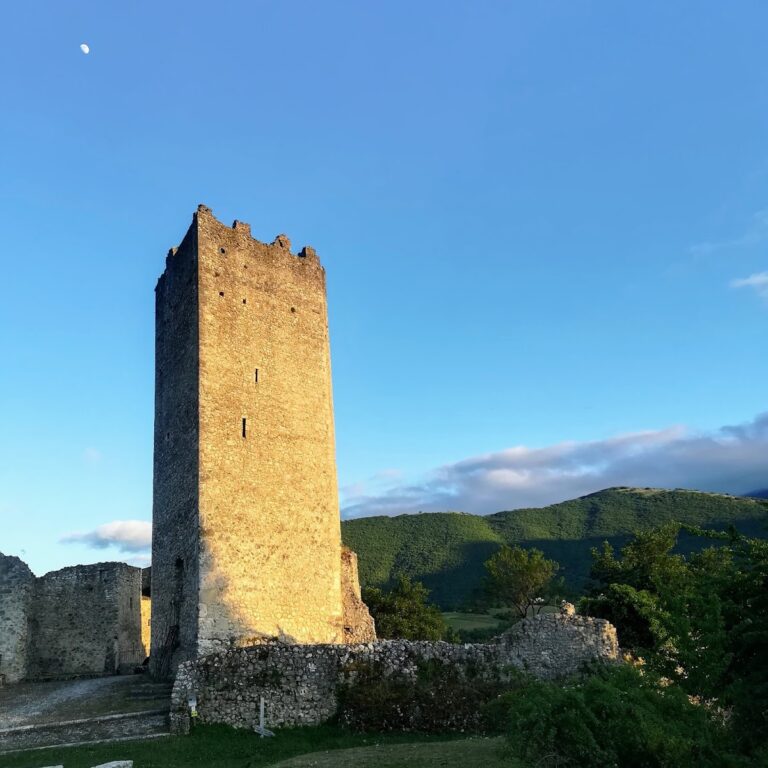
The Italic Temple at Castel di Ieri: A Pre-Roman Peligni Sanctuary
Site at a Glance
- Country
- Italy
- Primary era
- Classical
- Eras represented
- Classical
- Civilizations
- Roman
- Site type
- Religious
- Remains
- Temple
On this page12 sections
History
The Italic Temple at Castel di Ieri is a pre-Roman sanctuary in Italy near Goriano Sicoli, associated with the Peligni Superequani, a local community of the Peligni, an ancient Italic people of central Italy. Its phases extend from the fourth to the second centuries BC, and it served both religious and funerary purposes.
The earlier sanctuary
The sanctuary’s first temple, known as Temple B, dates to the fourth century BC. Votive objects associated with the building support this dating. Its successor, Temple A, was built in the second century BC using material from the earlier structure.
Temple A and its restoration
Temple A stood about two metres above Temple B and partly overlapped it, though the two buildings had different ground plans. In the following century, Temple A was given a more monumental form. Its dedication is uncertain, but one proposal identifies it as a temple to Jupiter, the principal god of Roman religion, in his aspect as bearer of the aegis, a divine protective emblem also associated with Minerva.
A floor inscription records a restoration undertaken by families whose members served as Roman magistrates. They belonged to the Sergia tribe, a civic grouping, and to the Sergia gens, a clan-like kinship group counted among Rome’s oldest.
Rediscovery
The site came to light in the 1980s. Excavation by Abruzzo’s Superintendency for Archaeological Heritage began in 1987.
Remains
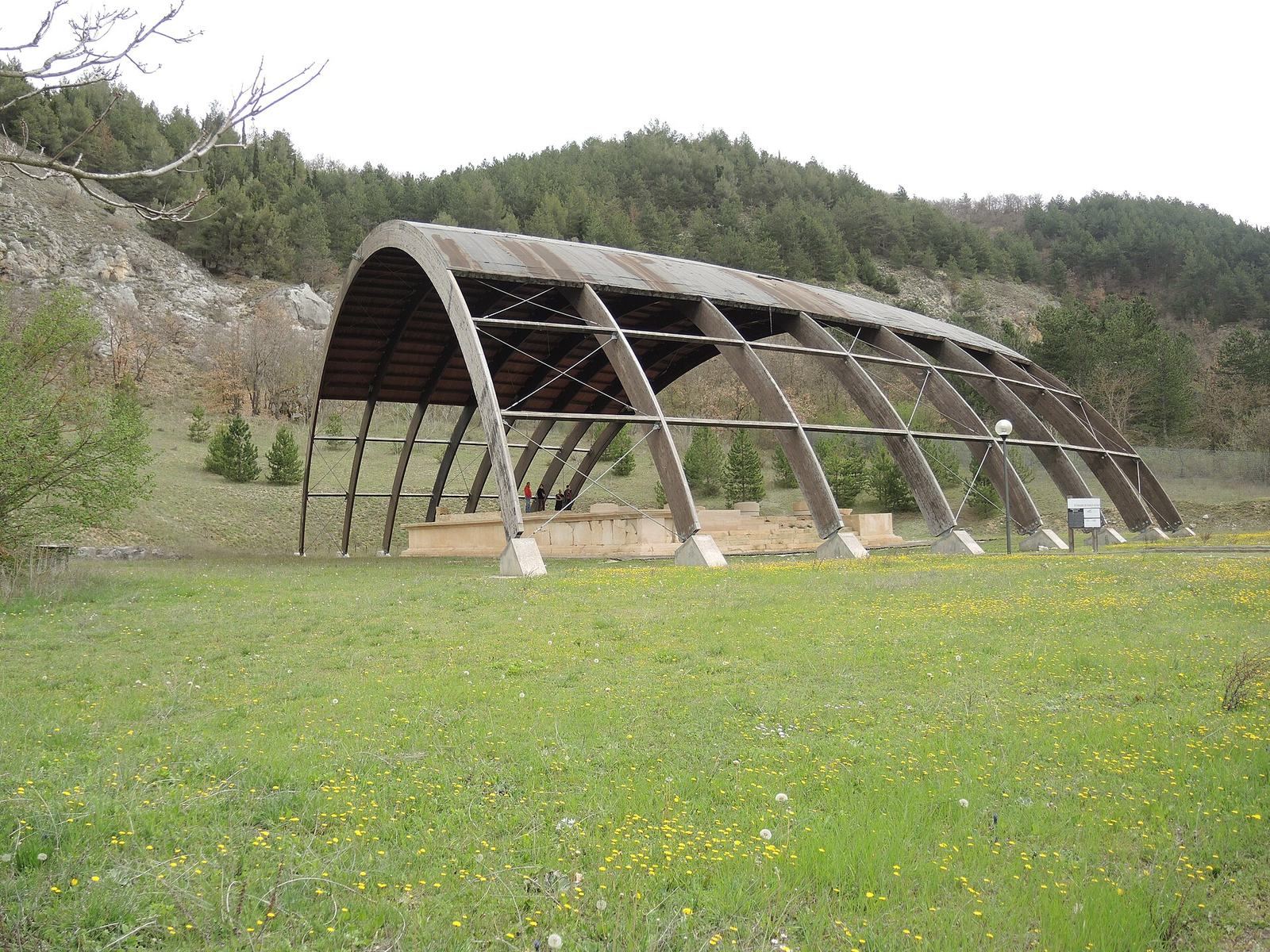
The archaeological area measures 120 by 90 metres, covering more than 10,000 square metres. At Piè di Franci, in the municipality of Castel di Ieri, it lies below a rocky face where a spring once flowed, beside the provincial road toward Goriano Sicoli. The two temples occupied different but partly overlapping footprints. Temple B is buried, while Temple A survives in part above it.
Temple B
The buried Temple B had a stone base supporting an upper structure made from perishable materials. Its remains lie beneath those of the later temple.
Temple A
Podium and chambers
The surviving podium, a raised platform supporting the temple, measures 15.12 by 19.80 metres. Its polygonal masonry, made from shaped blocks fitted together, is faced with limestone slabs and approached by a frontal staircase. The building had a deep entrance porch with four columns topped by Ionic capitals, the scroll-shaped tops of that architectural order. Beyond the porch, three chambers formed the inner sanctuary. Painted plaster survives on the walls.
Mosaic floor
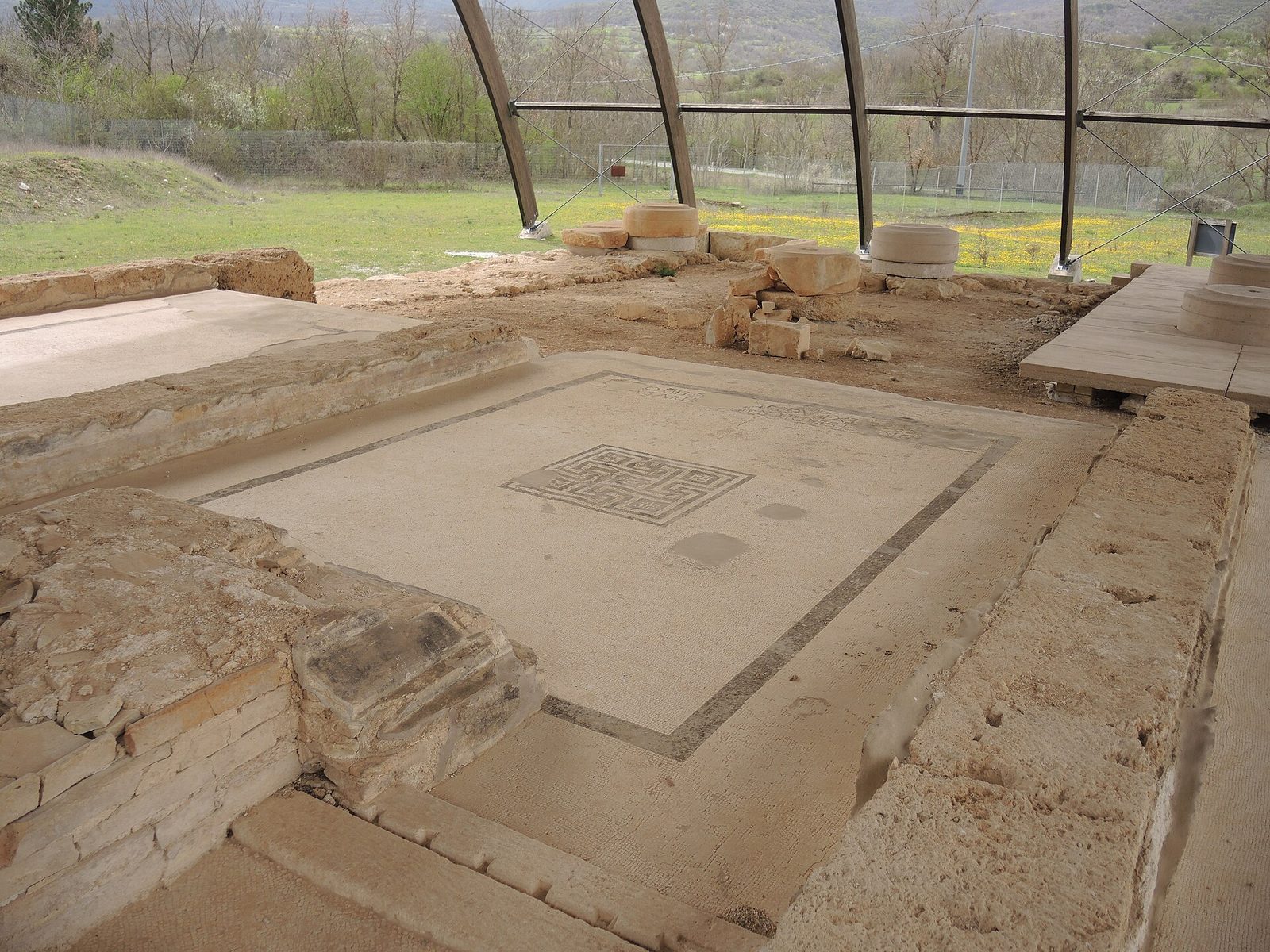
Mosaics covered the floors of all three chambers. The central room has a white floor featuring a square that encloses a black-and-white labyrinth. Its four corners show an equal-armed cross, a horizontal hourglass interpreted as a sign of infinity, a compass rose, and a counterclockwise cross with beak-like projections.
At the labyrinth’s centre, a black square with slightly inward-curving sides has its points set against the corners of the larger square. A white triangle within it points west, a direction interpreted as indicating Rome. Four white mosaic pieces at the triangle’s corners represent the cardinal points. The floor also carries a two-line black inscription on a white ground.
Rear niches and statue base
Small rooms or niches behind the three chambers were closed by grilles. They may have held objects used in worship, community archives, or the community treasury. At the rear of the central chamber, the base for a cult statue remains; the statue would have stood in front of and closed the niche.
Decoration and finds
Rich terracotta decoration from the temple is now held at the National Archaeological Museum of Abruzzo in Chieti. Finds also include fragments of a probable white-marble cult statue, among them a serpent-decorated mantle that may refer to Minerva’s aegis. Small votive bronzes include a figure of Hercules, while a sculpture fragment probably represents a lion.
Burials
Five tombs were found below the temple remains, at a deeper level.