Tel Shikmona: An Ancient Coastal Settlement at Haifa
Site at a Glance
- Rating
- 4.5
- Popularity
- Low
- Country
- Israel
- Primary era
- Medieval
- External website
- Open
- Eras represented
- Bronze Age, Iron Age, Classical, Medieval
- Civilizations
- Achaemenid, Byzantine, Canaanite, Israelite, Phoenician
- Site type
- City
On this page25 sections
History
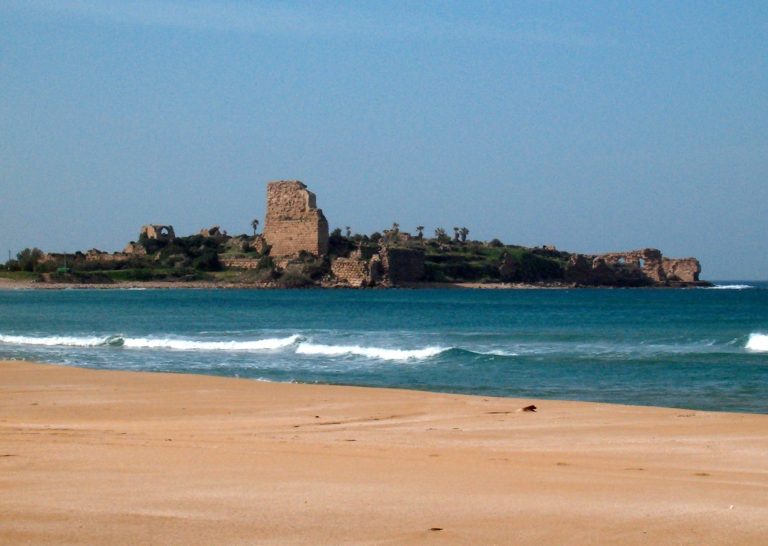
Tel Shikmona is an ancient coastal settlement at Haifa on Israel’s Carmel coast. Occupied from the Late Bronze Age, probably from the sixteenth or fifteenth century BCE, until the sixth or seventh century CE, it developed through Canaanite, Phoenician, Israelite, Persian, Hellenistic, Roman, and Byzantine phases. Its long history reflects changing connections between the coast, Mount Carmel, inland kingdoms, and the maritime communities of the Levant.
Origins and the Late Bronze Age
The ancient name of the settlement is unknown for the Late Bronze, Iron, and Persian periods. The modern name may refer to the sycamore or black mulberry, although another explanation connects it with Shuqamuna, a principal deity of the Kassites, an ancient people who ruled Babylonia during part of the second millennium BCE. The Arabic name Tell es-Samak means “mound of the fish.”
The earliest settlement may have been founded by Egyptians as a rear military base associated with Beth Shean. Another possibility is that it served as a transit station connected with a port and with a ritual site on Mount Carmel. Egyptian influence is visible in the material culture, while the settlement’s position near Mount Carmel may have given it a religious function. During the Late Bronze Age, its inhabitants combined maritime trade with agriculture.
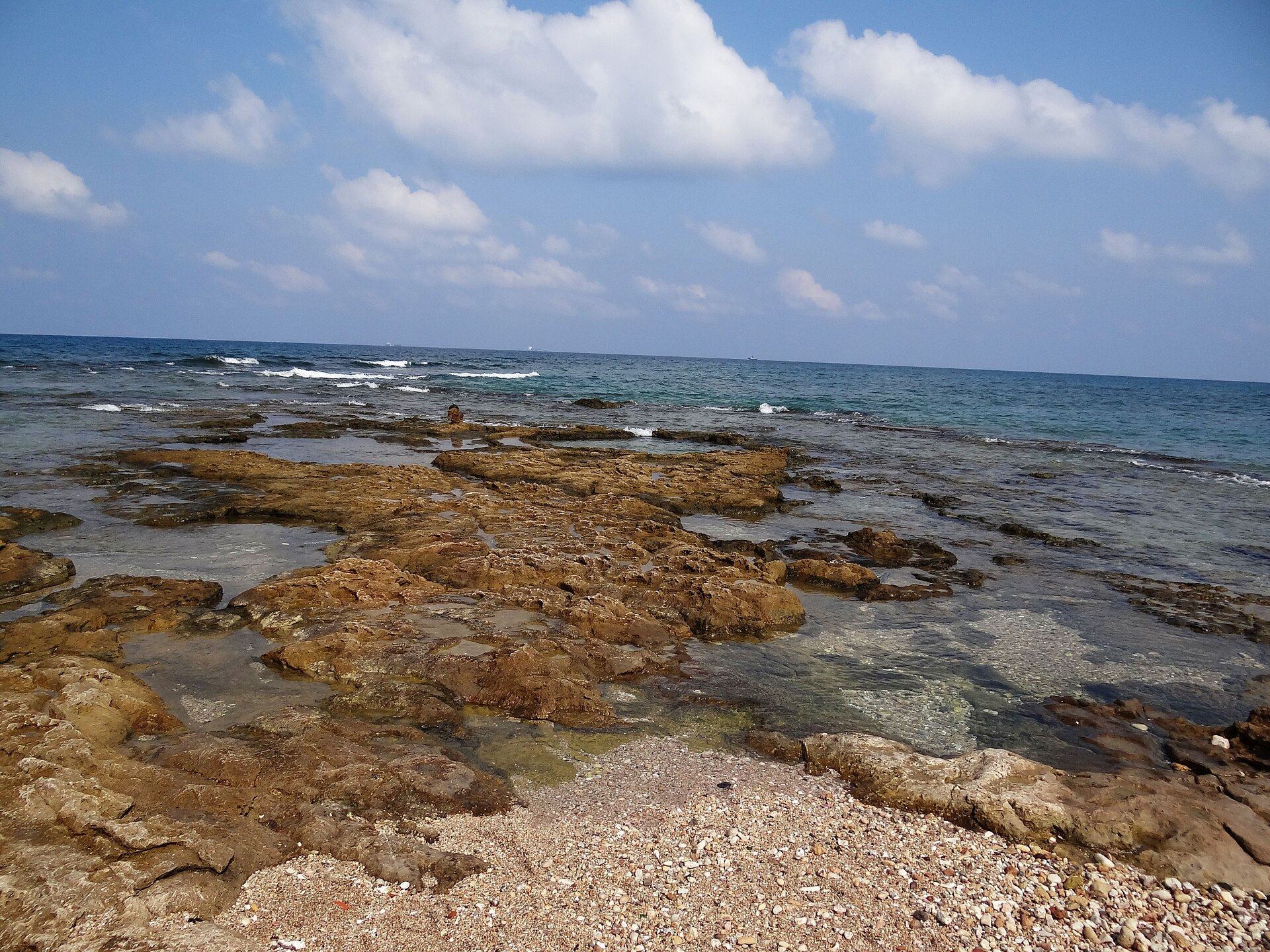
The rocky coast beside the settlement was a poor place for anchorage, so a harbor was probably located about 2 kilometers to the south. The Canaanite settlement was destroyed toward the end of the thirteenth century BCE, although the reason remains unknown. After an interval, it was resettled, probably by Phoenicians.
Iron Age frontier settlement
The first Phoenician settlement of the Iron Age was probably destroyed during campaigns traditionally associated with David’s conquests around Acre and Dor. It was soon rebuilt and fortified, perhaps during the reign of Solomon, after the territory of the Zebulun Valley was assigned to Hiram, king of Tyre. Tel Shikmona then stood near the boundary between Israel and Tyre and became a frontier settlement in the district of Dor.
A severe fire destroyed the settlement during the Egyptian campaign of Sheshonk I, probably in 925 BCE. Sheshonk I was a pharaoh who campaigned in the southern Levant during the early period of the divided Israelite monarchy. Tel Shikmona was rebuilt in the ninth century BCE and remained an important regional center for more than a century.
During the Iron Age, the settlement developed an extensive olive-oil industry and became a major center for producing and processing purple dye from murex sea snails. Current research identifies Tel Shikmona as the only known large-scale and continuous Iron Age purple-dye production center of its kind in the Levant, operating approximately from 1100 to 600 BCE. This industry has been interpreted as evidence of the economic strength of the Israelite kingdoms, particularly during the Omride period and the dynasty that followed it. The older assumption that early Levantine purple production was primarily centered on Tyre has therefore been questioned.
Assyrian forces under Tiglath-pileser III destroyed Tel Shikmona in 738 BCE. Tiglath-pileser III was the king of Assyria whose conquests reshaped the political map of the Levant. The settlement was rebuilt after the Assyrian conquest and the deportation of the Israelite population, apparently by people resettled in the region by the Assyrians. Maritime trade again became important, as newly designed vessels had handles suited to transport aboard merchant ships.
In the Assyrian period, Tel Shikmona was a northern frontier town between the province of Dor and the kingdom of Tyre. It was destroyed again in the seventh century BCE and was probably not occupied throughout the Babylonian period.
Persian and Hellenistic periods
After the Persian conquest, Phoenicians from Tyre established a colony at the site. The Achaemenid Persian Empire controlled the region during this period, and the coastal plain was divided between Tyre and Sidon. The settlements around modern Haifa came under Tyrian control. Maritime trade, fishing, and purple-dye production expanded Tel Shikmona’s population, and the settlement continued after a major earthquake in the fifth century BCE.
During the Persian period, Tel Shikmona grew from a small settlement into a large, carefully planned town. A citadel was built over the earlier settlement and survived until the end of the Persian period. In the Hellenistic period, the district of Dor was annexed to the Hasmonean kingdom in 102 BCE. The Hasmoneans were a Jewish ruling dynasty of the late Hellenistic period. Another fortress was built at the site, although its chronology and identification remain uncertain. A destruction date around 132 BCE has been proposed from coins bearing that date.
Tel Shikmona remained under Hasmonean rule until the Roman conquest in 63 BCE. A Roman fortress was traditionally thought to have been rebuilt and enlarged on the site as part of the Roman defensive system during the First Jewish Revolt and the Bar Kokhba Revolt. Later research has questioned or rejected the identification of these remains as a Roman fortress. The supposed fortress was later thought to have been abandoned toward the end of the Roman period, when residential buildings were constructed over it. Ballista stones found inside one building may indicate destruction after the revolt of Gallus in 351 CE, although this interpretation remains disputed.
The Christian settlement and abandonment
A Christian settlement was established in the mid-fourth century CE and is identified by current research with southern Porphyreon, an ancient place-name applied to the settlement during the Hellenistic-to-Byzantine sequence. It expanded during the sixth century, when it covered approximately 80 dunams and included residential districts, workshops, drainage and sewage systems, a church, and a monastery.
Historical references describe a substantial Jewish community at a place called Shikmona alongside a Christian population. Tel Shikmona is not mentioned in the Bible. The first-century Jewish historian Josephus referred to a place called Sycamine in connection with fighting between Ptolemy IX of Egypt and Alexander Jannaeus, a Hasmonean ruler. The place was also mentioned in the Babylonian Talmud and by Christian pilgrims, including a pilgrim from Piacenza who described it in the sixth century as a Jewish city.
Earlier scholars identified the site with the Jewish Shikmona, but recent archaeological research has found clear Christian remains without corresponding Jewish material culture. Tel Shikmona is now generally identified for the Hellenistic through Byzantine periods with southern Porphyreon. The Jewish Shikmona is thought to have stood nearer ancient Haifa and the bay.
The Christian settlement was destroyed or abandoned in the late sixth or early seventh century, before the Persian conquest. Fire remains have been found, while an earthquake has also been proposed as a cause. No remains securely attributable to the Early Arab period have been identified, suggesting that the settlement had been abandoned before the seventh century.
Excavation and protection
Early investigations in 1939 by the British Mandate Department of Antiquities revealed a chapel and a sixth-century mosaic floor. Major excavations were undertaken from 1963 to 1979 by a Haifa museum expedition led by Joseph Elgavish, followed by additional work in 1994. Salvage and research excavations in the 1990s focused on the eastern part of the Byzantine settlement and its cemetery.
From 2010, the Zinman Institute of Archaeology at the University of Haifa undertook renewed excavation, documentation, and conservation under Michael Eisenberg and Shay Bar. The project linked new archaeological layers with Elgavish’s earlier sequence, refined the chronology, conserved mosaics and industrial pools, and prepared the site for presentation as an archaeological park. Excavation continued in several seasons, including 2013, and a consolidated research publication appeared in 2021.
Since 2016, a University of Haifa project led by Ayelet Gilboa and Golan Shalvi has reexamined Elgavish’s unpublished records, entered them into a database, applied modern analytical methods, and combined them with new fieldwork. Research excavations were also conducted by Shay Bar and, in 2023, by Golan Shalvi. On 26 October 2008, Tel Shikmona, its surrounding archaeological area, and the adjacent coast were declared the Shikmona Nature Reserve and Shikmona National Park. The reserve covers approximately 1,677 dunams, while the national park covers approximately 73.3 dunams, including the tell.
Remains
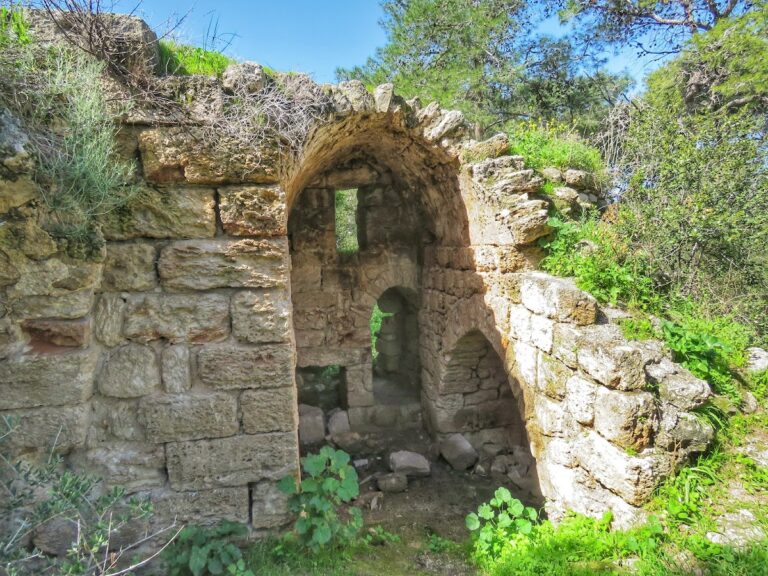
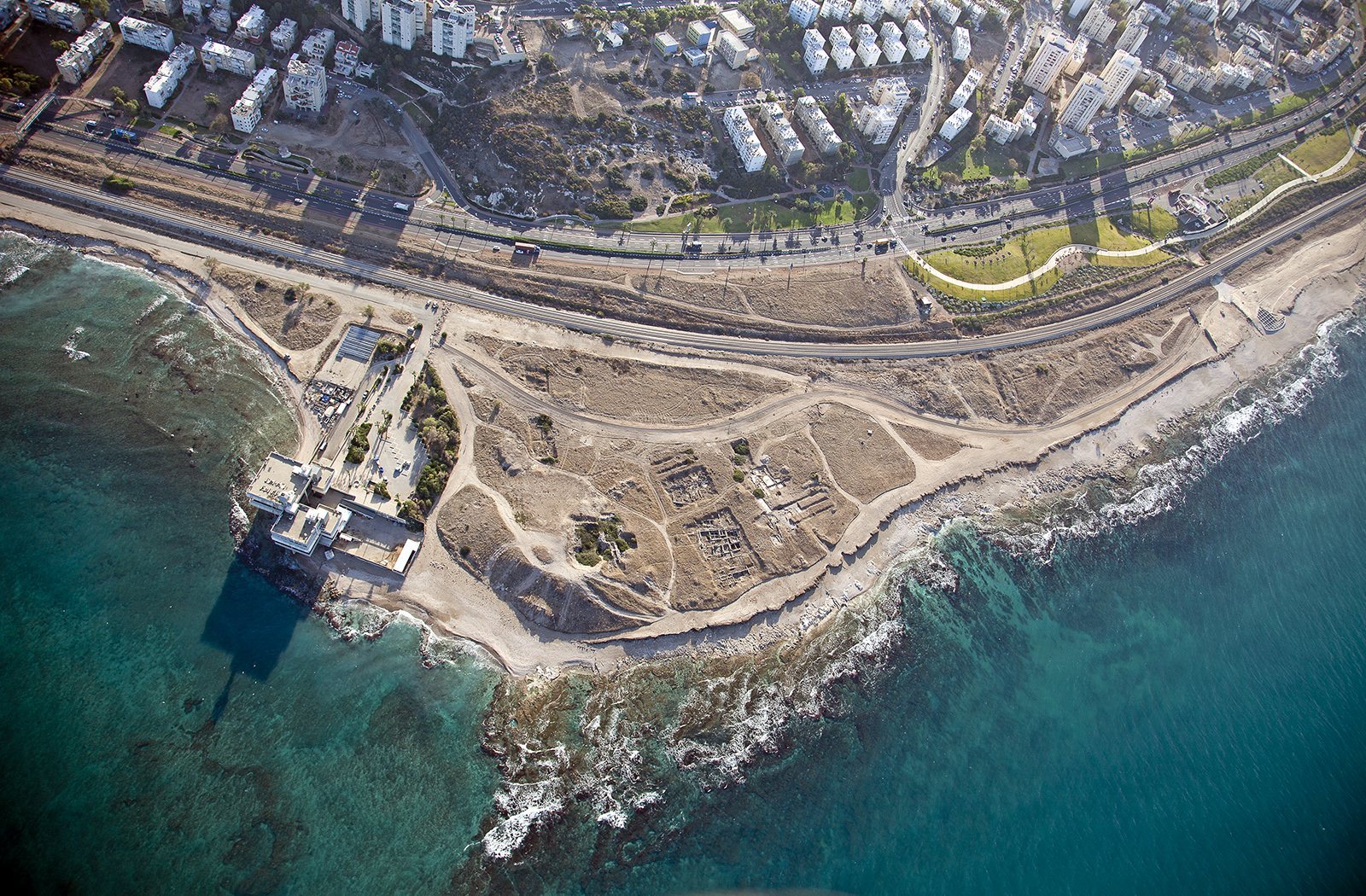
The tell covers approximately 8 dunams and stands beside the northern Carmel ridge near the Mediterranean coast. Before excavation, its highest point was 12.74 meters above sea level. The archaeological settlement extends beyond the mound into a lower city, mainly south and east of it, whose principal remains belong to the Late Roman and Byzantine periods. The physical remains therefore preserve both the raised core of the settlement and later urban areas spread across the surrounding ground.
Bronze Age remains
Middle Bronze Age burial complex
A Middle Bronze Age burial complex, probably dating to approximately 1750–1550 BCE, predates the main settlement by about 150 years. It consists of an entrance chamber and an inner chamber, where the deceased was placed on a bench facing the entrance. The tomb contained bowls, perfume vessels, carved bone plaques, scarabs, two spearheads, two daggers, a sickle, and a horse skull.
One scarab bears the inscription “Son of Re, Yaqub-Har, endowed with life.” Yaqub-Har was an early ruler of Egypt’s Fifteenth, or Hyksos, Dynasty. The scarab provides a close connection between the burial and the political world of Egypt and the Levant during the Middle Bronze Age.
Late Bronze Age storage and imported objects
A Late Bronze Age storage building contained numerous pottery vessels and jars. Other finds include imported objects, deity figurines, Cypriot, Greek, and Mesopotamian pottery, and an Egyptian ivory musical percussion instrument from the fourteenth century BCE. The instrument is decorated with the goddess Hathor, an important deity in ancient Egyptian religion.
A clay seal bearing the name of Pharaoh Seti I was also found at the site. Together with the imported objects and other Egyptian-related material, these finds point to long-distance connections. Agricultural remains from the plain surrounding the tell show that the coastal settlement was also linked to farming.
Iron Age fortifications and industries
Defensive and domestic areas
Iron Age remains include a casemate wall, a fortification made with parallel walls and enclosed chambers, with a single gate opening to the north. Domestic buildings, warehouses, storage jars, and workshops occupied parts of the settlement. An inscribed jar bears the Hebrew words “LaMalkal.” It may have belonged to an official responsible for storage facilities, although that interpretation is uncertain.
Iron Age religious objects include terracotta figurines of riders, the goddess Astarte, and women playing tambourines. Locally produced and imported pottery, including Phoenician-style vessels, was found alongside remains of textile and dyeing installations.
Purple-dye production complex
The purple-dye complex lay south of the tell and included industrial installations, pools, and large quantities of murex shells. Purple dye made from these sea snails was a costly ancient textile dye traditionally associated with Tyre. Chemical analysis confirmed that painted pottery from Tel Shikmona was decorated with authentic murex purple, connecting the industrial remains with the settlement’s large-scale dye production.
Persian and Hellenistic structures
Persian residential quarter
The Persian-period residential quarter was laid out along paved streets and included a rainwater-drainage system. Buildings contained pottery and stone vessels, jewelry, weapons, and other domestic objects. A distinctive iron sword resembles swords shown in reliefs from the Persian royal palace at Susa, linking the local material culture with wider Persian artistic and military traditions.
Persian citadel
A citadel was built over the earlier settlement during the Persian period. Its remains included a cellar containing wine jars and a hoard of silver and bronze coins. The citadel survived until the end of the Persian period and formed part of the planned settlement’s fortified architecture.
Hellenistic fortified installation
A later fortress or fortified installation has been proposed for the Hellenistic period. Its surviving remains include large storage rooms containing wine amphorae, some marked with Greek stamps, and coins dated to 132 BCE. The date and identification of the fortress are not secure, so these remains are best understood as evidence for a substantial fortified complex rather than as a firmly identified Hasmonean structure.
Roman and Byzantine settlement
Roman-period military evidence
Several ballista stones were found inside a Roman-period building. A ballista was a large military weapon used to fire stones or bolts. The stones have been interpreted as evidence of military destruction, but the wider identification of a Roman fortress at Tel Shikmona has been challenged.
Residential and industrial districts
The Byzantine settlement included residential quarters with mosaic floors, workshops, and other industrial installations. Drainage and sewage systems served the settlement, which expanded across the tell and the lower city. A large villa occupied the summit of the tell, while the wider settlement also contained a monastery and a church.
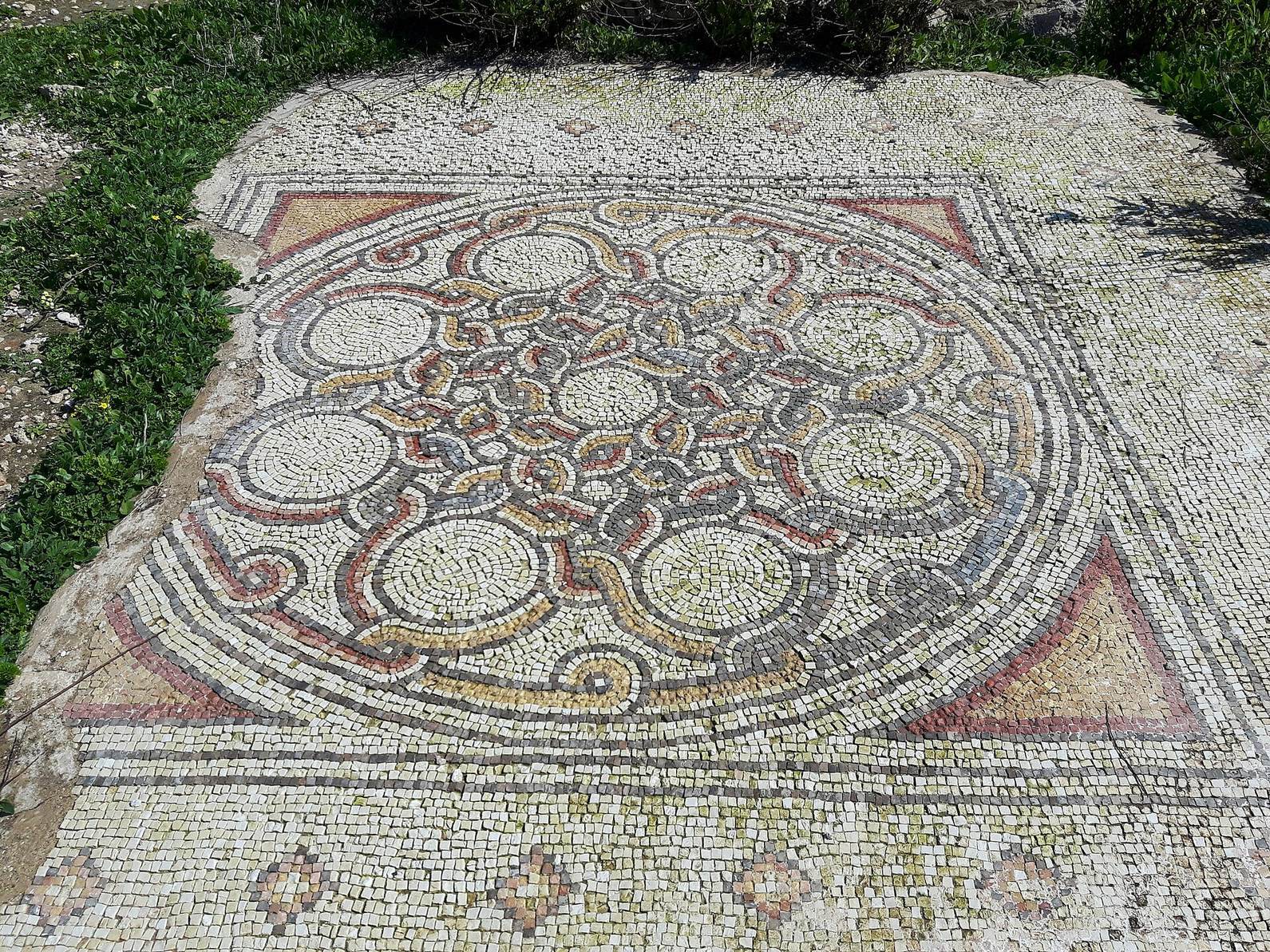
More than 50 mosaic floors have been uncovered. Their designs are mainly geometric and vegetal, with trees, trefoils, citrons, apples, grapes, and cups. Animal motifs are concentrated in the monastery, where mosaics depict pairs of quails and doves. Two rooms adjoining the monastery’s main hall contained Greek inscriptions. One refers in translation to “the blessed days” or “the good days,” while another mentions a person named Eugenius or Antonius whose identity is unknown.
Church and monastery complex
A church mosaic carries the inscription “Blessed is the builder.” Bronze plaques decorated with crosses were found in the church and monastery complex. The number and consistent style of the mosaics have led researchers to propose that a local workshop produced mosaics at the site.
Southern church
A second church lies approximately 120 meters south of the tell. Its mosaic floors were conserved during renewed excavations, and excavation of the surrounding area was planned to continue northward. The church forms part of the lower settlement’s Christian architectural remains.
Cemetery and displayed finds
Rock-cut burial complexes
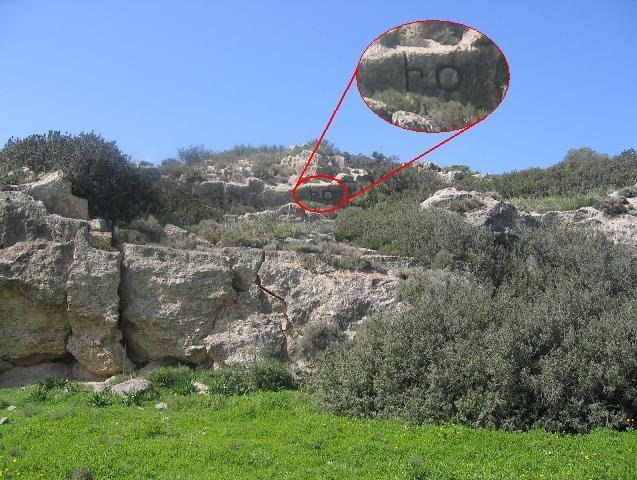
A cemetery east of the tell extends onto the Carmel slopes and partly east of Highway 4. It contains 22 rock-cut burial complexes near a monument consisting of an anchor set on a rock. Twenty-one of the complexes date to the Roman and Byzantine periods, while one belongs to the Late Bronze Age.
Objects from the excavations
A substantial group of finds is displayed in the National Maritime Museum in Haifa. These objects include the Yaqub-Har scarab, the Egyptian ivory percussion instrument from the Late Bronze Age, a Mycenaean III B terracotta vessel shaped like a hedgehog, a Cypro-Phoenician Iron Age IIA vessel, and a Phoenician Iron Age vessel of the Akhziv type.