Acozac: An Aztec Archaeological Site in Mexico
Site at a Glance
- Rating
- 4.5
- Popularity
- Low
- Country
- Mexico
- Primary era
- Medieval
- External website
- Open
- Eras represented
- Medieval
- Civilizations
- Aztec
- Site type
- City
On this page8 sections
History
Acozac is an archaeological site on the slope of Cerro de Montesuma in Ixtapaluca, Mexico, associated with successive Aztec-period occupations from around AD 900 to 1521. Its history is linked with Tlazallan-Tlallanoztoc, a place mentioned in the Codex Xolotl, a pictorial manuscript about the Chichimec and Acolhua peoples of central Mexico. The manuscript identifies the location as the residence of Techotlallatzin, a grandson of Xolotl and a ruler of Texcoco.
Early occupation
Ceramic evidence places the beginning of settlement in the first Aztec phase, around AD 900–1200. Occupation continued during the second phase, around AD 1200–1430, when Techotlallatzin ruled. Acozac was inhabited by Chichimeca, Acolhua, and Tepanec populations, as well as Aztecs, placing the site within the overlapping political and cultural traditions of central Mexico.
The third Aztec phase
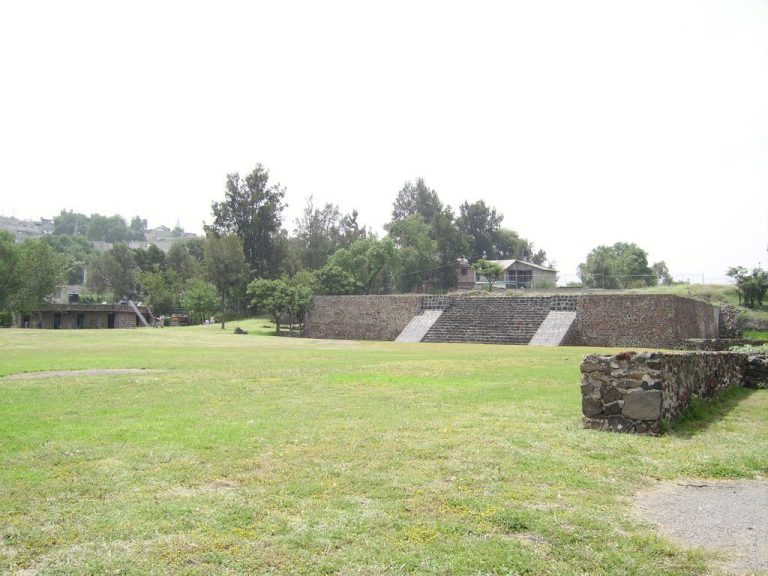
The structures visible today belong to the third Aztec phase, around AD 1430–1521. This period produced the temple pyramids and palace buildings that formed the principal monumental center. Their surfaces were probably coated with stucco and painted, although the surviving remains now present only part of their original appearance.
Remains
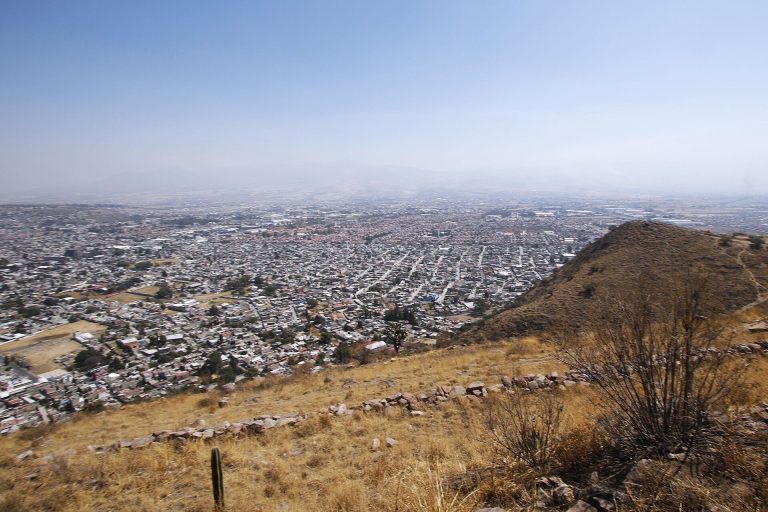
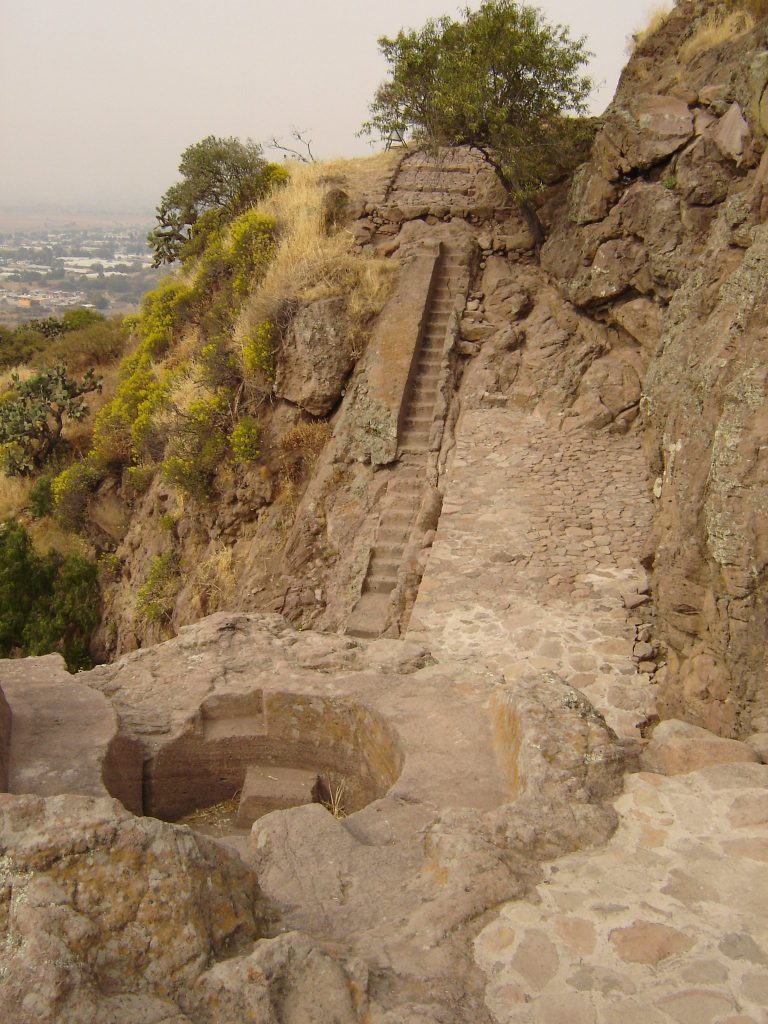
Acozac occupies a wooded slope, and its remains are set within a natural landscape from which the volcanoes Iztaccihuatl and Popocatepetl can be seen. More than one hundred structures have been detected across the site, including buildings thought to have served residential purposes. The surviving ceremonial and palatial architecture belongs mainly to the third Aztec phase.
Temple and palace complex
Circular temple pyramid
A large circular pyramid probably supported a temple dedicated to Ehecatl, the Mesoamerican wind deity understood as an aspect of Quetzalcoatl, the Feathered Serpent deity. Its round form has a comparable example at Calixtlahuaca. The pyramid belongs to the third Aztec phase and was probably finished with stucco and painted decoration.
Central platform and palace buildings
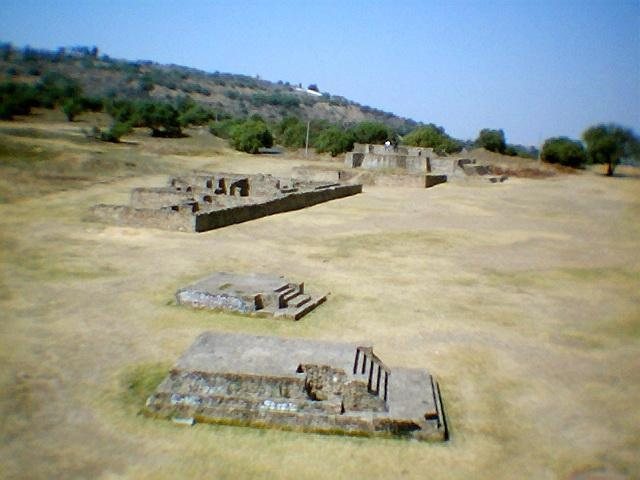
Between the circular temple and the palace stands a great central platform containing rooms and courtyards. Some red stucco survives on the structure. Two stone altars were found near the foundation of the principal temple and in front of the platform’s lower section. Two additional platforms in the foreground may have supported temples or palace buildings.
Ballcourt
Remains of a ballcourt have also been identified at Acozac, adding a formal recreational and ceremonial space to the site’s temples, platforms, courtyards, and residential structures.