Take-dera Temple: A Tendai Buddhist Temple in Hanno, Japan


Site at a Glance
- Rating
- 4.3
- Popularity
- Low
- Country
- Japan
- Primary era
- Unclassified
- External website
- Open
- Eras represented
- Unclassified
- Civilizations
- Japanese
- Site type
- Religious
- Remains
- Sanctuary
On this page11 sections
History
Foundation and Religious Character
Take-dera Temple is a Tendai Buddhist temple in Hanno, Saitama Prefecture, Japan, traditionally founded in 857. Ennin, also known as Jikaku Daishi, is regarded as its founder. During a journey through eastern Japan, he is said to have encountered many people suffering from illness and established a religious practice site at Take-dera, where he performed a goma fire ritual, a Buddhist ceremony in which offerings are burned before a sacred flame.
The temple’s formal name is Eight Kings Temple. Its mountain title is Medicine-King Mountain, and its institutional title is Medicine-Life Institute. Gozu Tenno is the principal object of worship, while Yakushi Nyorai, the Buddha associated with healing and medicine, is regarded as his Buddhist counterpart. Although the Meiji Restoration introduced a policy separating Buddhist institutions from Shinto worship, Take-dera retained its syncretic character, combining Buddhist practices with devotion to a Shinto-associated deity.
Pilgrimage and Protective Traditions
Take-dera is the 33rd and final temple on the Musashino Thirty-Three Kannon Pilgrimage, a circuit devoted to Kannon, the bodhisattva associated with compassion. It is also the concluding site of the Hanno Seven Lucky Gods pilgrimage, which links places of worship associated with Japan’s traditional seven lucky deities.
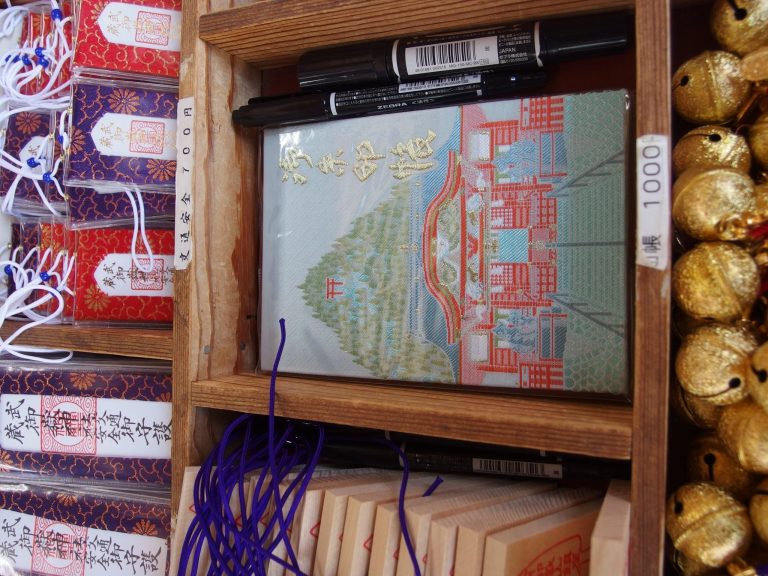
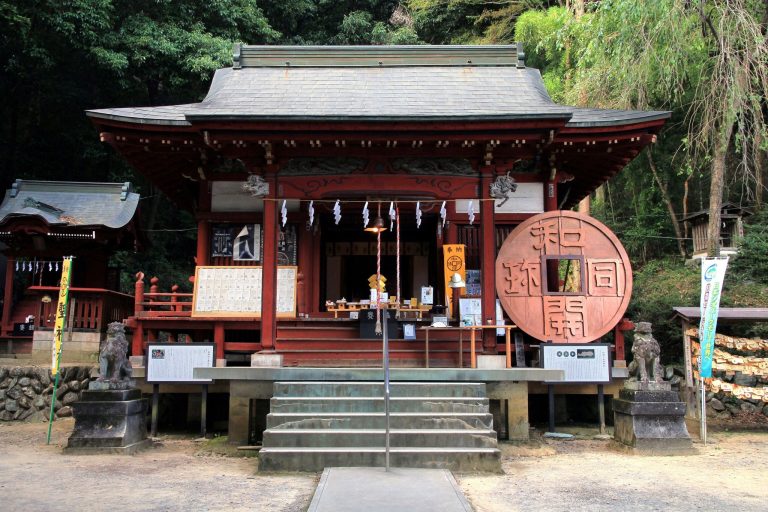
Protective customs remain part of the temple’s religious identity. A chinowa, a large woven-grass purification ring, stands at the torii marking the entrance to a Shinto sacred area. Wooden talismans connected with the Somin Shorai legend are also distributed. Both the ring and the talismans are regarded as protections against misfortune, including illness and epidemics.
Fire, Rebuilding, and the Haiku Tradition
The principal shrine building was destroyed by fire in 1999 and rebuilt in 2003. Take-dera is also known by the nickname “Oku-Musashi Haiku Temple.” This name became associated with the site after the poet Fushio Akimoto described it that way in a newspaper. Haiku monuments and votive plaques on the grounds have reinforced the temple’s connection with poetry.
Remains
Temple Grounds and Worship Buildings
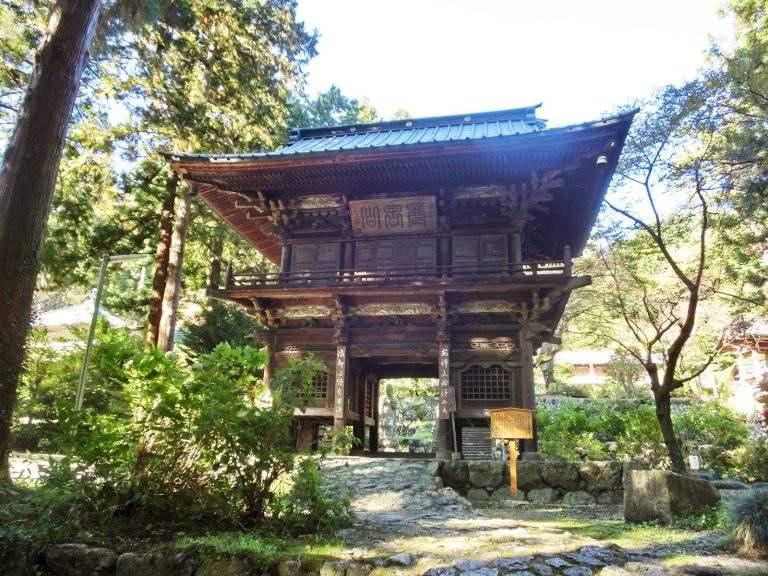
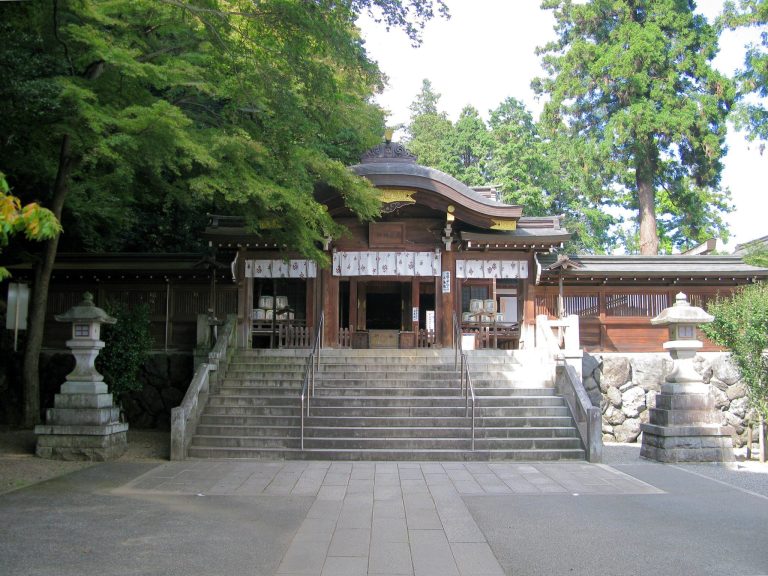
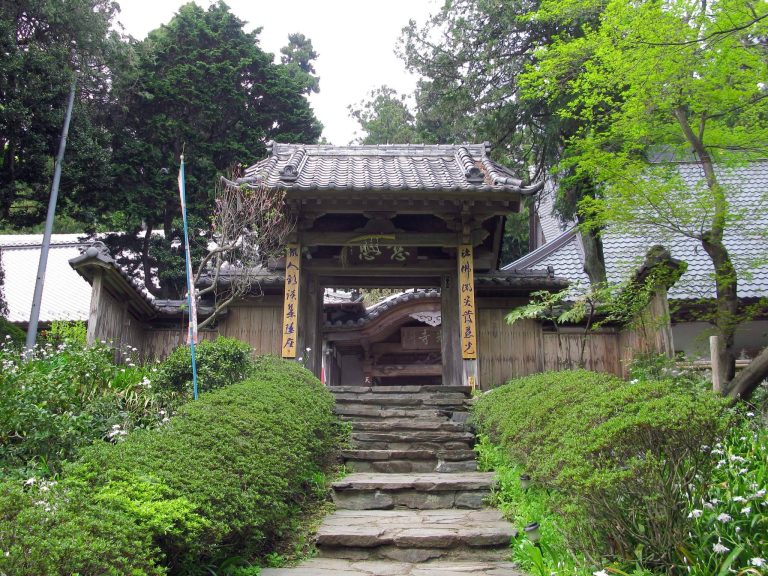
Take-dera’s grounds cover 11,768 square meters and are organized around several religious buildings and features. These include the Gozu Tenno shrine, the main temple precinct, the Thirty-Third and Final Pilgrimage Hall, the Ruriden, Benten Hall, an Inari shrine, a water pavilion, an inner sanctuary, a torii, and stone lanterns. Together, these structures express the site’s combination of Buddhist and Shinto worship.
Gozu Tenno Shrine
The Gozu Tenno shrine is the principal worship building and stands at an elevation of 490 meters. The rebuilt structure contains a wooden seated image of Gozu Tenno and images of the Eight Kings, described as his eight child attendants. These images are displayed publicly once every twelve years in the Year of the Ox.
Associated Halls and Shrines
The Ruriden serves as the hall for Gozu Tenno’s Buddhist counterpart. The grounds also contain Benten Hall, dedicated to a deity associated with eloquence, music, the arts, and good fortune, as well as an Inari shrine. A water pavilion, inner sanctuary, pilgrimage hall, entrance torii, and stone lanterns complete the documented group of religious features.
Poetic and Natural Features
Haiku Monuments and Votive Plaques
Numerous monuments and votive plaques bearing haiku stand within the temple grounds. Some are associated with Takao Nakaya, Fushio Akimoto, and Matsubara Jizōson. These features provide the physical expression of the poetic tradition reflected in Take-dera’s nickname.
Koya-maki
A Koya-maki, or Japanese umbrella pine, is associated with Take-dera as a designated natural monument.