Shōfuku-ji Temple: A Kamakura-Period Zen Temple in Tokyo


Site at a Glance
- Rating
- 4.1
- Popularity
- Low
- Country
- Japan
- Primary era
- Medieval
- External website
- Open
- Eras represented
- Medieval
- Civilizations
- Kamakura shogunate
- Site type
- Religious
- Remains
- Temple
On this page7 sections
History
Foundation and Patronage
Shōfuku-ji Temple is a Rinzai Zen Buddhist temple in Higashimurayama, Tokyo, Japan, associated with the Kenchō-ji branch and traditionally founded during the Kamakura period, the medieval era when the Kamakura shogunate governed Japan. Its foundation date is uncertain: traditions place it in 1270, in the middle of the Kamakura period, or specifically in 1278. The founding is attributed either to Hōjō Tokiyori or his son Hōjō Tokimune, while Sekkei Shingetsu is identified as its founding abbot. The temple’s principal image is Senju Kannon Bosatsu, the thousand-armed form of the bodhisattva Kannon.
Temple records place the construction of a Jizō Hall in 1278 under the sponsorship of Kamakura Regent Hōjō Tokiyori. A traditional story tells that Tokiyori fell ill during a hunting expedition, recovered after receiving care from a local priest, and commissioned builders from Kamakura in gratitude. The story conflicts with the known chronology because Tokiyori died in 1263. The foundation and construction may instead belong to the period when Hōjō Tokimune held authority. Even so, patronage from the Kamakura shogunate played an important part in the temple’s construction.
Rebuilding and Preservation
The present Jizō Hall was rebuilt in 1407 during the Muromachi period. An ink inscription found during repairs in 1933 records this rebuilding and states that the temple had been dedicated to Jizō Bodhisattva since its foundation. The temple has retained much of its original configuration. Located about 50 kilometres from Kamakura, it stood near the northern limit of the city’s outer defensive sphere. Its relative remoteness helped protect it from the destruction that affected many buildings in Kamakura.
On March 29, 1952, the Jizō Hall was designated a National Treasure of Japan. It is regarded as a representative and unusually intact survival of Kamakura-period architectural traditions, and as the oldest intact building in Tokyo Prefecture. The hall also remains connected with a healing tradition centred on Jizō. Wooden dolls kept outside it are taken to a sick family member or friend, and after recovery the original doll is returned with another. The hall’s interior is opened during the Jizō Festival on November 3.
Remains
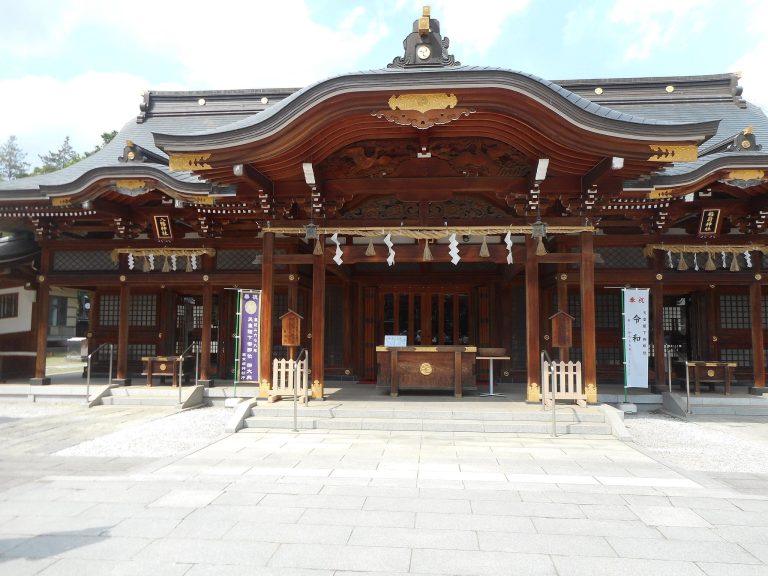
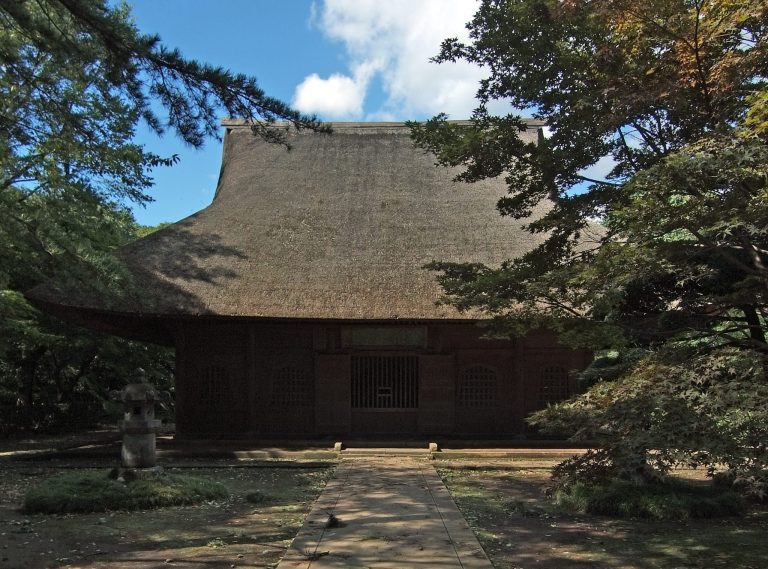
The temple complex is entered through a main gate, from which the Jizō Hall is viewed across the grounds. The hall is a nearly square, single-space timber building with a three-bay main body on each side and a subsidiary lower roof, called a mokoshi, surrounding it. Its hipped-and-gabled irimoya roof has sharply upturned edges, giving the building the outward appearance of two stories even though its interior forms one open volume.
Temple Layout
Main Gate
The main gate forms the approach to the temple grounds and frames the view toward the Jizō Hall. The hall’s exterior can be seen from the grounds, while the interior is accessible during the annual Jizō Festival.
Jizō Hall
The Jizō Hall combines a three-bay central structure with the one-bay mokoshi roof around its lower level. The lower roof is covered with copper for conservation. The main roof was originally thatched. During the dismantling and repair of 1933, it was restored to an original-style kokerabuki covering, made from thin wooden shingles stacked in overlapping layers and fastened with bamboo nails.
The hall stands on stone foundation bases, with columns rising directly from them. Closely spaced bracket complexes fill the spaces between the columns, while flower-head windows, lattice-panel doors, and penetrating ties give the building features associated with Zen-style architecture. Elastic Japanese cypress, functional decorative brackets, and cantilevers support a curved roof, open interior, and upturned eaves while helping the structure resist earthquakes.
Inside, an earthen floor extends through the undivided space. Rafters remain exposed beneath the ceiling around the mokoshi, while the central sanctuary has a mirror ceiling. The hall contains the principal image of Jizō Bodhisattva together with numerous smaller Jizō images. Its roof curve and general form are closely comparable to the Shariden of Engaku-ji in Kamakura, although the Shōfuku-ji building differs in details including its copper-covered lower roof. A sectional model of the hall is held by the National Museum of Japanese History.